1,425 items
4.2/5 based on 8599 reviews collected online and in stores

City E-Bike FAQs

Which city e-bike is best suited to longer daily journeys?

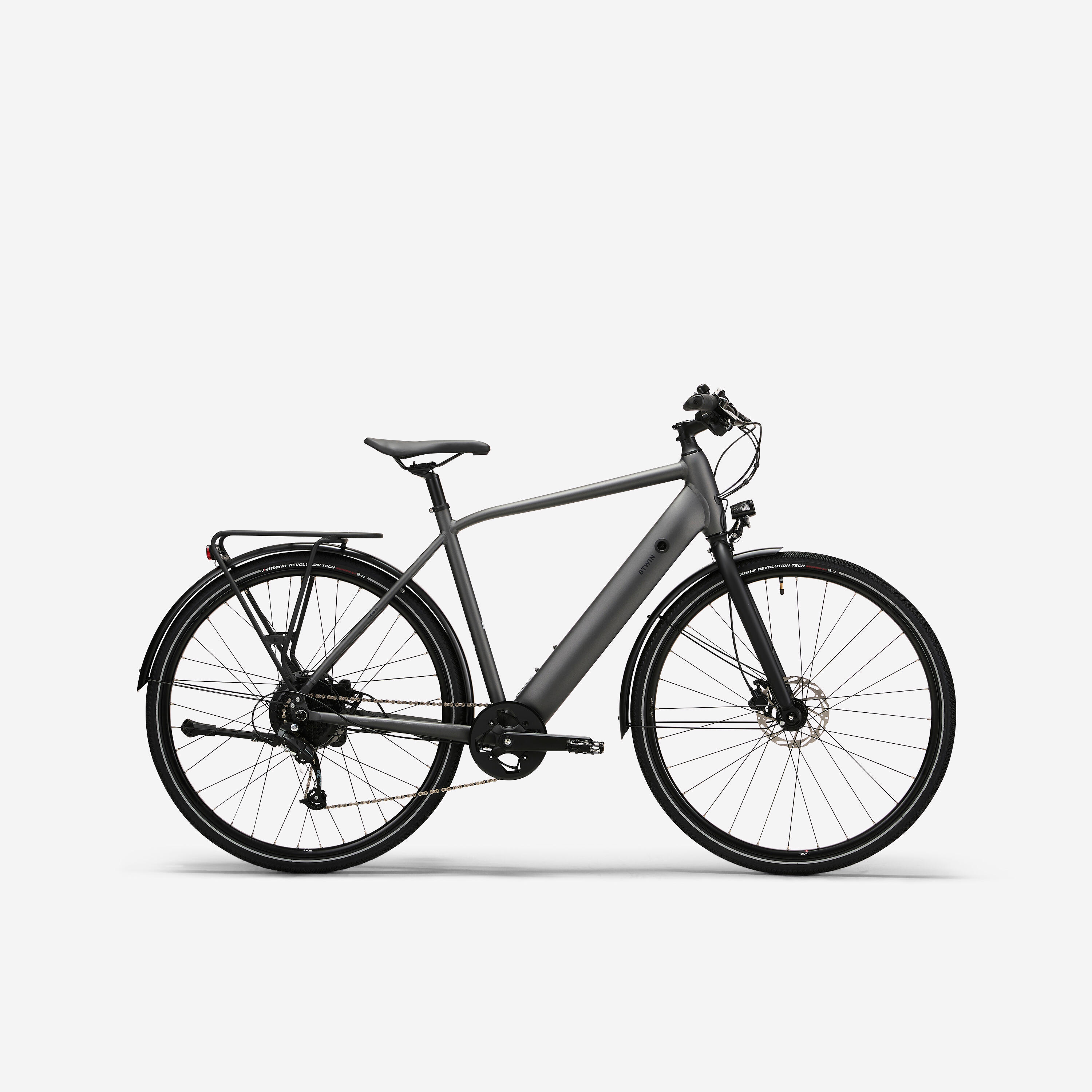
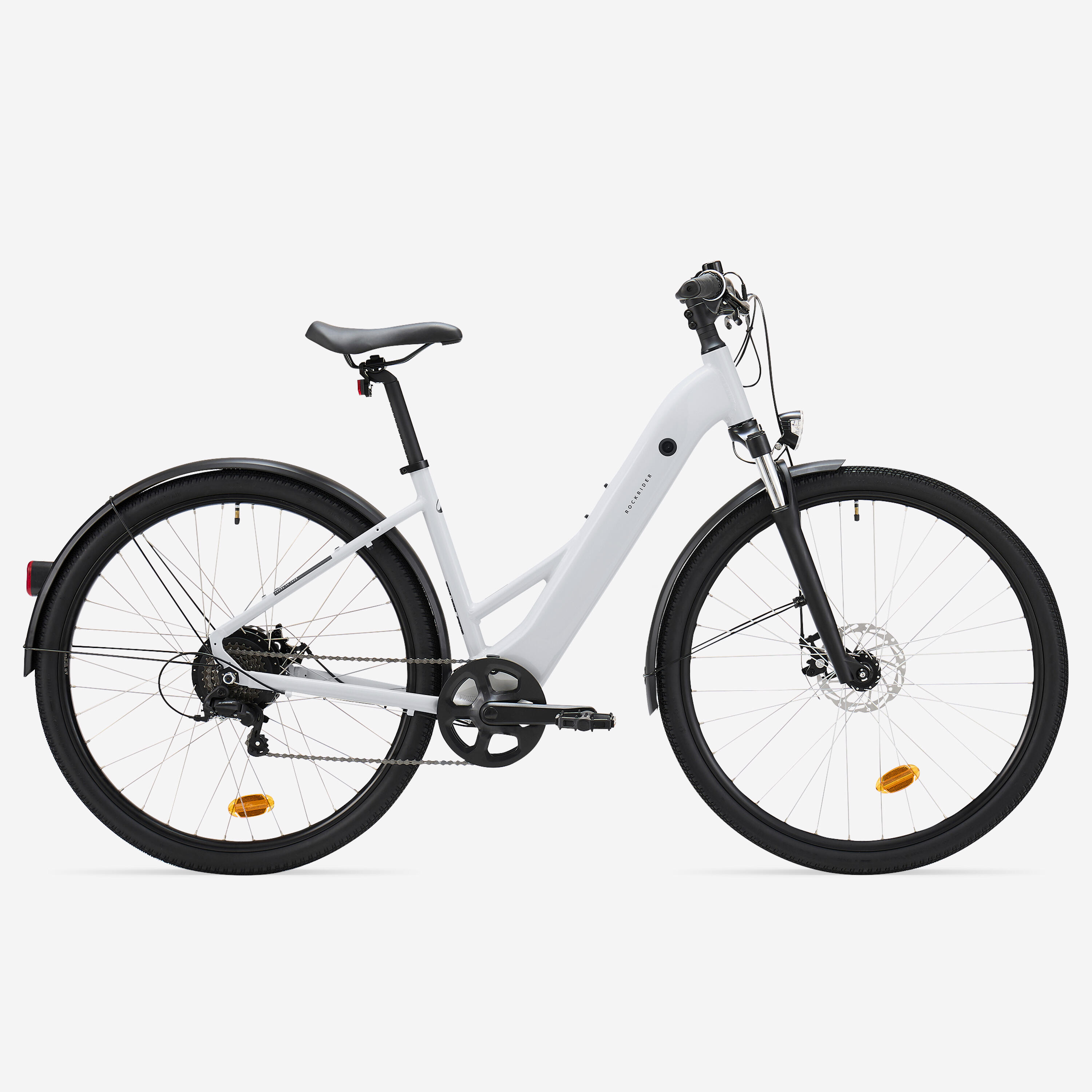
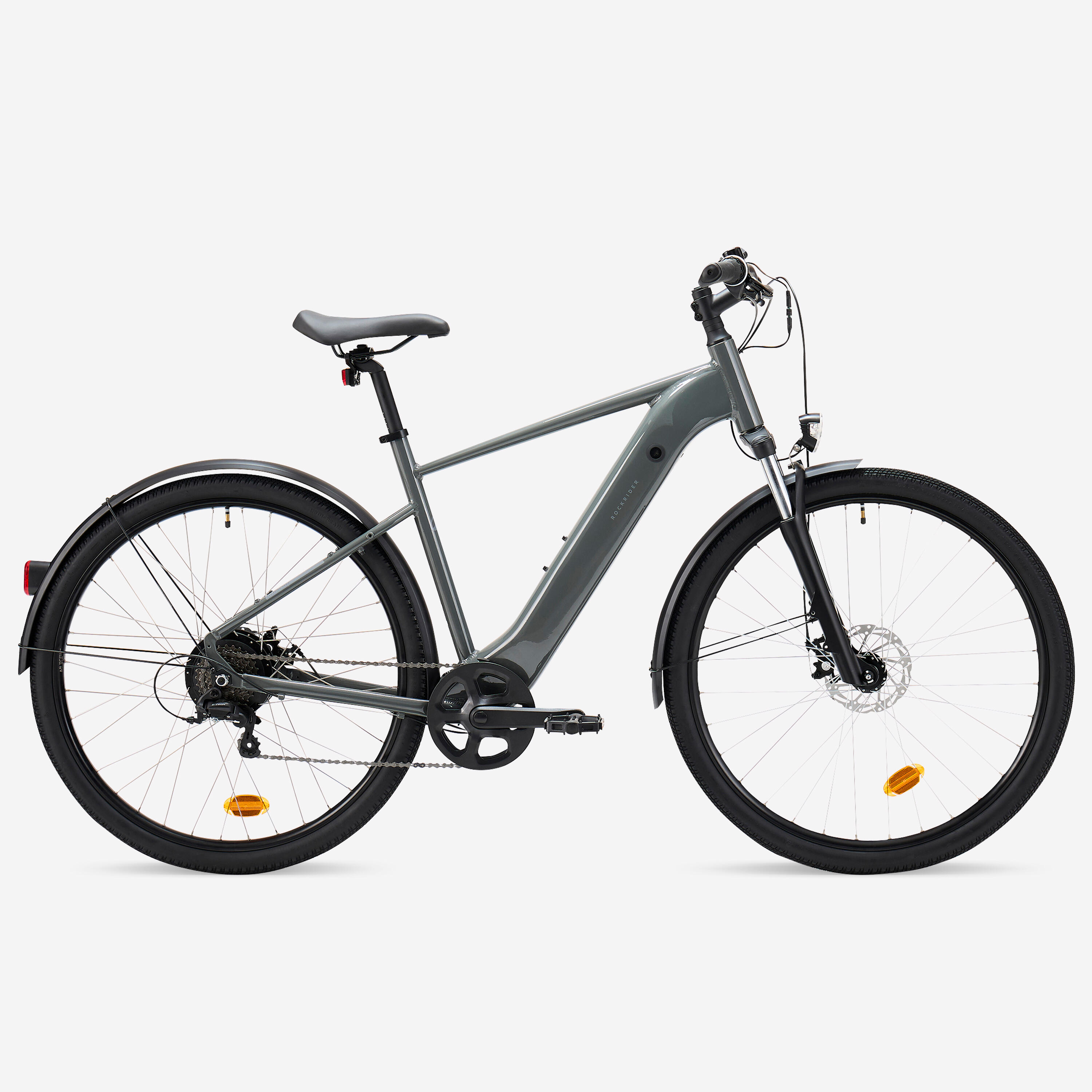
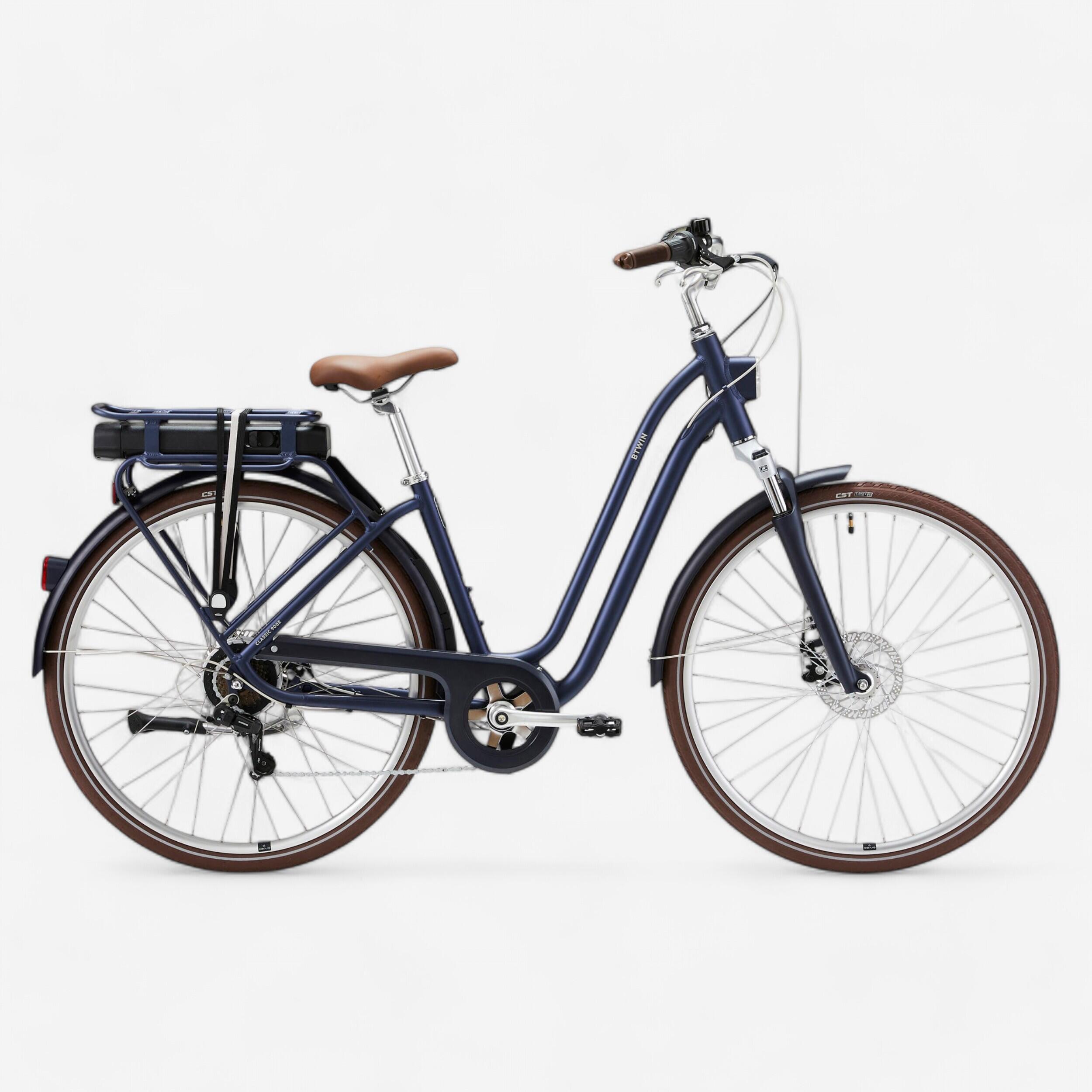
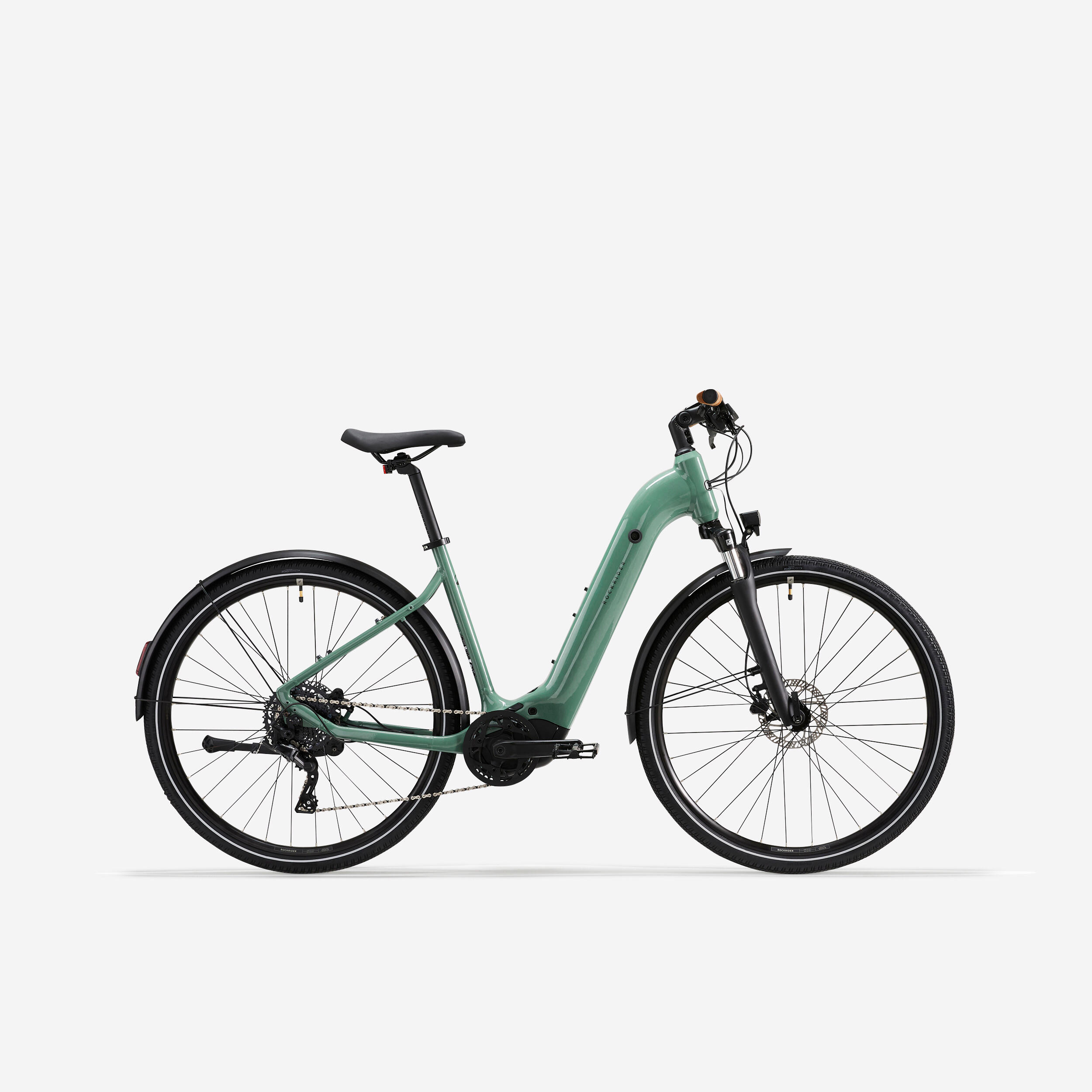
Start with your normal return distance, local hills, luggage needs and where you can charge the battery. To help with regular commuting, a step over frame electric assist city bike can provide a stable frame layout alongside progressive pedal assistance for longer urban journeys. Torque and cadence sensing can make motor support respond more naturally to your effort, while different assistance modes let you trade extra support for greater battery range. Look at riding position as well: a moderately forward posture can improve pedalling efficiency without becoming as low as a road-bike position. Pro tip: plan battery use around your full round trip rather than the maximum quoted distance. Wind, carried weight, gradients, temperature and tyre pressure can all change real-world range.
When is a step-through electric city bike more practical?

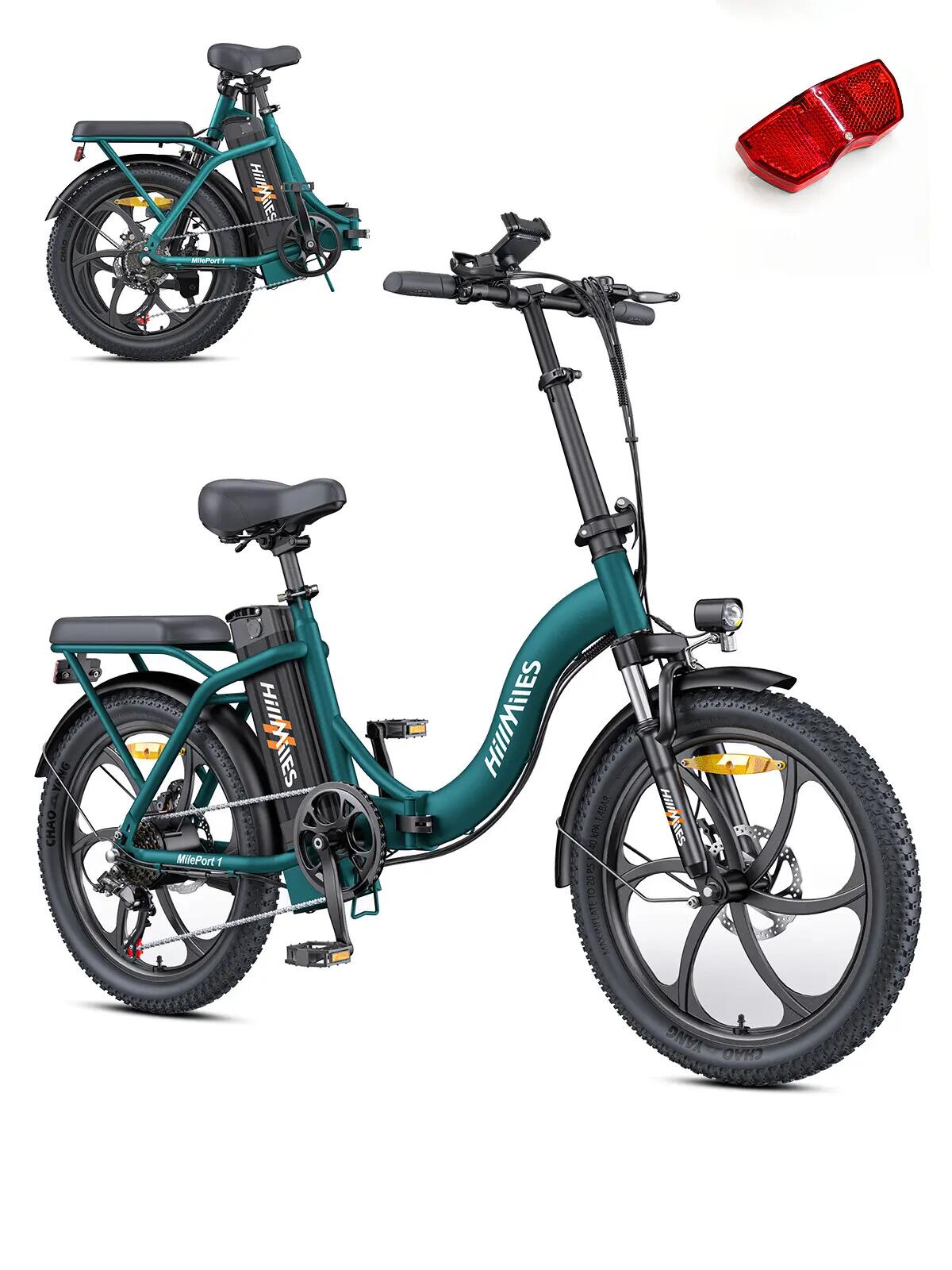
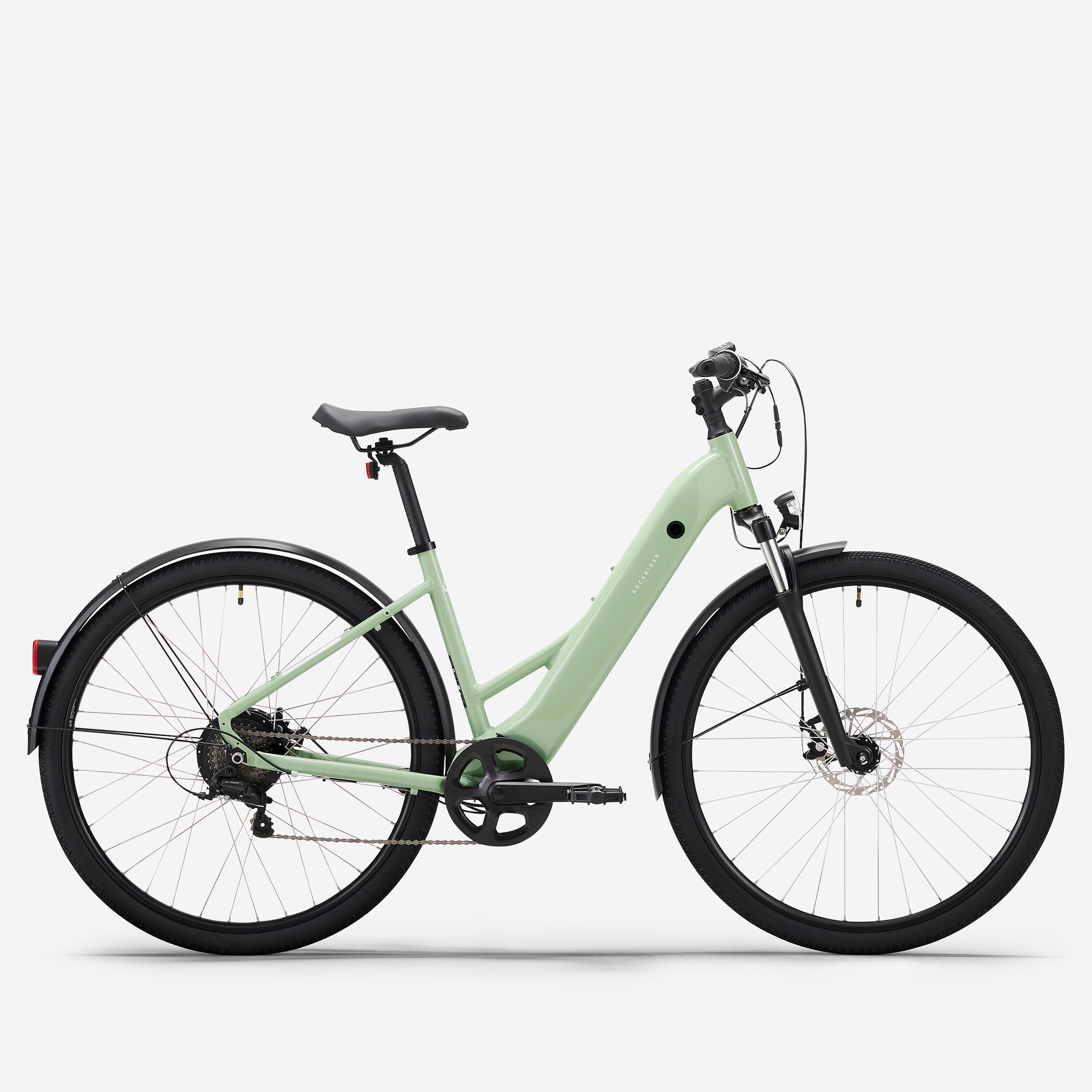
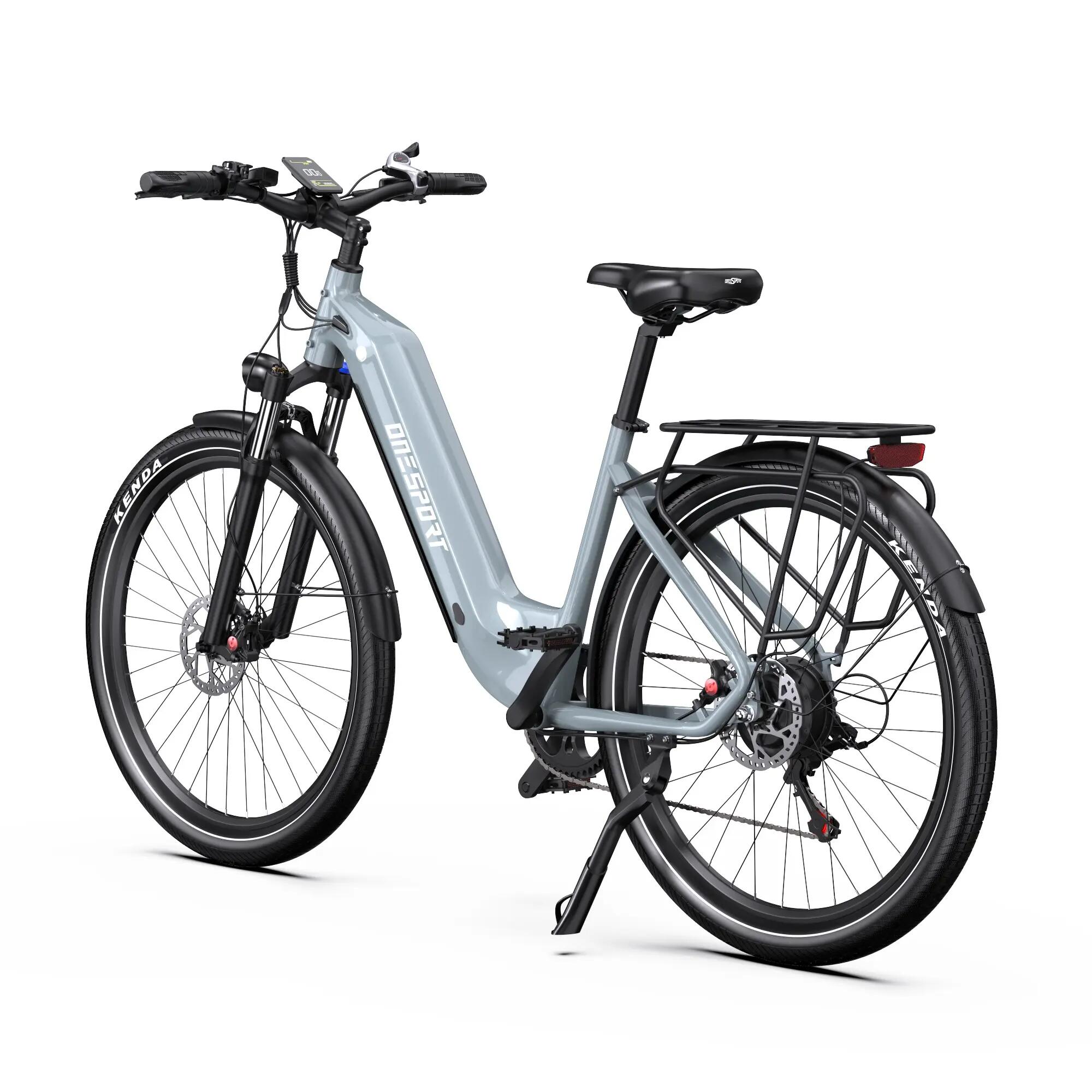
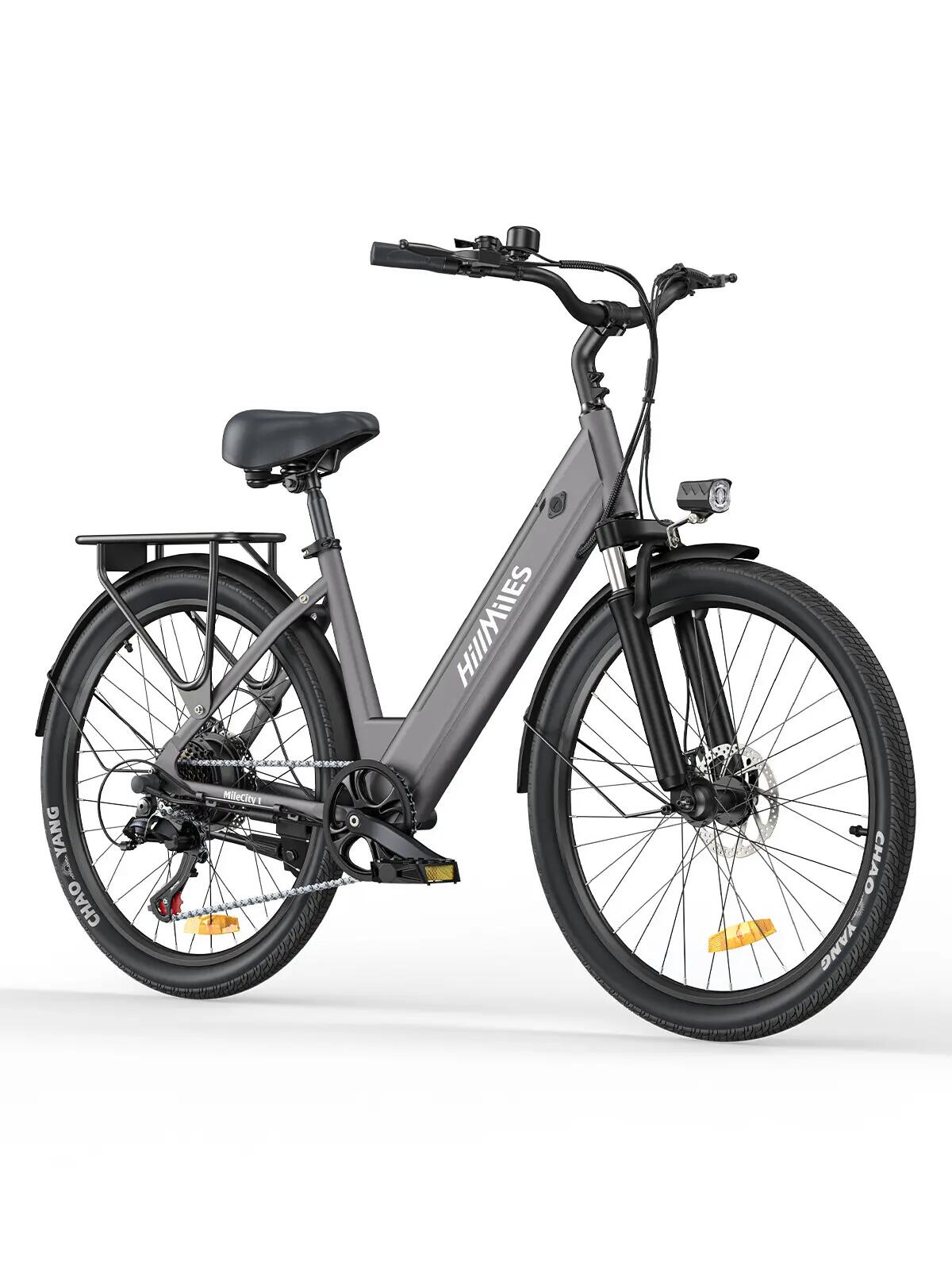
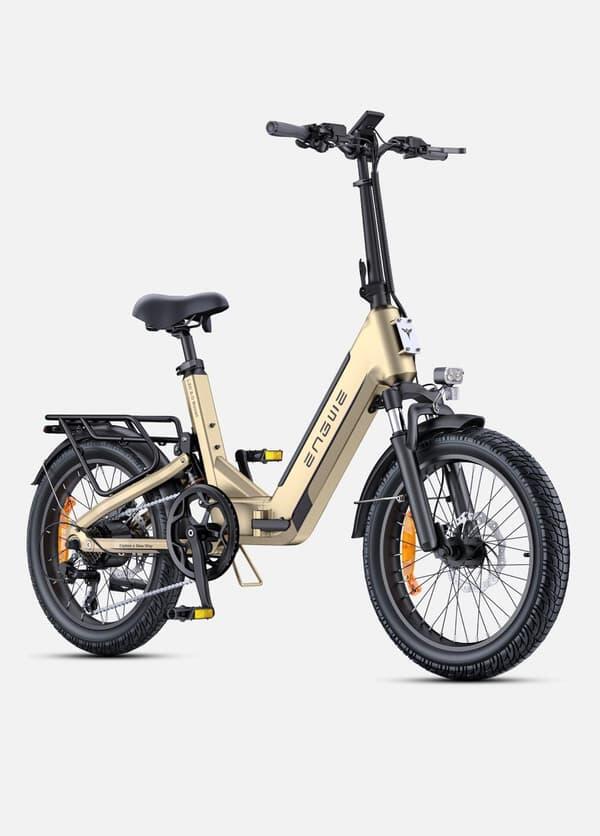
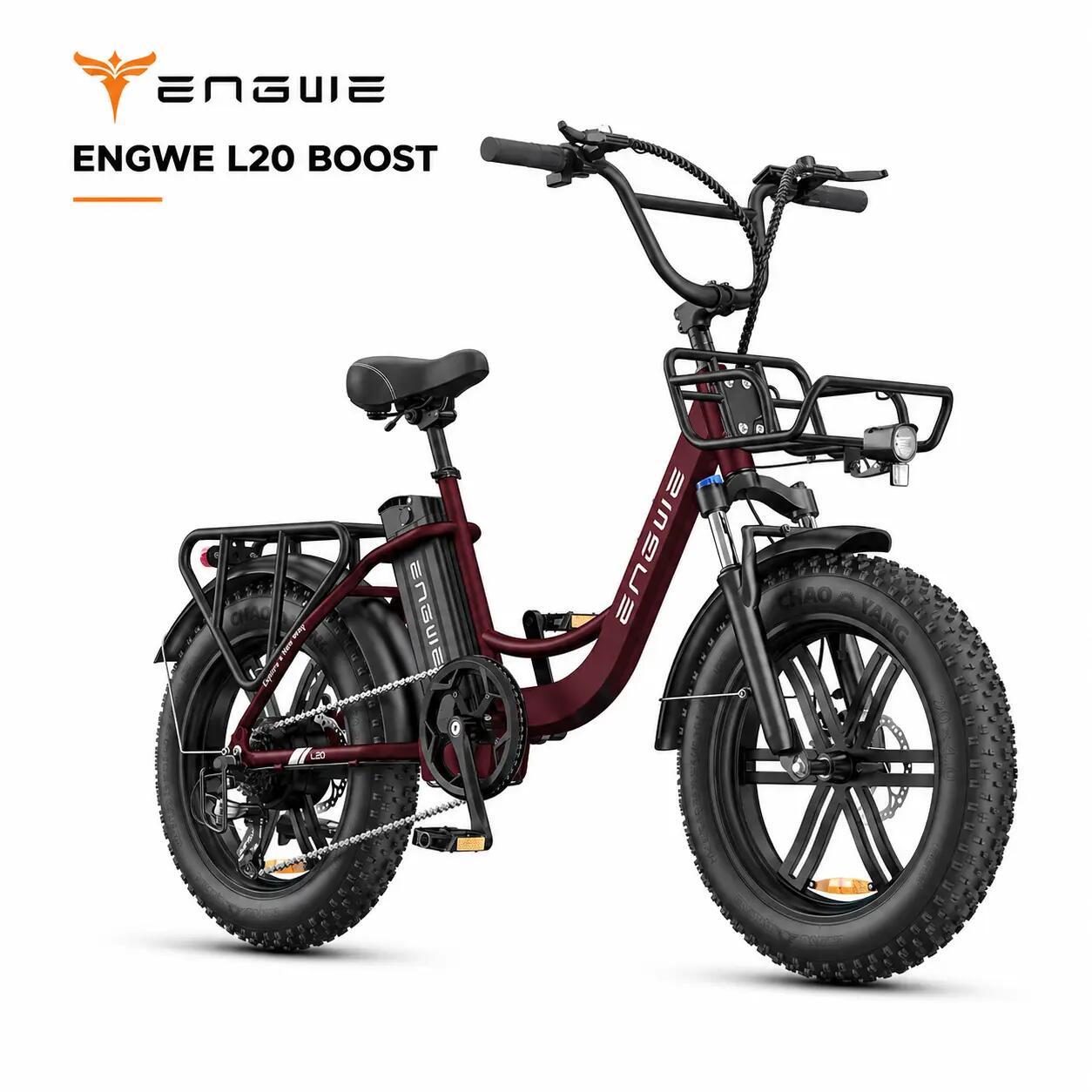
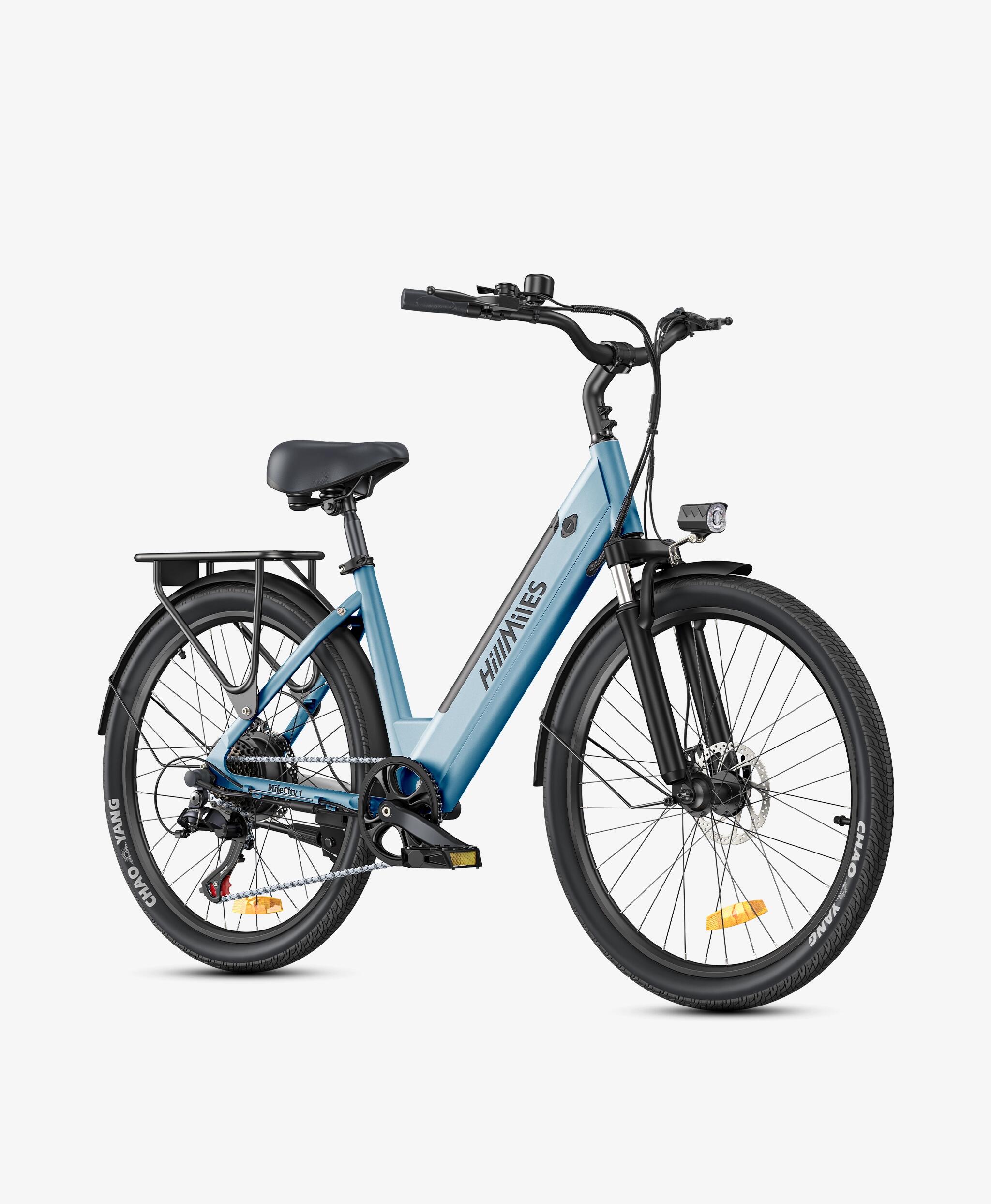
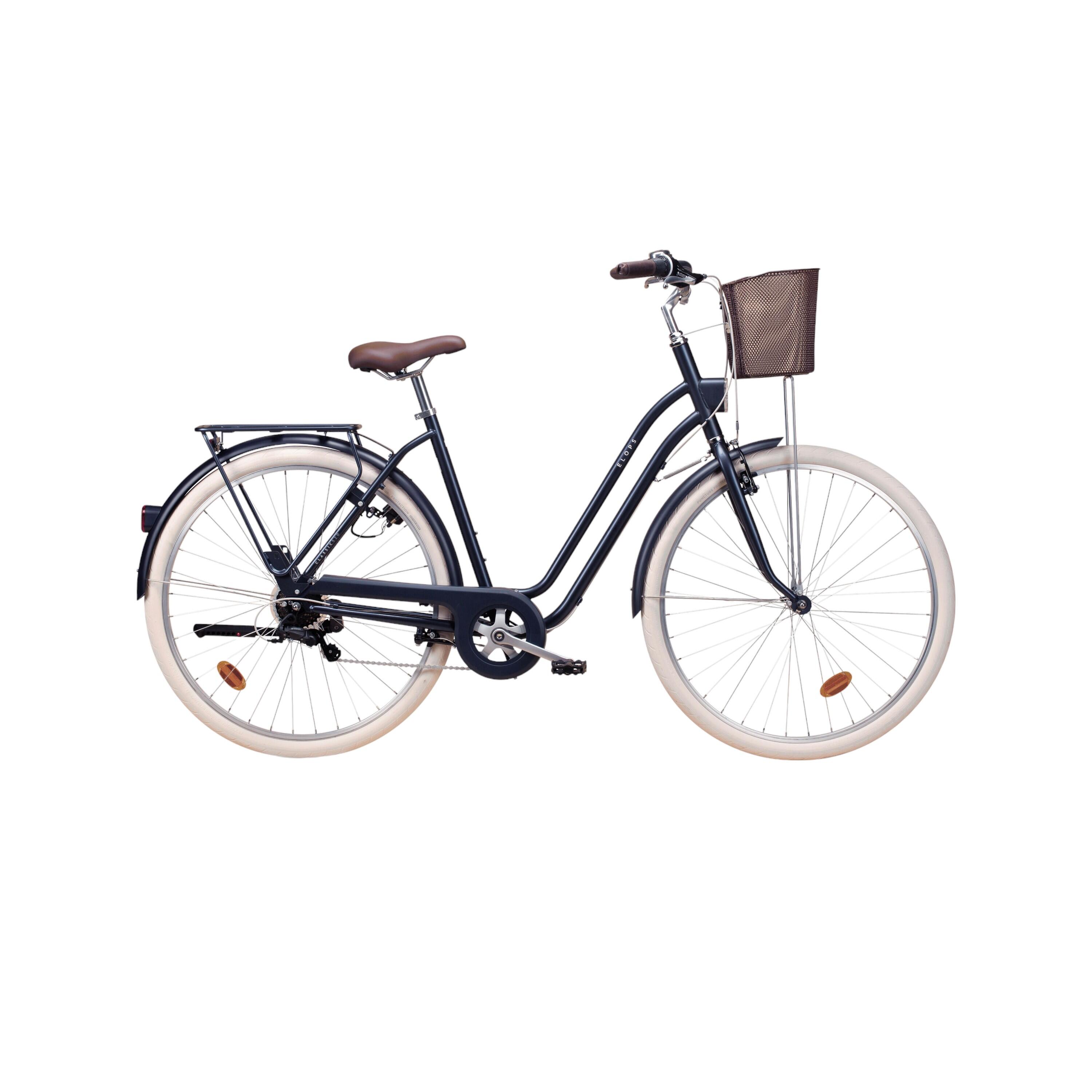
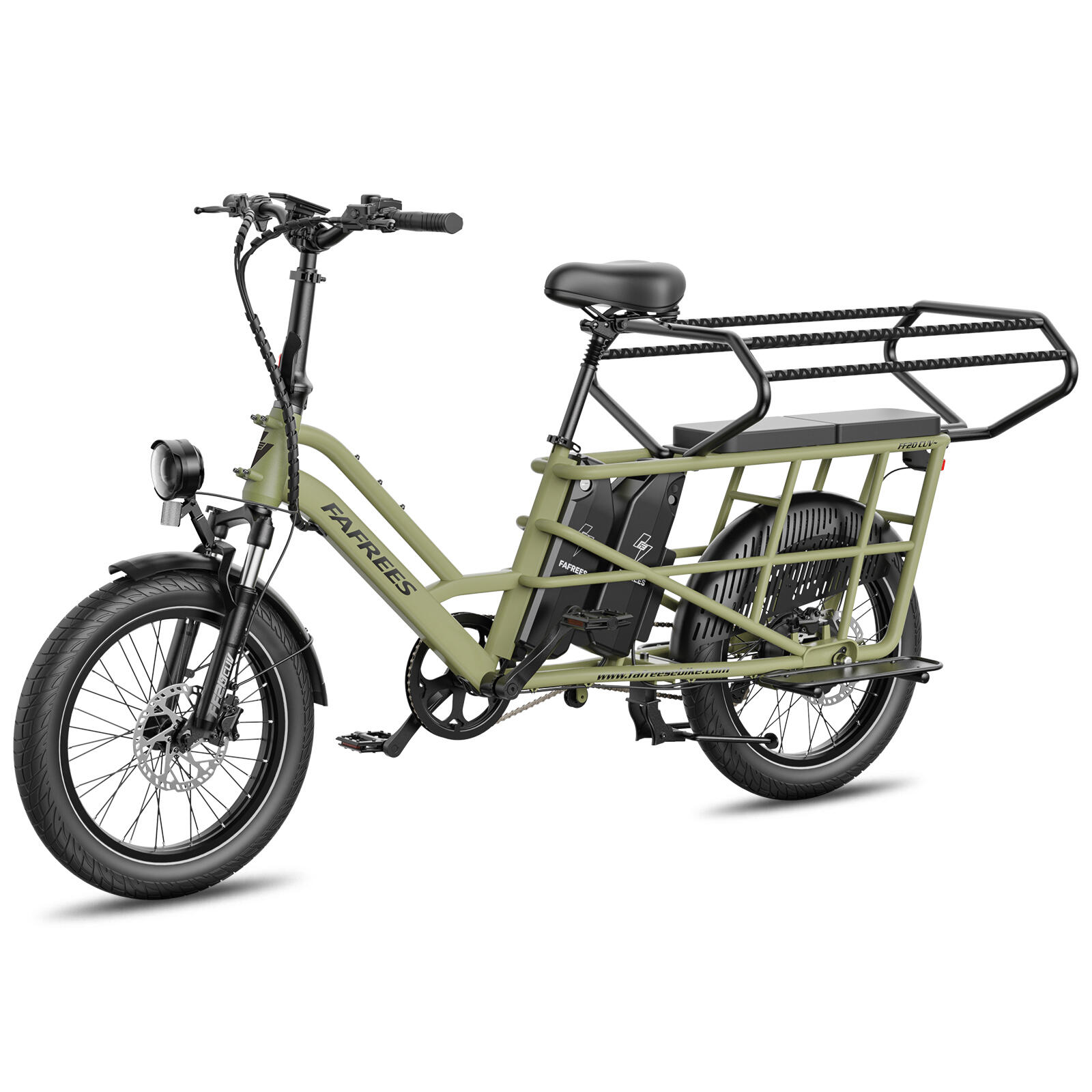
If you stop frequently, carry luggage or use a rear child seat, getting on and off can be easier with a step through frame electric assist city bike. The lower frame reduces how high you need to lift your leg, which can be useful in traffic or when the bike is loaded. Check that the riding position, saddle height and handlebar reach still suit your body, as step-through geometry does not replace proper sizing. Pro tip: practise starting and stopping with your normal luggage load. Extra rear weight changes balance at low speed, so smooth braking and a stable foot position become especially important when junctions or traffic lights interrupt the ride.

What is different about an automatic electric city bike?

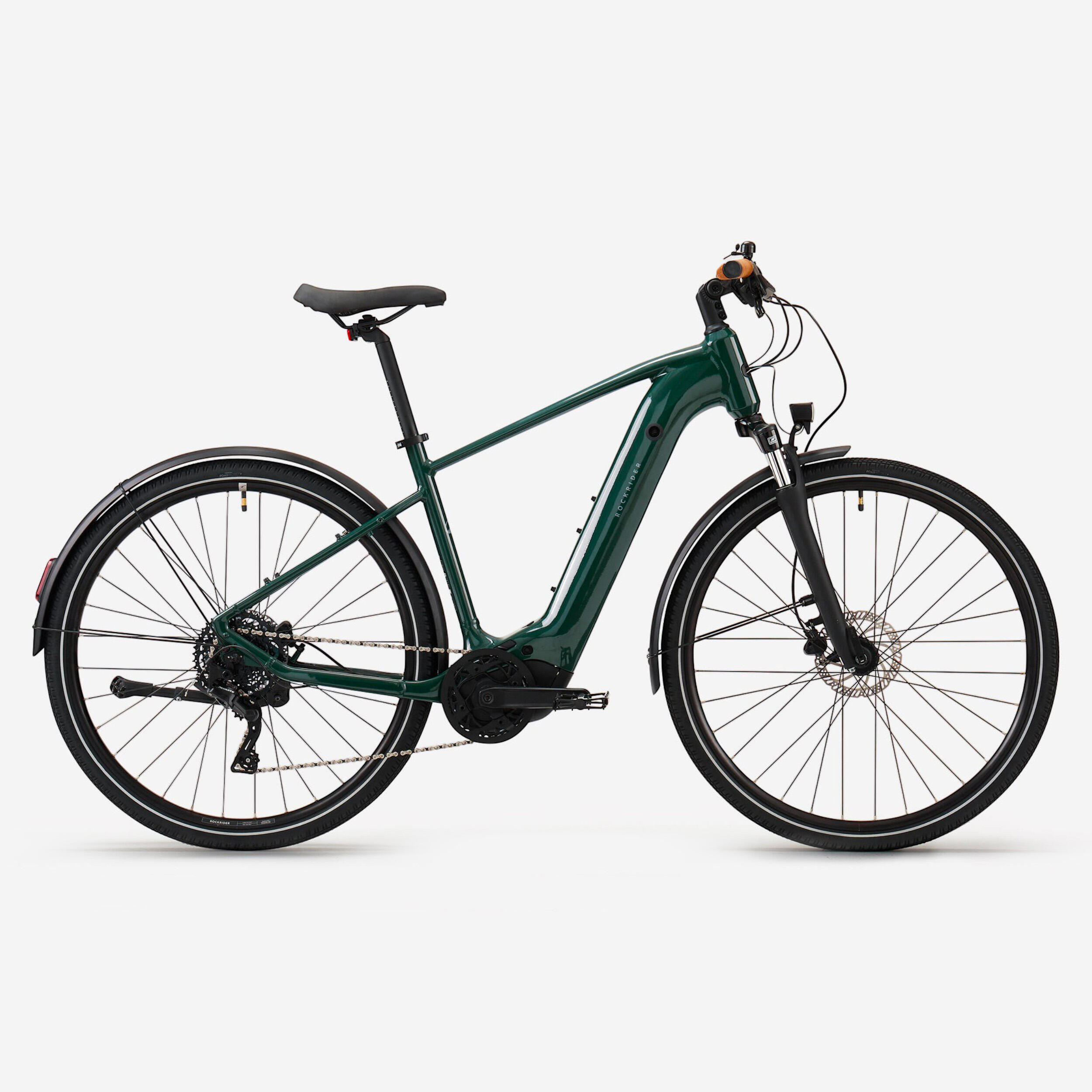
Instead of asking you to select conventional gears, a high frame automatic electric city bike can automatically adjust the transmission as terrain and pedalling effort change. Decathlon's Owuru system lets the rider set a preferred cadence, then the continuously variable transmission alters its ratio to help maintain that rhythm. This can reduce the number of controls you need to manage during stop-start urban riding. Pro tip: choose a cadence that feels sustainable rather than simply setting the highest possible value. A smooth pedalling rhythm can help you use the assistance more consistently on rolling roads and repeated starts.

How do city e-bikes compare with other city bikes?

The main difference is the addition of a motor, battery and control system, which can reduce the effort needed on hills, longer commutes and loaded journeys. Conventional city bikes are usually lighter and mechanically simpler, while electric models add charging, battery care and extra system weight to ownership. Both formats can include practical urban features such as racks, mudguards, lights and security fittings. Pro tip: choose electrical assistance when it solves a regular problem such as distance, hills or carrying weight. If most rides are short and flat, a standard city bike may be easier to lift, store and maintain.

What should you check before buying a city e-bike?

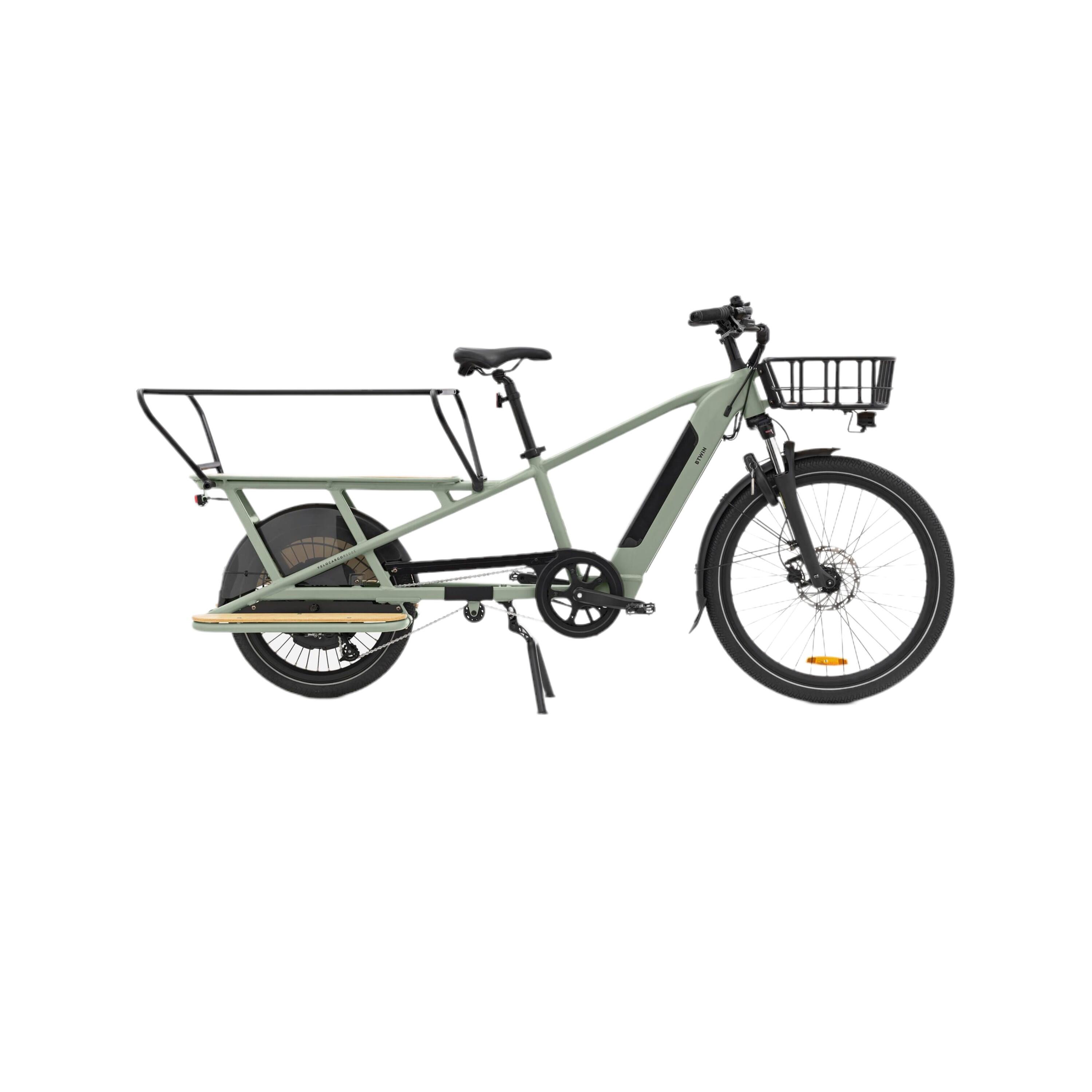
Frame fit, battery removal, charging access, luggage capacity, braking and motor behaviour should all match your normal routine. Looking across other bikes can also help you decide whether an electric city model suits you better than a hybrid, cargo bike or folding option. Removable batteries can be useful when the bike is stored away from a socket, while integrated racks and stable stands matter if you regularly carry shopping or work bags. Pro tip: check tyre pressure regularly because under-inflated tyres increase rolling resistance and can reduce battery efficiency. Avoid pressure washing electrical areas, keep the drivetrain clean and lubricated, and store the battery according to the manufacturer's guidance during longer periods without use.