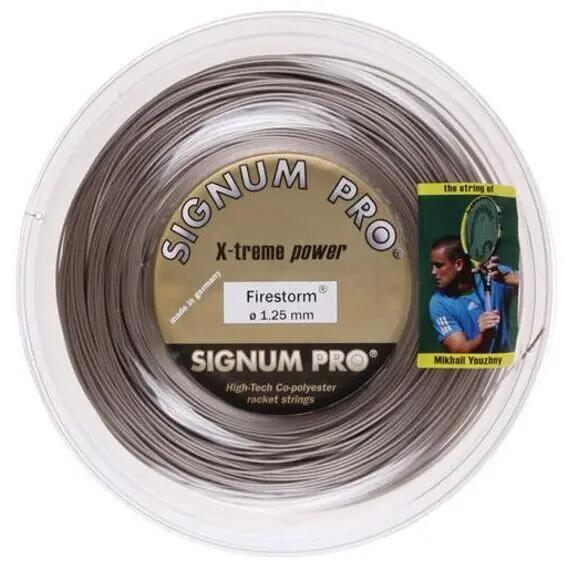
Current price {{currentPrice}} €220.00
Tennis Strings
Refresh your racket and reignite your game with tennis strings tuned to match how you play. Choose from durable polyester for power players or comfortable multifilament strings for a softer feel, with options for spin, control, or comfort. Fresh strings sharpen every swing and get you back on court.
- Marketplace -Online OnlyCurrent price {{currentPrice}} €10.00€0.84/mSold and shipped by nordicdots™
- Reviews.votesAriaCurrent price {{currentPrice}} €11.00€0.92/m
- Marketplace -Online OnlyCurrent price {{currentPrice}} €127.80Sold and shipped by Sports Lab IE
- Reviews.votesAriaCurrent price {{currentPrice}} €11.00€0.92/m
- Marketplace -Online OnlyCurrent price {{currentPrice}} €92.50€9.25/unitSold and shipped by Sport & Go EU
- Reviews.votesAriaCurrent price {{currentPrice}} €11.00
- Reviews.votesAriaCurrent price {{currentPrice}} €105.00€0.53/m
- Reviews.votesAriaCurrent price {{currentPrice}} €85.00
- Marketplace -Online Only4 coloursCurrent price {{currentPrice}} €167.35Sold and shipped by Sports Lab IE
- Marketplace -Online Only4 coloursCurrent price {{currentPrice}} €167.40€380.46/mSold and shipped by Sports Lab IE
- Marketplace -Online OnlyCurrent price {{currentPrice}} €76.00€25.17/mSold and shipped by Sport & Go EU
- Marketplace -Online OnlyCurrent price {{currentPrice}} €77.00€183.34/mSold and shipped by Sport & Go EU
- Reviews.votesAriaCurrent price {{currentPrice}} €11.00€0.92/m
- Reviews.votesAriaCurrent price {{currentPrice}} €85.00€0.43/m
- Reviews.votesAriaCurrent price {{currentPrice}} €85.00€0.43/m
- Last chanceReviews.votesAriaCurrent price {{currentPrice}} €11.00€0.92/m
- Reviews.votesAriaCurrent price {{currentPrice}} €140.00
- Reviews.votesAriaCurrent price {{currentPrice}} €110.00€0.55/m
- Reviews.votesAriaCurrent price {{currentPrice}} €145.00
- Reviews.votesAriaCurrent price {{currentPrice}} €13.00
- Reviews.votesAriaCurrent price {{currentPrice}} €105.00
- Reviews.votesAriaCurrent price {{currentPrice}} €115.00
- Marketplace -Online OnlyCurrent price {{currentPrice}} €102.50€10.25/unitSold and shipped by Sport & Go EU
- Marketplace -Online OnlyCurrent price {{currentPrice}} €133.50 17% offLowest price: €162.00Starting on 27/10/2026 and valid for the entire duration of the promoSold and shipped by Sports Lab IE
- Marketplace -Online OnlyCurrent price {{currentPrice}} €210.05Sold and shipped by Sports Lab IE
- Marketplace -Online OnlyCurrent price {{currentPrice}} €92.50€220.24/mSold and shipped by Sport & Go EU
- Marketplace -Online OnlyCurrent price {{currentPrice}} €113.00€11.30/unitSold and shipped by Sport & Go EU
- Marketplace -Online OnlyFromCurrent price {{currentPrice}} €56.00€5.60/unitSold and shipped by Sport & Go EU
- Marketplace -Online OnlyCurrent price {{currentPrice}} €76.00€25.17/mSold and shipped by Sport & Go EU
- Reviews.votesAriaCurrent price {{currentPrice}} €14.00€1.17/m
- Reviews.votesAriaCurrent price {{currentPrice}} €14.00€1.15/m
- Marketplace -Online OnlyCurrent price {{currentPrice}} €77.00€183.34/mSold and shipped by Sport & Go EU
- Marketplace -Online OnlyCurrent price {{currentPrice}} €113.00€11.30/unitSold and shipped by Sport & Go EU
- Marketplace -Online OnlyCurrent price {{currentPrice}} €108.00€257.15/mSold and shipped by Sport & Go EU
- Marketplace -Online OnlyCurrent price {{currentPrice}} €112.00€266.67/mSold and shipped by Sport & Go EU
- Marketplace -Online OnlyCurrent price {{currentPrice}} €108.00€257.15/mSold and shipped by Sport & Go EU
- Marketplace -Online OnlyCurrent price {{currentPrice}} €92.50€220.24/mSold and shipped by Sport & Go EU
- Marketplace -Online OnlyCurrent price {{currentPrice}} €92.50€220.24/mSold and shipped by Sport & Go EU
- Marketplace -Online OnlyCurrent price {{currentPrice}} €112.00€266.67/mSold and shipped by Sport & Go EU