31 items
4.5/5 based on 9940 reviews collected online and in stores

Triathlon Recovery Snacks FAQs

What should you eat after triathlon training?

After a demanding swim, bike or run session, choose food that provides both carbohydrate and protein while replacing the fluid lost through perspiration. Carbohydrate replenishes the energy used during exercise, while protein supplies amino acids needed during muscle recovery. Decathlon separates full recovery products from lighter protein snacks, helping you match your intake to the duration and intensity of the session. Many recovery bars and drinks are positioned for consumption within approximately 30 minutes after prolonged or intense exercise. A balanced meal eaten soon afterwards may also provide what you need. Use triathlon nutrition and hydration to coordinate recovery with your wider fuelling and drinking plan. Pro tip: prepare your snack before training so it is ready when you finish.

Should you choose a triathlon recovery drink or protein bar?

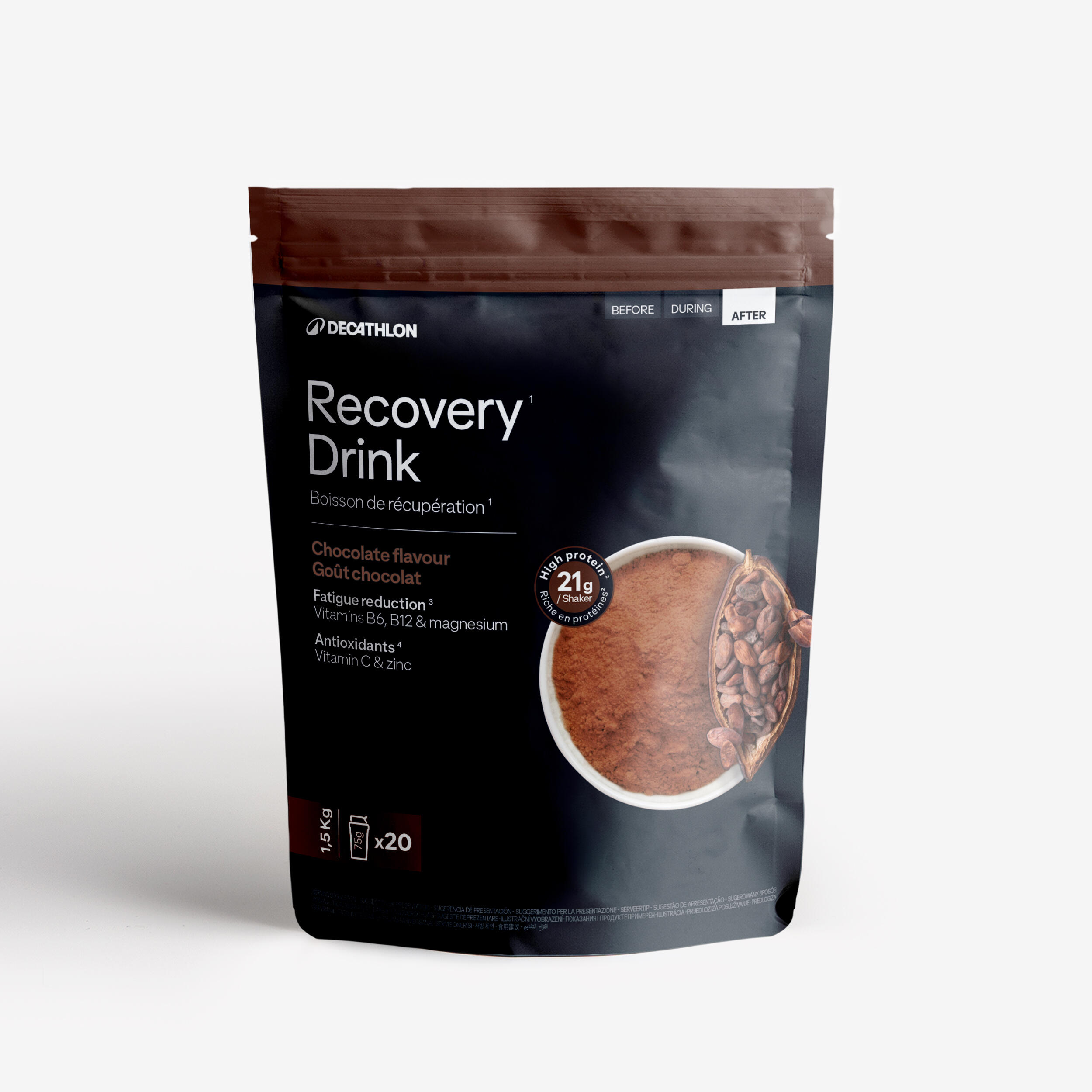
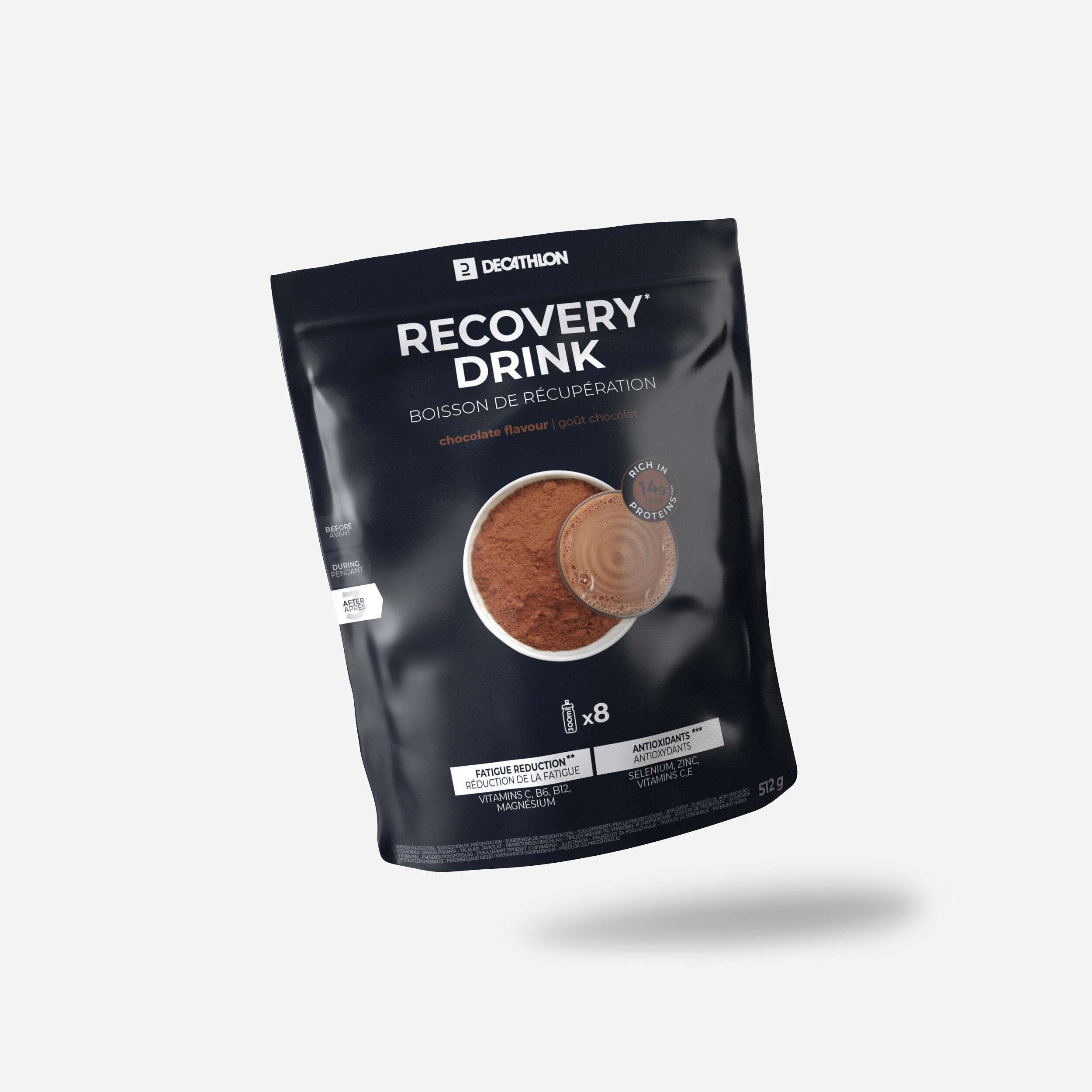
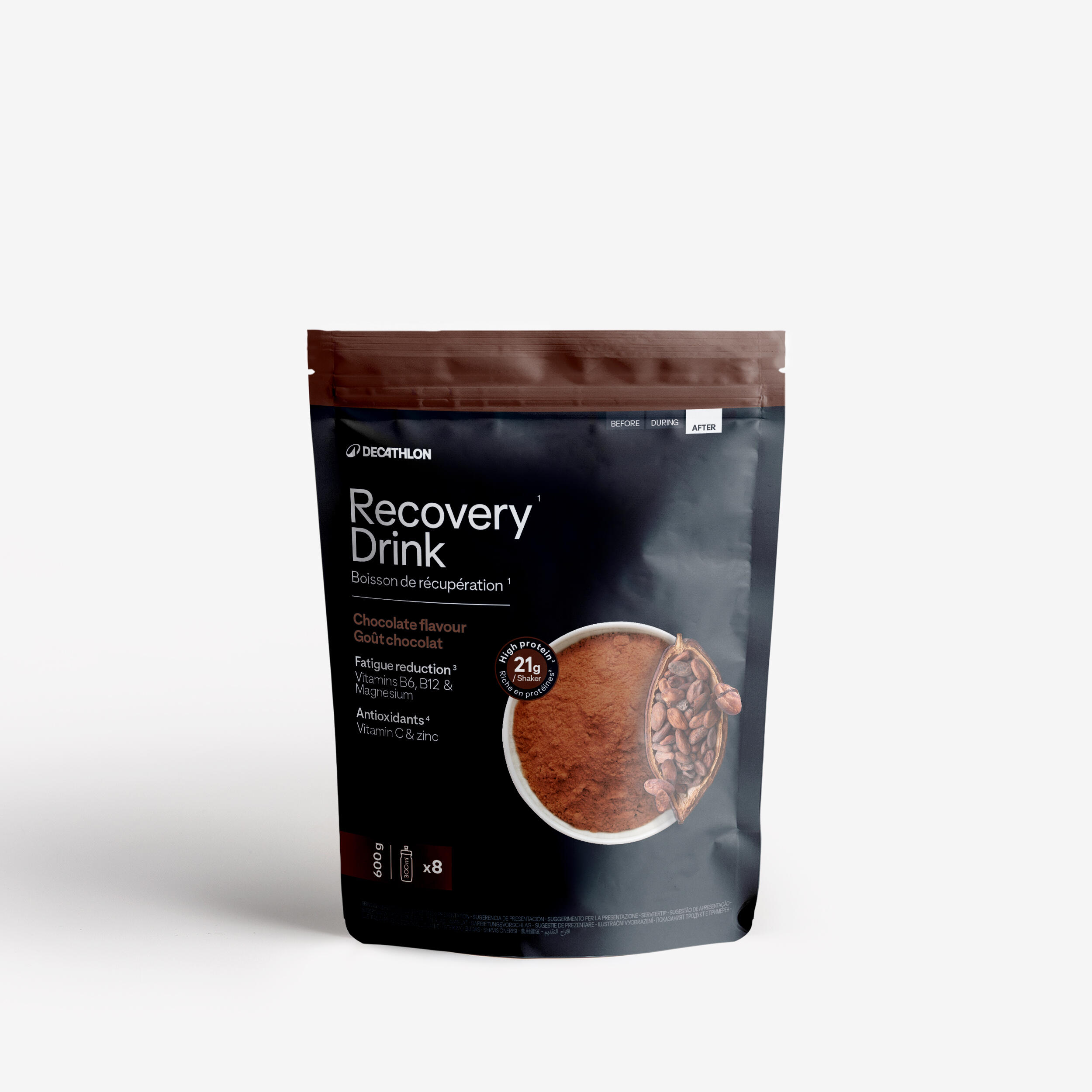
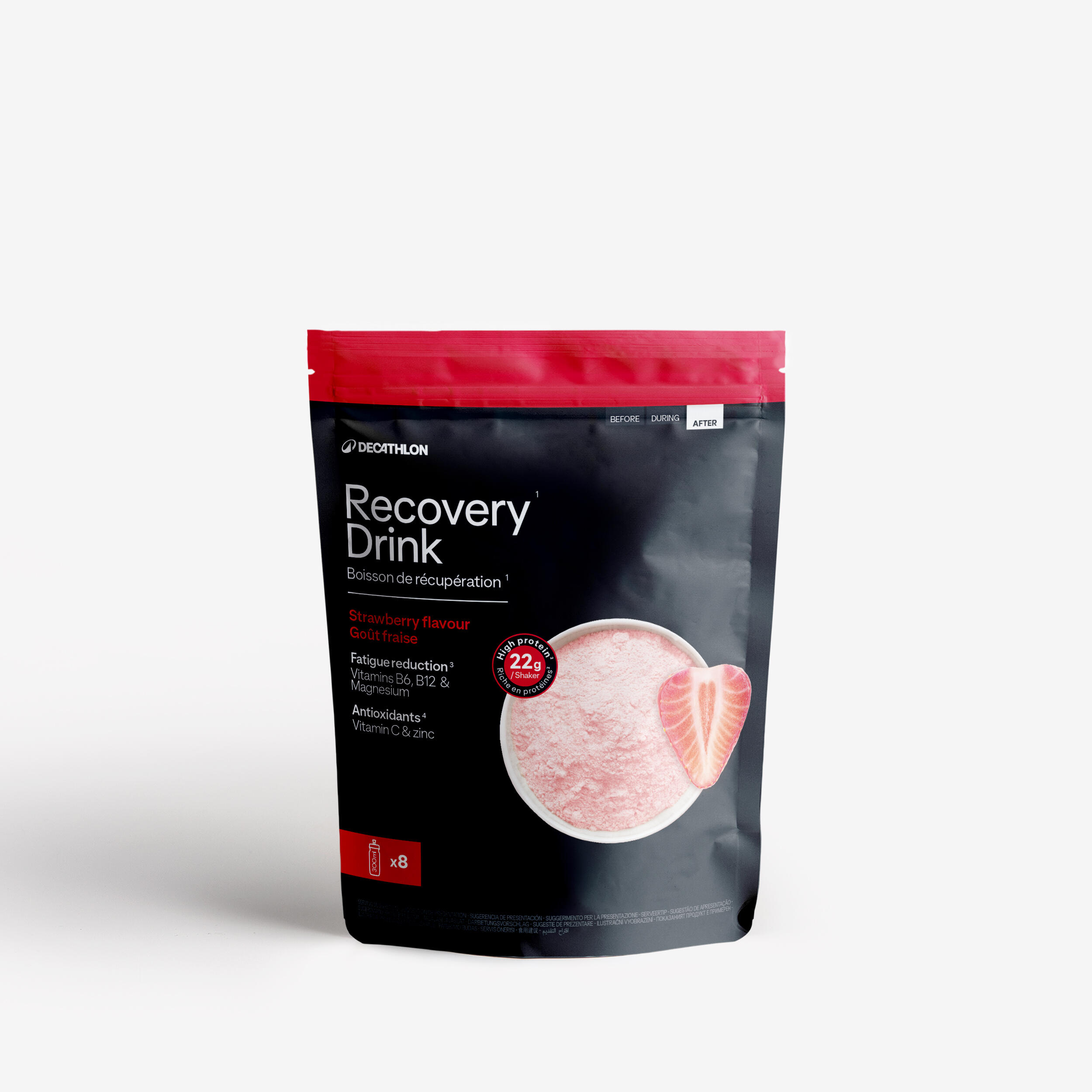
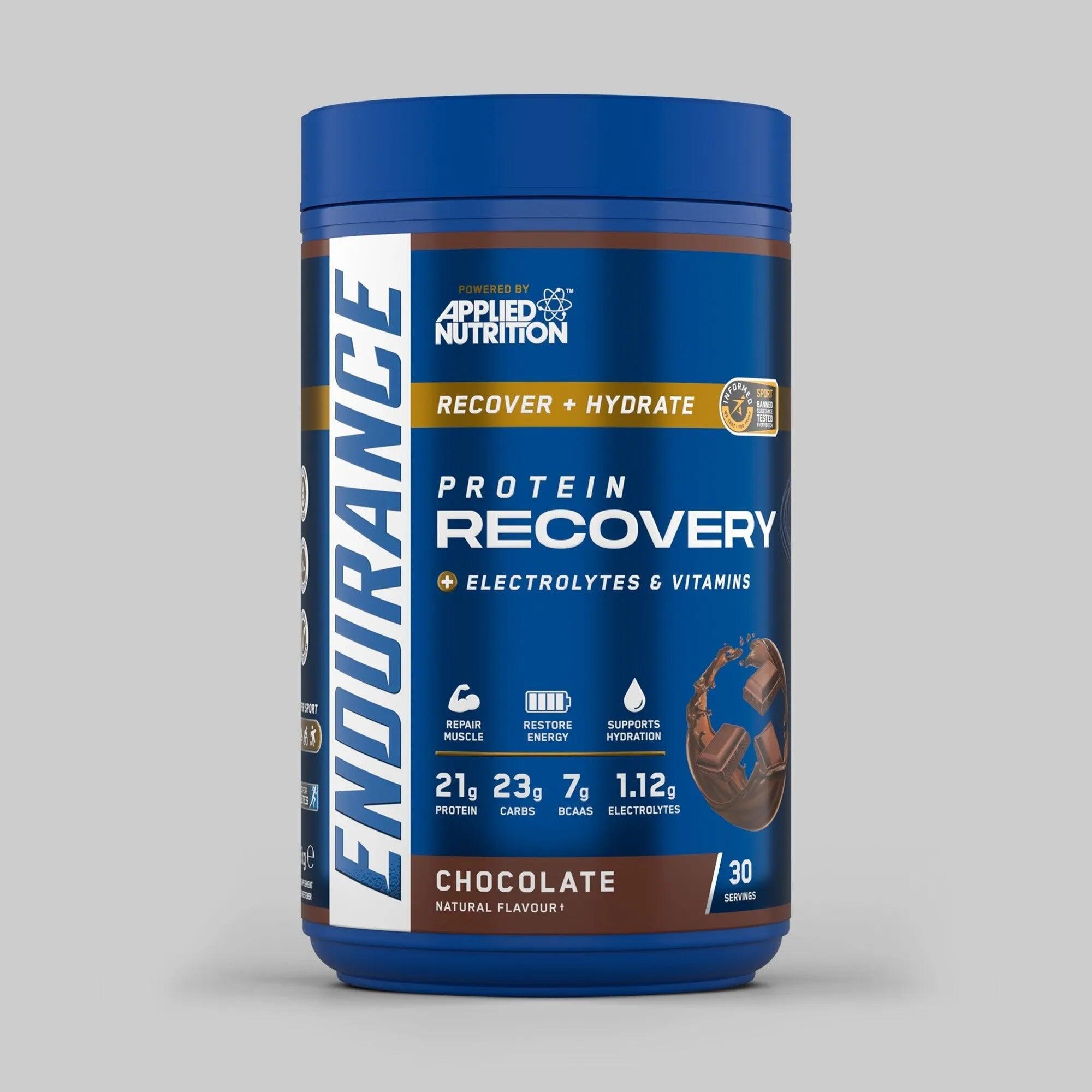
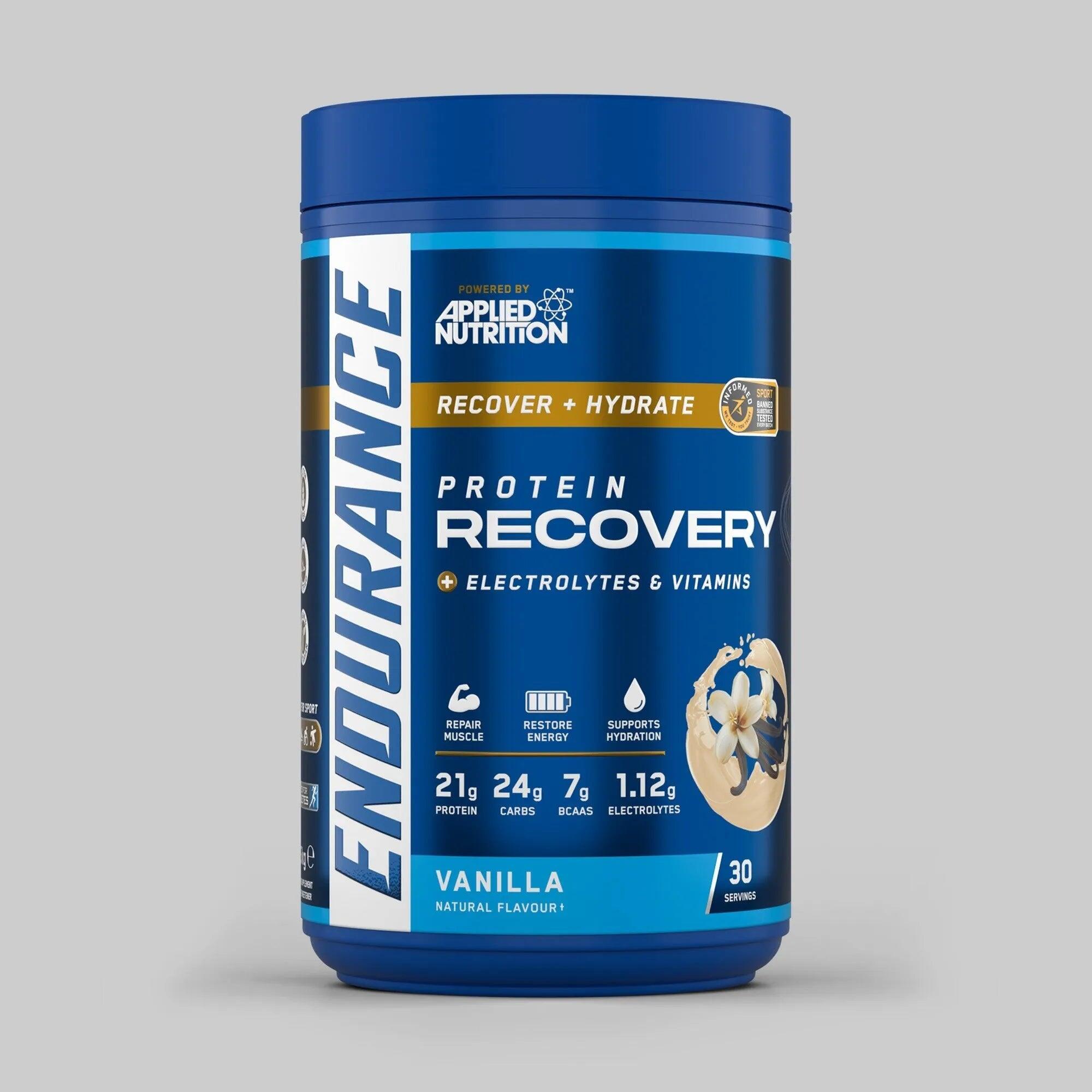
A recovery drink can be practical when solid food feels difficult immediately after intense exercise or when you need a measured combination of carbohydrate, protein and fluid. Decathlon's original high-protein powdered mix for sports recovery combines glucose and fructose carbohydrates with whey, casein, BCAAs and sodium. A prepared serving uses three scoops with 300 ml of water, although the water volume can be adjusted for texture. Protein bars are easier to carry and require no preparation, but they do not replace the water lost through exercise. Choose the format you can digest comfortably and follow with a normal meal when needed.

When should you use a recovery protein bar?

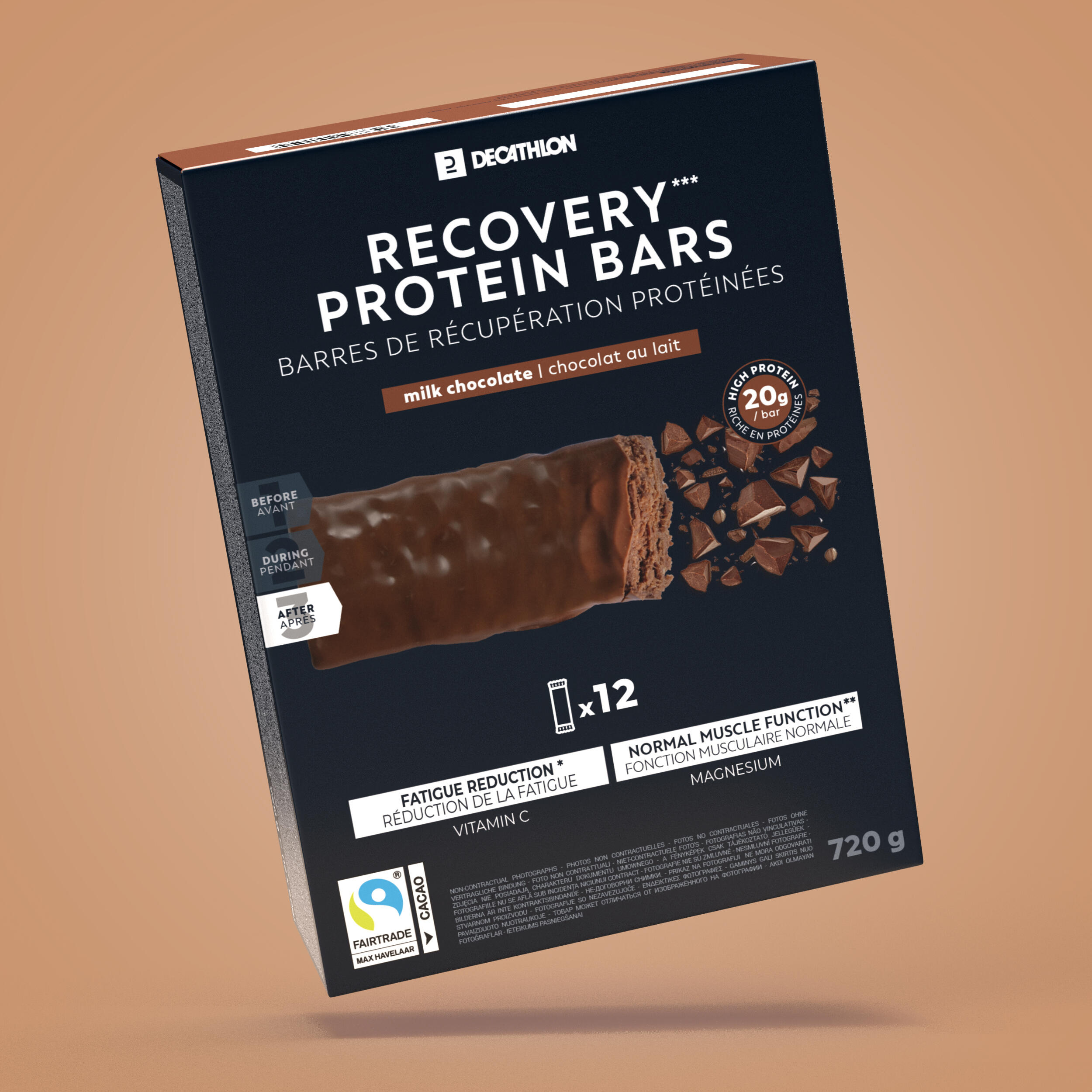
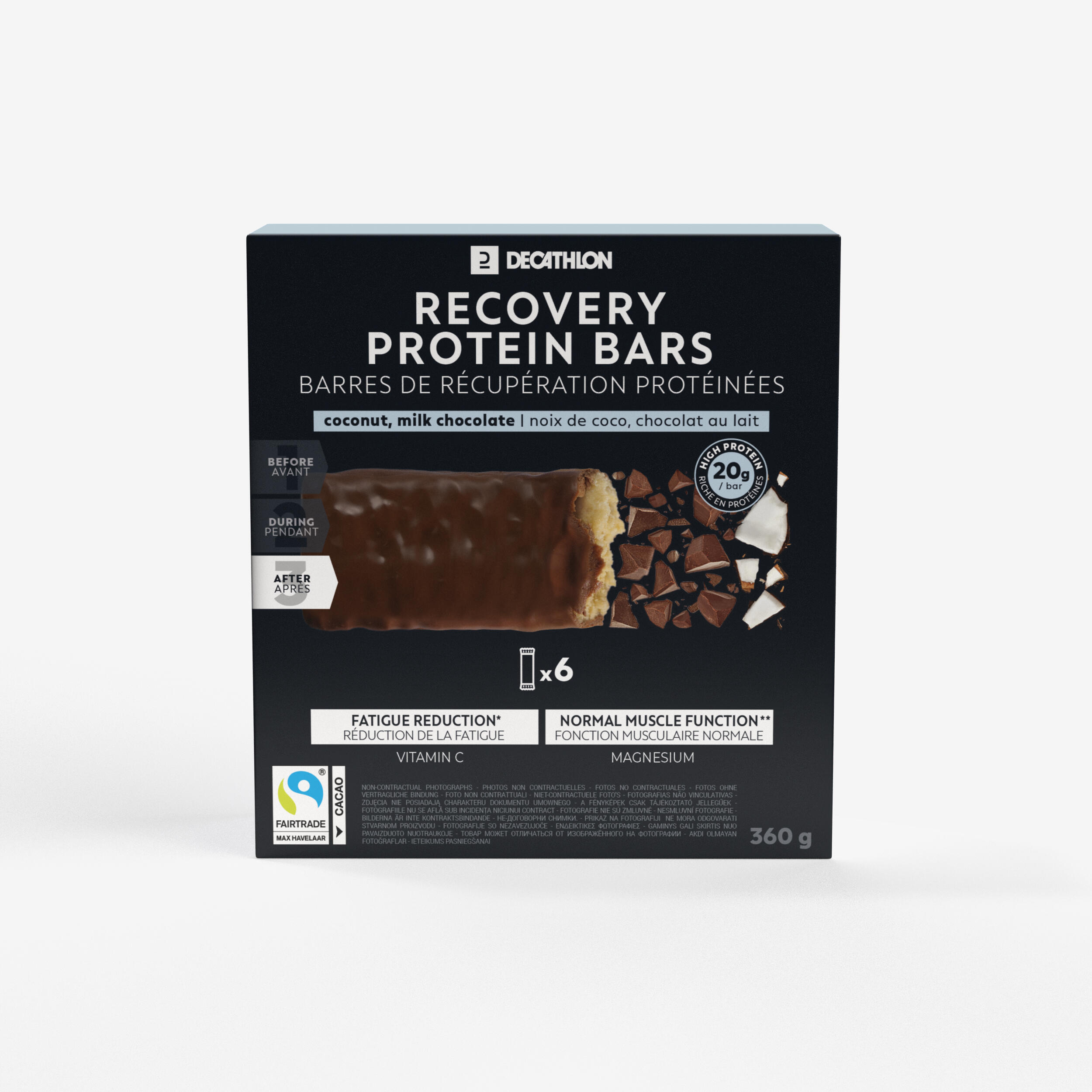
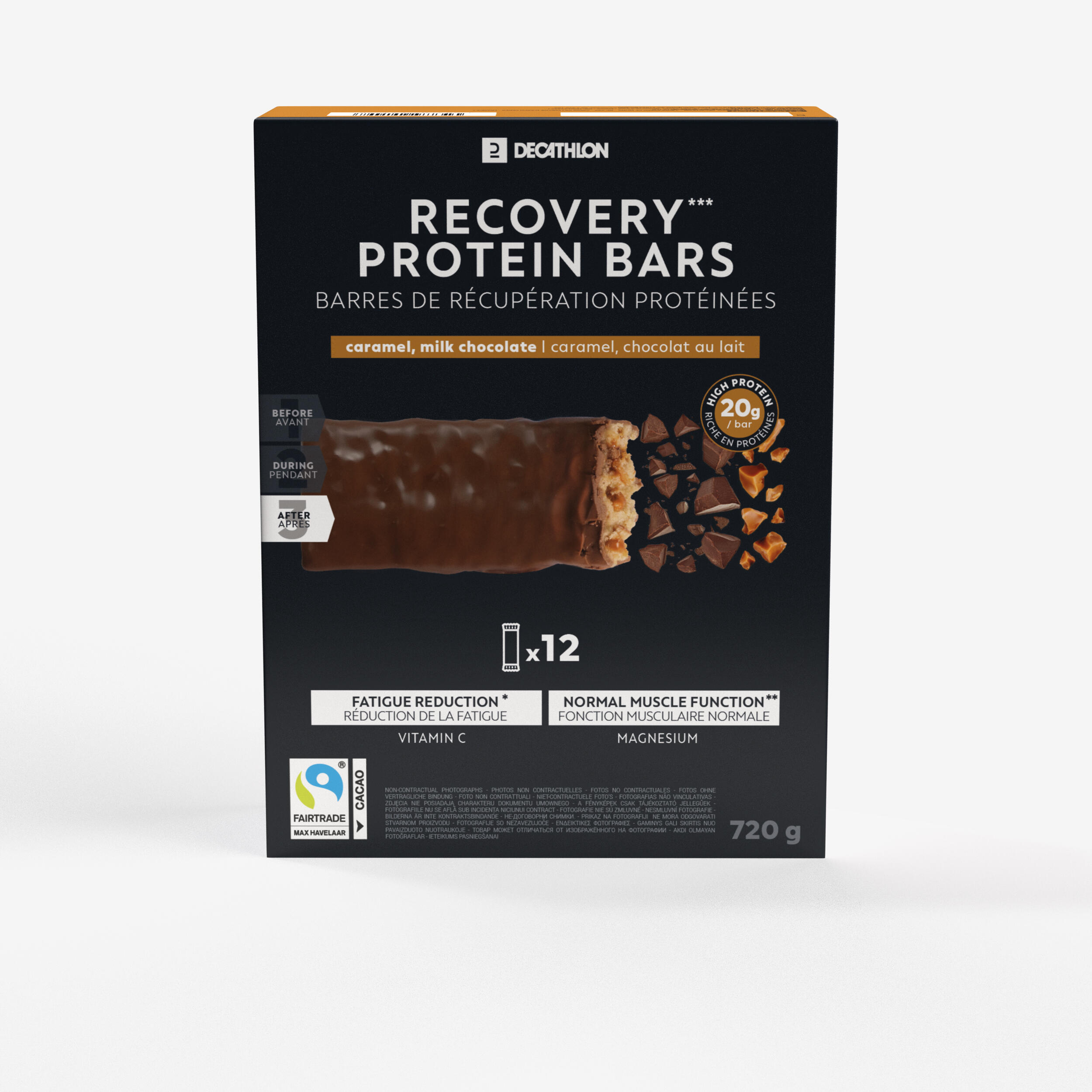
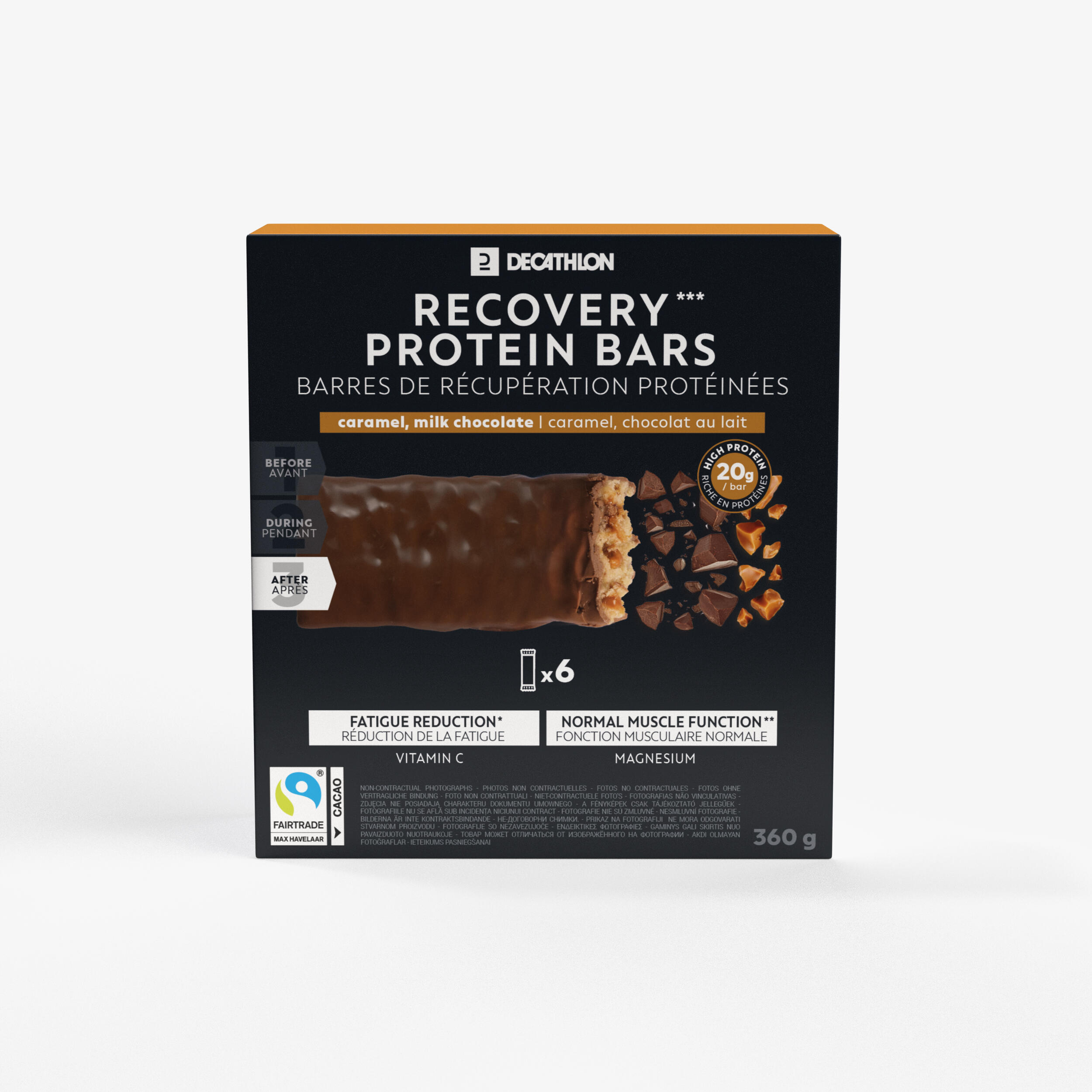
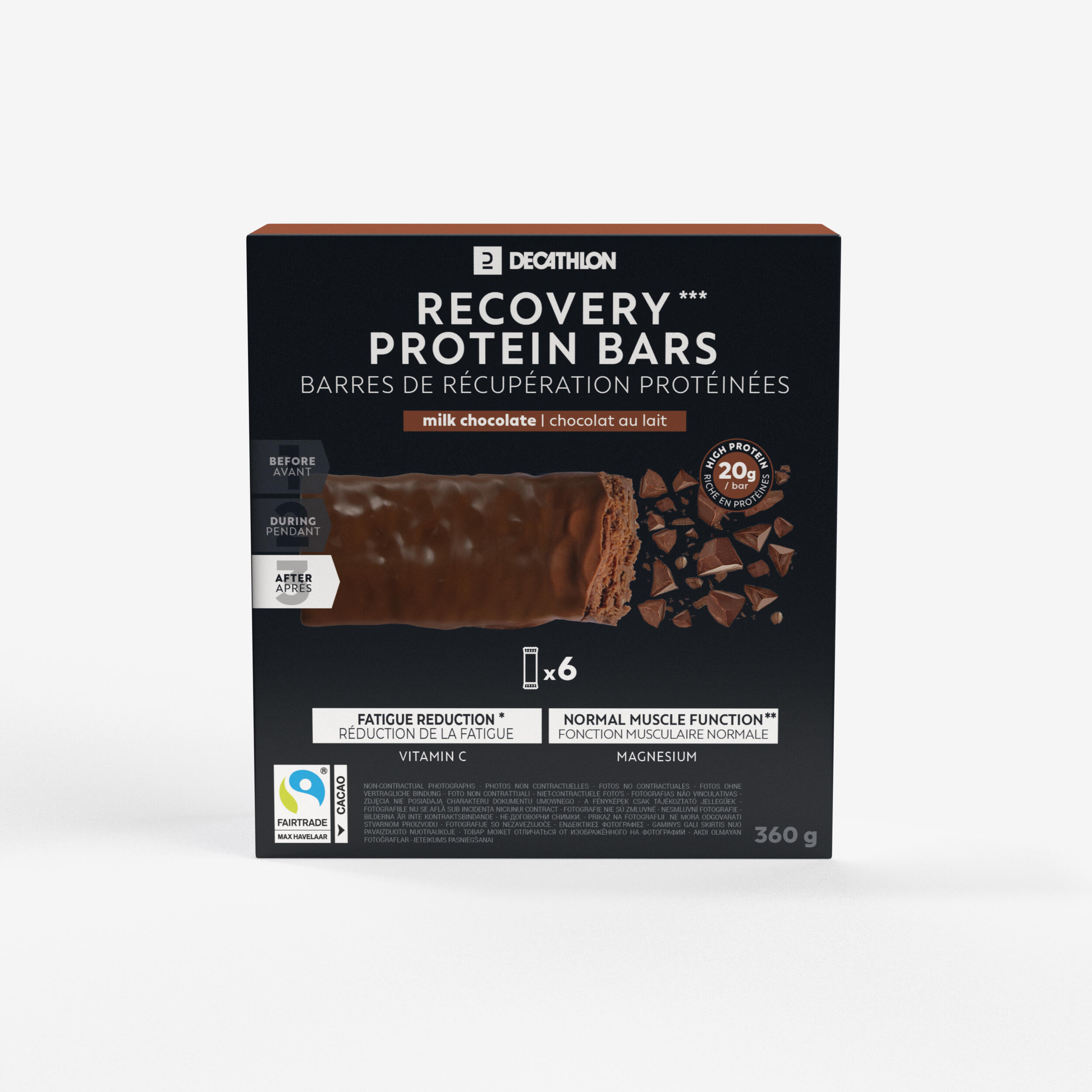
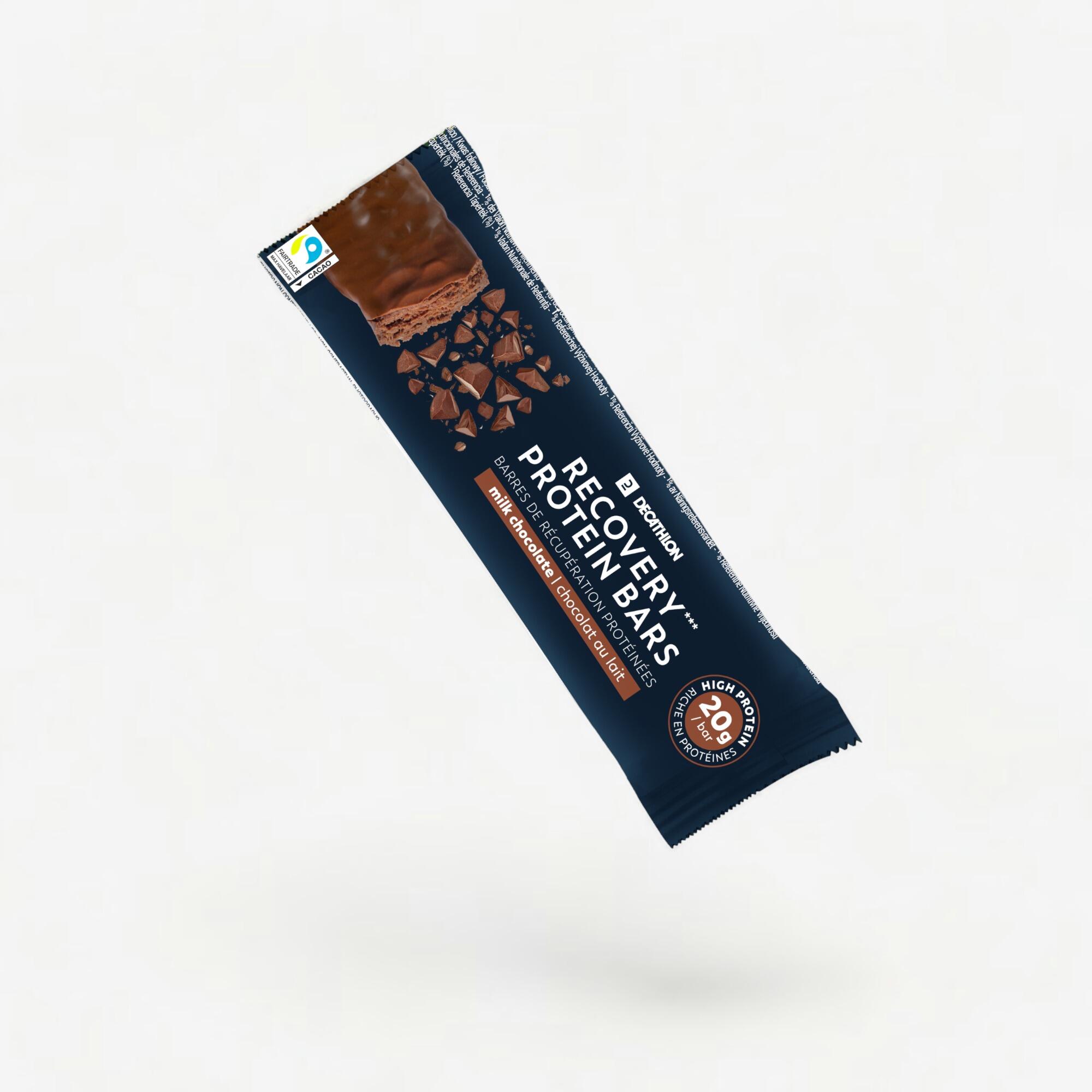
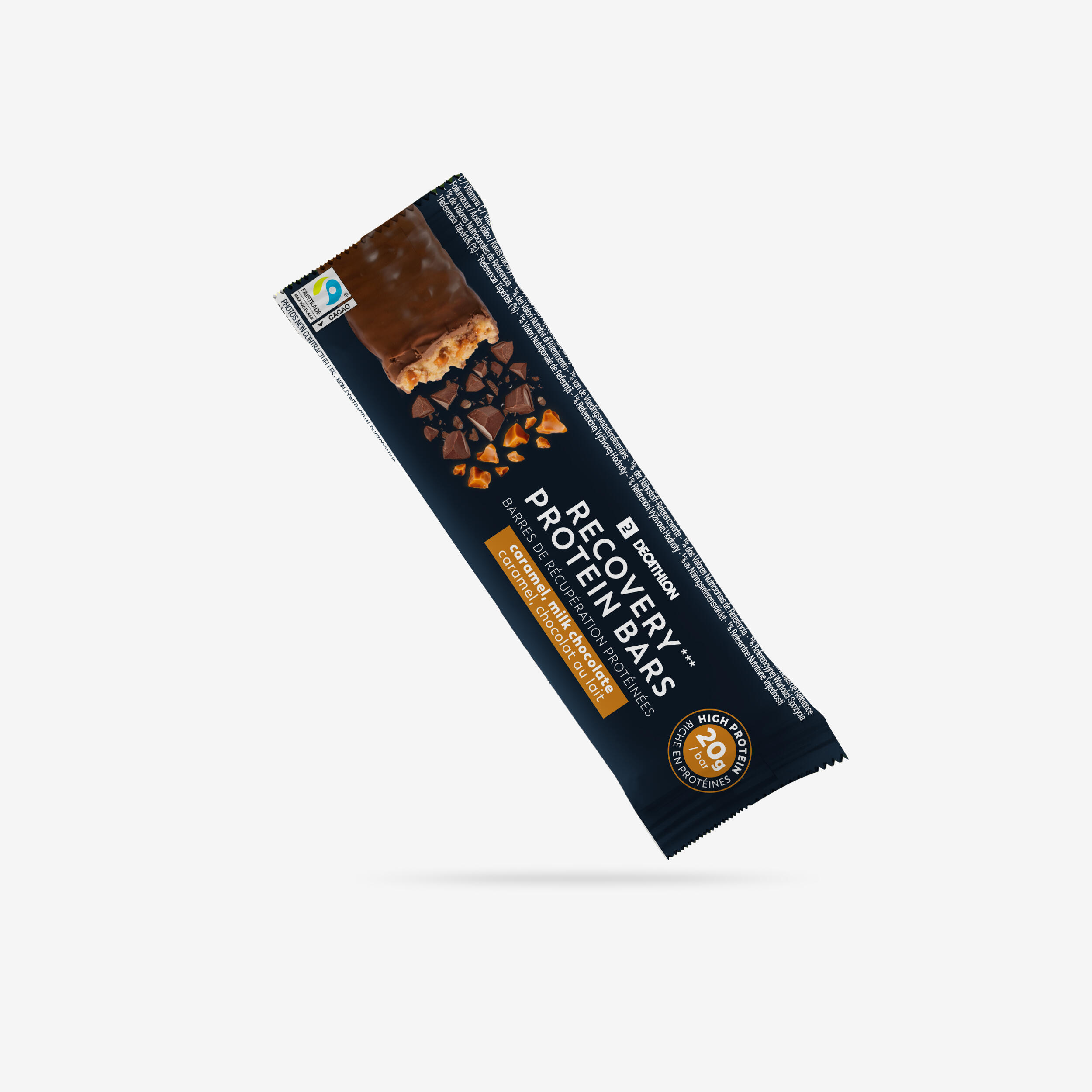
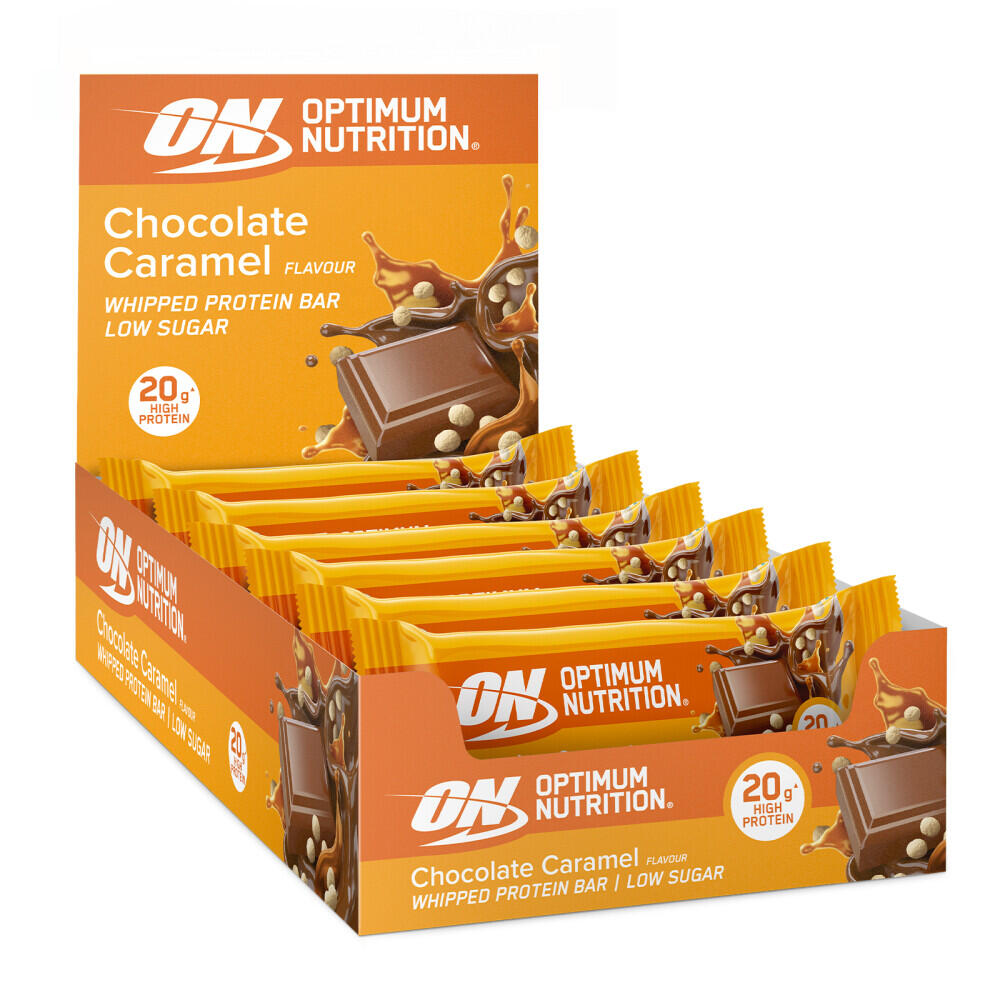
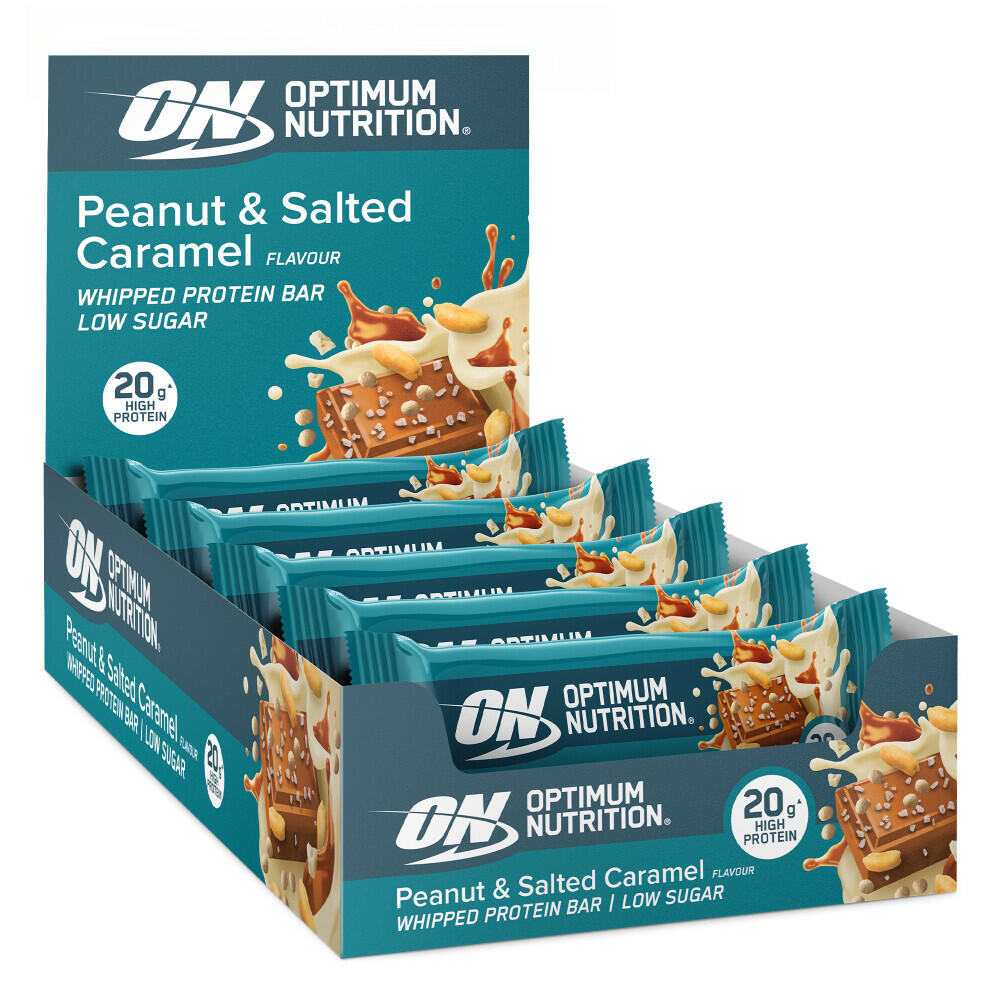
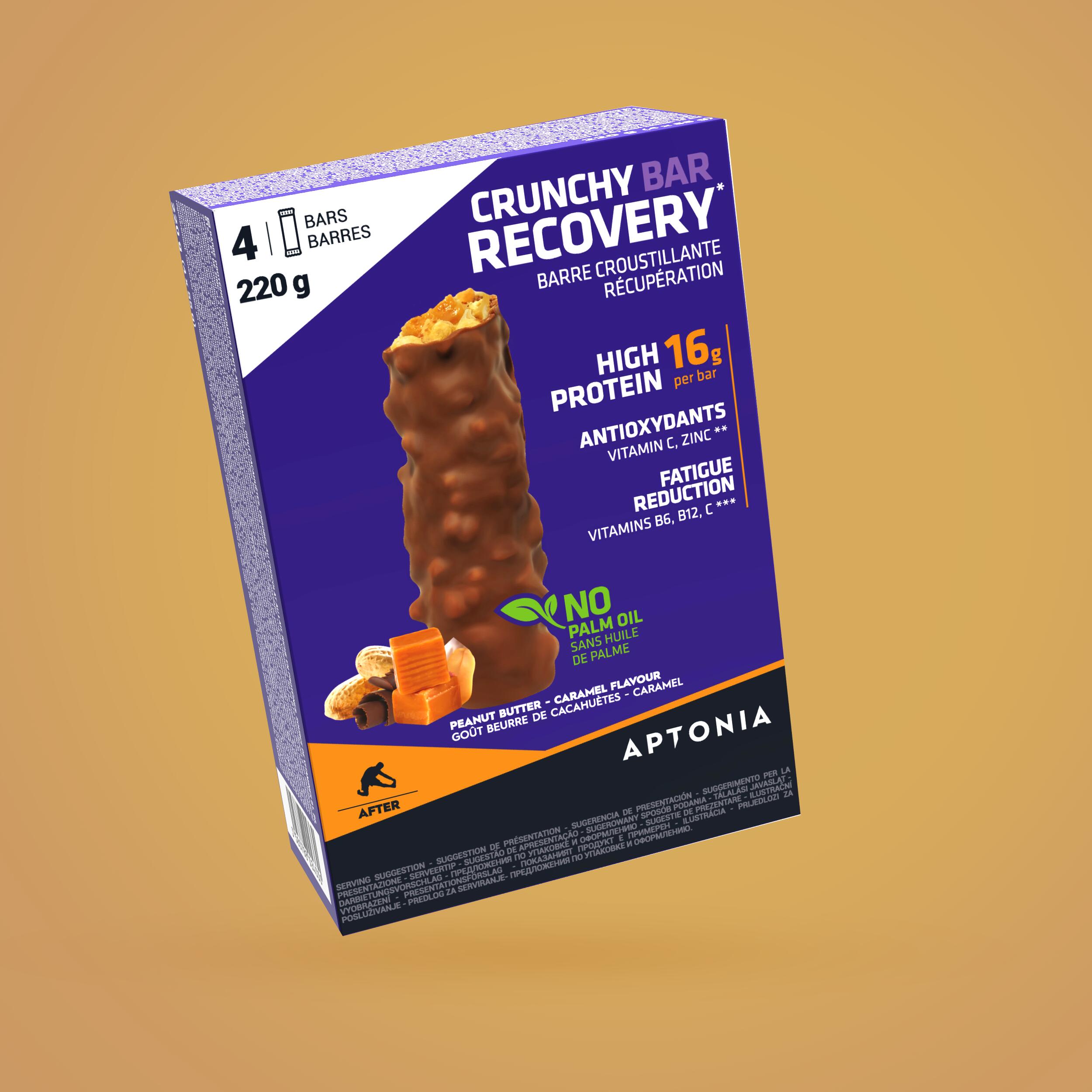
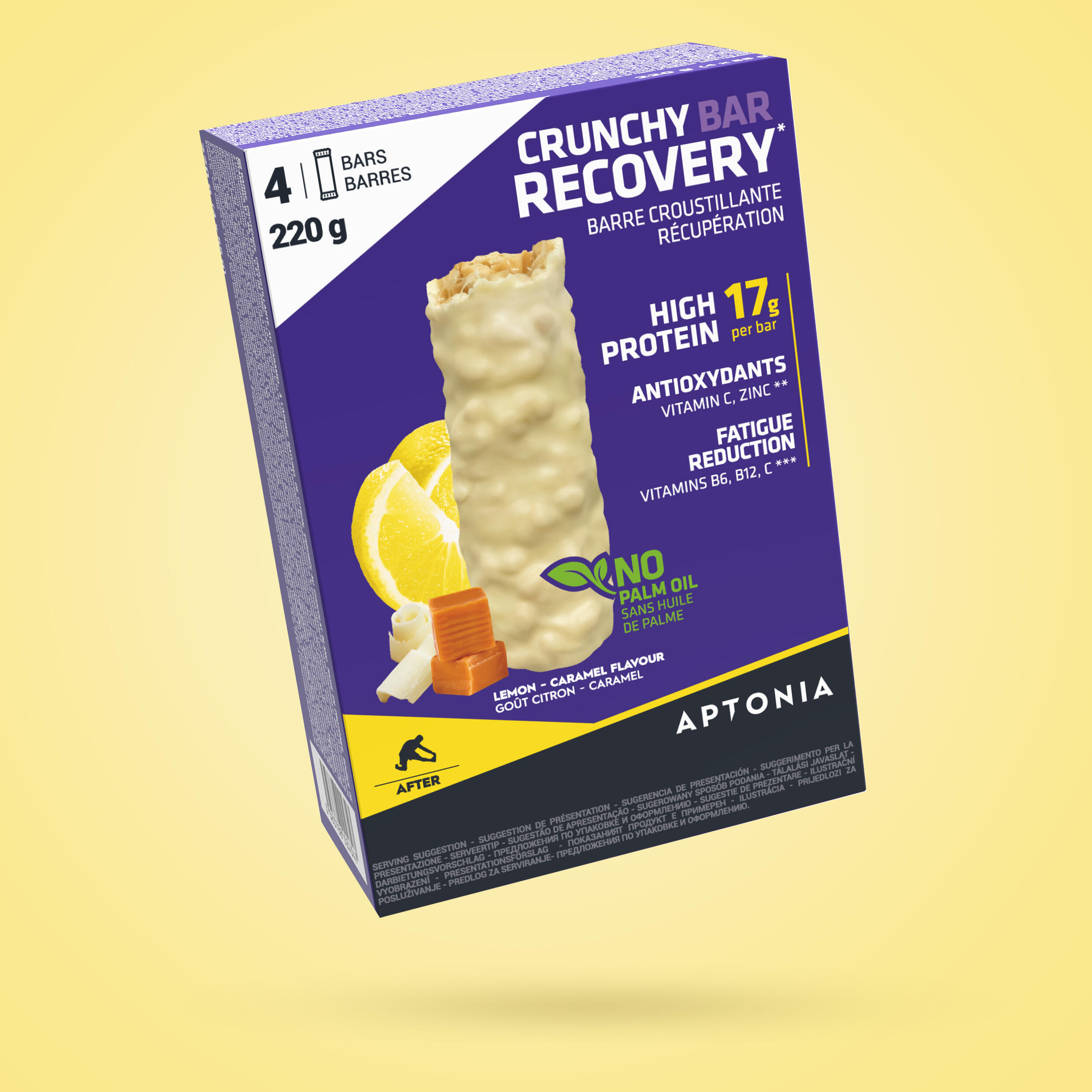
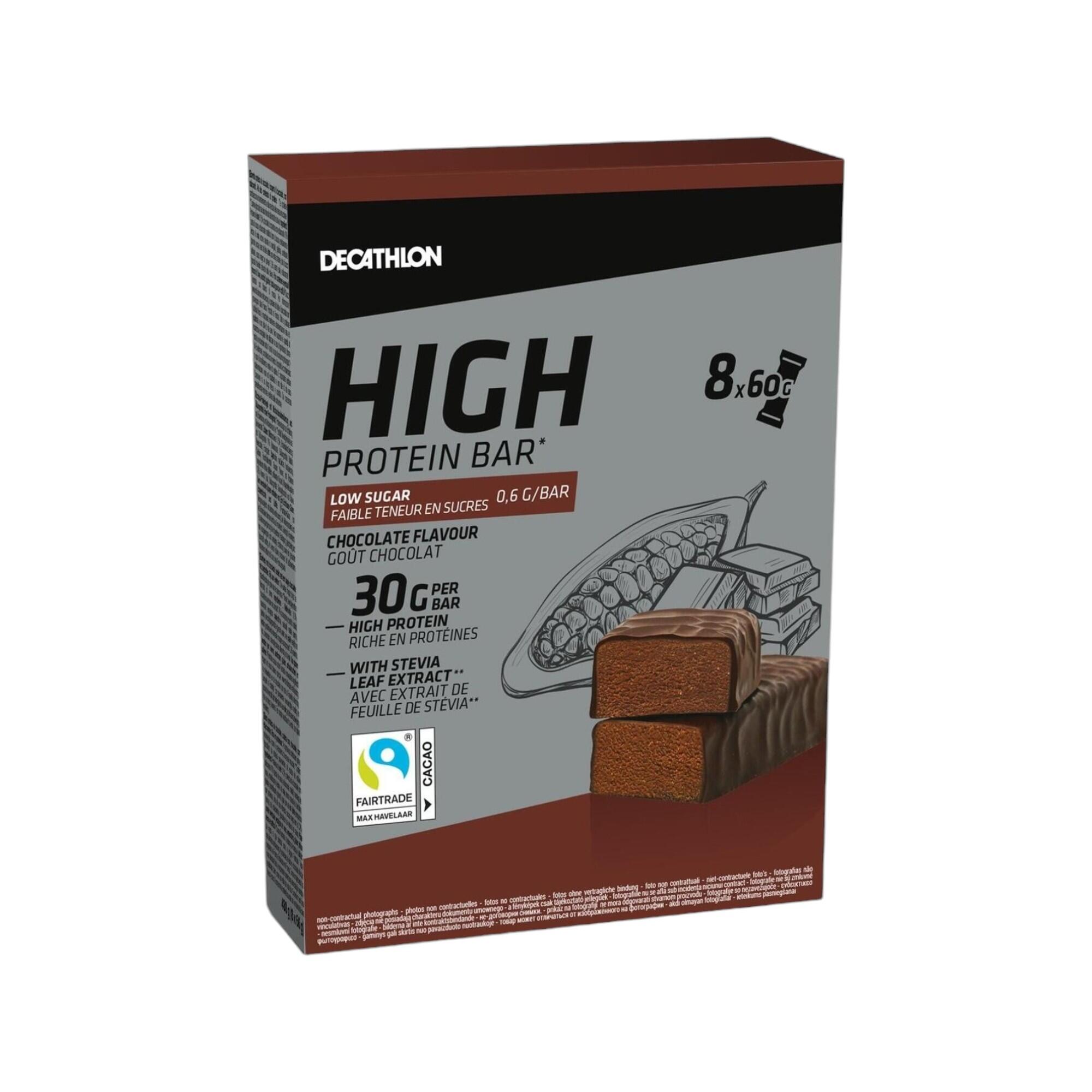
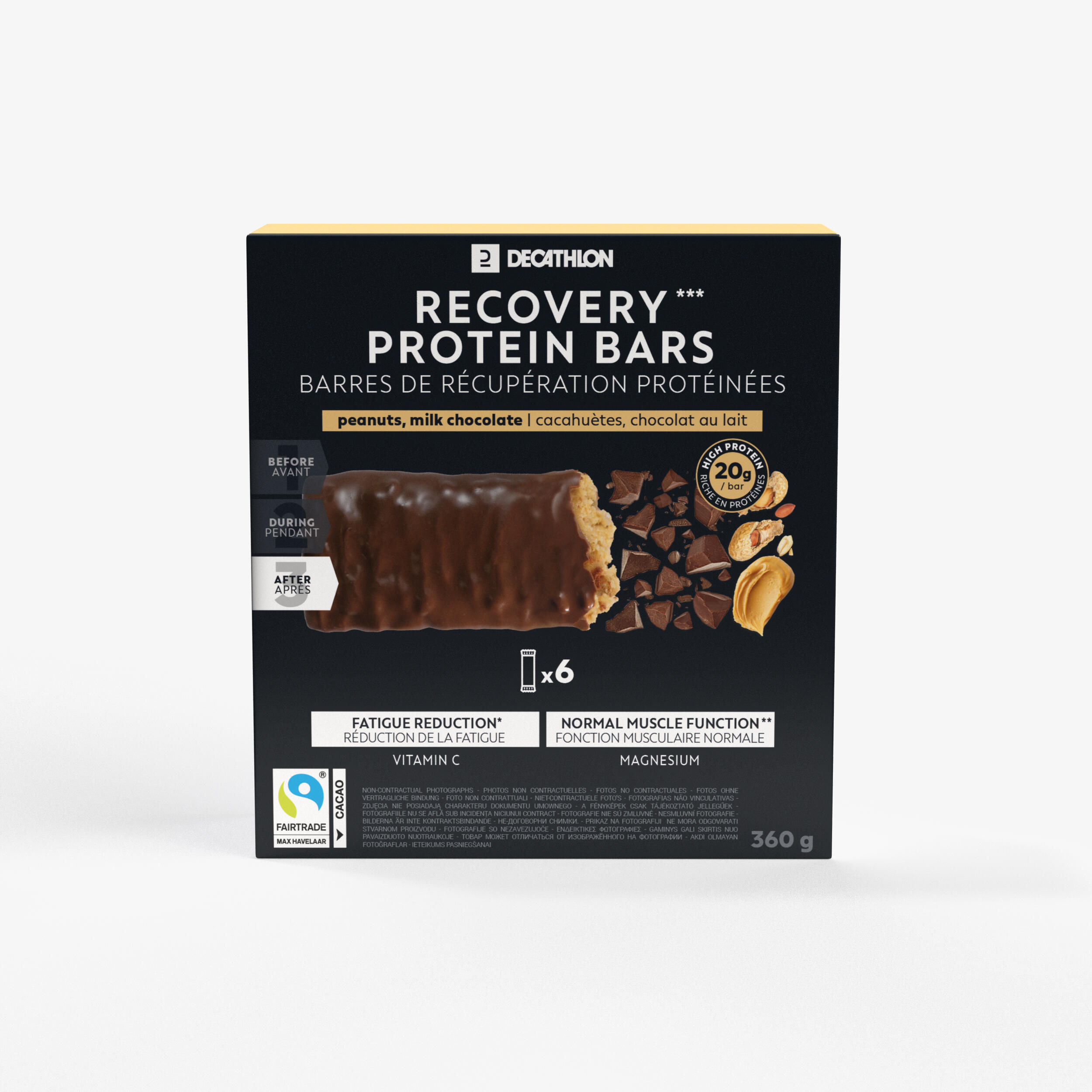
A specialist recovery bar suits demanding training where you want a substantial protein and carbohydrate portion without preparing a shake. Decathlon's full recovery bars provide 20 g of protein and approximately 25 to 27 g of carbohydrate, depending on the flavour. This makes them different from lighter snack bars that mainly provide a smaller protein top-up. A recovery protein bar is intended for after exercise rather than for fuelling the bike or run leg, where quicker carbohydrate sources are usually easier to consume. Store it in a cool, dry place and test the flavour and texture after training before packing several for an event weekend.

Are triathlon energy bars and recovery bars the same?

Energy bars and recovery bars serve different stages of training. Energy bars generally prioritise carbohydrate for use before or during exercise, while specialist recovery bars add a larger protein portion for consumption after the session. A dense, high-protein bar may be harder to chew and digest during a race, particularly when breathing is heavy or the stomach is already managing gels and drinks. Plan your training nutrition with triathlon energy bars. Read the nutrition panel rather than judging the product by its name alone, checking the carbohydrate, protein and serving size. Pro tip: pack during-session fuel and post-session snacks in different compartments so you do not take the wrong bar during transition.

Are vegan protein bars suitable for triathlon recovery?

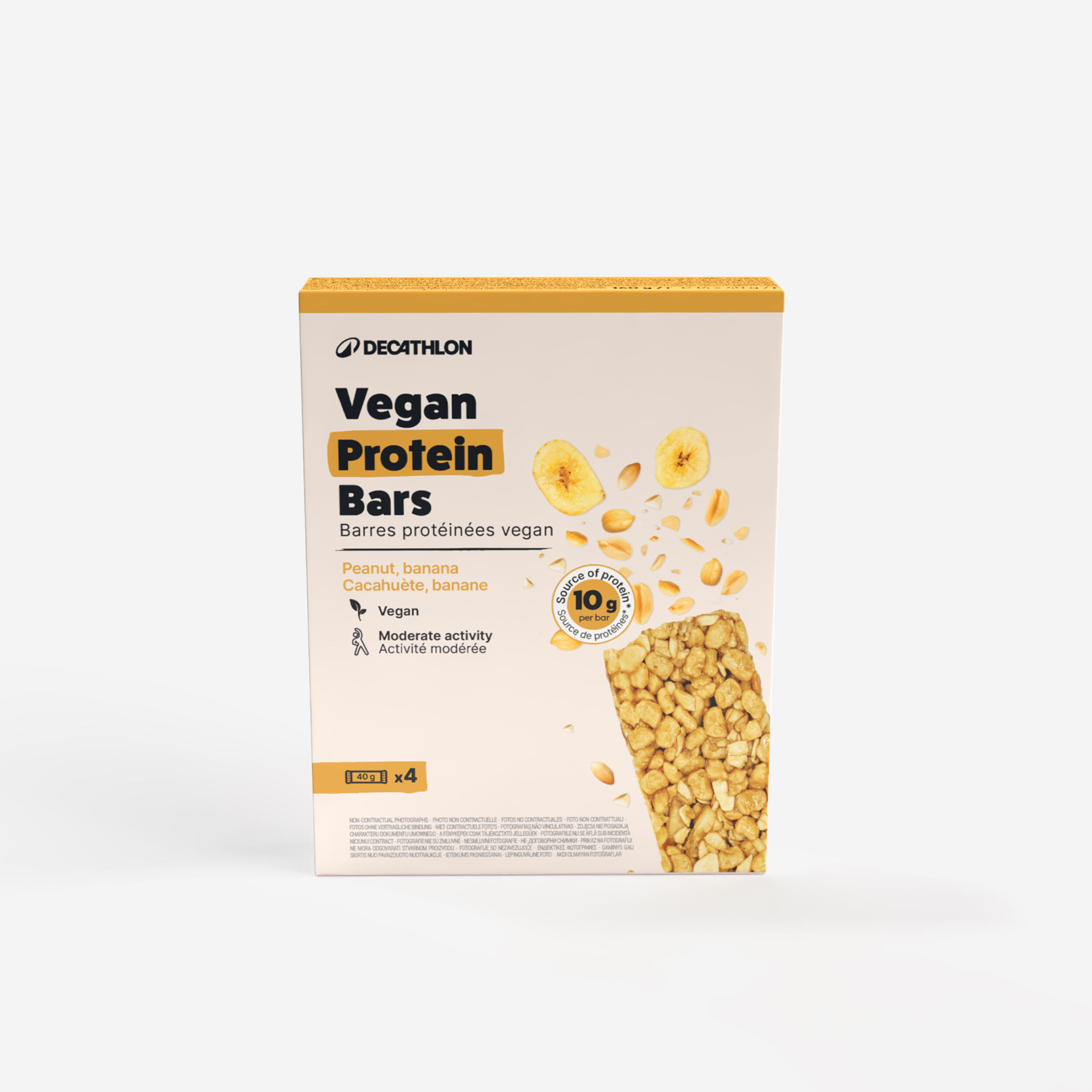
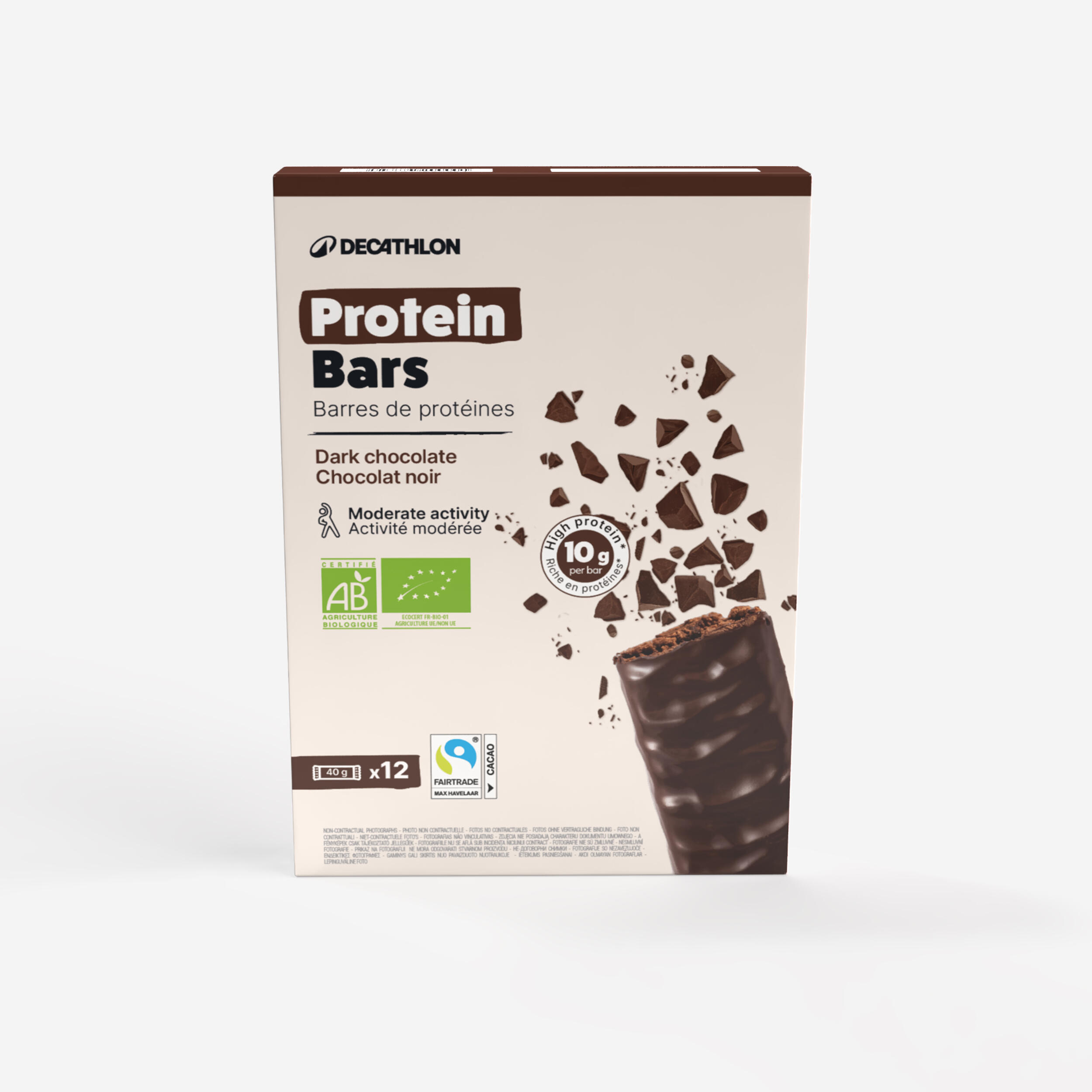
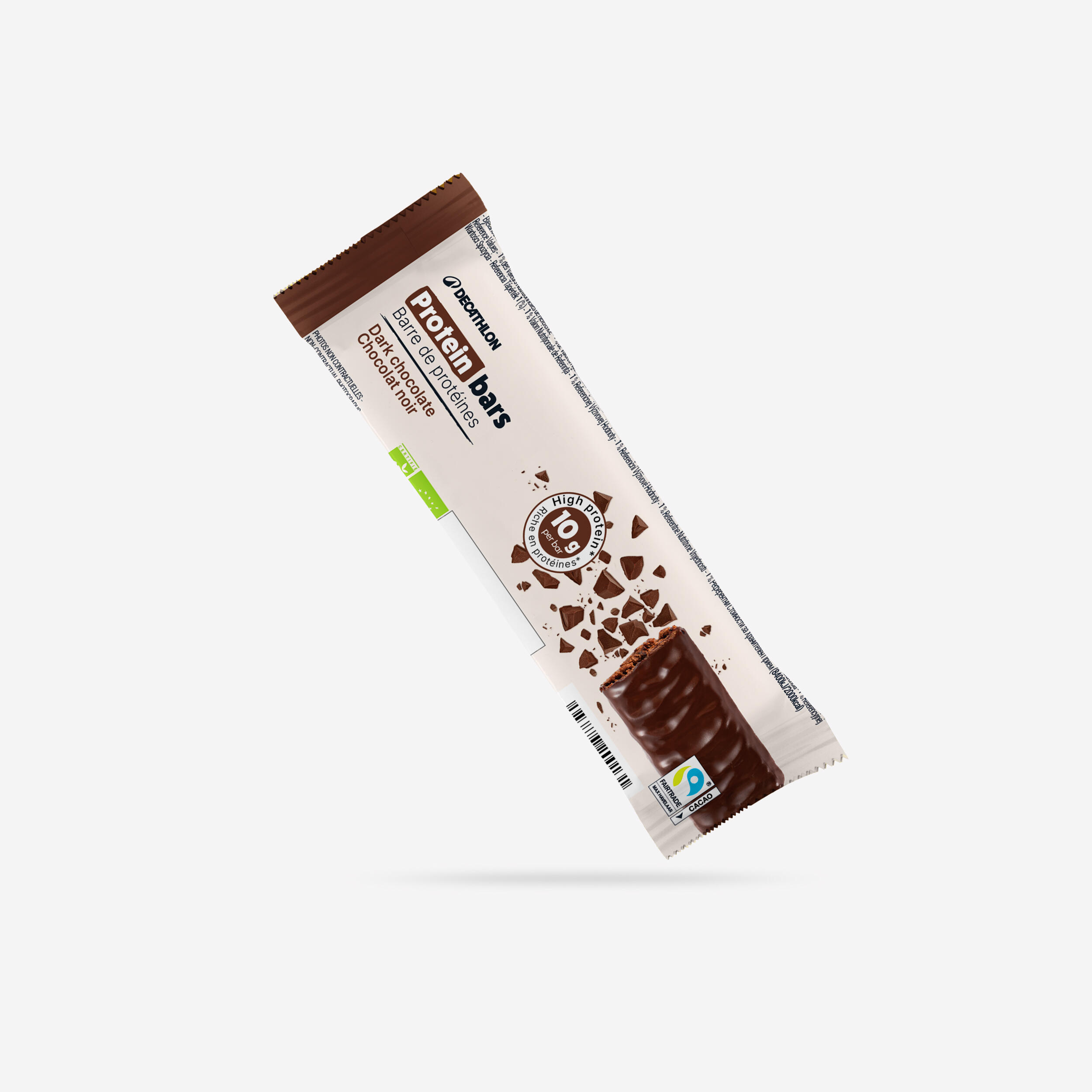
Plant-based protein bars can support lighter recovery or contribute to your normal daily protein intake. Decathlon's vegan banana and peanut protein bars combine pea and wheat protein with peanuts and banana chips, providing 10 g of protein and 16 g of carbohydrate per bar. This is a smaller recovery portion than the full 20 g protein bars, so it may suit a shorter or moderate session rather than forming the complete response to a long triathlon. Check the ingredient list for allergens and consider what you will eat afterwards. Recovery needs vary with body size, exercise intensity and normal diet, so use the bar as one convenient option rather than treating it as compulsory after every workout.