53 items
4.6/5 based on 2622 reviews collected online and in stores

Feeders FAQs

Which feeder size and weight suit your fishing conditions?

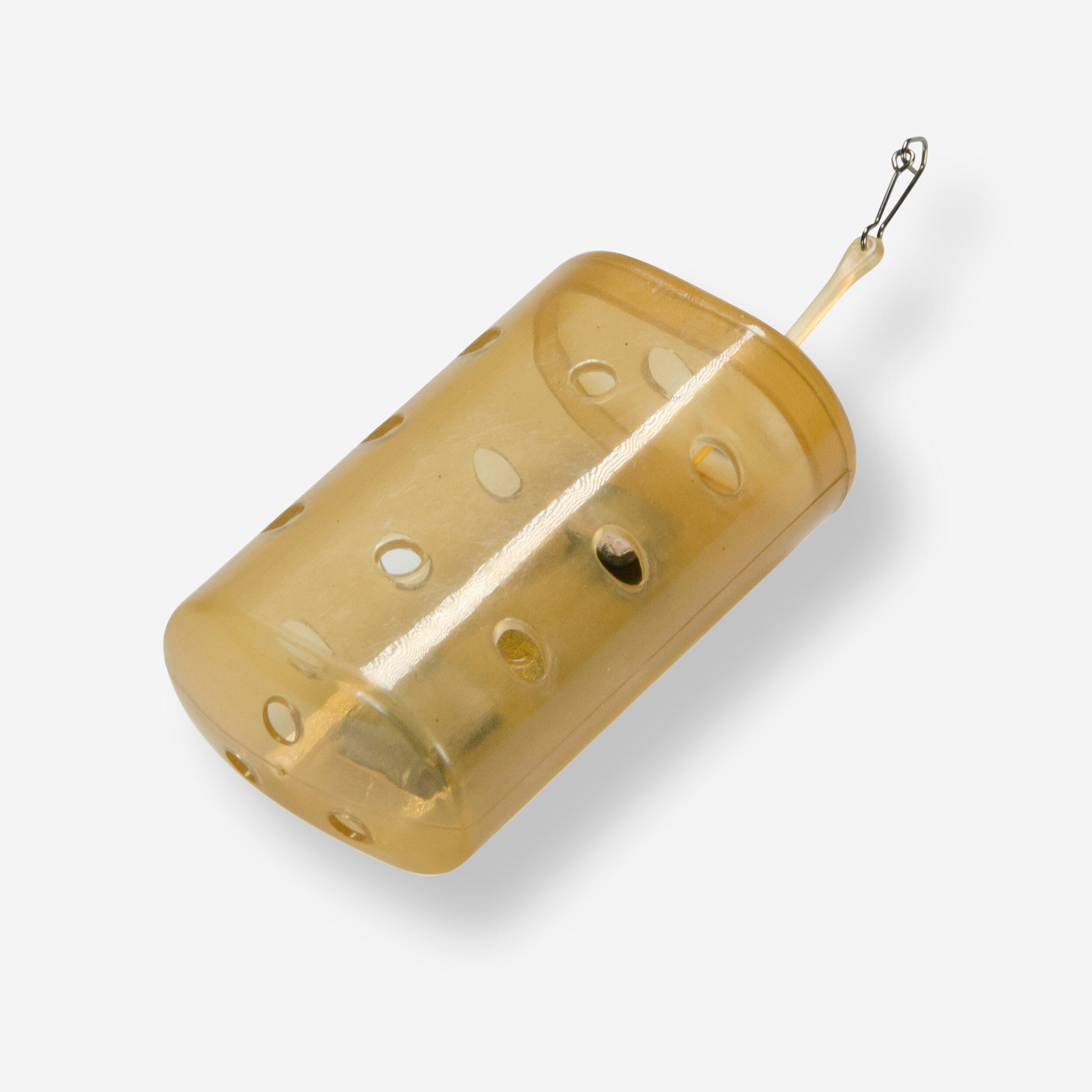
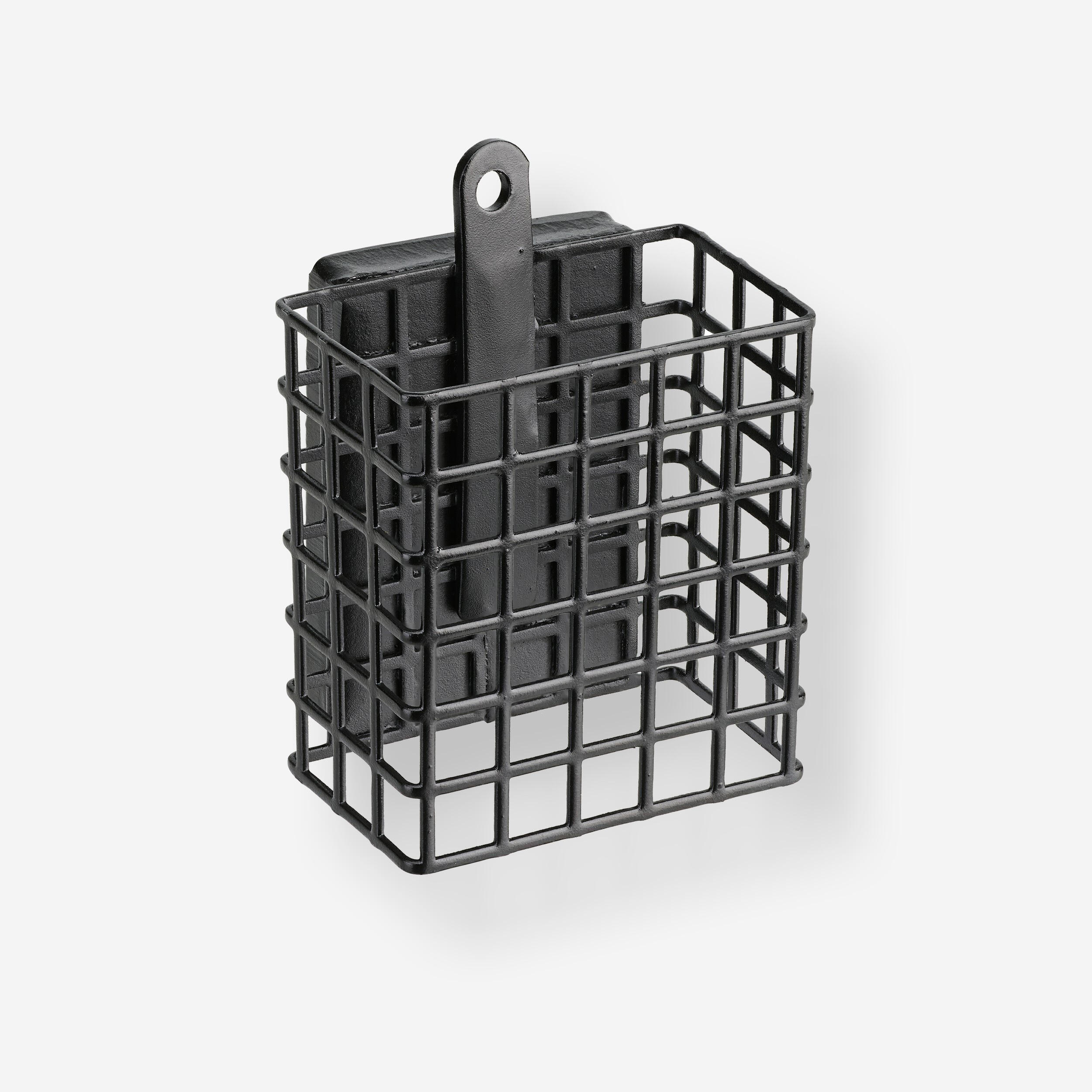
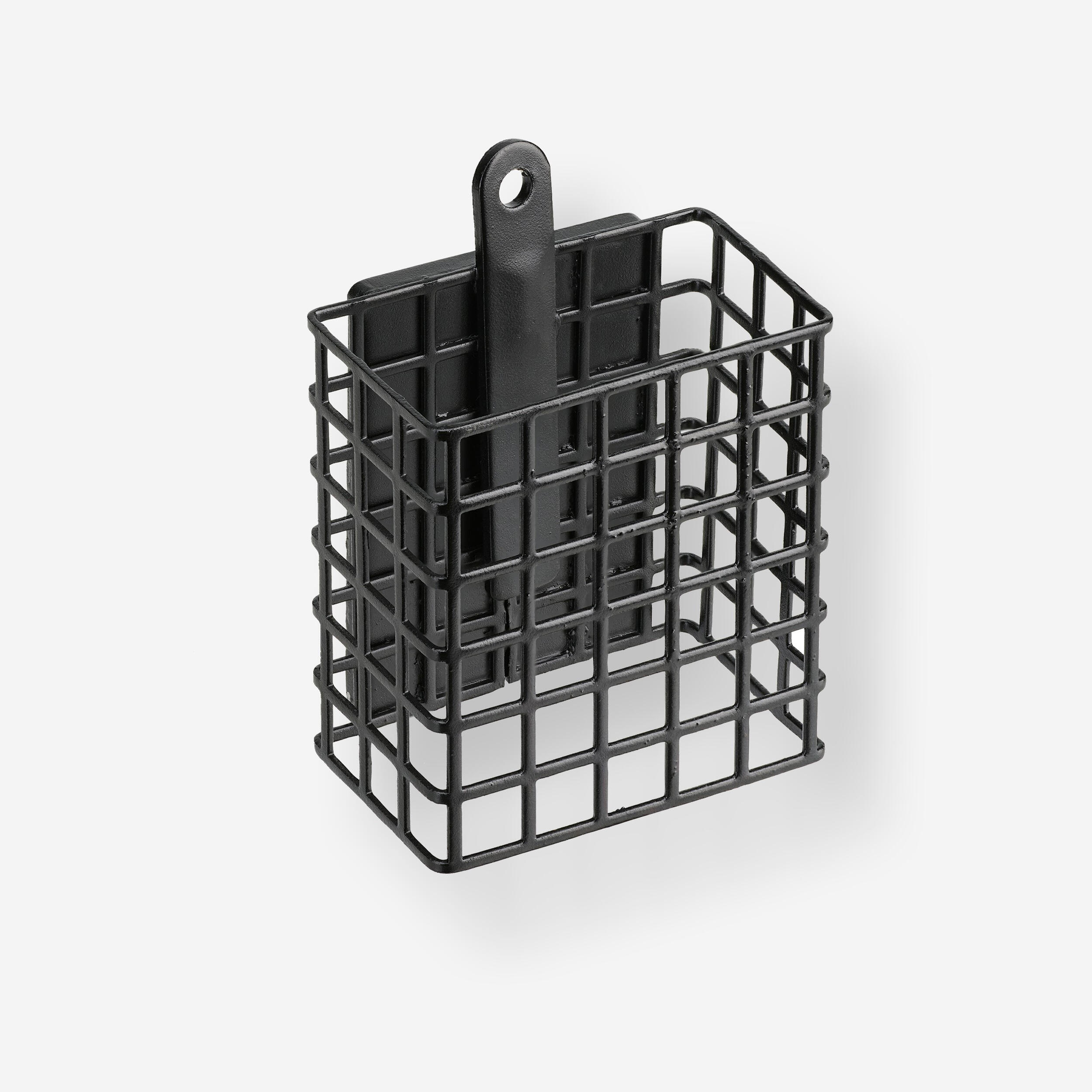
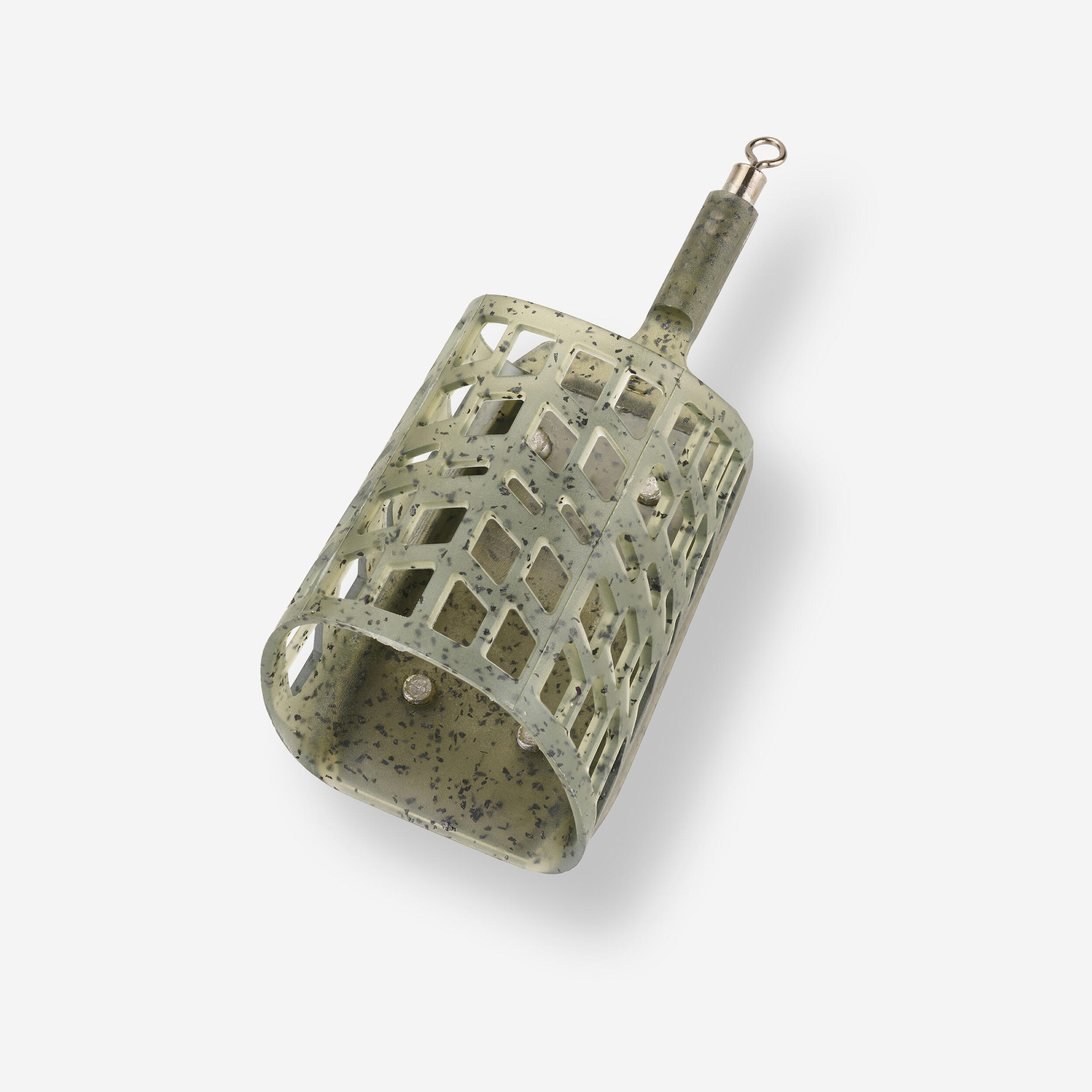
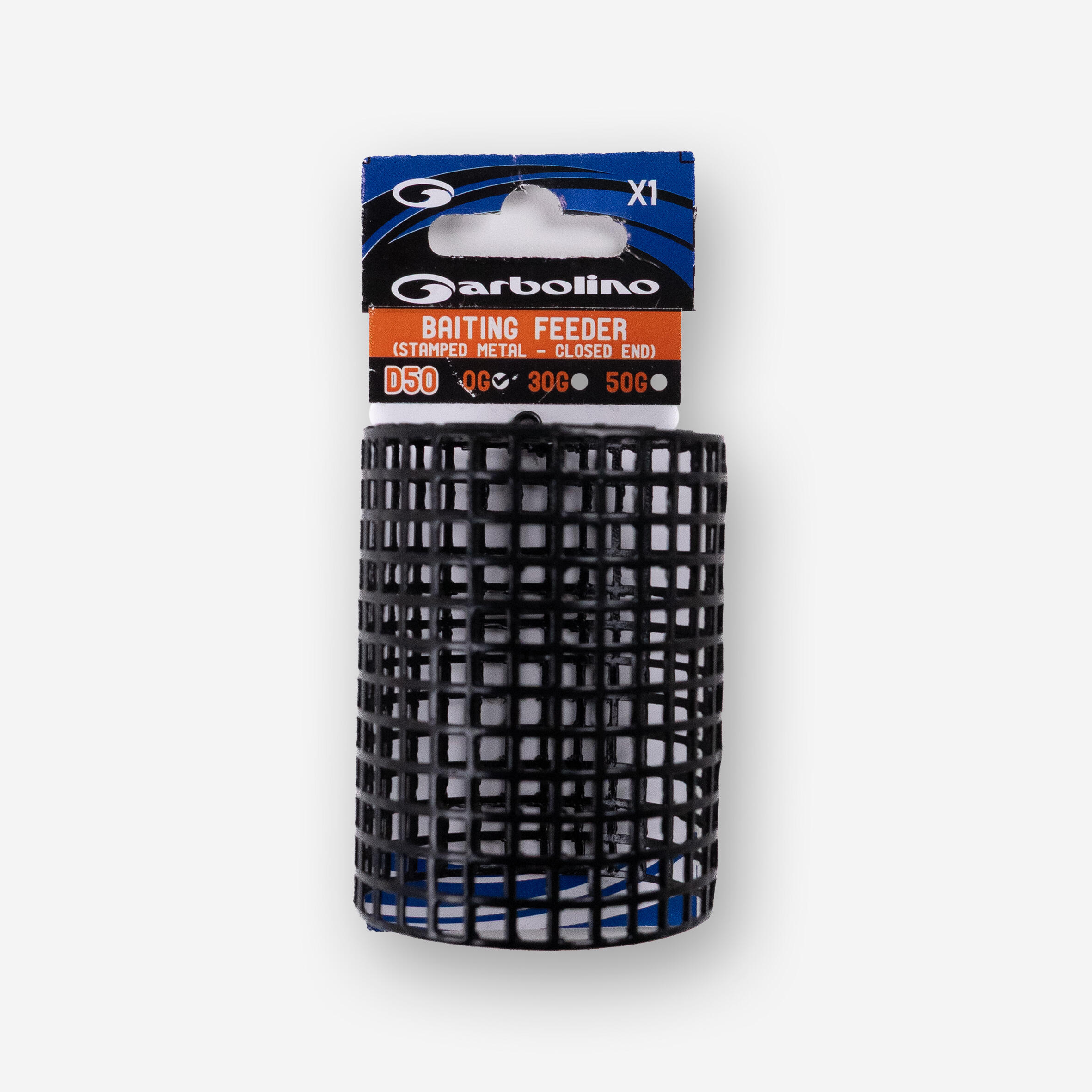
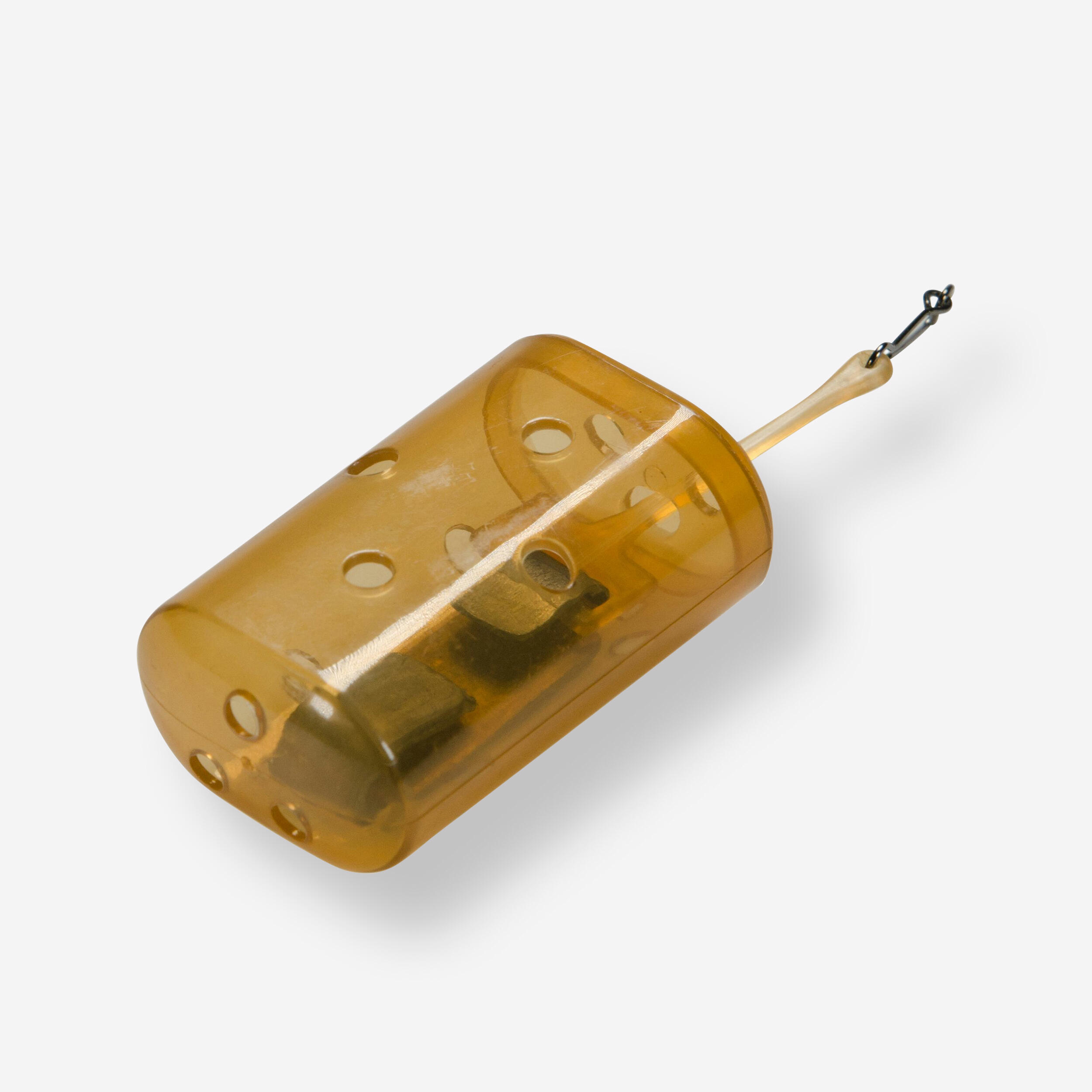
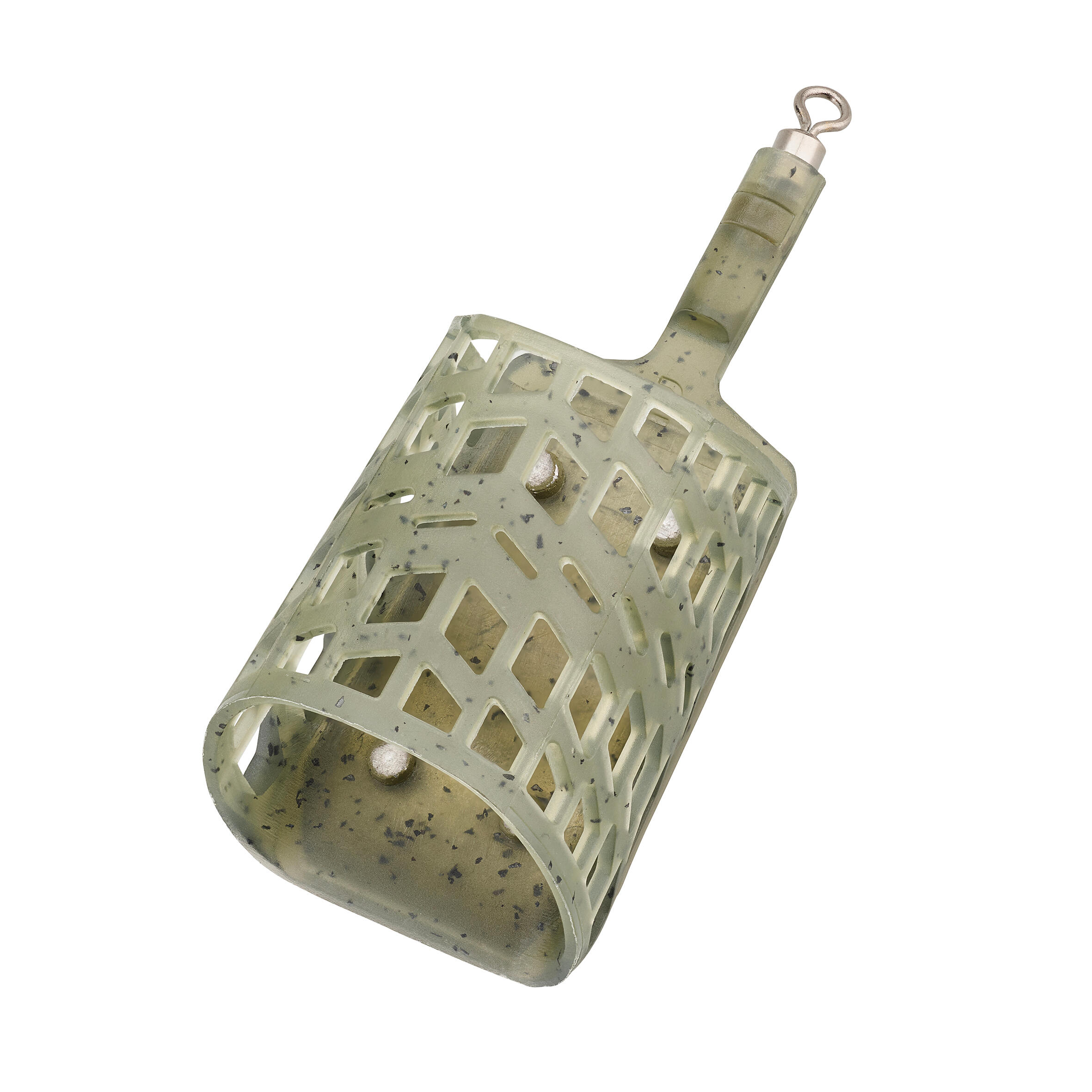
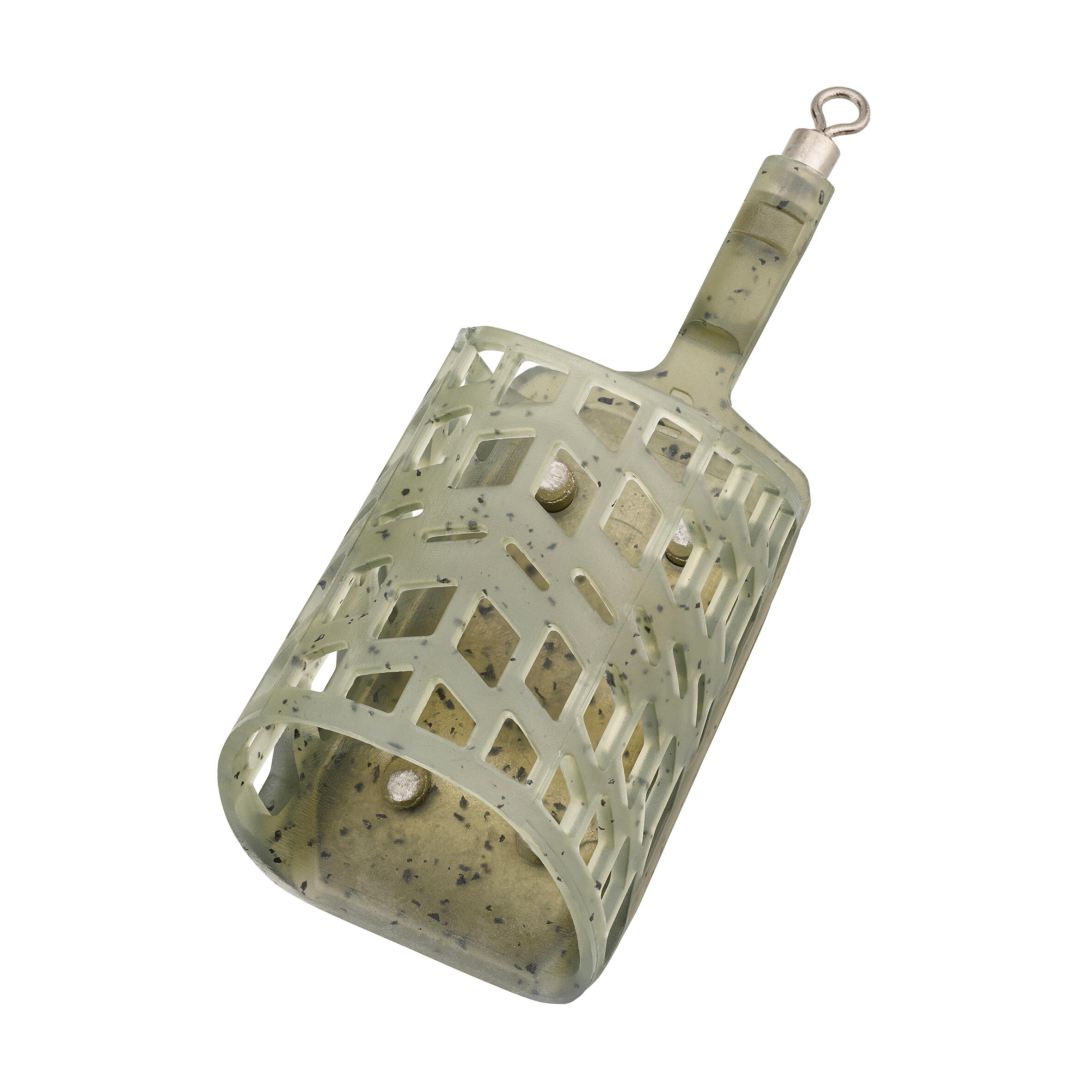
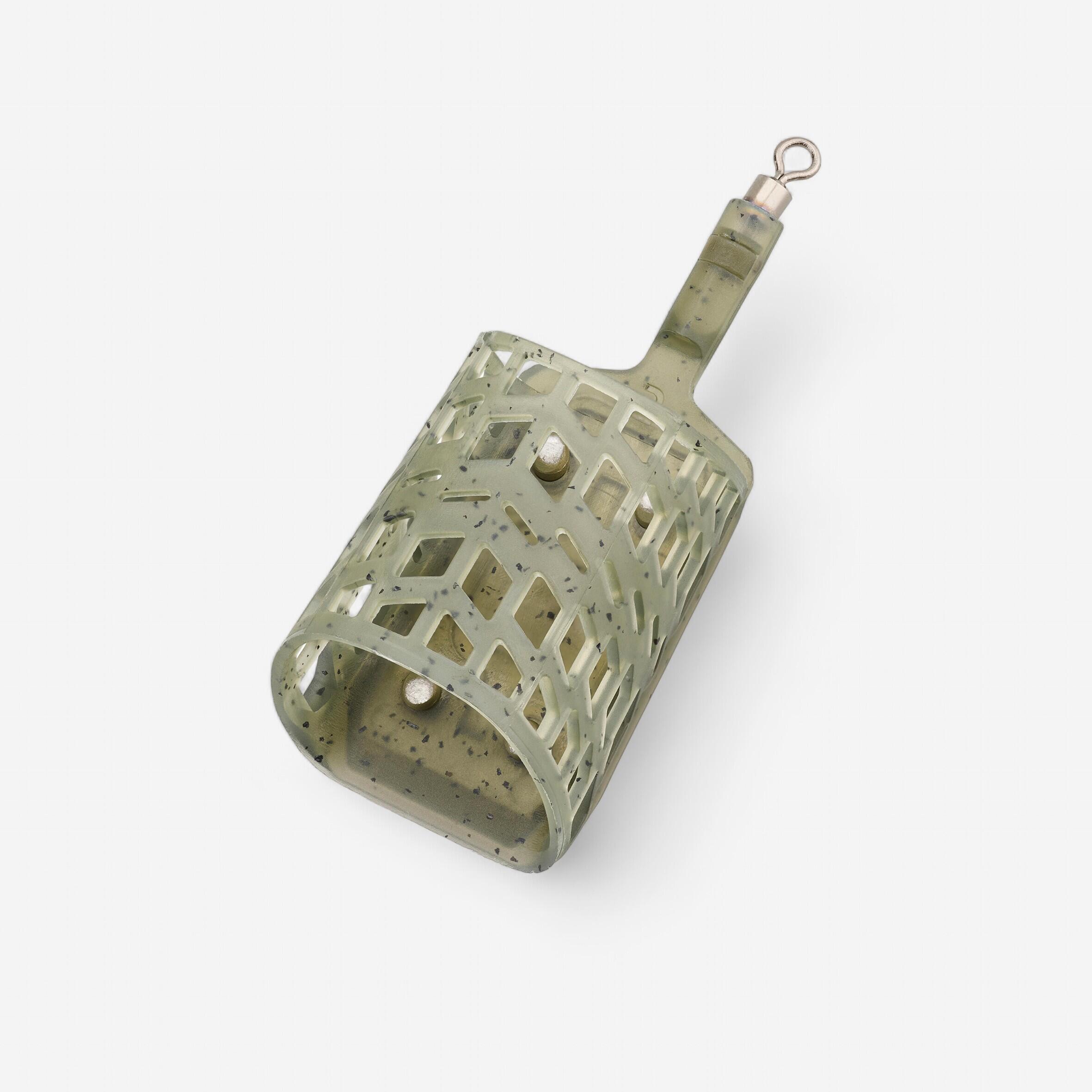
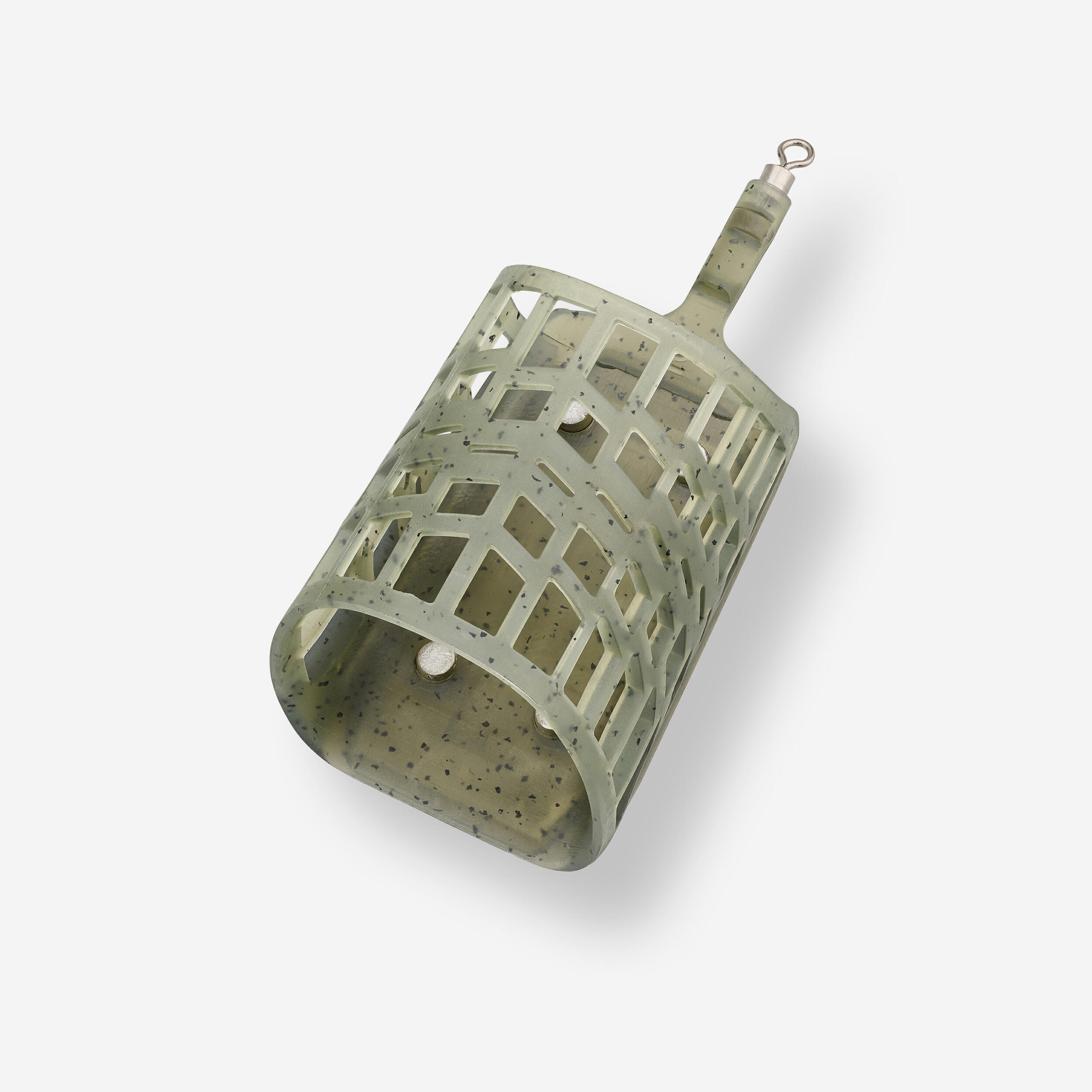
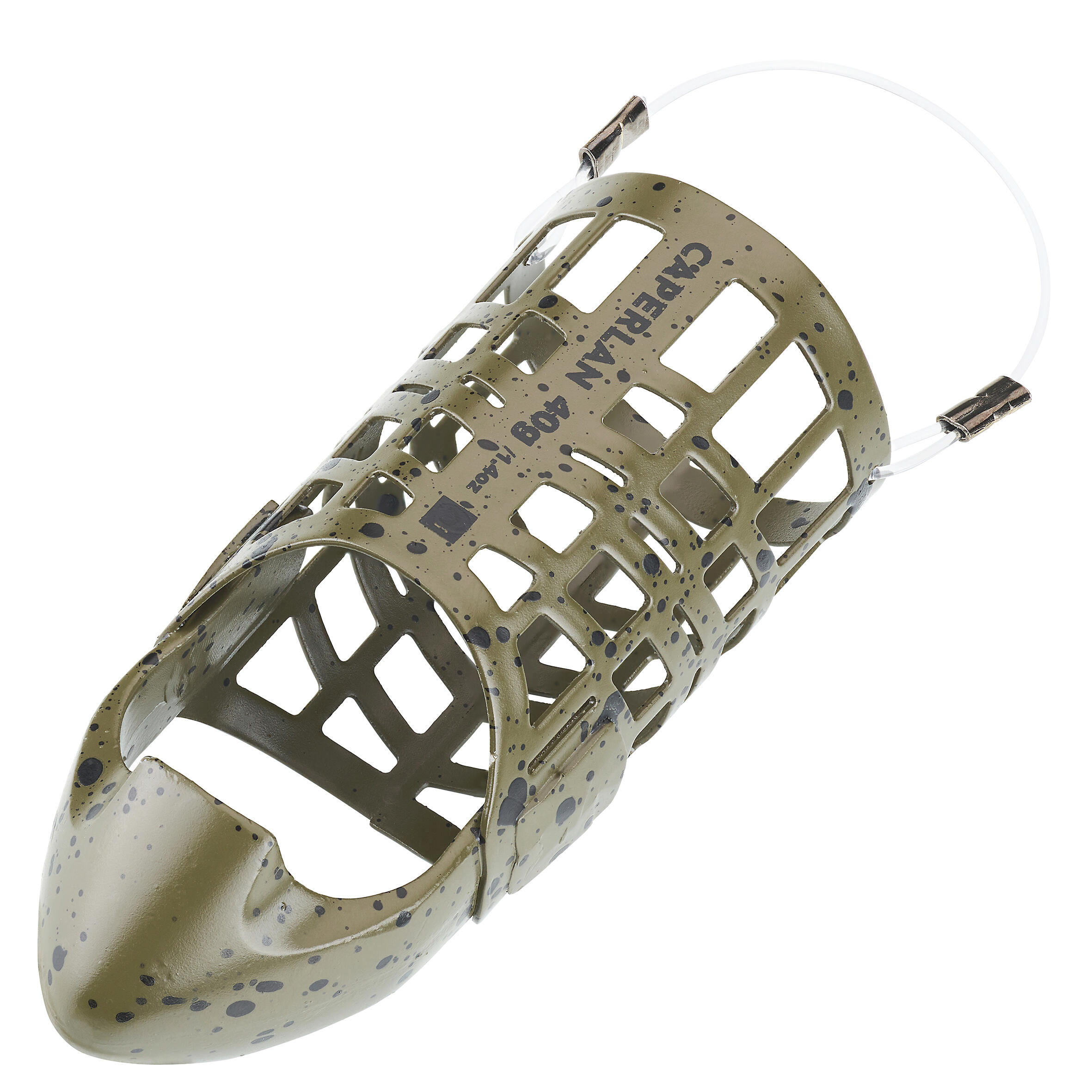
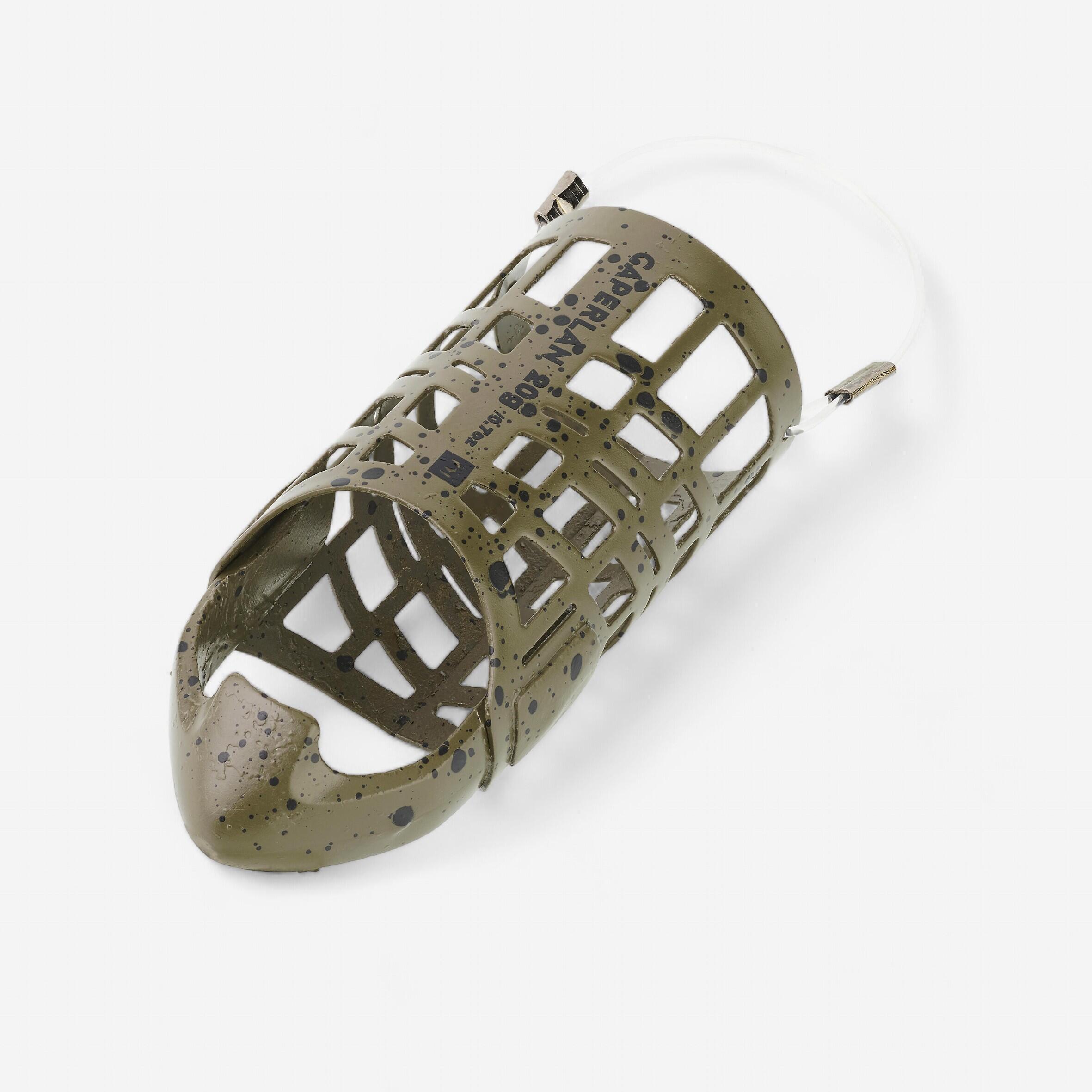
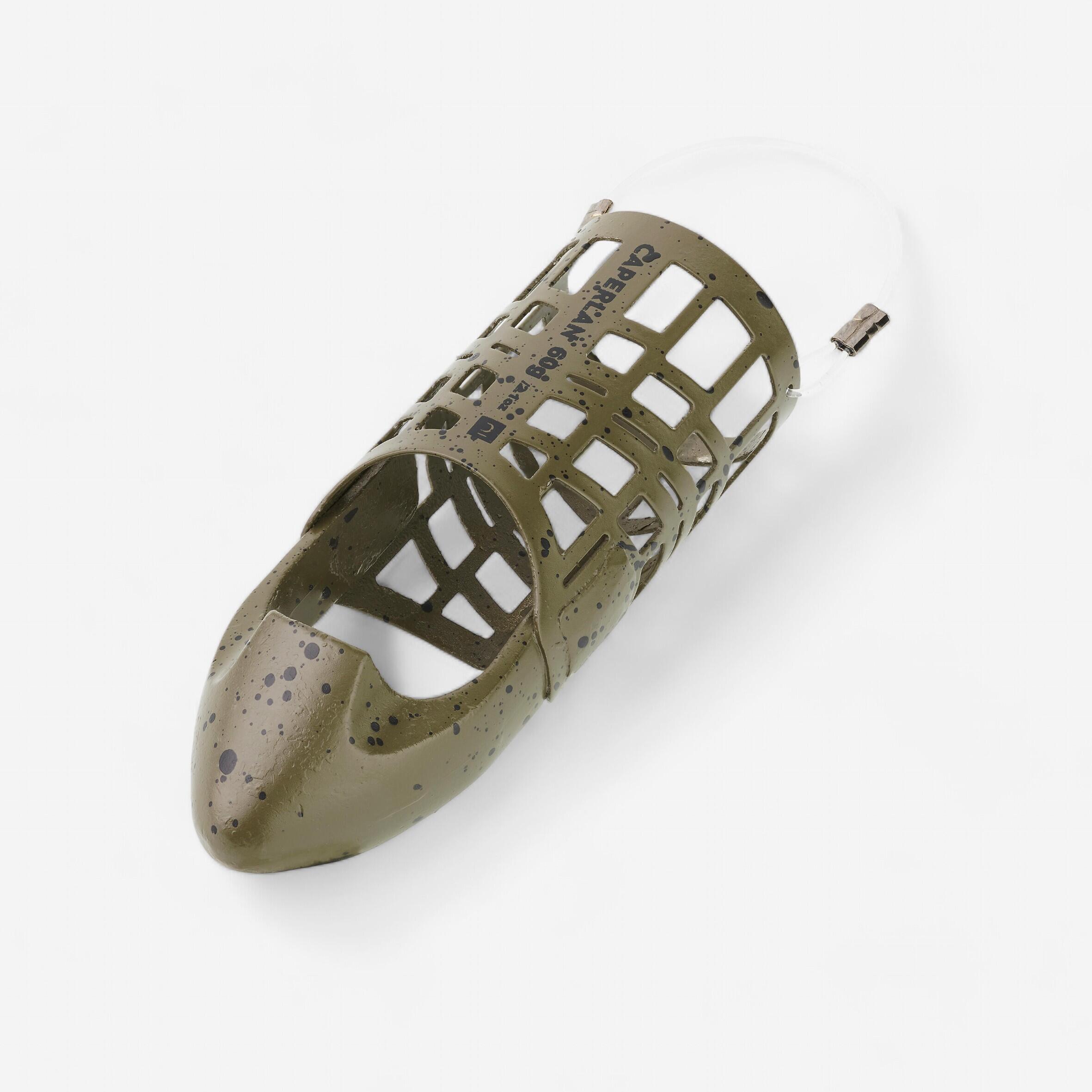
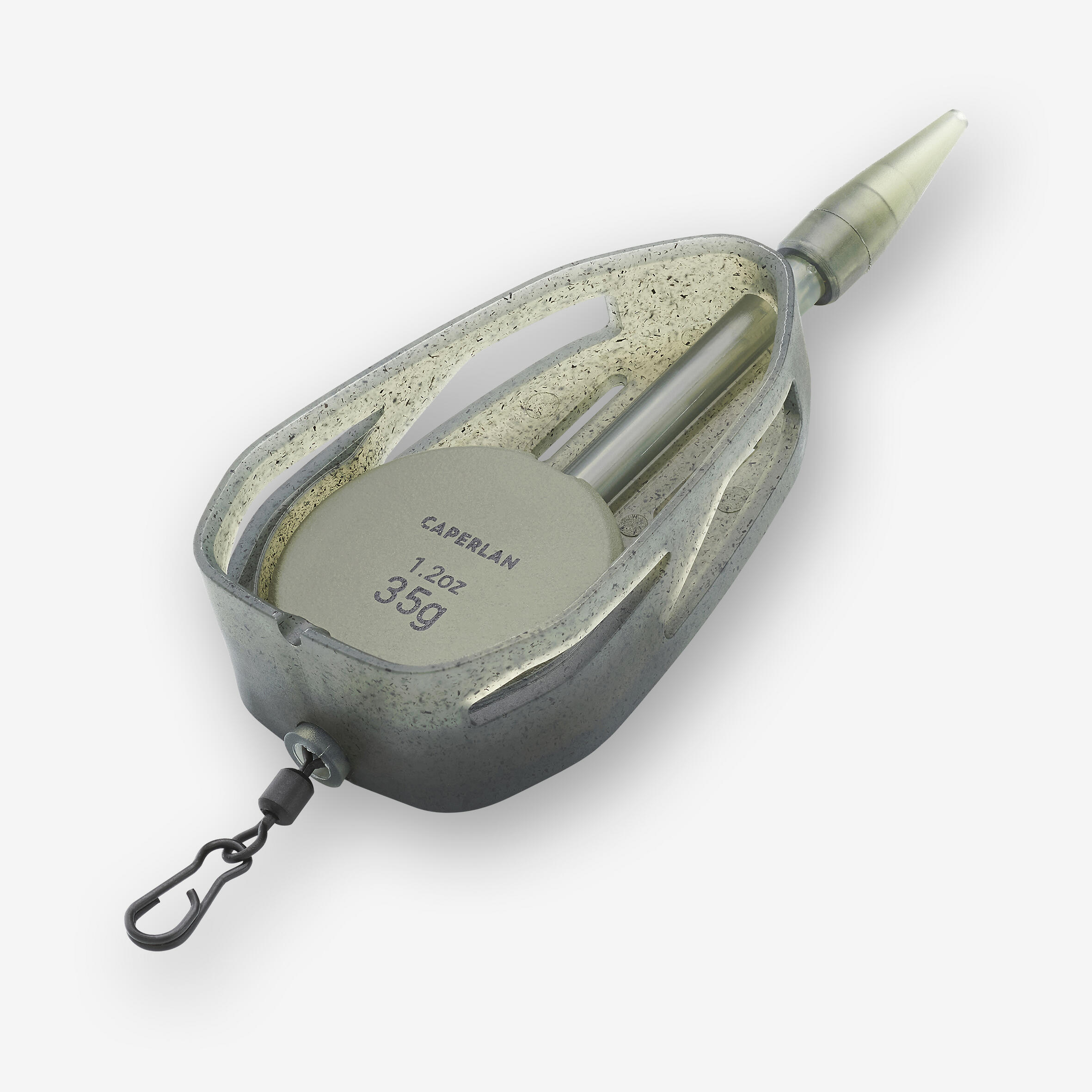
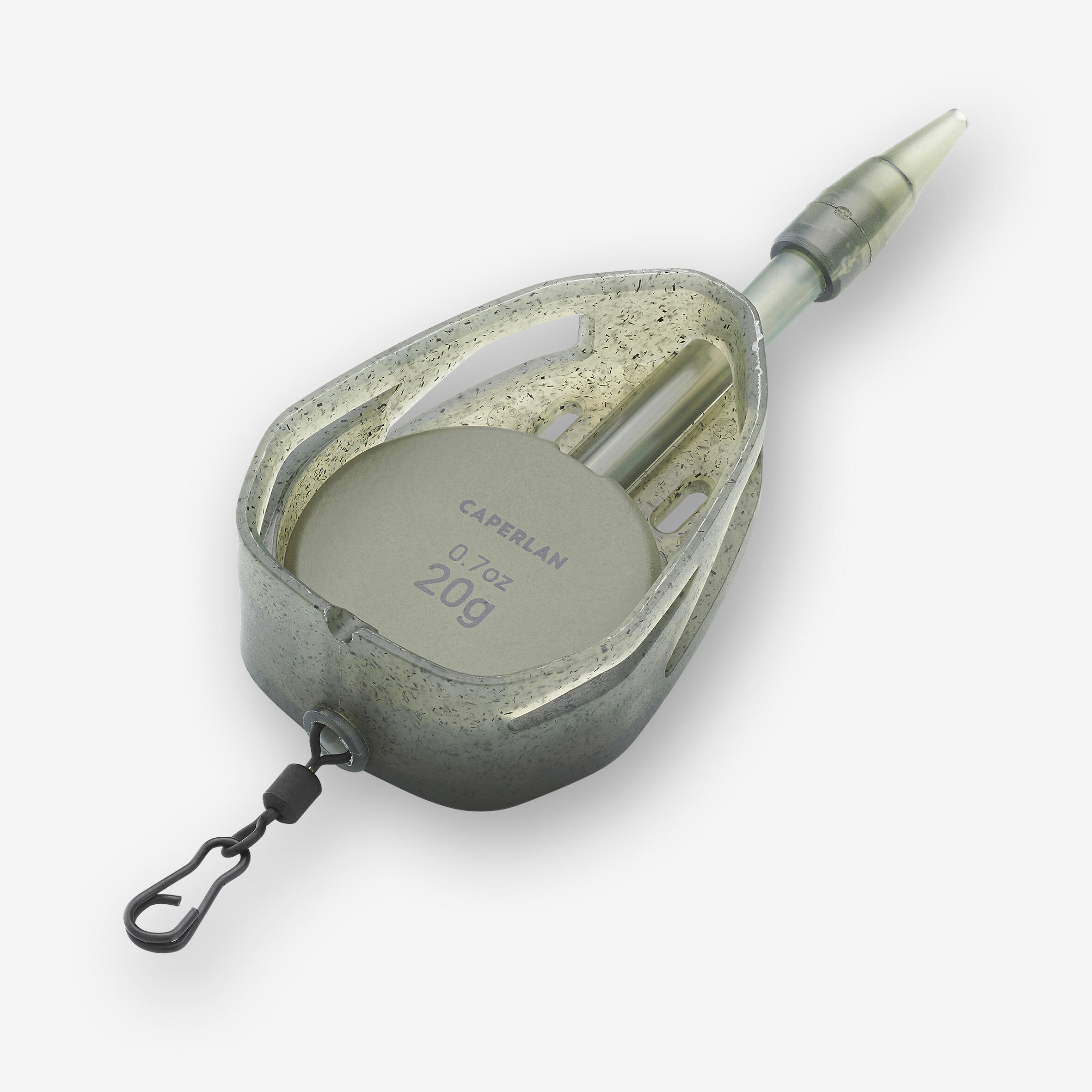
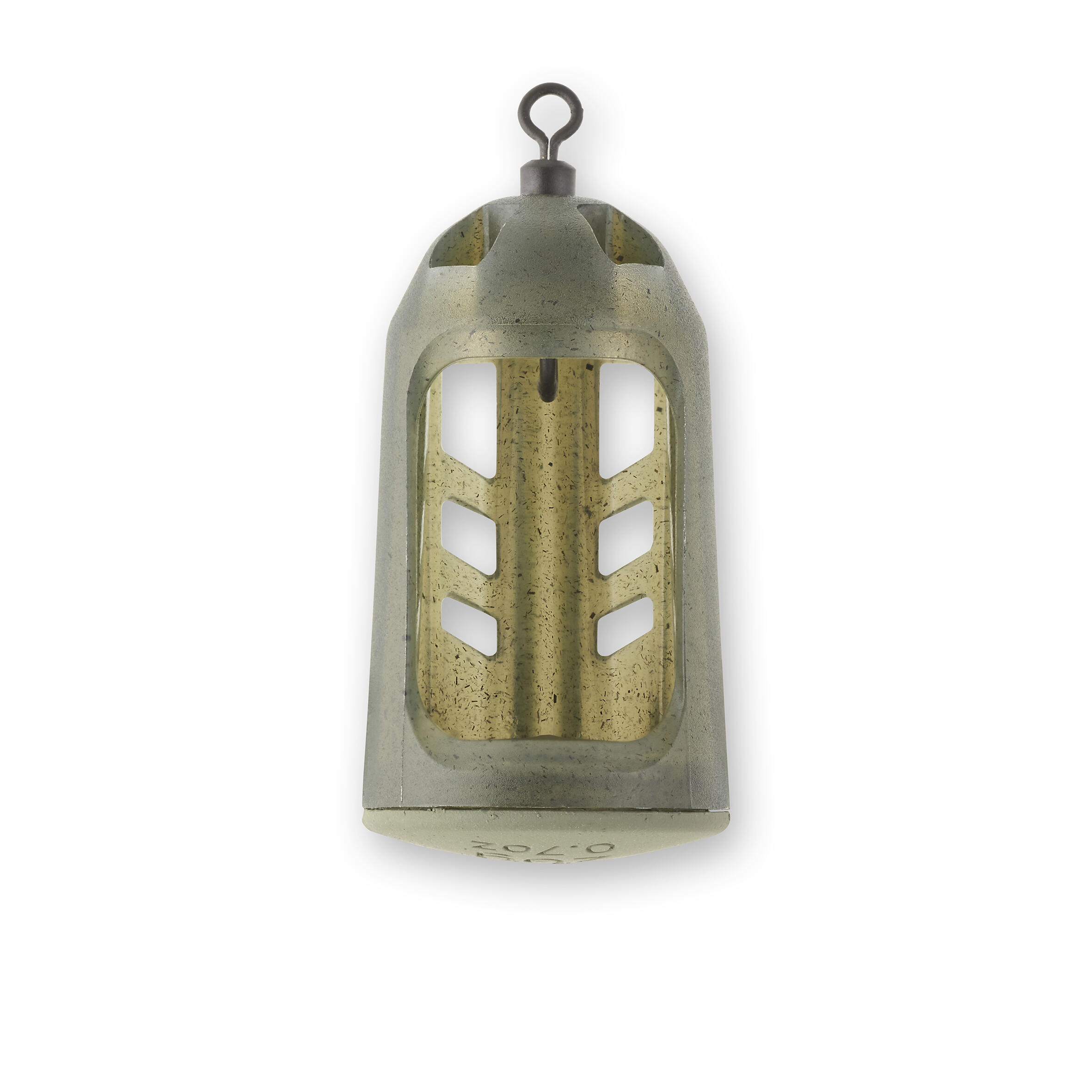
Feeder size and feeder weight control different parts of your presentation, so it helps to consider them separately. A larger body carries more bait, while extra weight mainly helps you reach greater distance, fish deeper water or keep the feeder more stable. Caperlan open cages use the same general body format across several weights, including 20 g, 30 g, 40 g and 50 g, which lets you alter casting weight without automatically changing bait capacity. The conical shape also makes loading groundbait easier, while the trapezoidal sinker supports accurate casting. A feeder fishing open cage is a practical option when you want groundbait to disperse through the mesh after the feeder settles.

What is the difference between a method feeder and a Hybrid Method feeder?

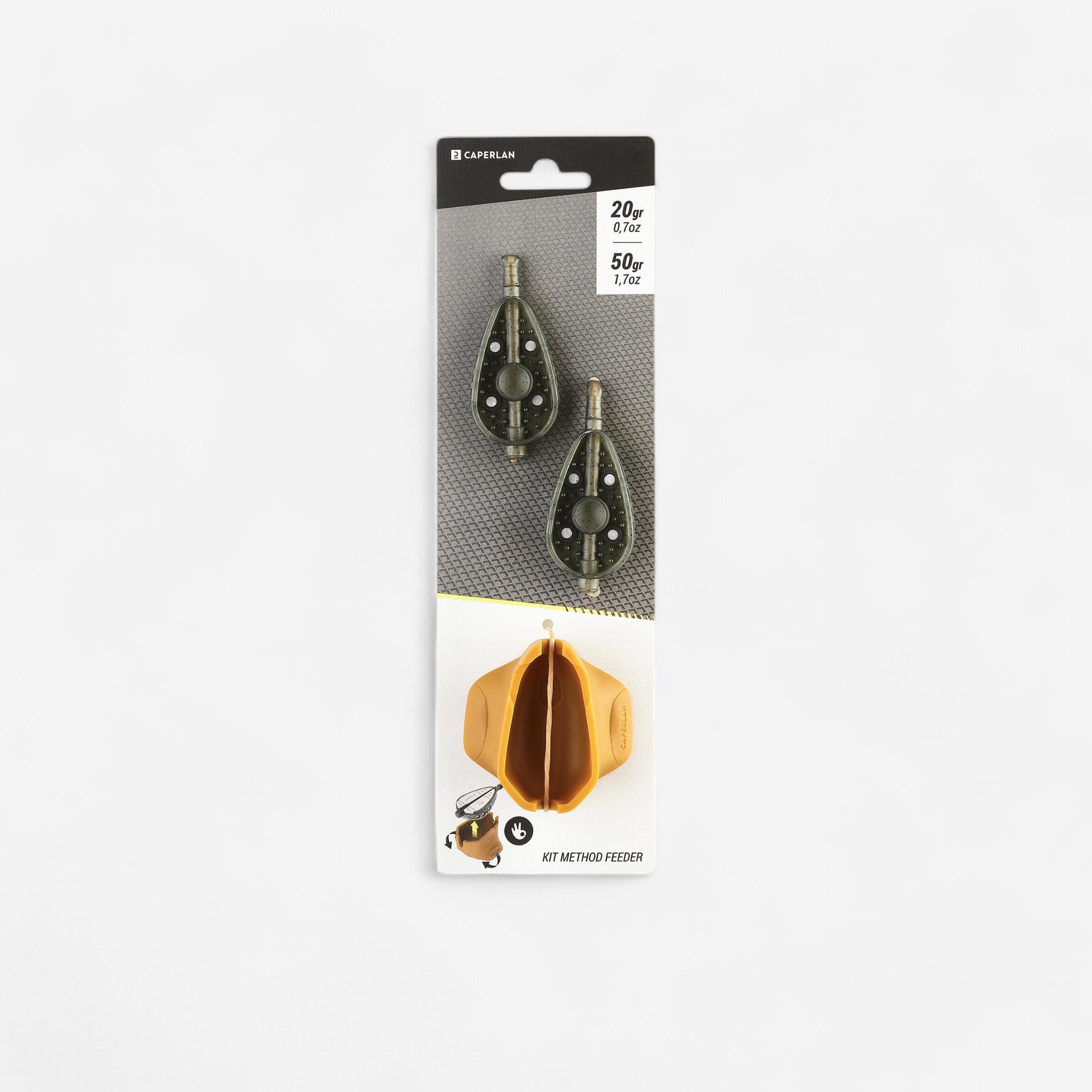
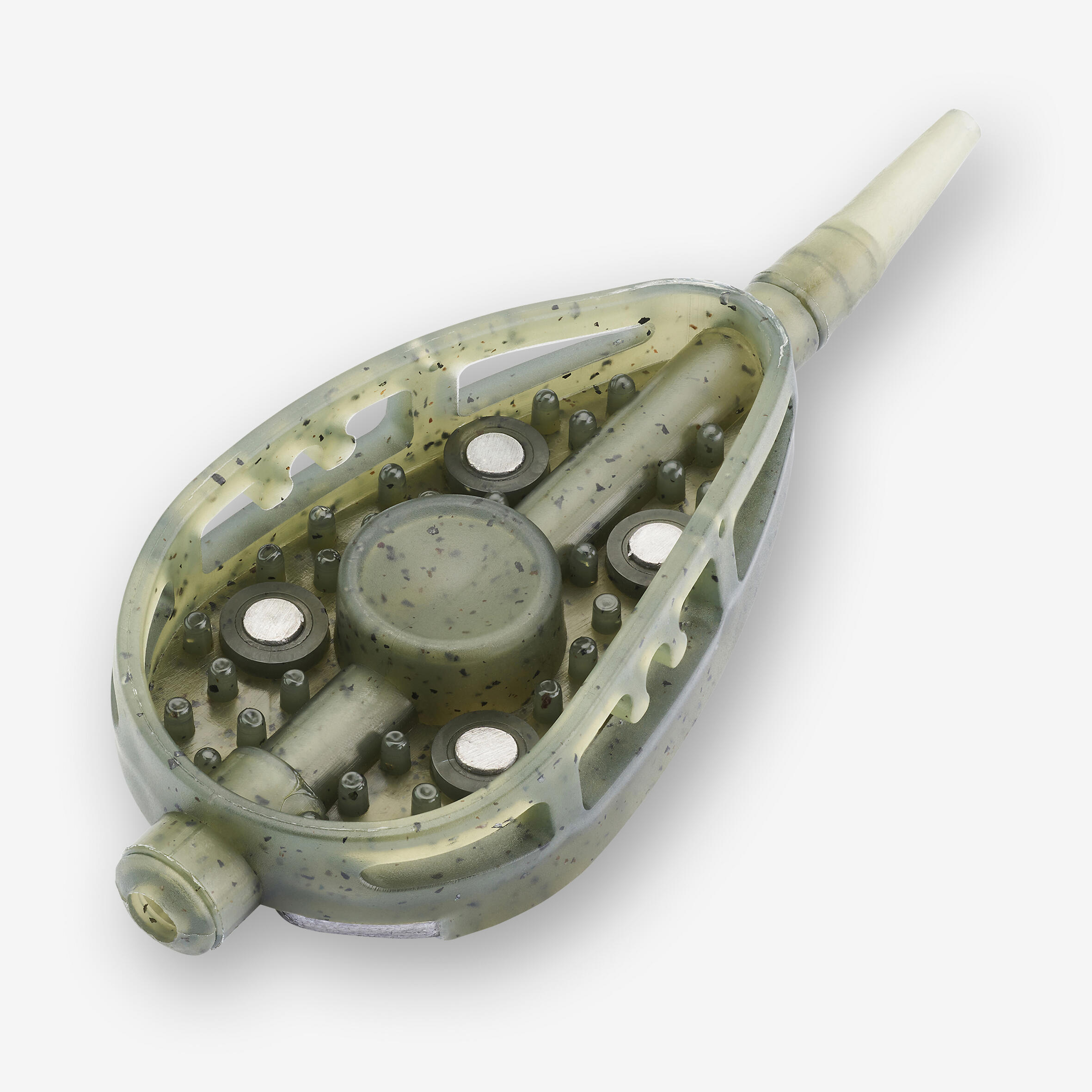
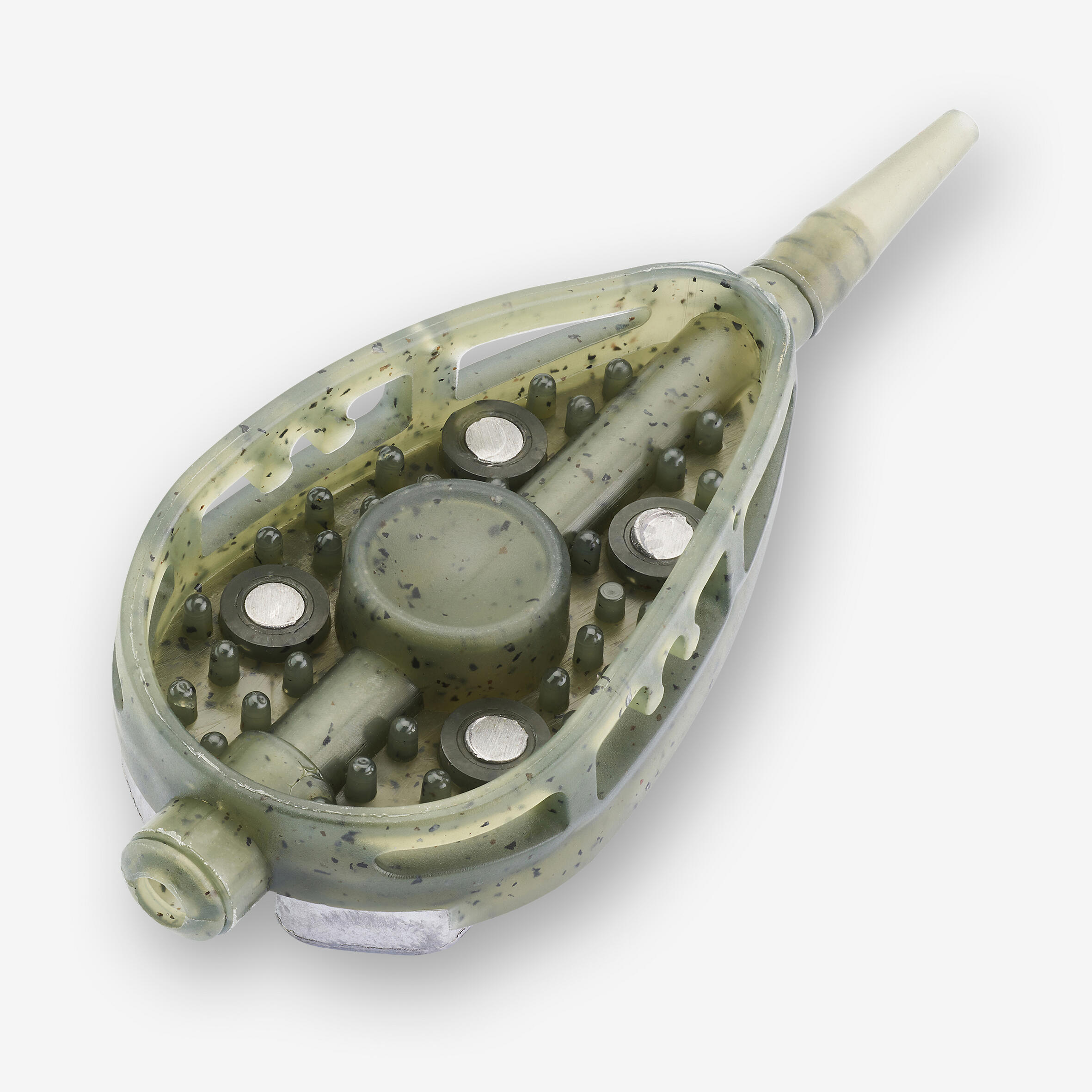
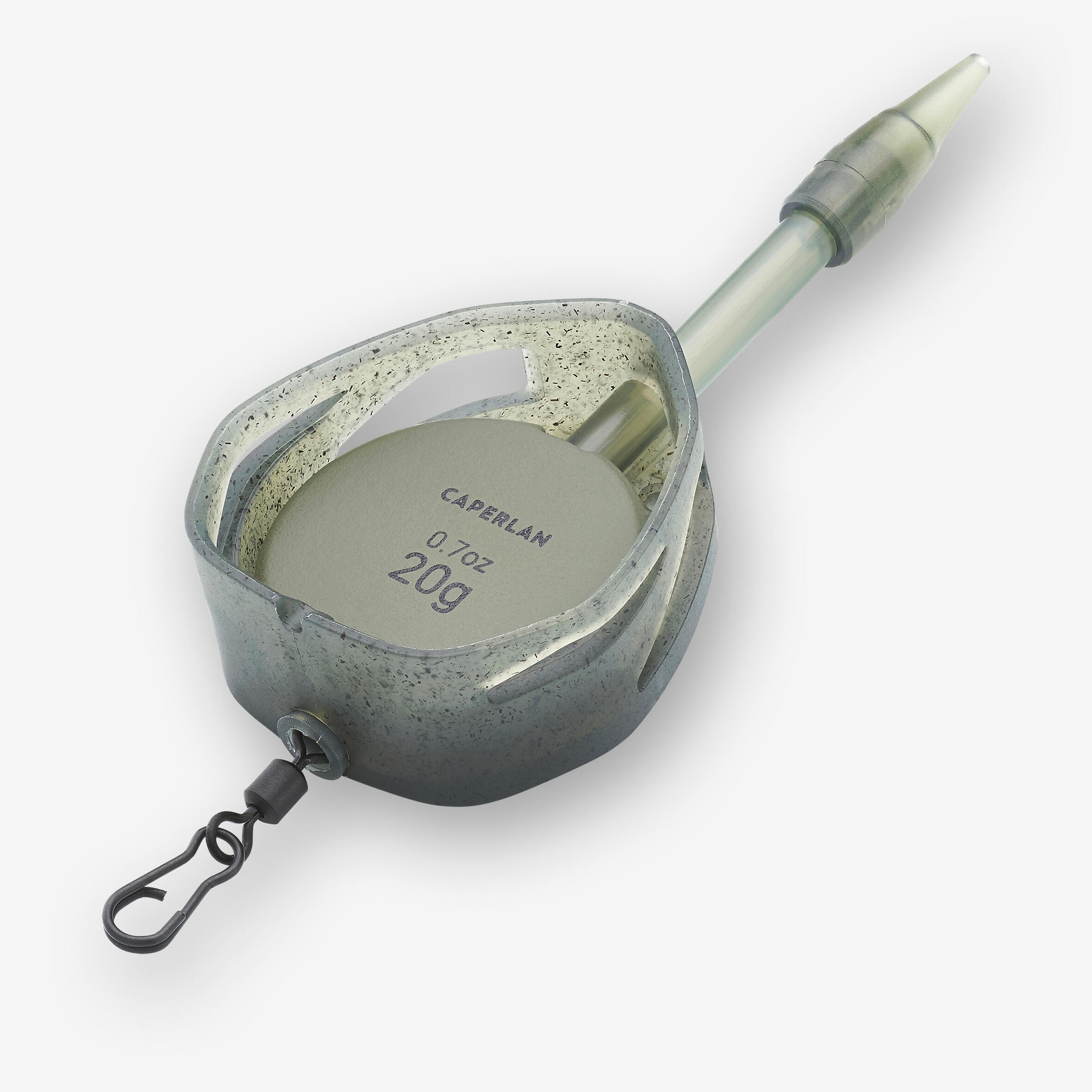
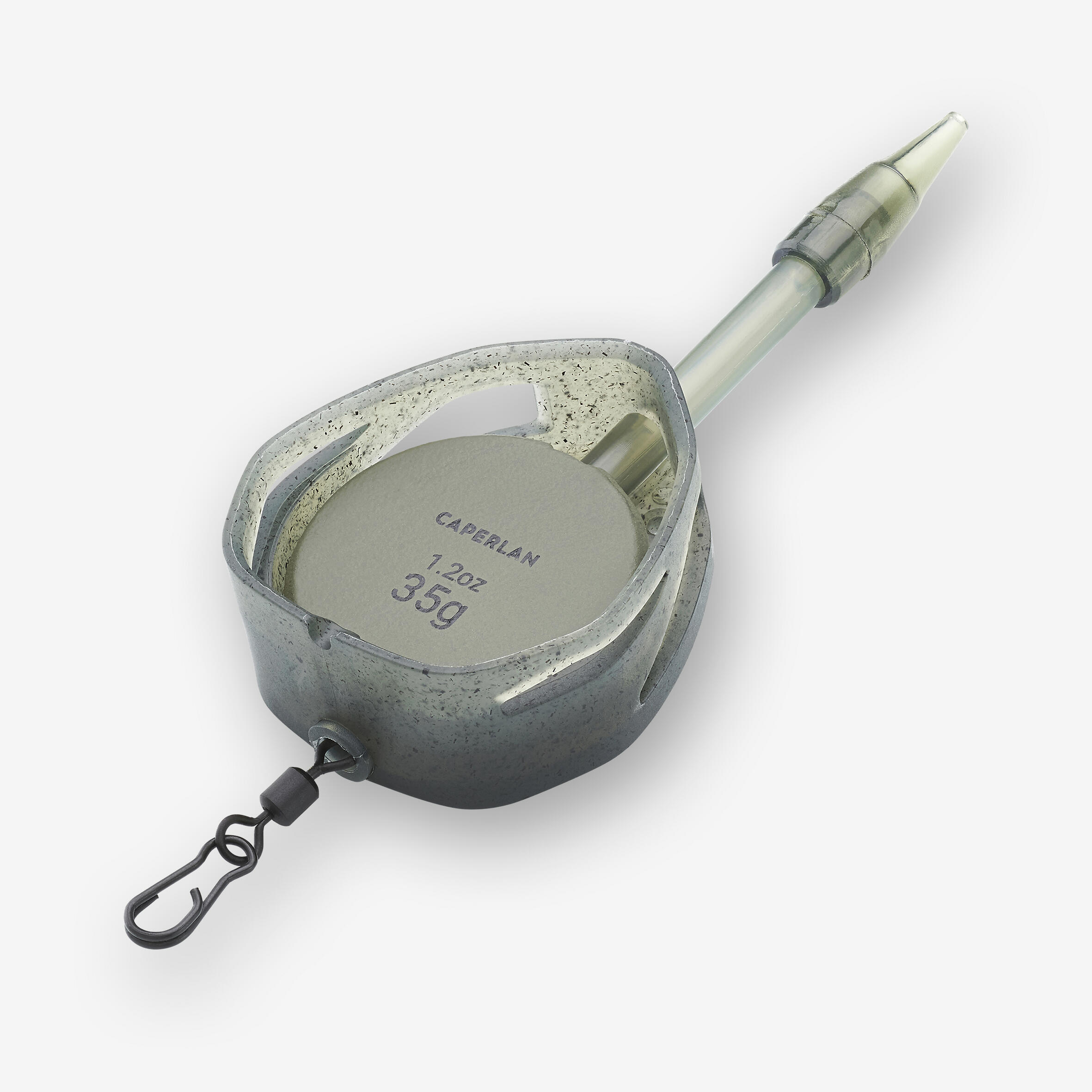
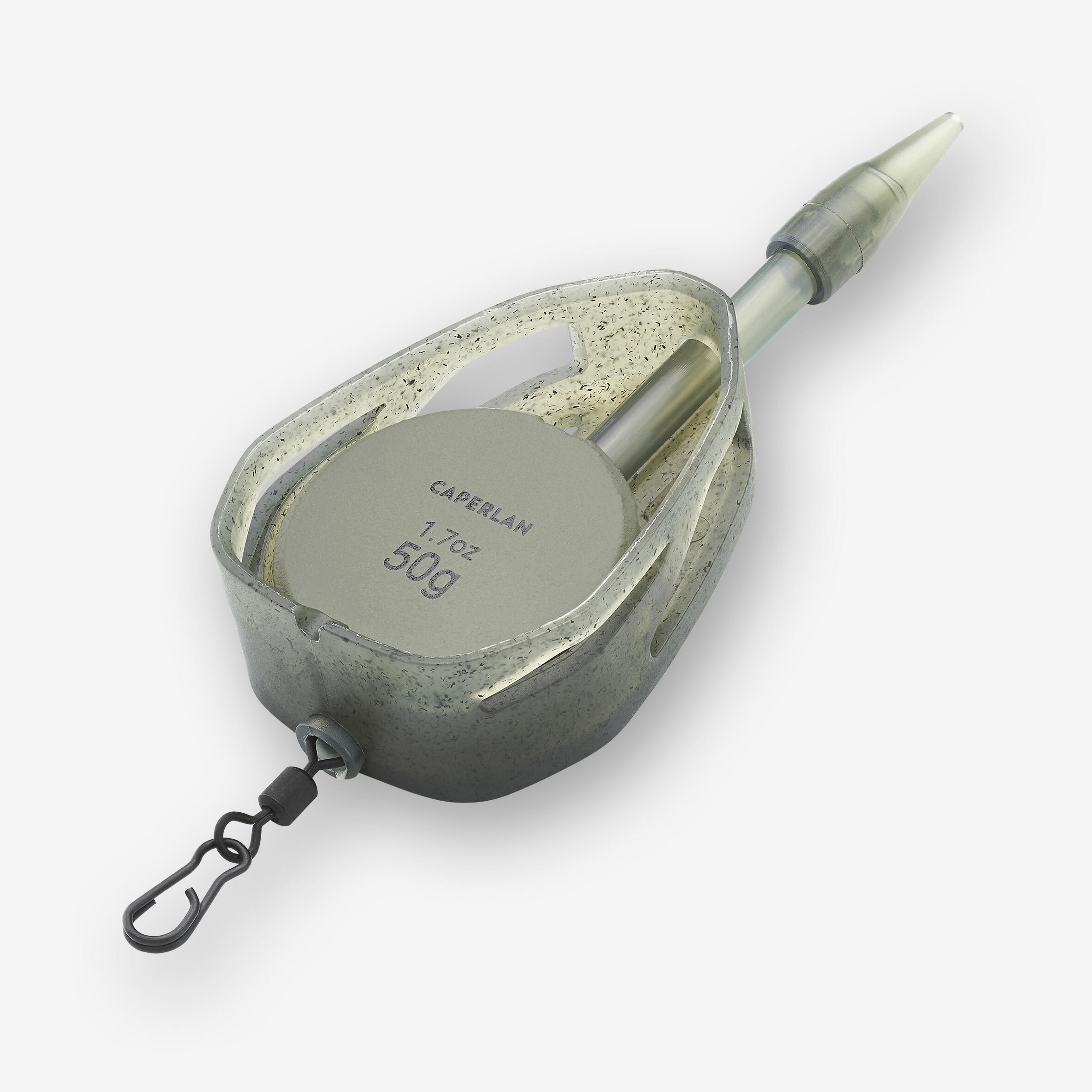
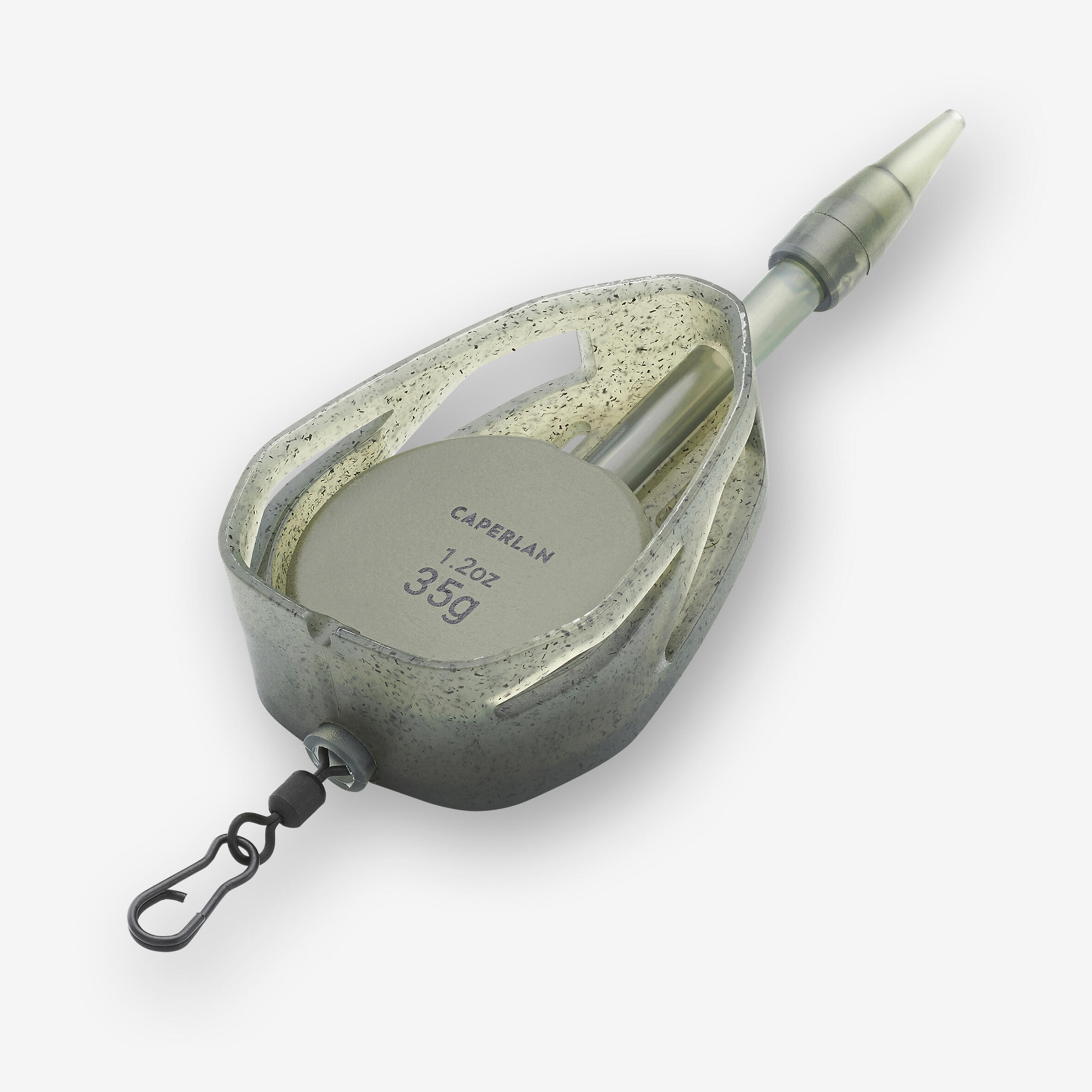
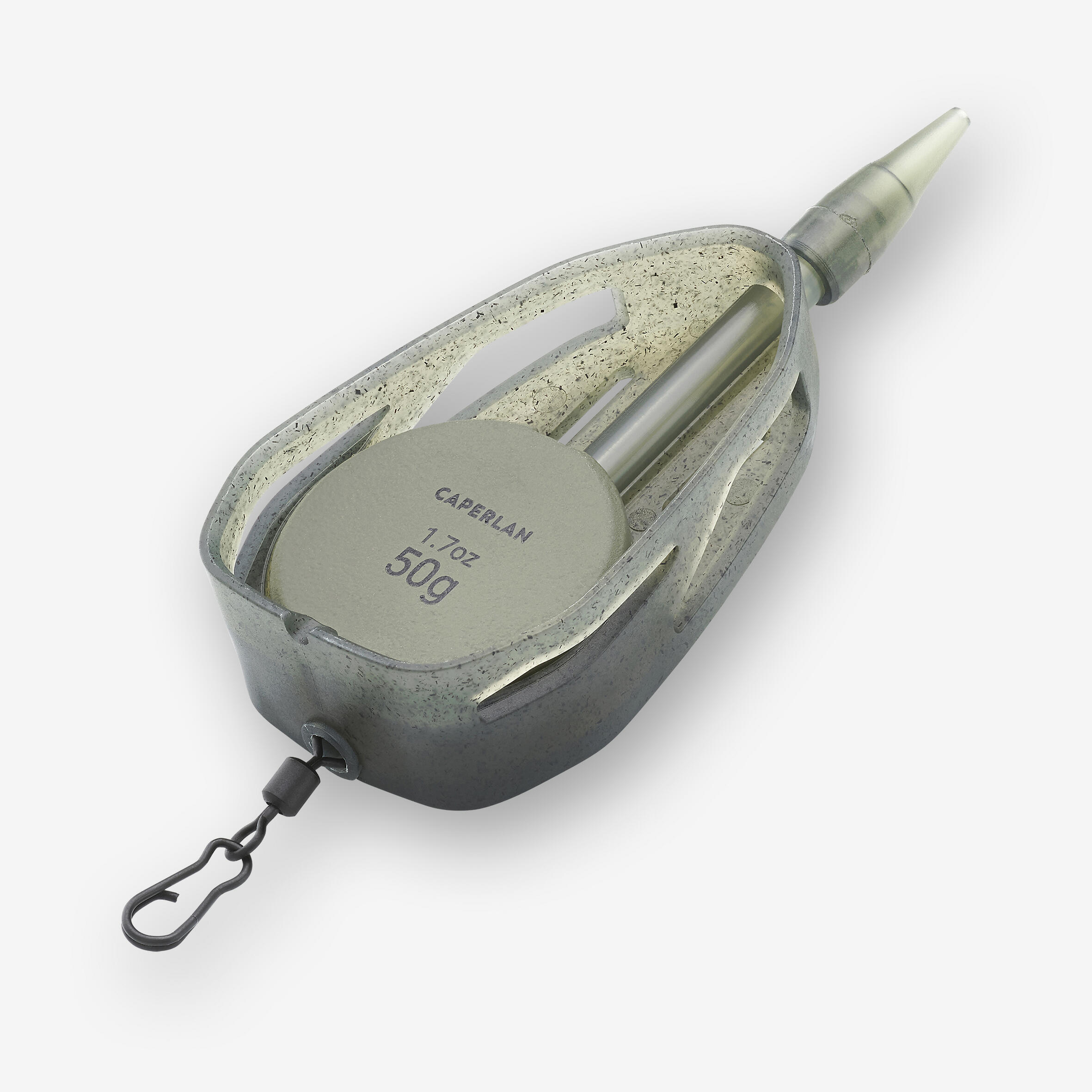
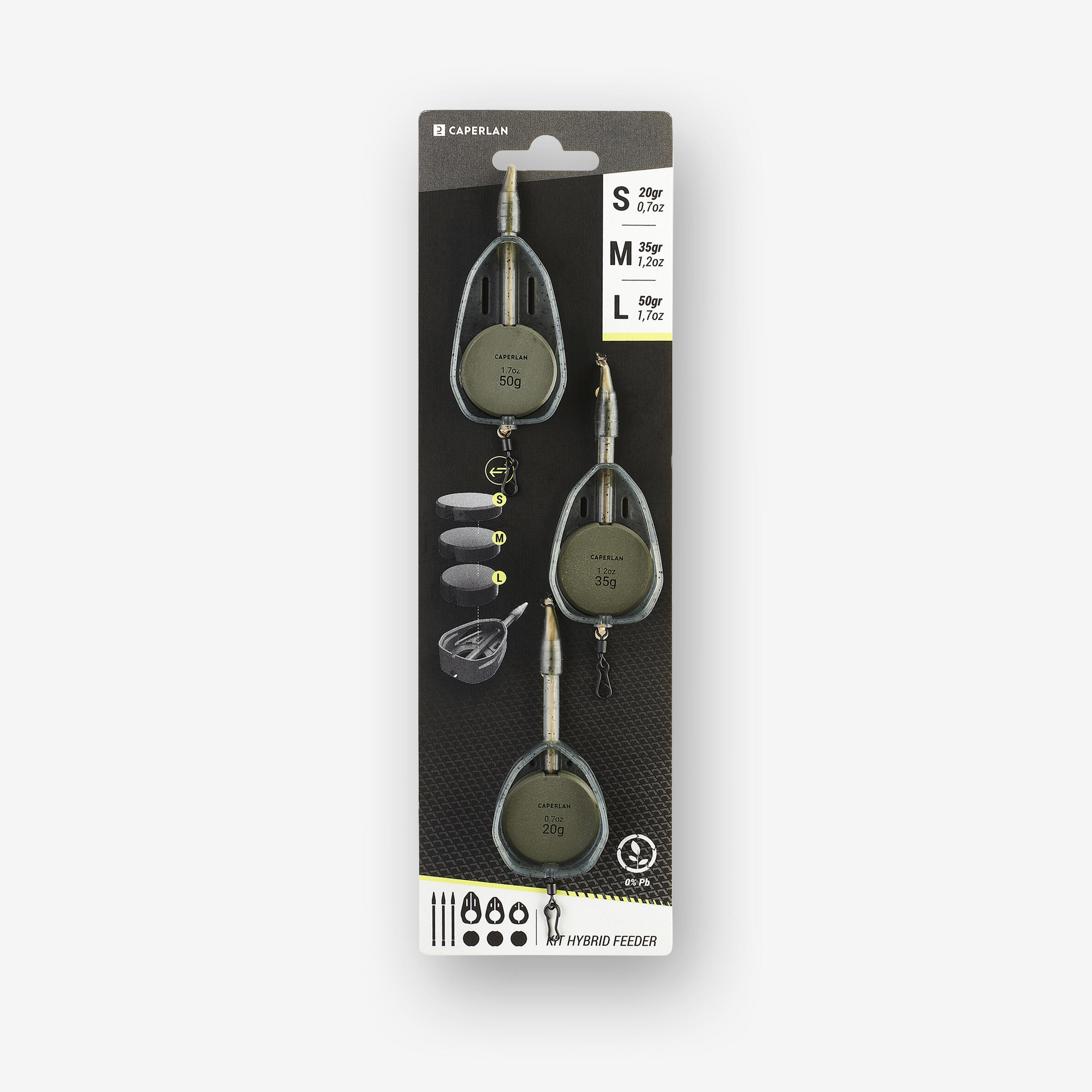
A conventional method feeder keeps bait concentrated around a short hooklength, while Caperlan's Hybrid Method format adds raised sides around the bait bed to help stabilise the moulded feed during casting. The modular system also separates feeder body size from sinker weight. Three frame sizes can be combined with 20 g, 35 g and 50 g steel weights, creating nine possible configurations without carrying nine complete feeders. The method hybrid feeder kit uses lead-free interchangeable weights and allows the feeder to be removed from the line without cutting the rig. This makes it easier to adjust casting distance, bait quantity or feeder weight during the same session.
What benefits do anti-tangle accessories provide when feeder fishing?

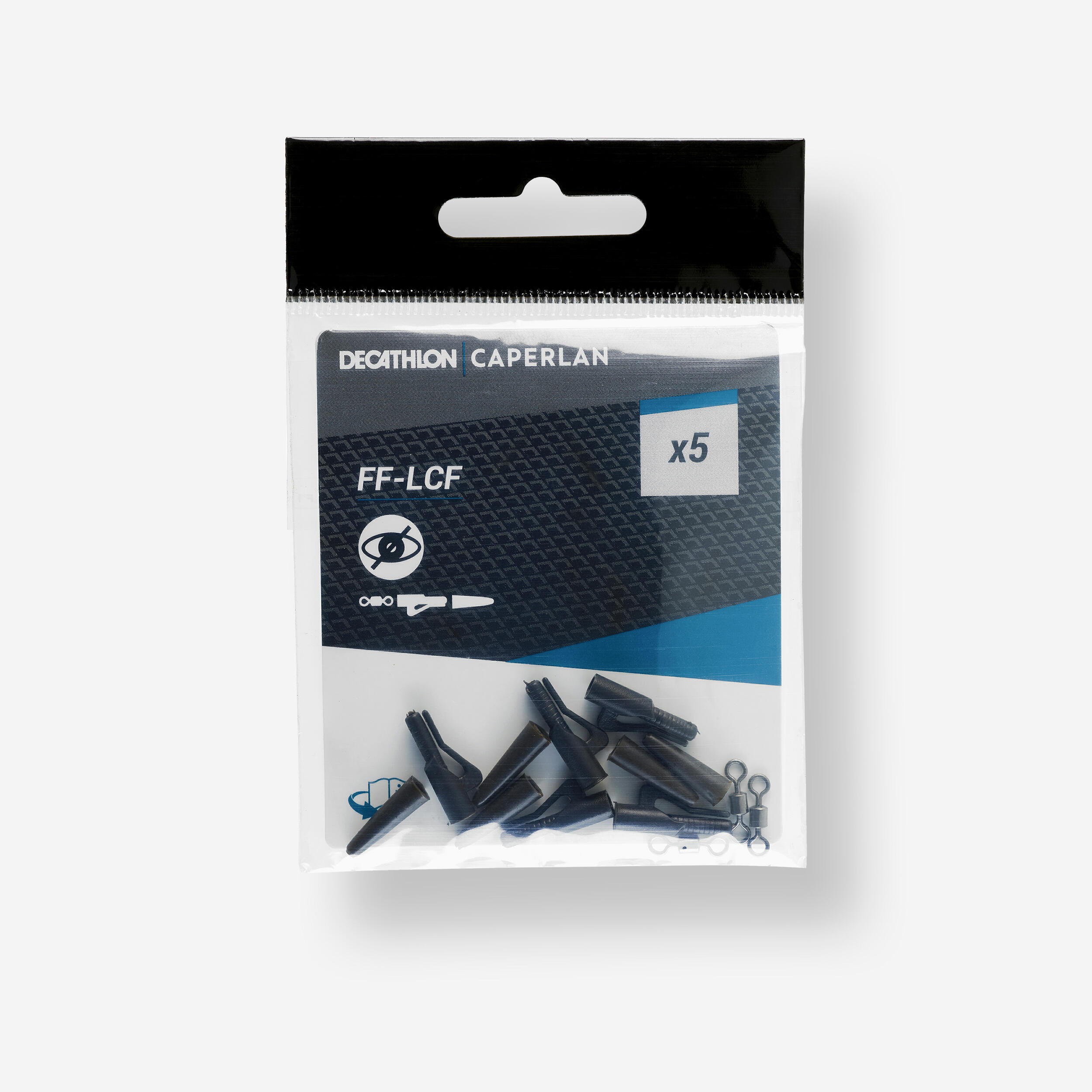
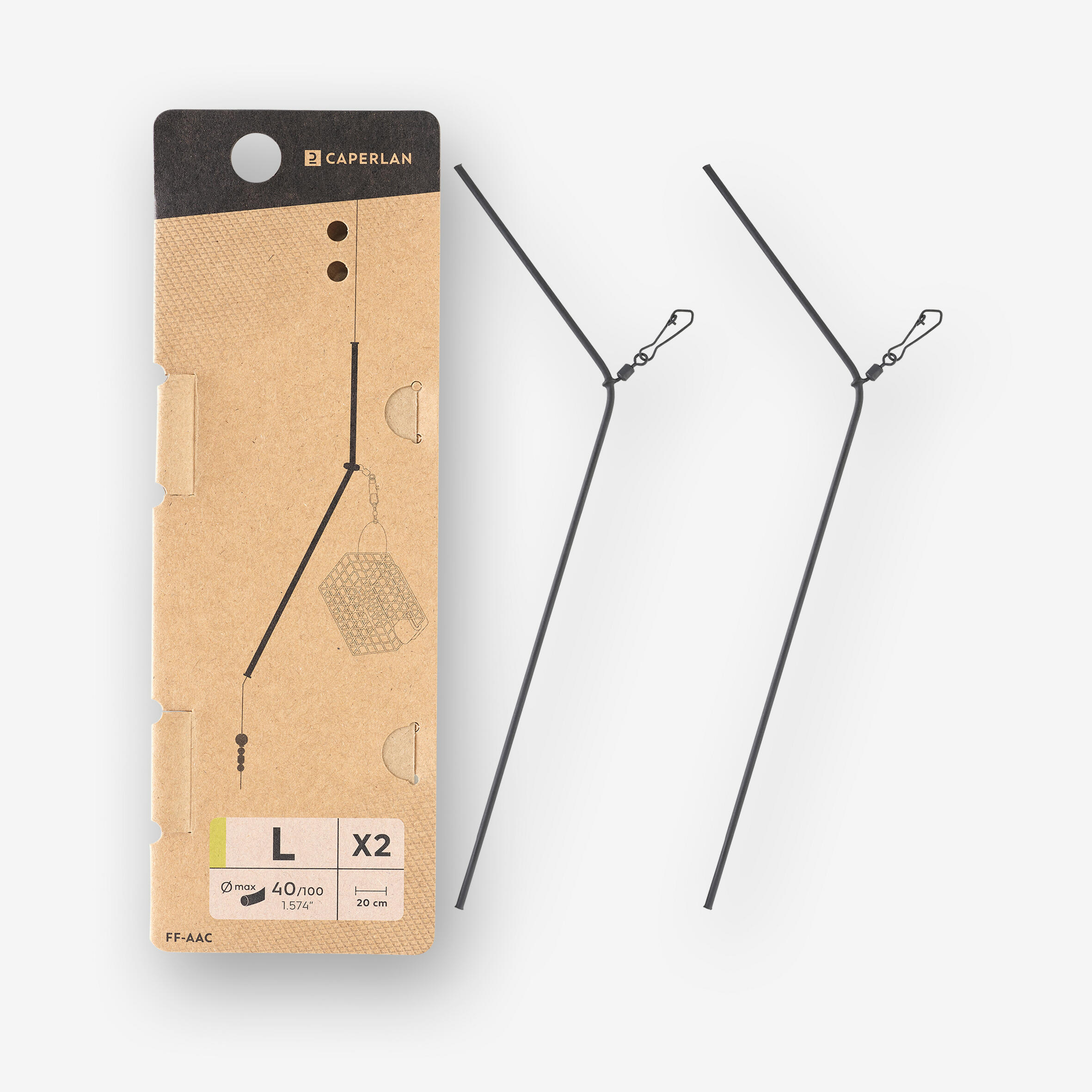
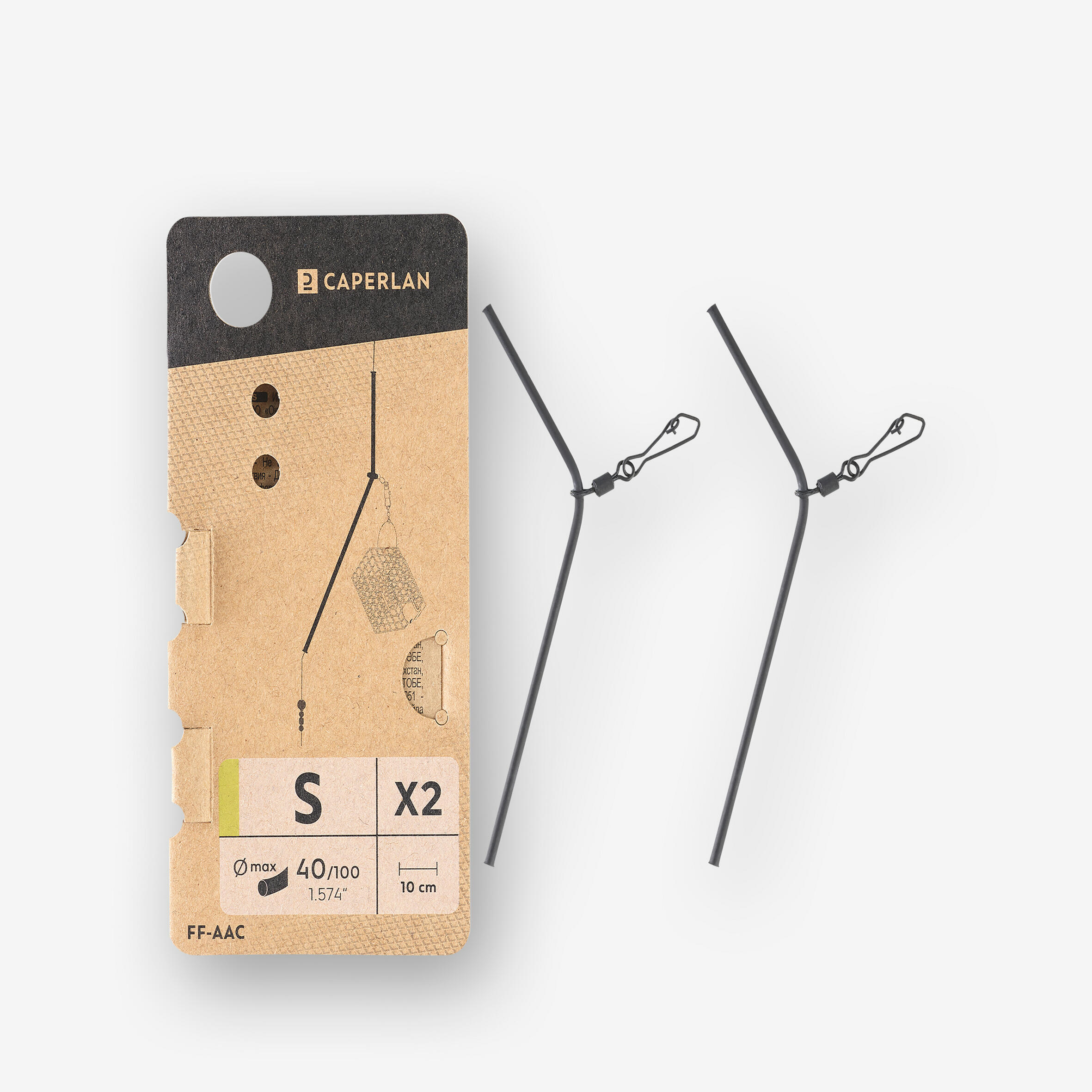
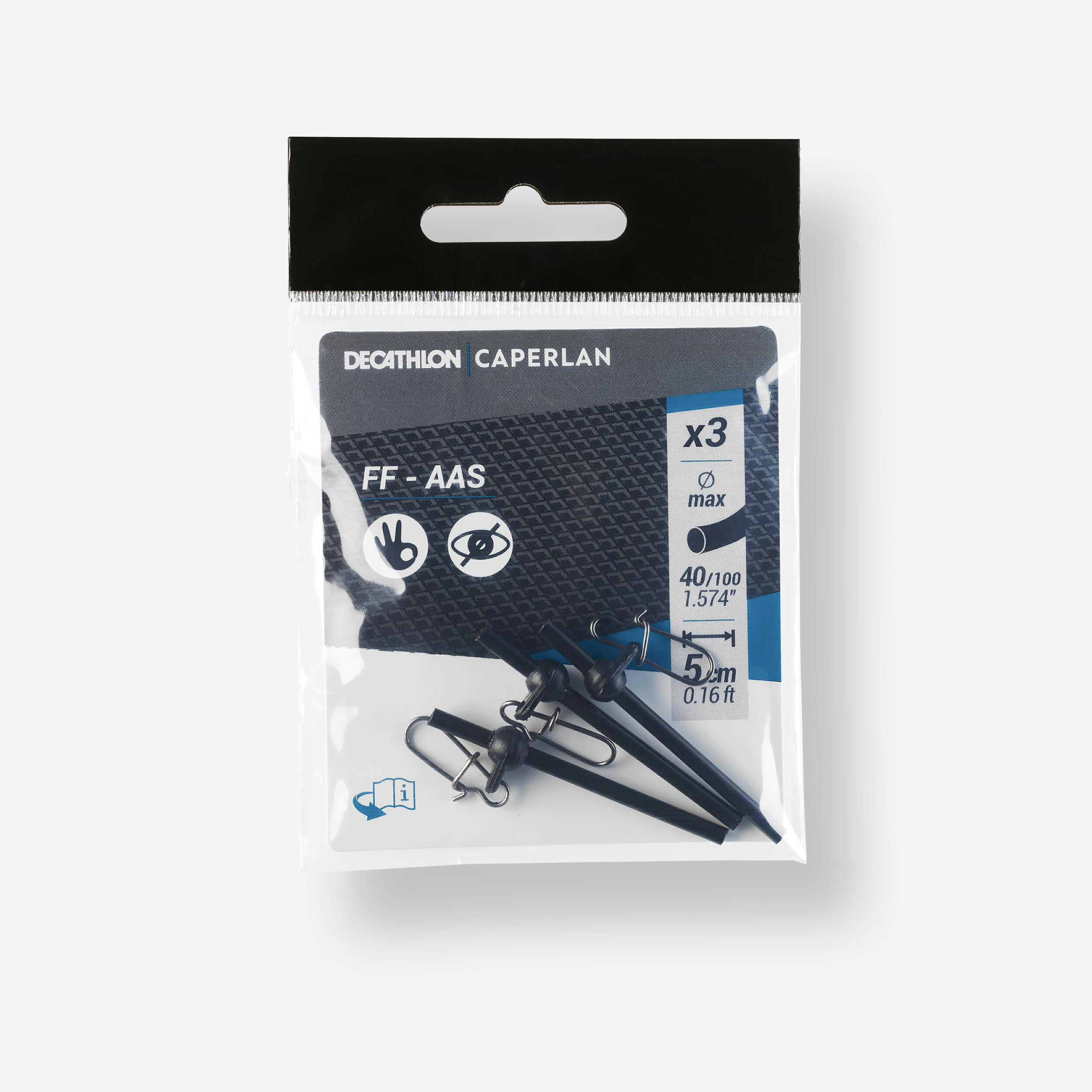
Feeder rigs combine a main line, feeder, hooklength and terminal connections, so the leader can sometimes wrap around other parts during casting. An anti-tangle component creates separation between the feeder connection and hooklength, helping the rig straighten more cleanly in flight and settle with fewer crossed sections. Caperlan's 20 cm anti tangle feeder accessory can be added when you want more separation in a conventional feeder setup. Check the tubing and connection points before each session, particularly if the rig has been stored assembled. Keeping the hooklength straight and undamaged is just as important as the anti-tangle part itself for a tidy presentation.
What does a feeder fishing accessories kit include for beginners?

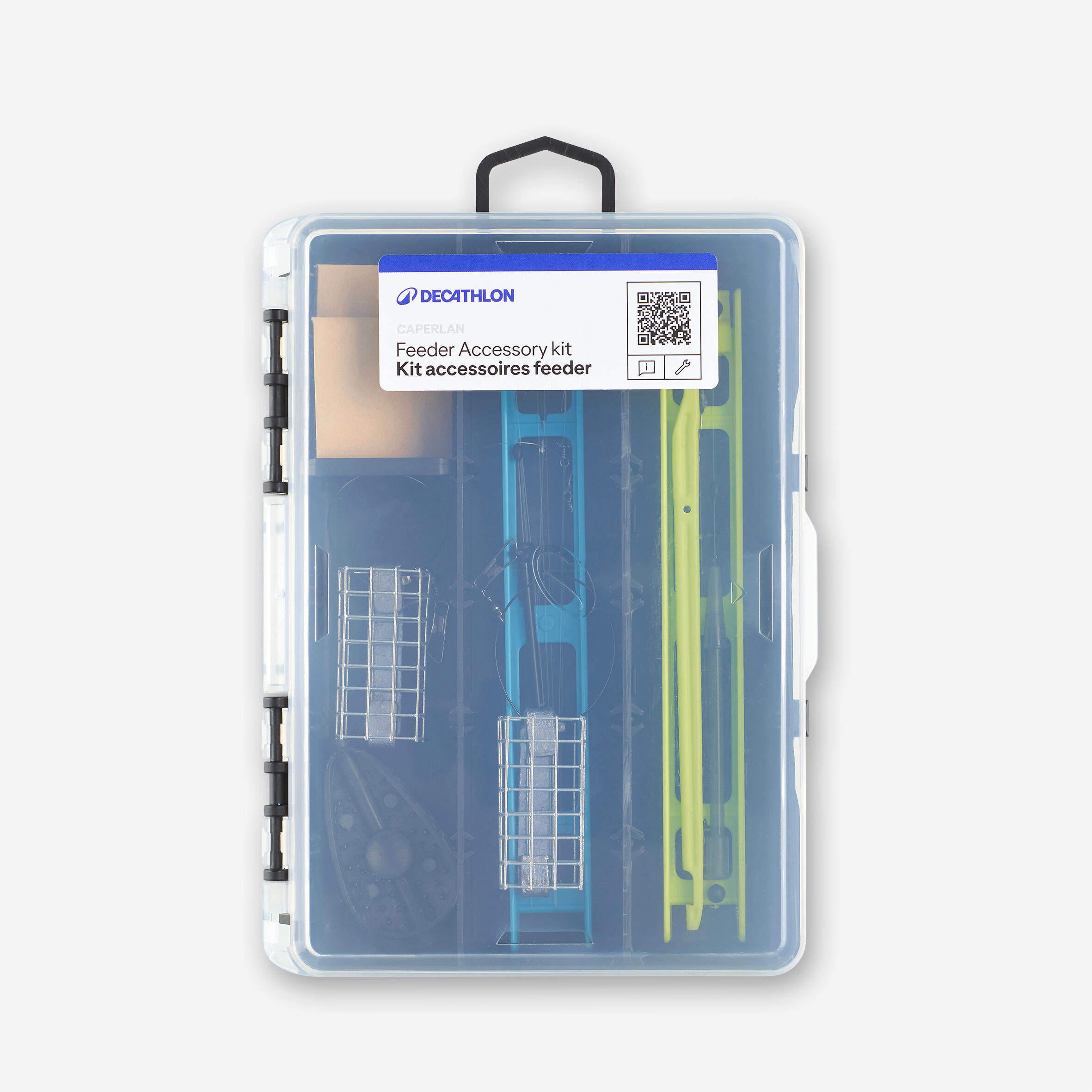
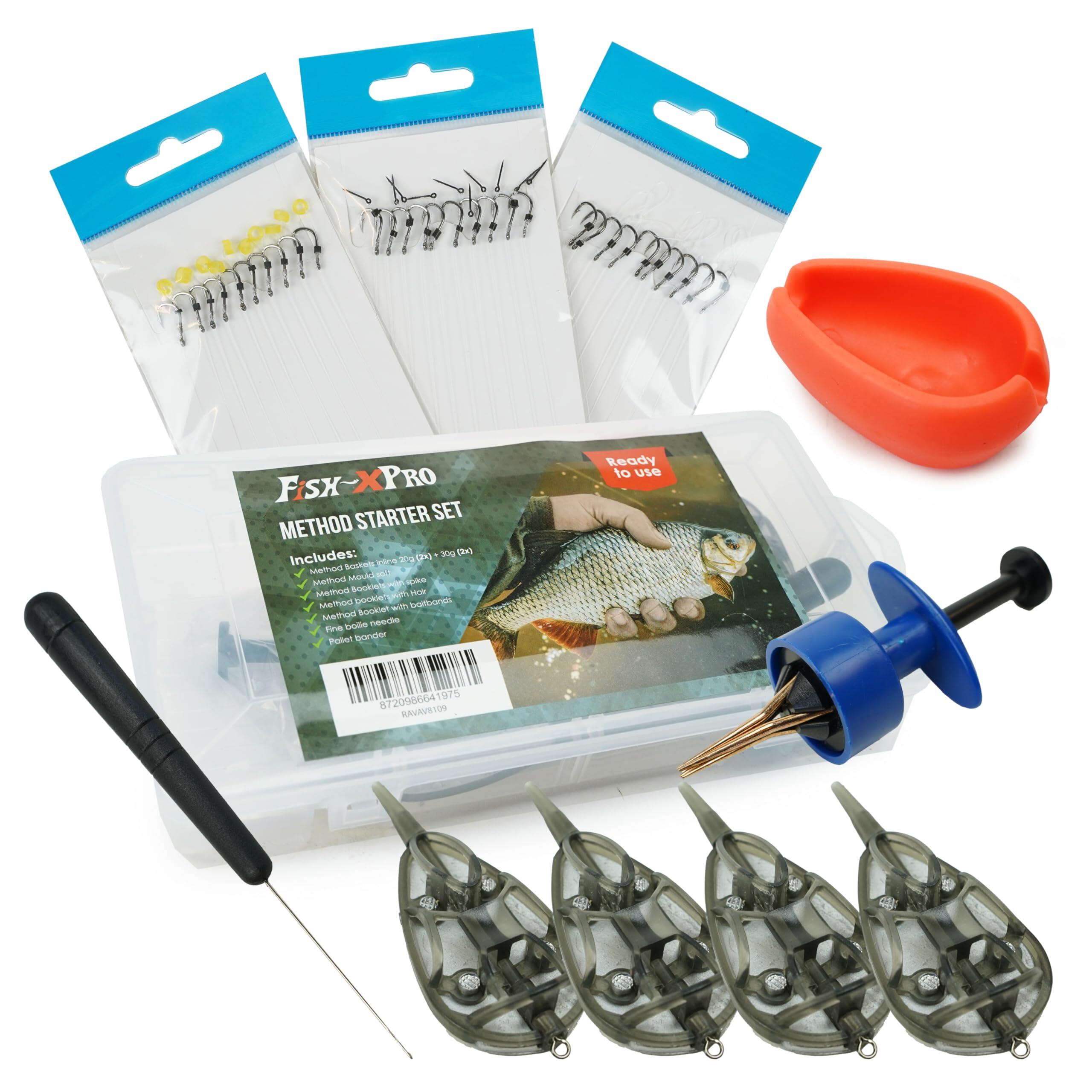
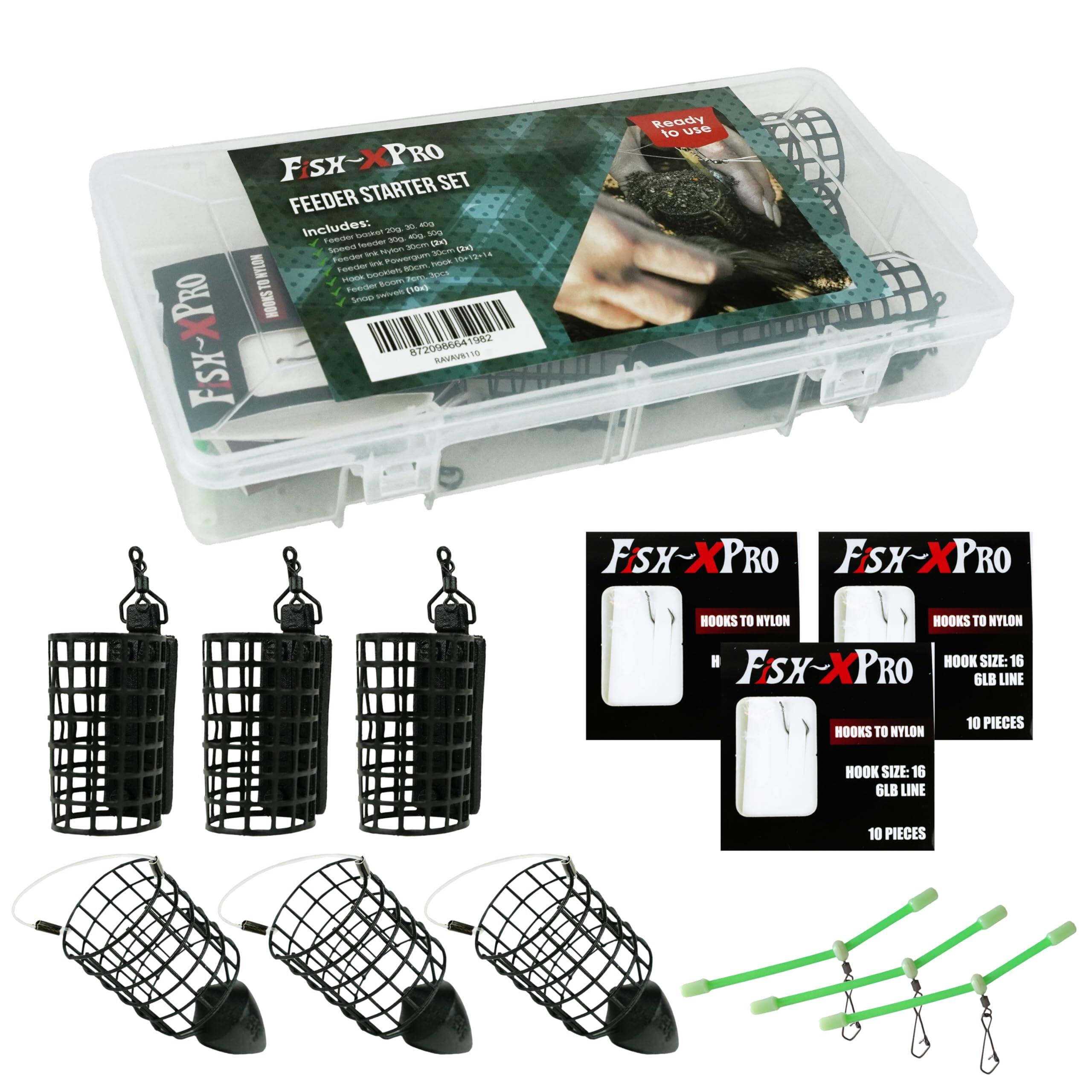
A starter kit can reduce the number of separate terminal pieces you need to select before learning the basic feeder rigs. Caperlan's feeder fishing accessories kit includes prepared setups for both method and conventional feeder fishing. The method rig uses a shorter 10 cm leader with stronger 24/100 line and a size 10 hook, while the conventional feeder rig uses a longer 60 cm leader and finer line. This gives you two noticeably different presentations rather than one general-purpose setup. Keep the prepared rigs separated in the supplied tackle box so hooklengths remain straight, and use each configuration as a reference when you begin tying replacement rigs yourself.

What care do fishing feeders need after use?

Feeders regularly contact wet groundbait, lake or river water and the bottom, so cleaning and dry storage help keep frames, swivels and weights working properly. Remove old bait after the session, rinse away grit where necessary and let every component dry fully before closing the tackle box. Caperlan specifically recommends keeping its modular Method Hybrid parts in a dry box, which helps protect the steel weights and connection points between trips. Organise feeders by weight and body size so you can quickly match them to the conditions next time. This approach also works well across your wider coarse fishing tackle, where keeping leaders, hooks and feeder components separated makes setup quicker and reduces avoidable tangles or damaged terminal gear.