25 items
4.7/5 based on 396 reviews collected online and in stores

Feeder Fishing Rods and Combos FAQs

How can you match feeder rod length to the right casting weight?

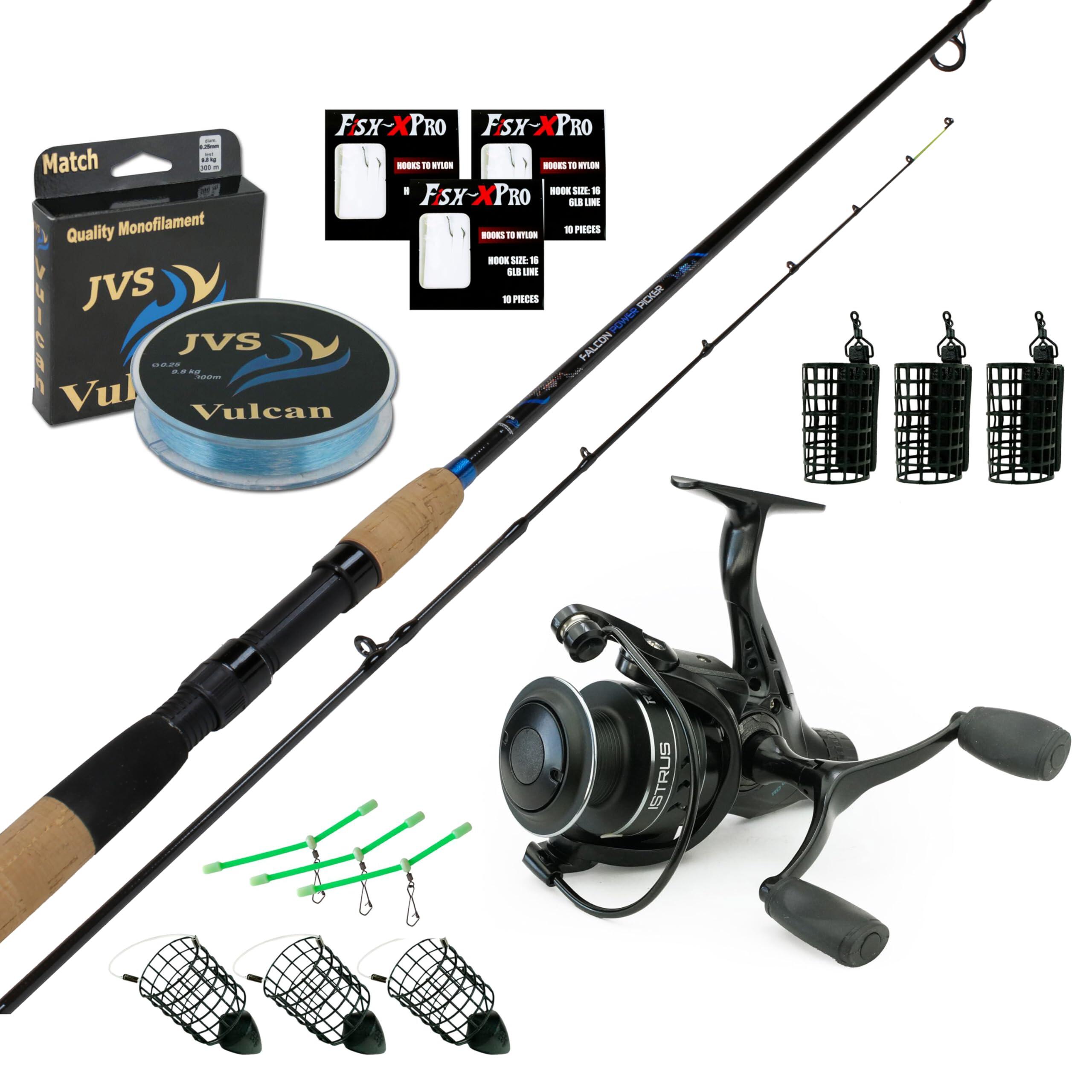
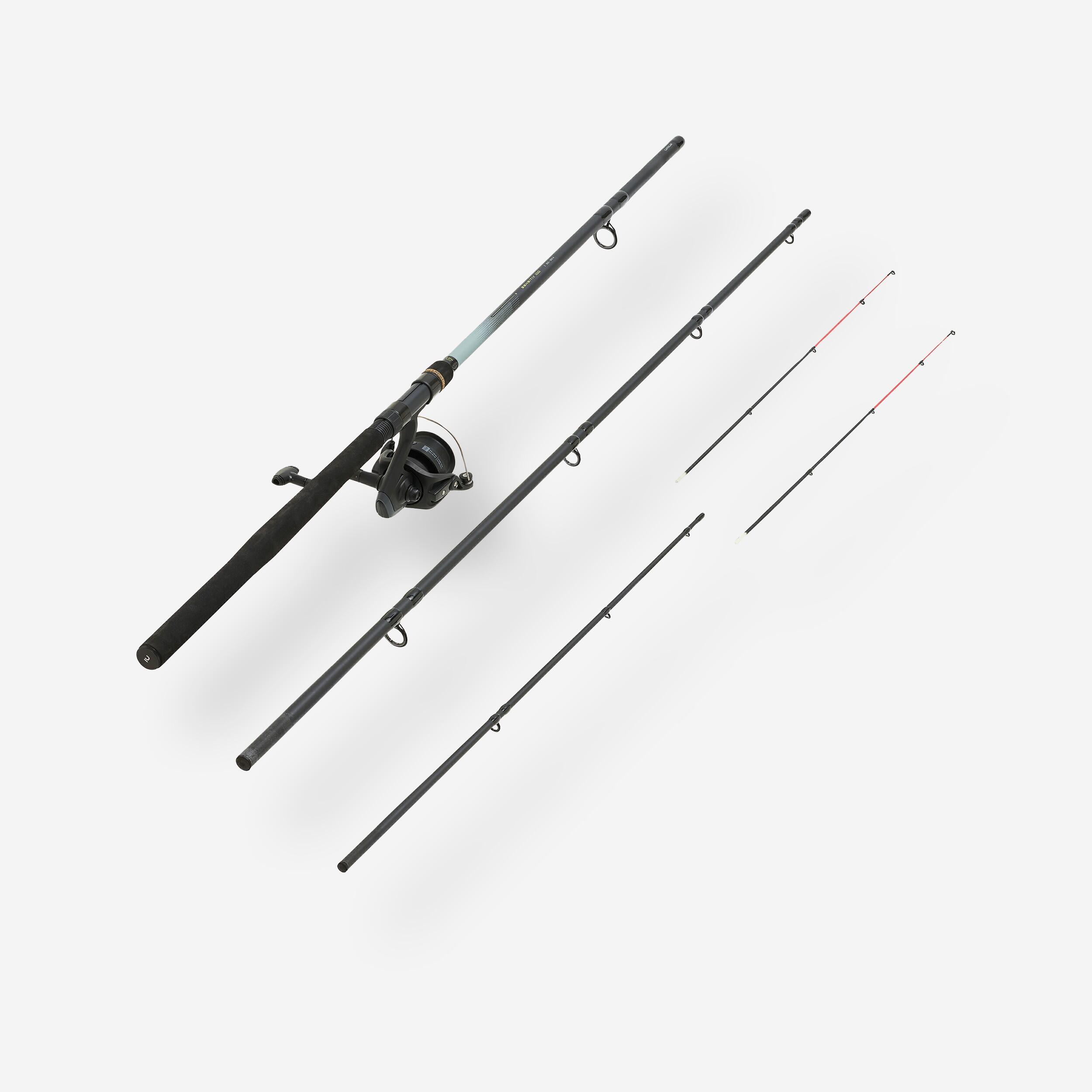
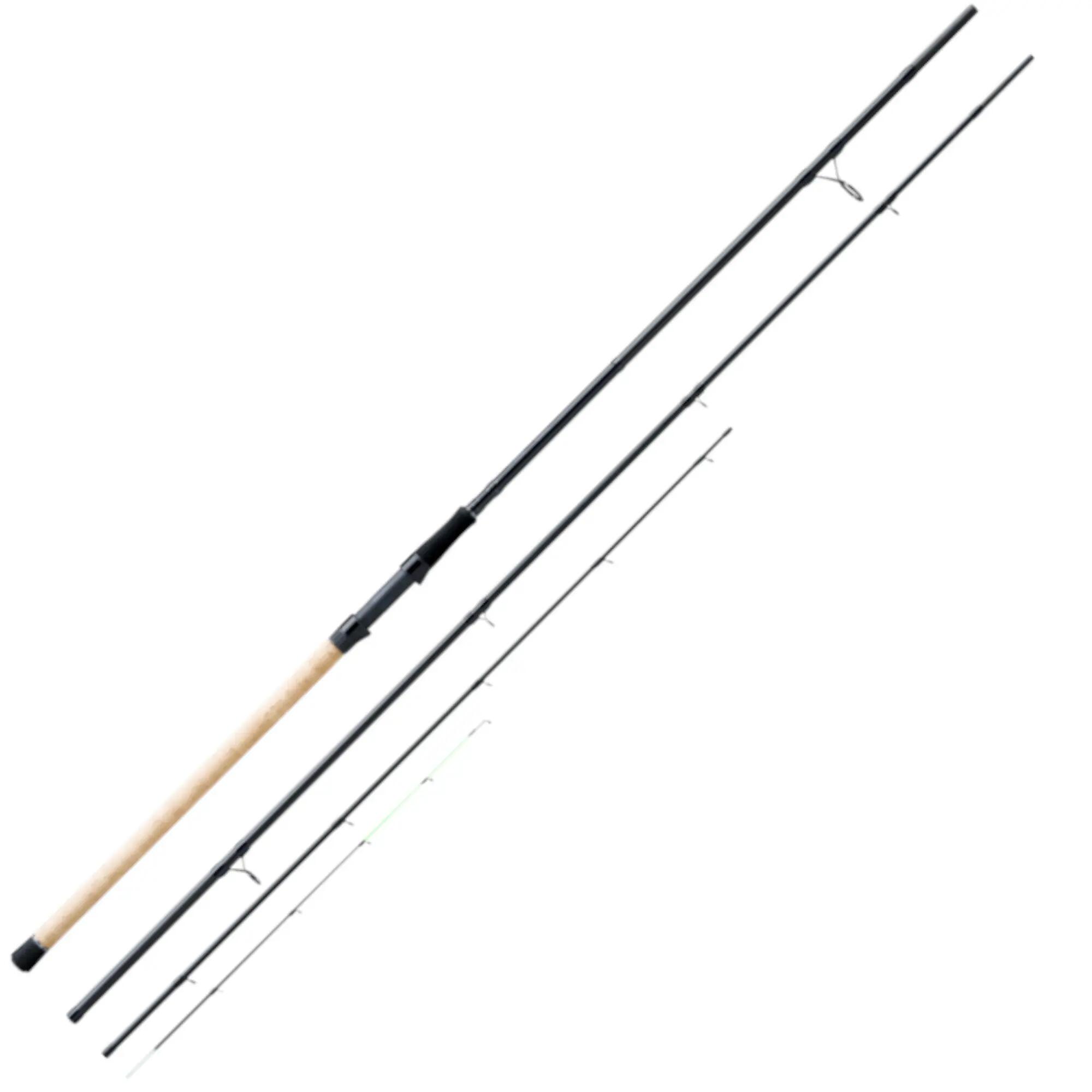
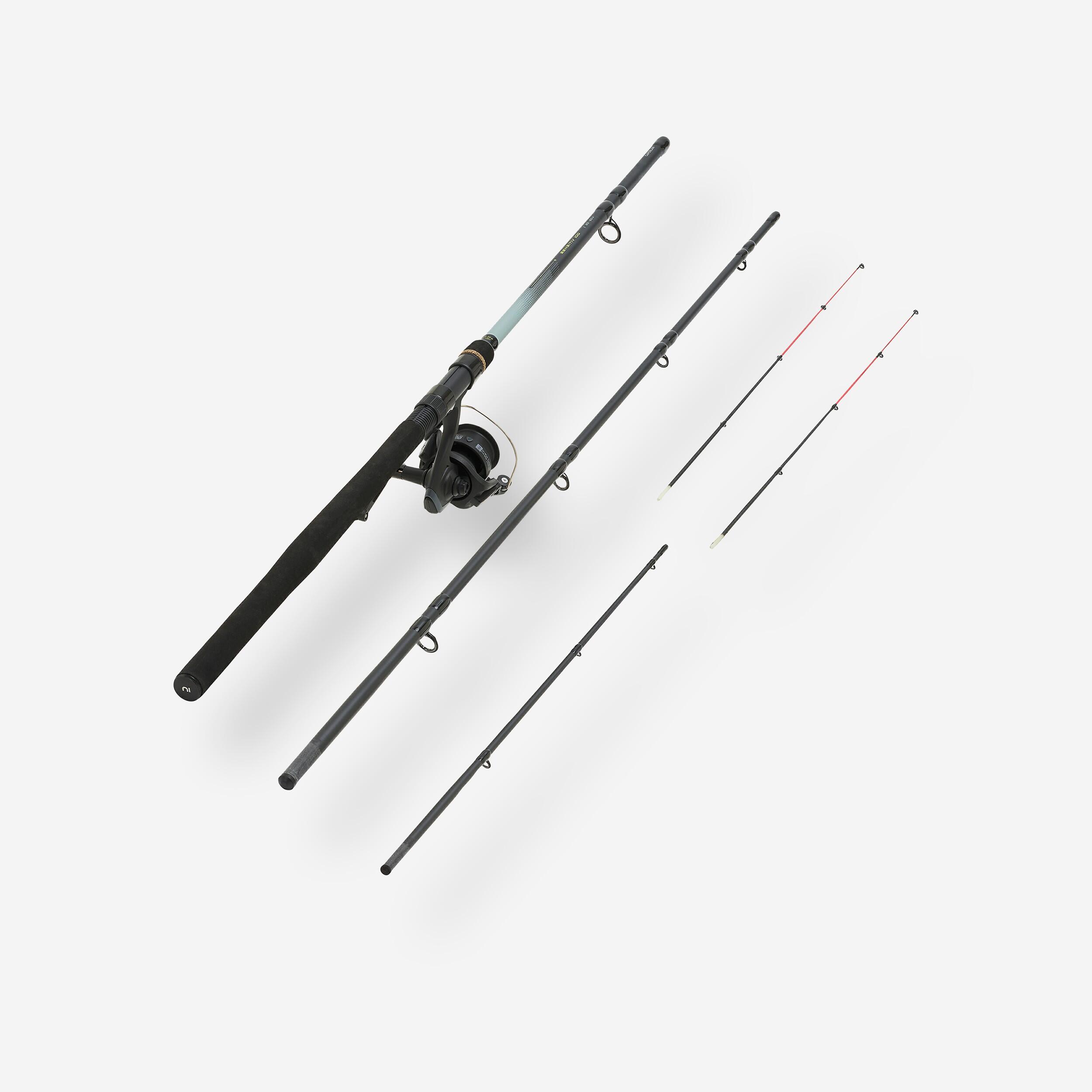
Start with the fishing distance and the total weight of the feeder rig you expect to cast. Caperlan's Sensitiv range provides a useful progression: 3 m rods suit shorter to medium distances, while 3.60 m models give you extra length for reaching further swims. Casting ratings also range from lighter 10-40 g and 20-60 g setups to heavier method-feeder rods rated up to 100 g. Staying inside the rod's stated range helps the blank load progressively during the cast rather than forcing it with excessive weight. The feeder fishing set Sensitiv pairs a 3.60 m rod rated for 50-90 g with a size-5000 reel, making it suitable when medium to longer casting distances are part of the session.

When is a telescopic feeder fishing combo useful?

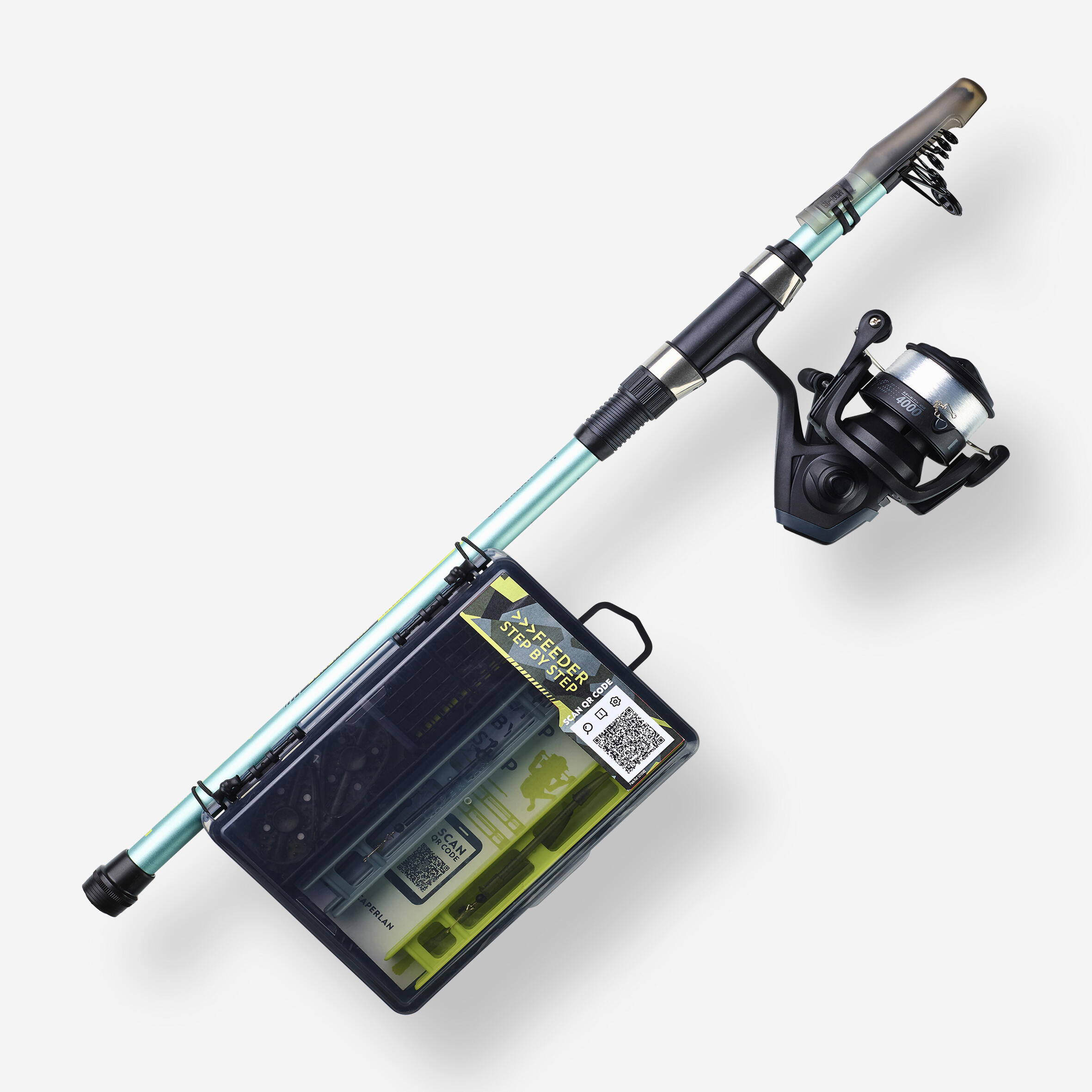
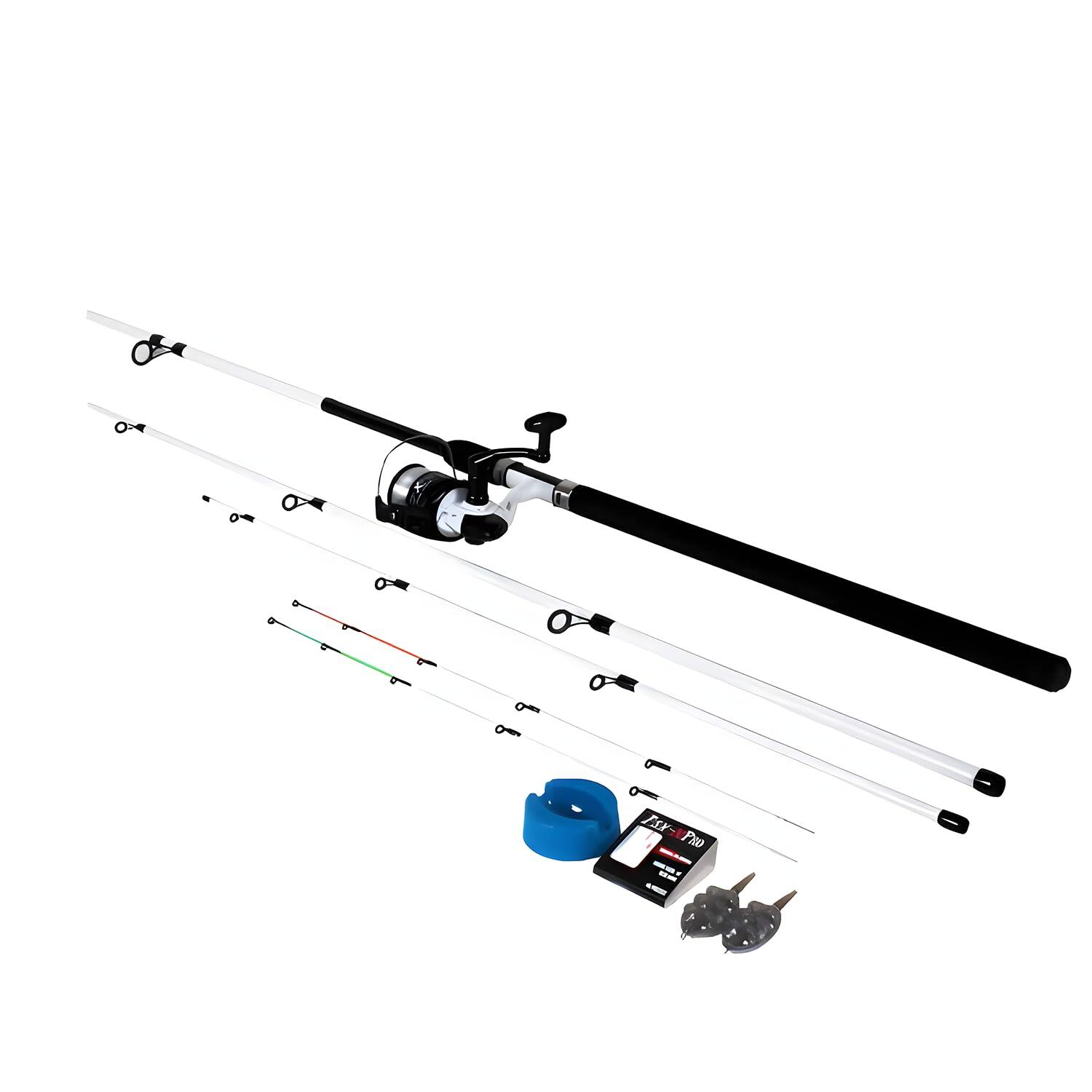
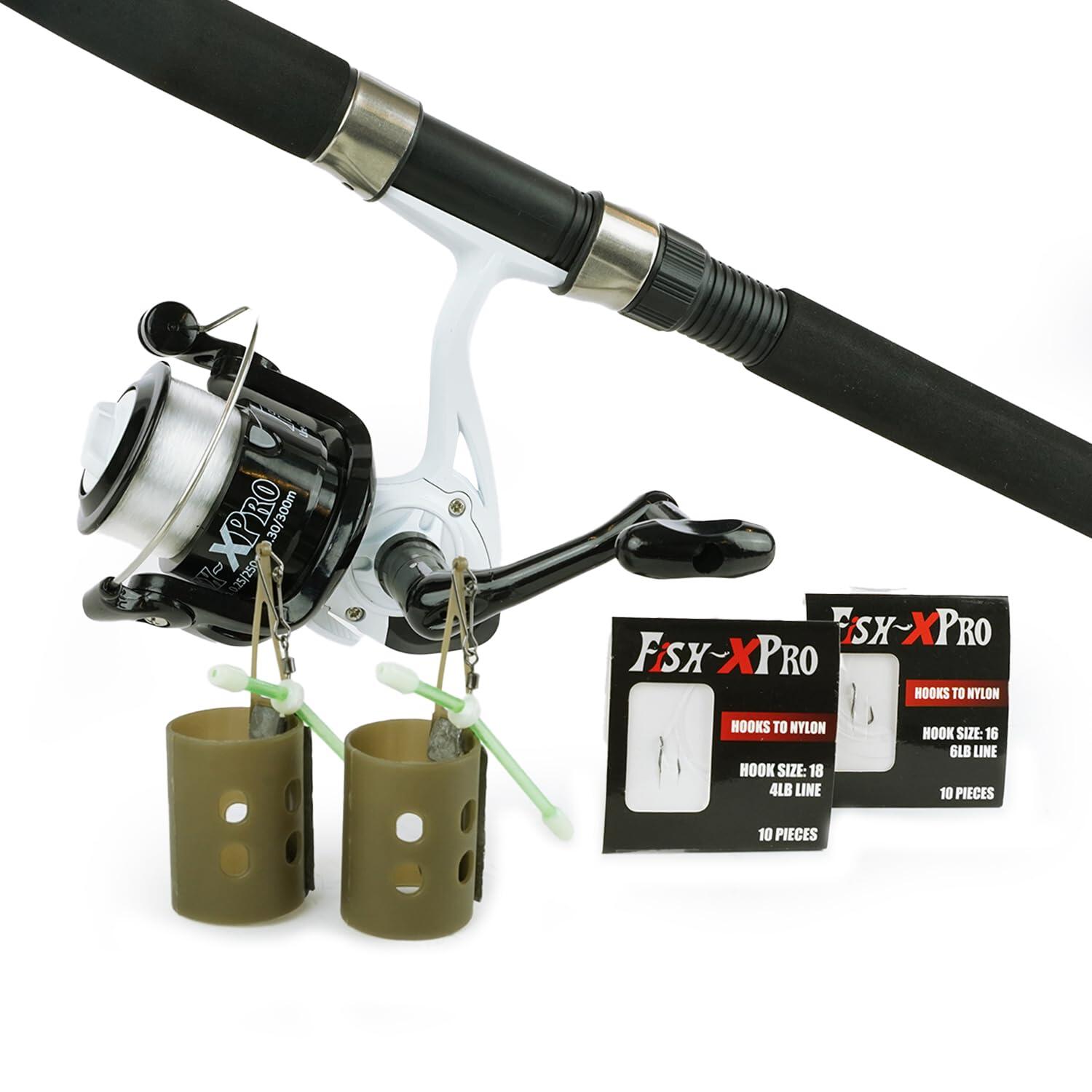
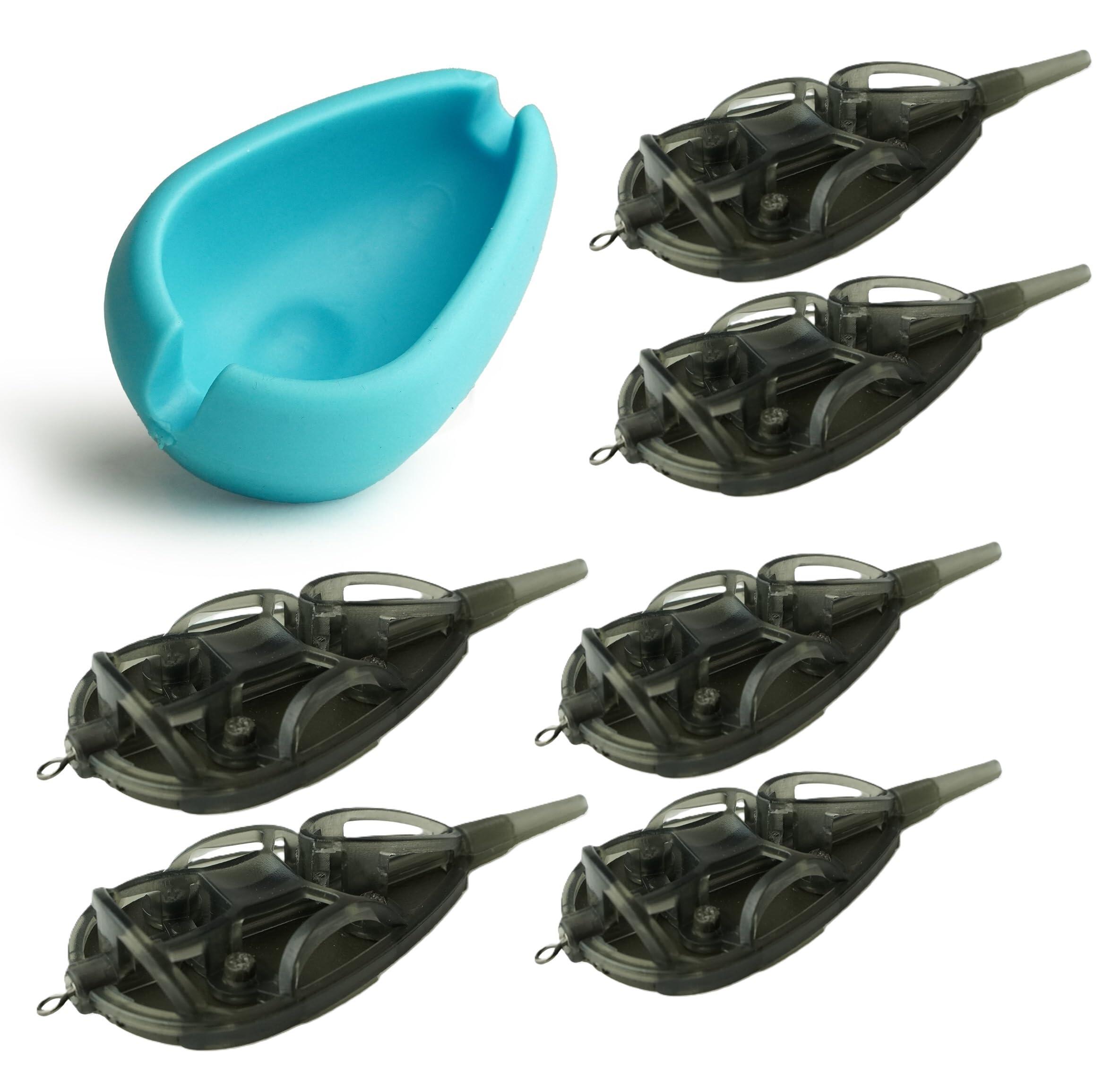
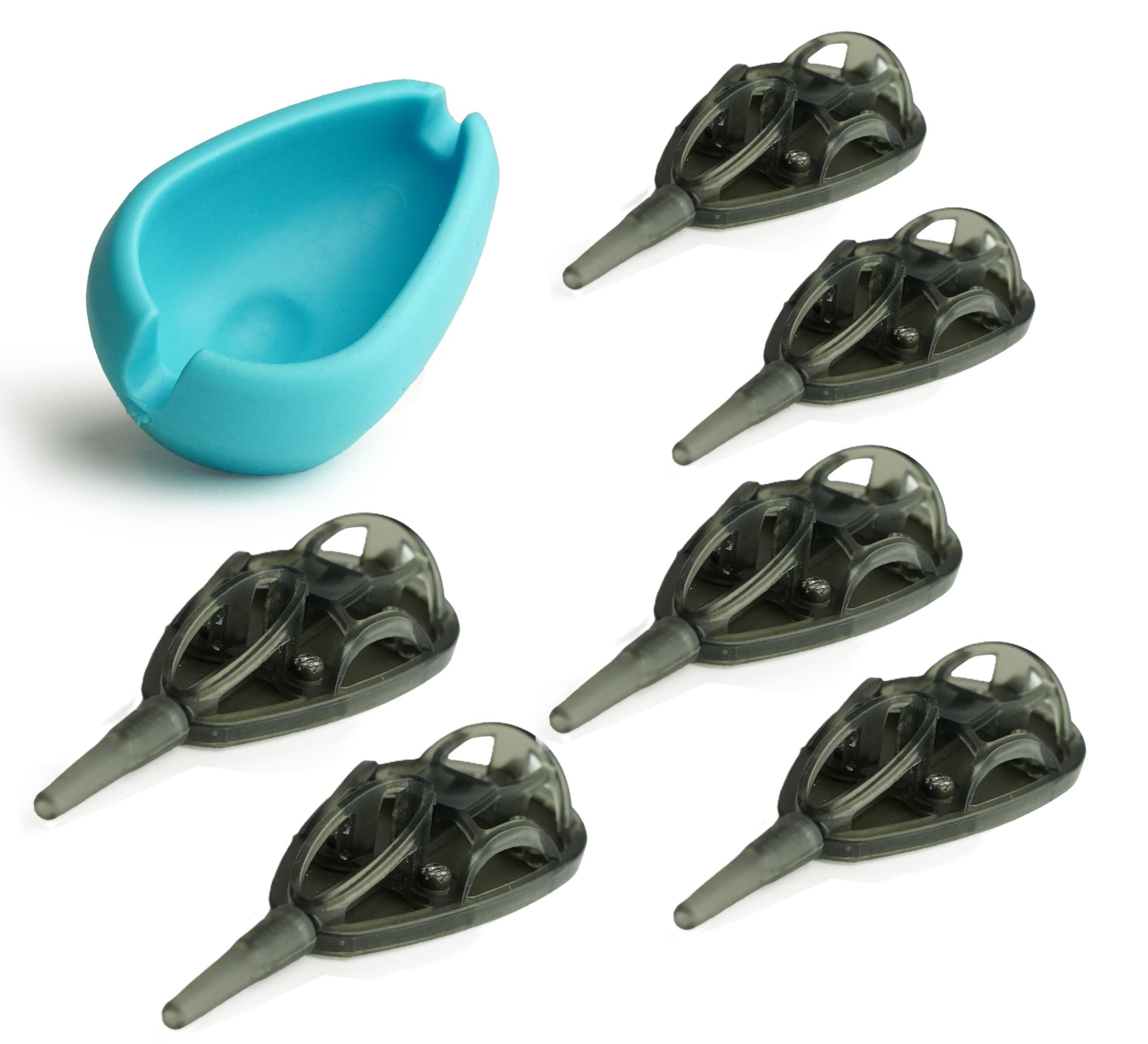
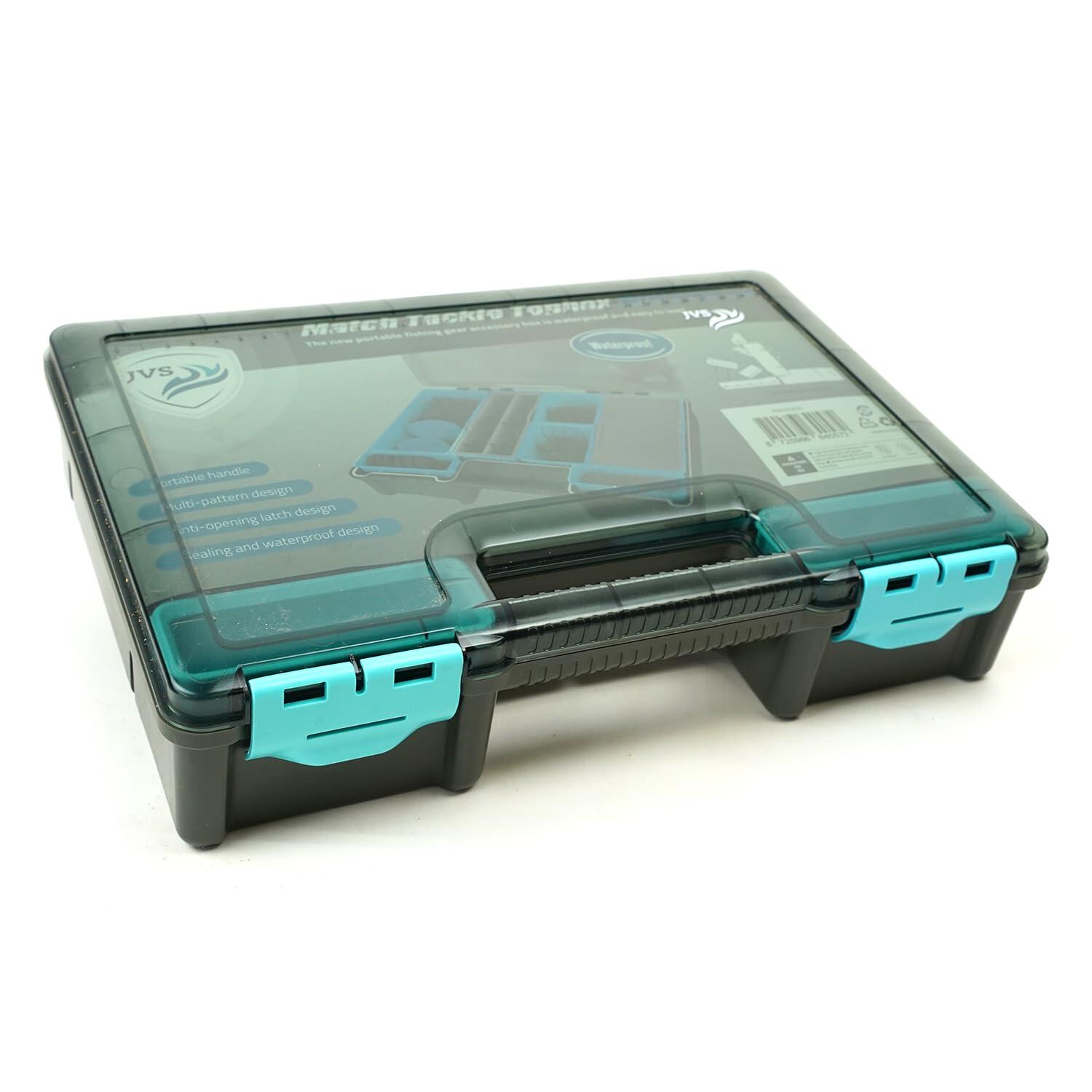
A telescopic setup can make sense when transport space and quick preparation matter more than having a multi-section rod. Caperlan's beginner Sensitiv system reduces the number of separate pieces you need to carry and combines the rod with much of the equipment required to start feeder fishing. The telescopic feeder fishing combo set includes a pre-spooled reel, feeders, pre-rigged lines, barbless hooks, a disgorger and a small tackle box. Printed instructions and QR-linked guidance also support first-time setup. A slower rod action can help beginners because the blank bends progressively during casting and when playing a fish. Check that each telescopic section is fully extended and aligned before casting so the rod works as intended.

What effect do different quiver tips have on bite detection?

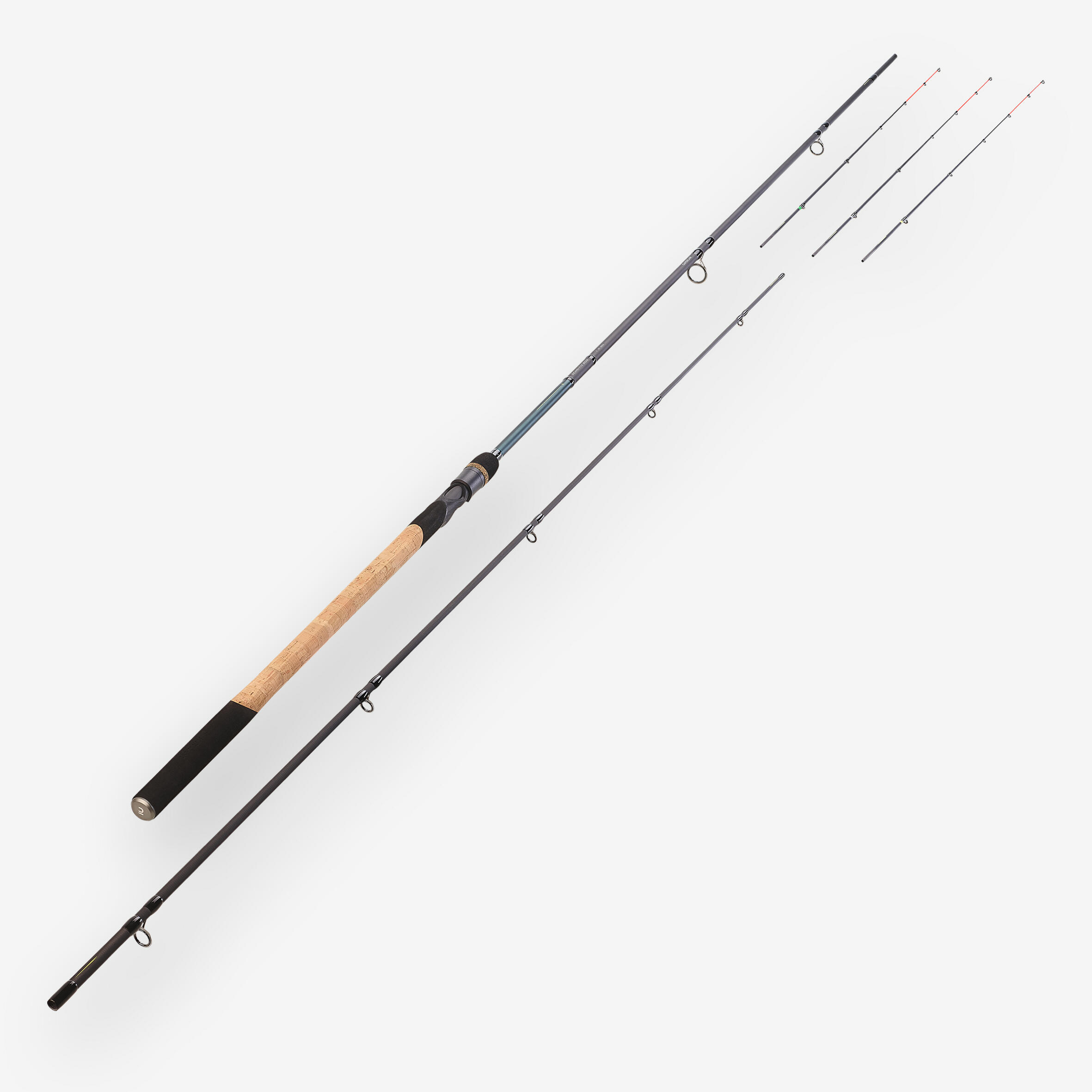
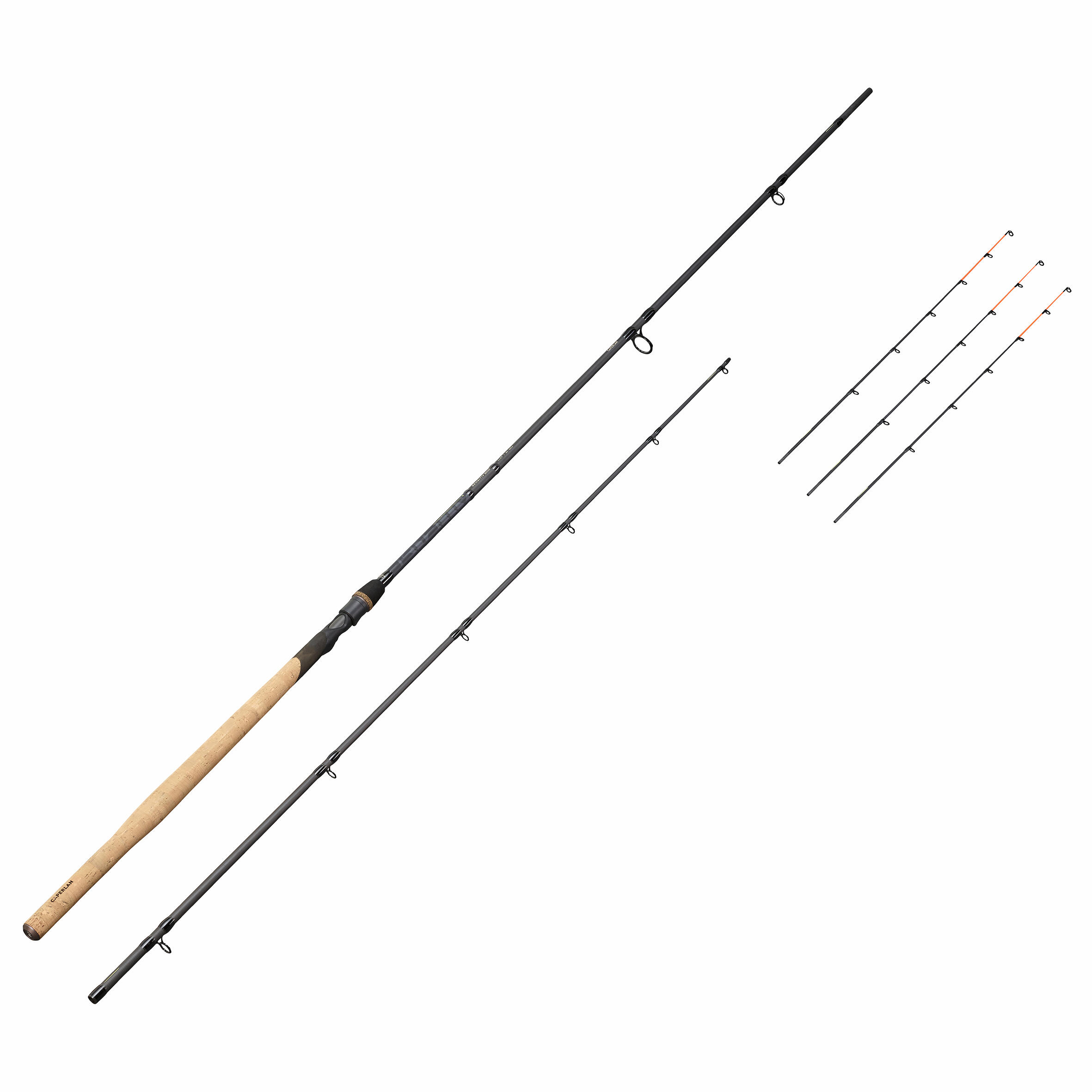
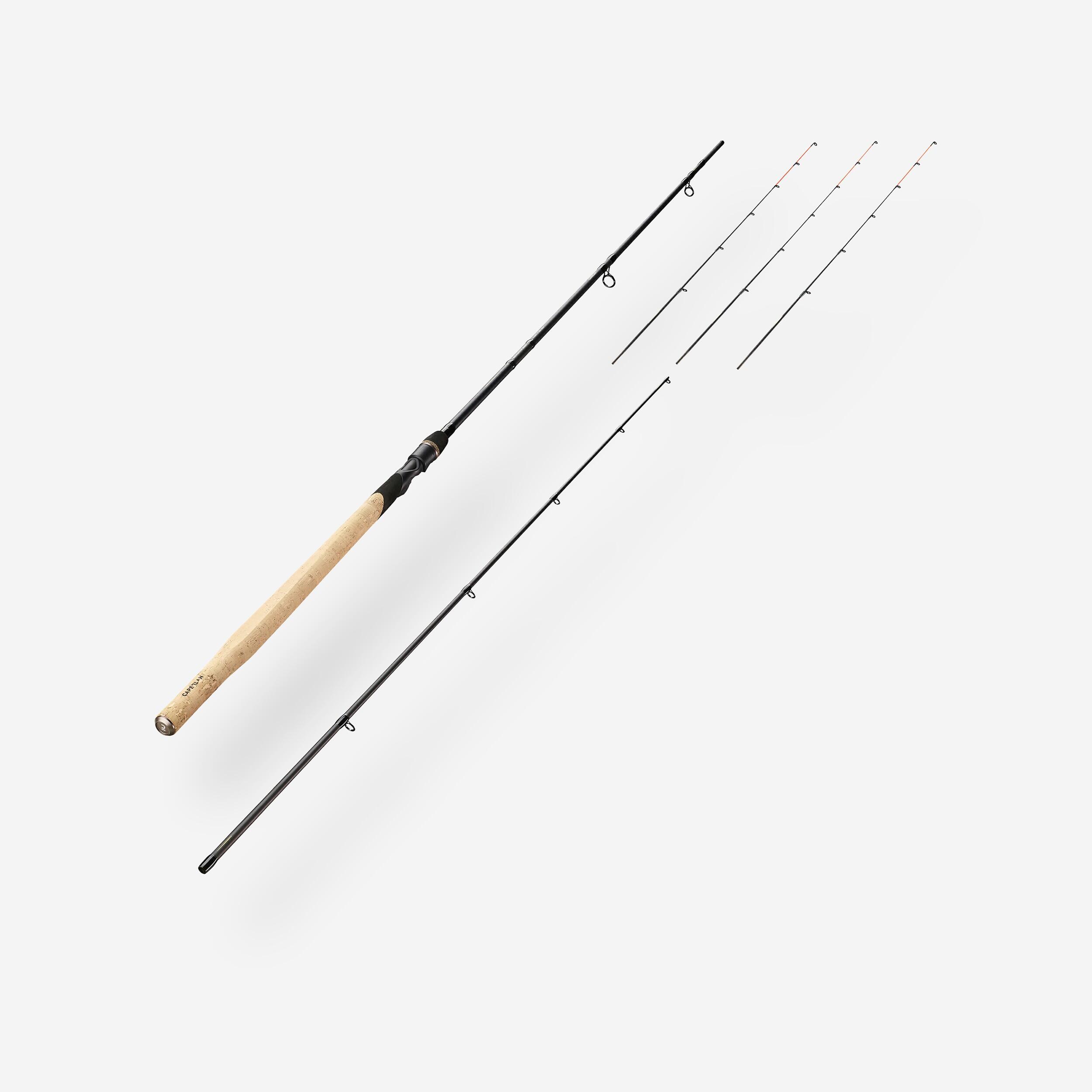
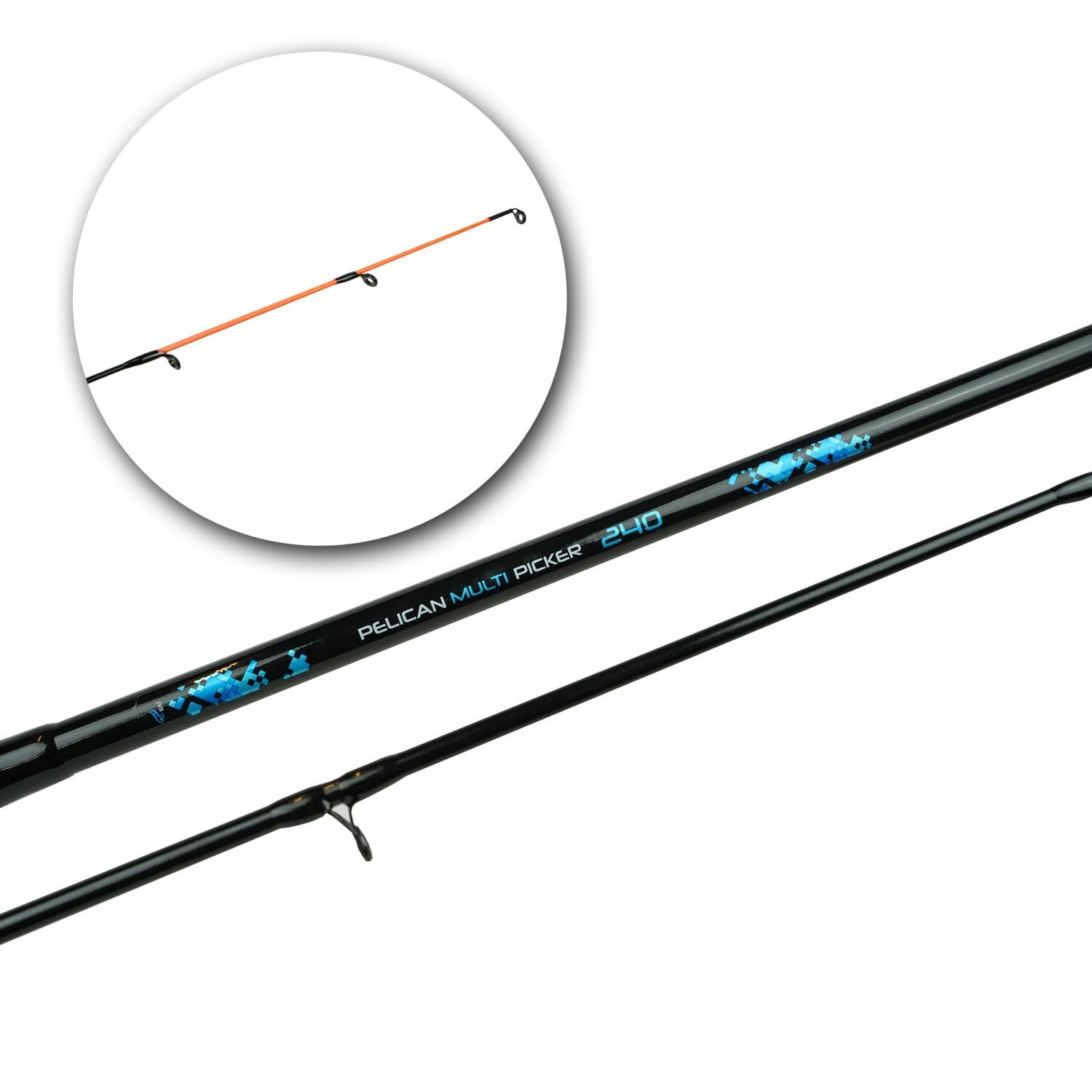
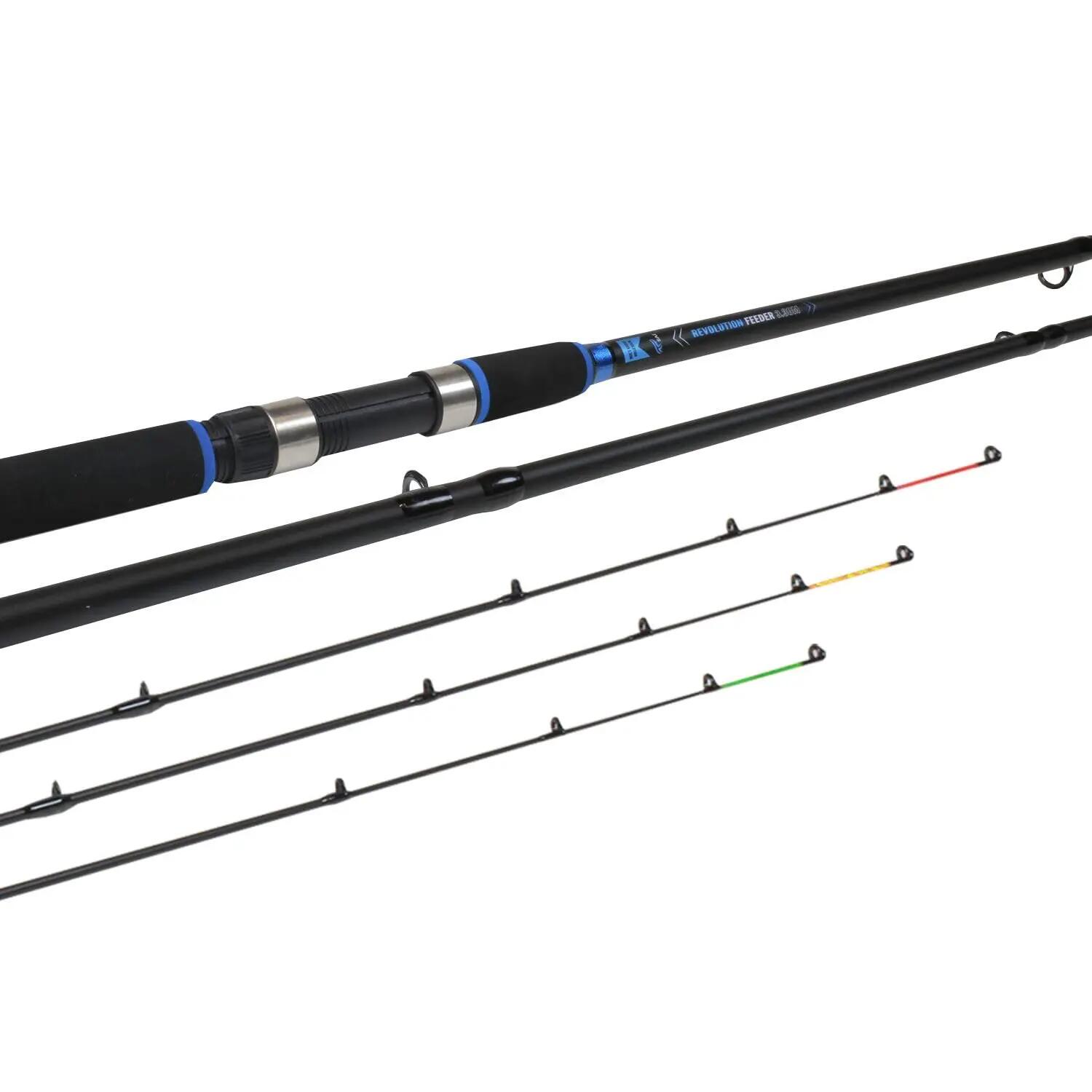
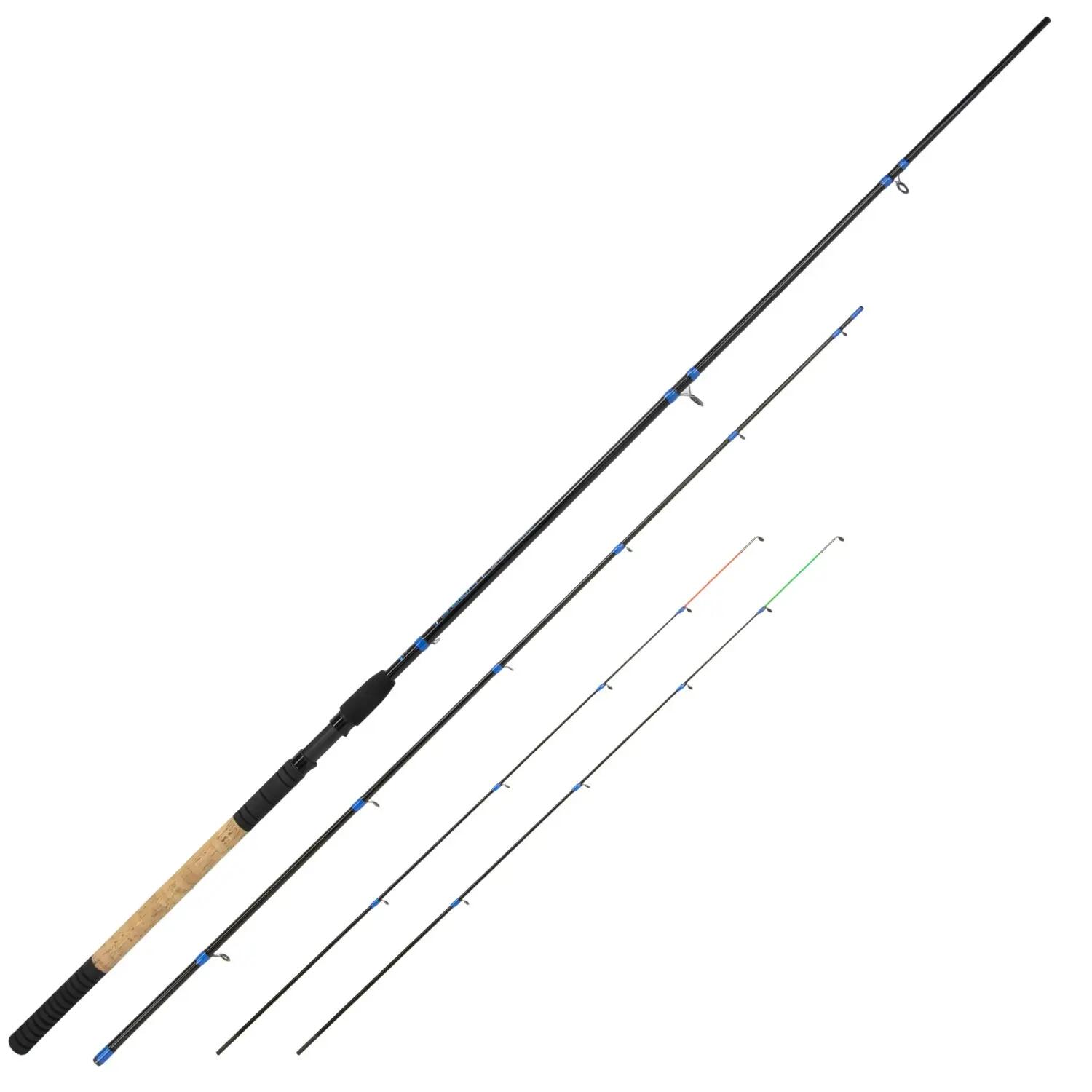
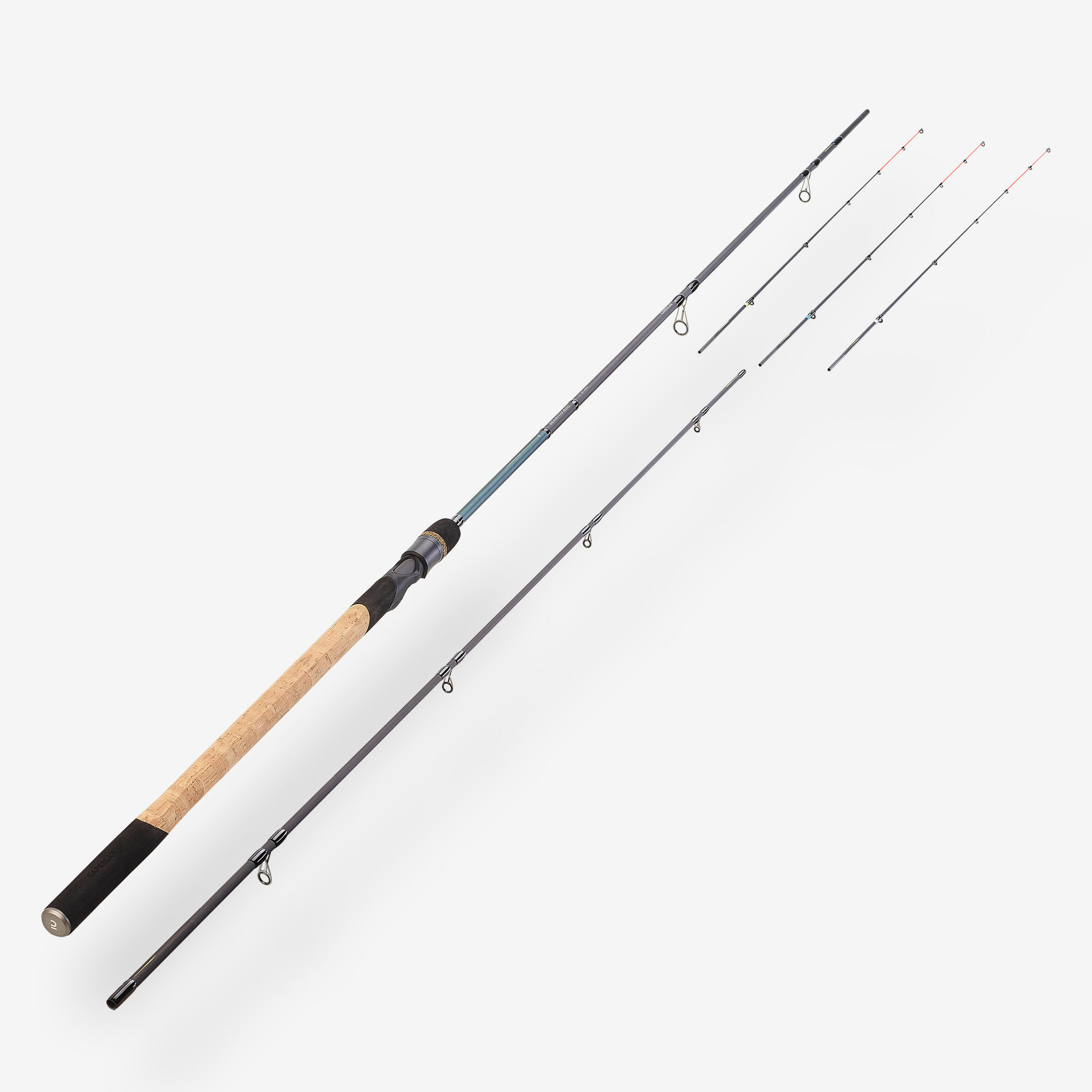
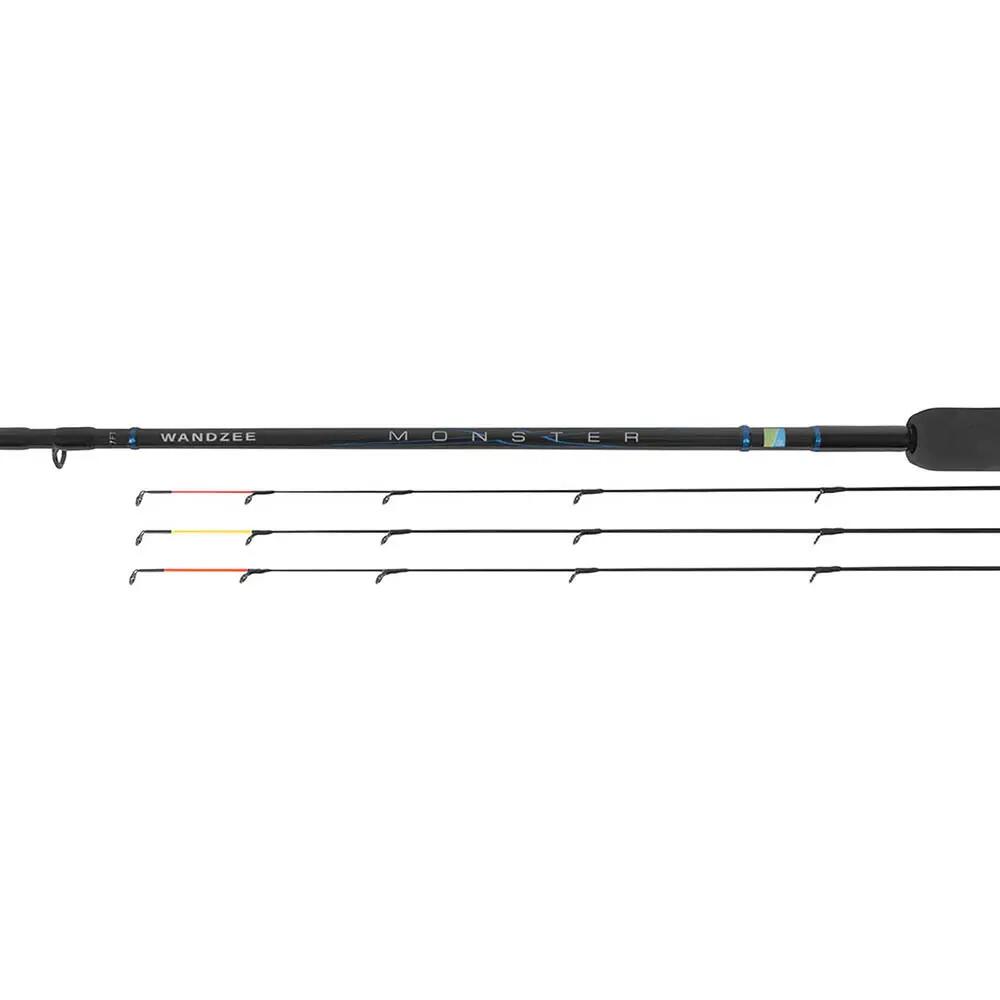
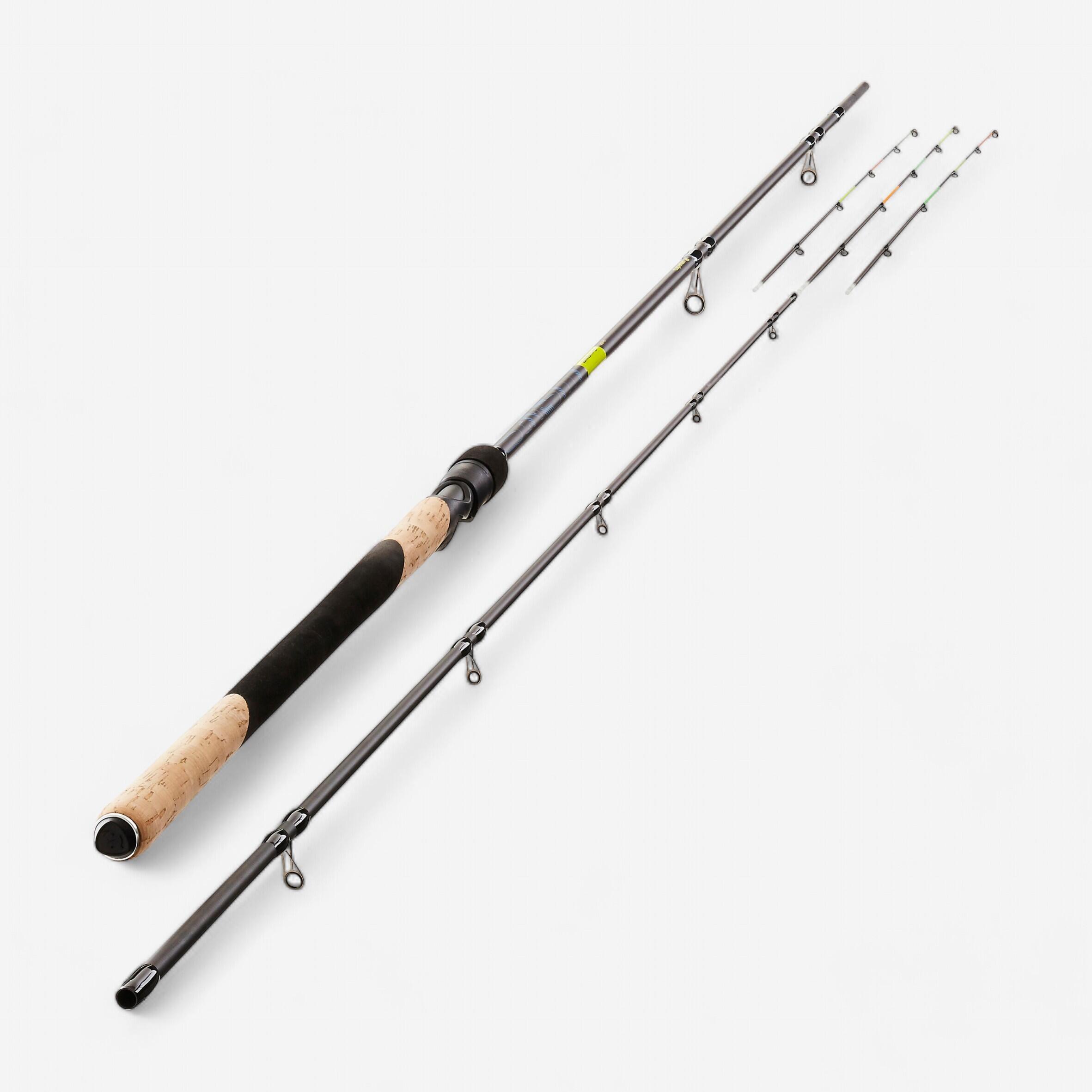
The quiver tip is your main visual bite indicator, so its stiffness should suit the feeder weight, wind and sensitivity you need. Caperlan uses both fibreglass and carbon tips across its Sensitiv rods. Fibreglass is particularly flexible and responds well to delicate bites, but that flexibility can also make wind movement more noticeable. Carbon tips remain sensitive while being more rigid, which can make the indication easier to read in breezier conditions. Coloured tip ends improve visibility, no matter which material you use. Several rods within the wider feeder fishing range include interchangeable tips with different ratings, allowing you to adapt the rod without replacing the whole setup. Use a tip suitable for the feeder weight rather than automatically choosing the softest option available.

Which features are important in a distance feeder fishing rod?

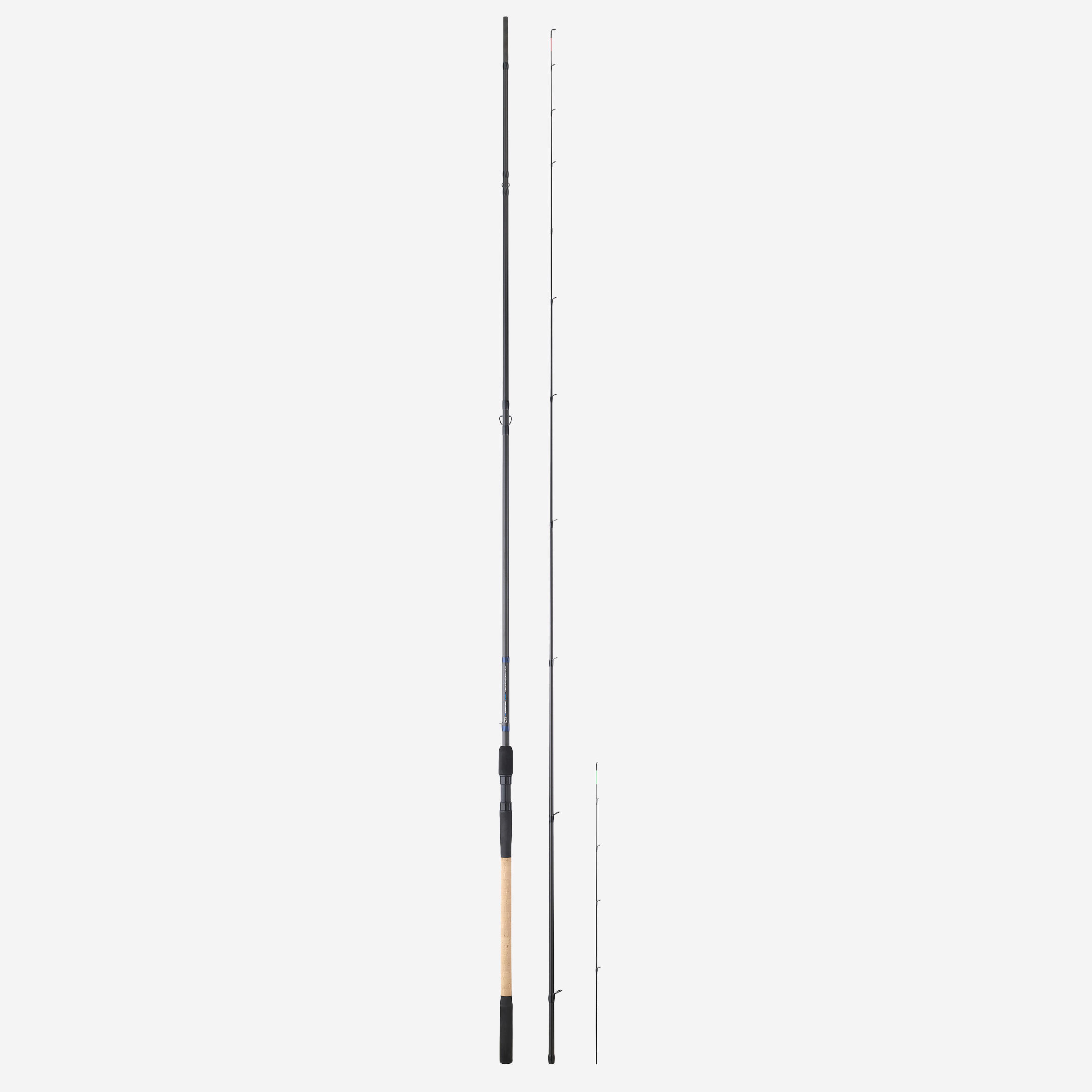
Longer-distance fishing places more emphasis on casting control, suitable rod length and a blank that can handle the combined weight of the feeder and bait. A 3.60 m rod can give you useful leverage when casting farther than a shorter setup, while a moderate or faster action can help direct the feeder accurately towards a chosen line or feature. The distance feeder fishing rods category option gives you a 3.60 m format specifically intended for feeder work at range. Whatever model you use, match the reel and line to the distance and keep the feeder within the rod's stated casting capability. Practise hitting the same target consistently before trying to add more distance, as accurate feeding usually matters more than simply casting as far as possible.

Which ways can you protect feeder rods and quiver tips between sessions?

Quiver tips are deliberately fine so they can show small bites, which also means they deserve extra care during transport. Selected Sensitiv 100 rods solve this by storing a spare tip inside the rod butt rather than leaving it loose in a bag. Before packing away, wipe dirt and moisture from the blank, check the guides for damage and make sure removable tips are protected from side pressure. Caperlan also provides replacement quiver tips and selected components through its after-sales system, so identifying the correct replacement can be more practical than replacing the complete rod. Keep longer carbon rods away from overhead power lines and do not use them during thunderstorms. The same careful transport routine is useful across your wider coarse fishing equipment, particularly where delicate rod sections and terminal tackle share the same bag.