3 items
4.5/5 based on 184 reviews collected online and in stores

Sea Fishing Trollies FAQs

How much fishing equipment can a surfcasting trolley carry?

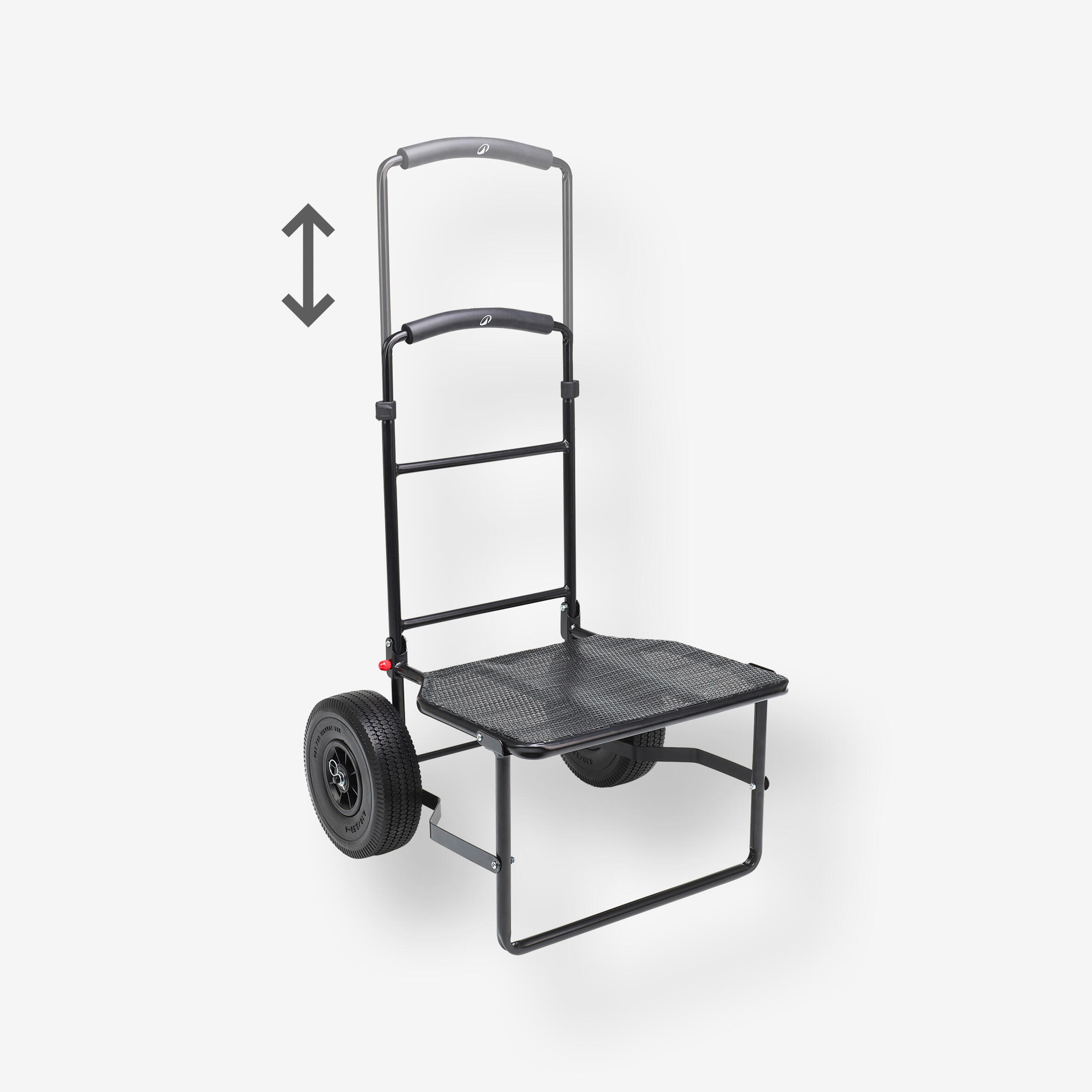
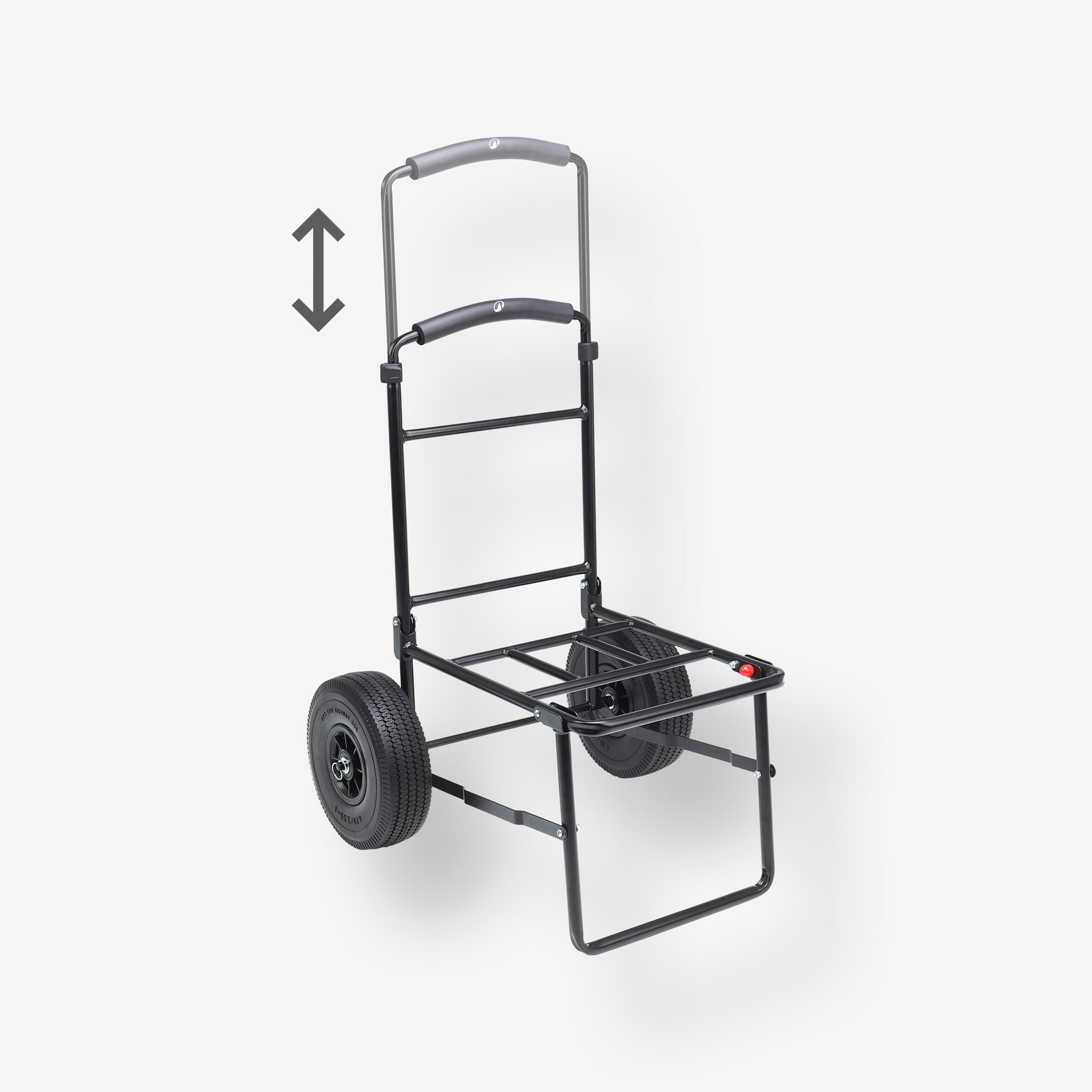
Load capacity matters when rods, bait, boxes and bank-side accessories all need to travel from the car to the fishing position. Caperlan's sea fishing surfcasting trolley carries up to 60 kg of equipment and uses a 50 x 40 cm loading platform to support a substantial setup. Its steel frame gives the trolley a rigid base, while a foam-covered handle improves comfort when you pull a heavier load. The trolley itself weighs approximately 7 kg. Treat the 60 kg figure as an equipment limit rather than a seating capacity, as Decathlon specifically excludes sitting on or riding in the trolley. Arrange heavier items low on the platform so the load remains easier to control while moving.

What makes trolley wheels useful for beach fishing?

Sand can make narrow or rigid wheels difficult to pull, especially once the trolley carries several boxes and rods. Caperlan uses 25.5 cm polyurethane wheels on its current sea-fishing trolleys and develops them for traction across sand as well as harder paths. The flexible polyurethane construction also provides abrasion resistance, while the TROLLEY 500 uses puncture-proof wheels to reduce the maintenance associated with inflatable tyres. Keep the wheels clear of packed sand before folding the trolley and loading it back into a vehicle. Other sea fishing equipment can then travel on the same platform, reducing the number of separate trips needed between your parking point and the shore.

How can a trolley strap keep fishing gear more secure?

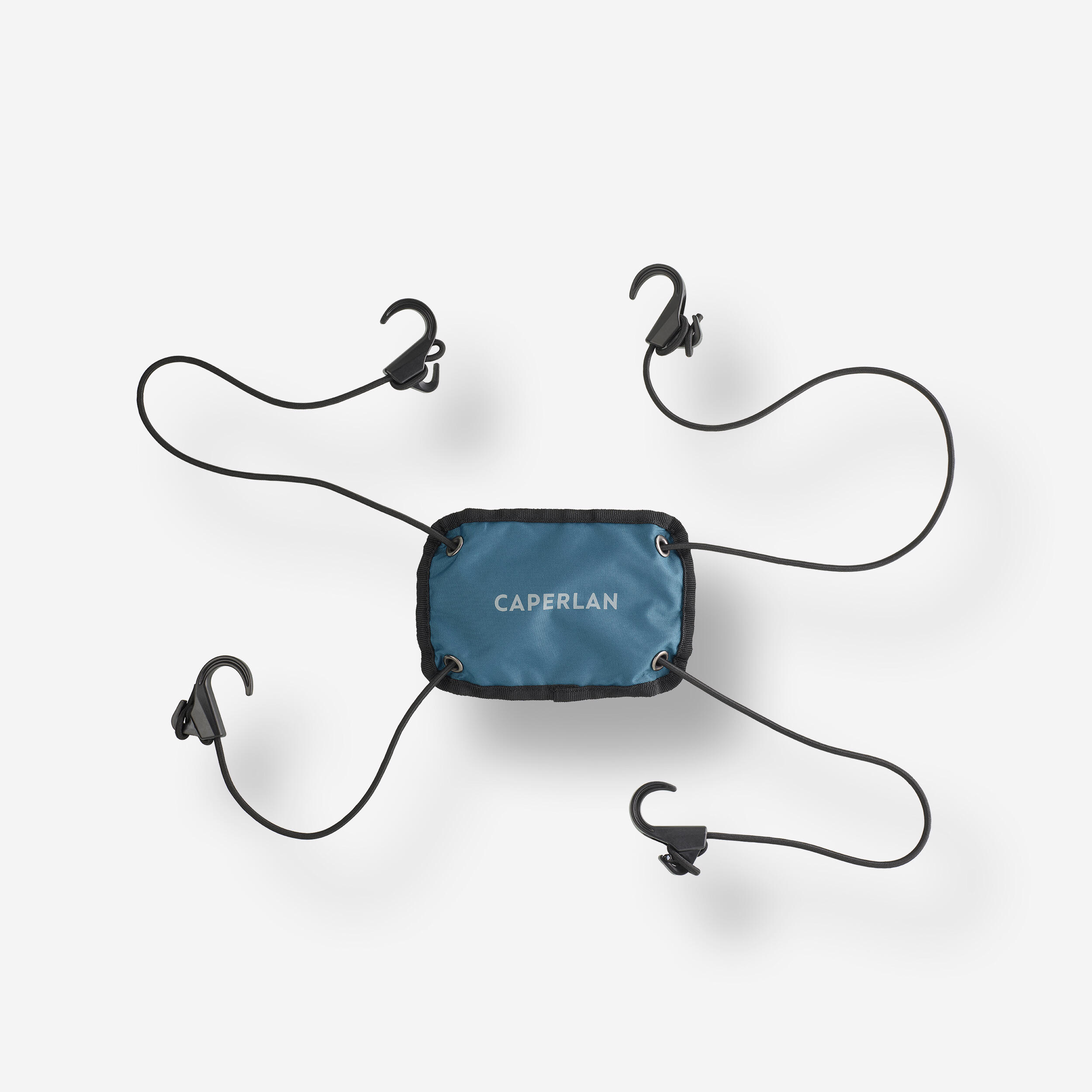
Loose tackle can shift when the trolley crosses uneven paths, soft sand or slopes, so securing the load makes transport more manageable. Caperlan's sea fishing trolley strap uses two elastic bands and four fastening hooks to hold equipment against the trolley platform. Each band measures approximately 135 cm, giving enough length for boxes, bags and other bulky fishing items. Caperlan describes the accessory as compatible with different trolleys rather than limiting it to one model. Position the hooks where they cannot catch rod guides or damage softer luggage, then tension the bands across the load before you start walking. Remove the straps carefully after the session instead of allowing the hooks to spring back towards equipment.

How do you organise boxes on a sea fishing trolley?

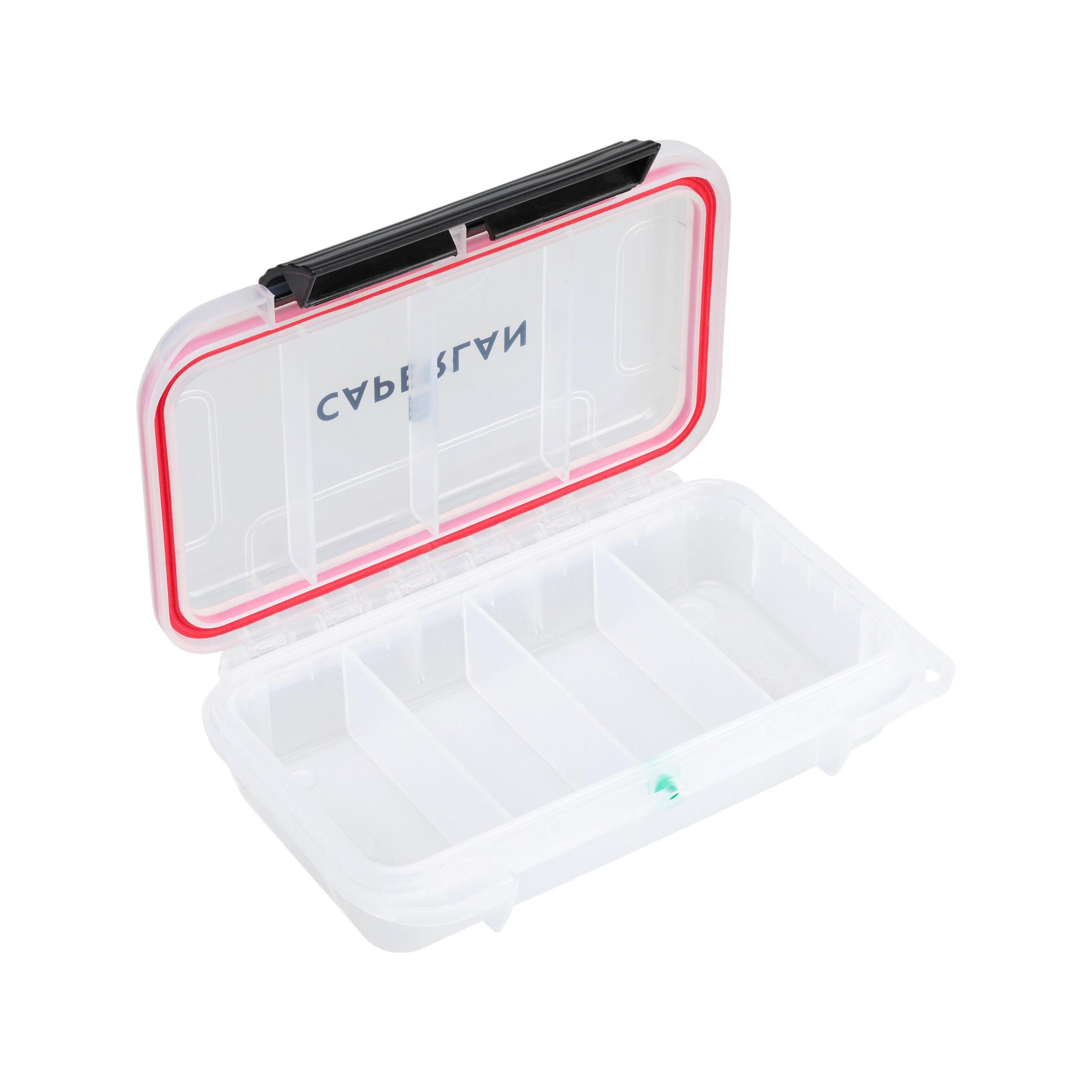
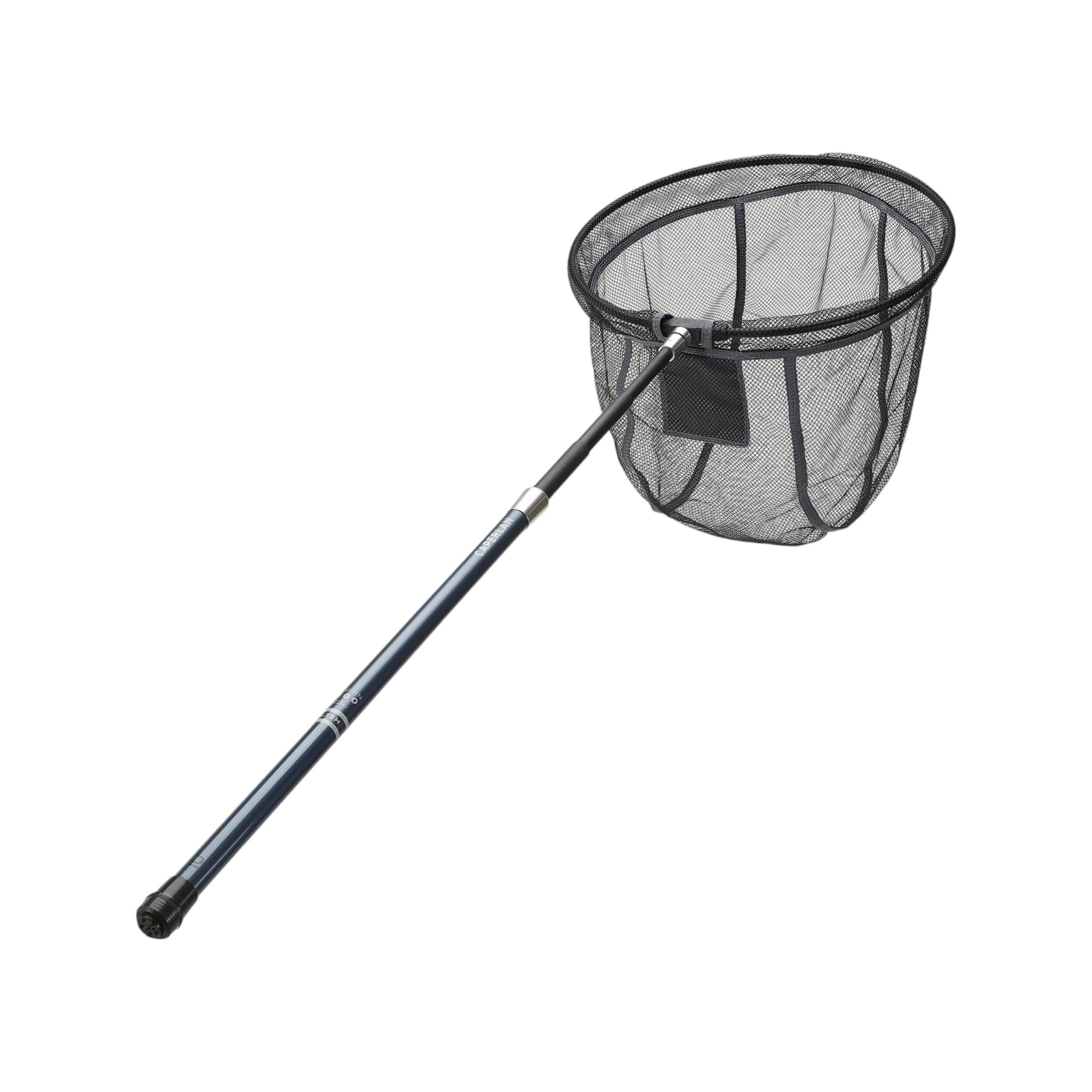
Place rigid boxes and heavier tackle closest to the base, then add lighter bags or accessories above them so the trolley remains more stable while moving. Separate hooks, sinkers and tools inside suitable sea fishing boxes rather than allowing small terminal tackle to move loosely across the trolley platform. Keep frequently used items accessible so you do not need to unload the complete rig once you reach the beach. If you carry bait, rods and a landing net together, leave enough clearance around delicate rod tips and guides. The wider platform on the TROLLEY 500 can help distribute a larger load, but good organisation still matters when the route includes soft sand, kerbs or uneven access points.

How do you store a fishing trolley after a coastal session?

Remove sand, salt residue and bait debris before folding the trolley so moving joints and wheel areas stay cleaner between trips. Both current Caperlan trolleys use folding frames and retractable handles, reducing their stored depth considerably compared with the assembled position. Replacement wheels are also available separately, so worn or damaged wheels do not automatically mean replacing the complete trolley. Let damp straps dry fully before storage, and hand wash the securing accessory at a maximum of 40 degrees Celsius when necessary. After saltwater fishing, inspect the wheels, steel frame, handle and fastening points before putting the trolley away. Dry storage helps keep the transport system ready for the next walk to the shore.