721 items
4.4/5 based on 22639 reviews collected online and in stores

Men's Athletics Jackets FAQs

What fit works best for men's athletics jackets?

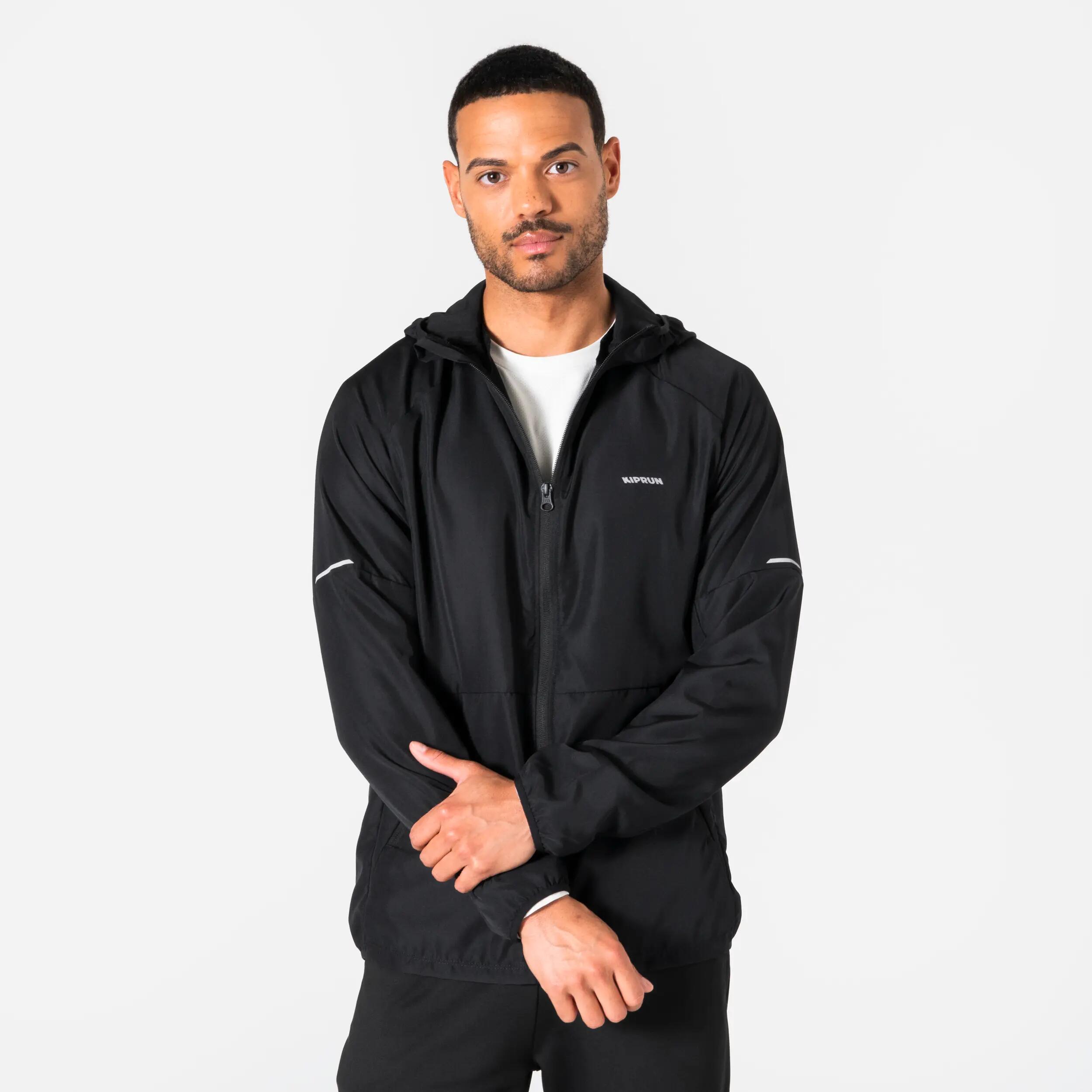
A men's athletics jacket should leave enough room for your arms, shoulders and torso to move freely without loose fabric flapping around your body. Swing your arms, rotate your upper body and bend into a running stance when checking the size. The jacket should close comfortably over your normal base layer without pulling across the chest or gathering beneath the arms. Cuffs should remain near your wrists, while the hem should cover your waist without restricting hip movement. Match the jacket with your usual men's athletics clothes so the layers work together. A practical pro tip is to load the pockets before jogging, as a phone or keys can change how the jacket moves and sits.

What type of men's athletics jacket works best in cold weather?

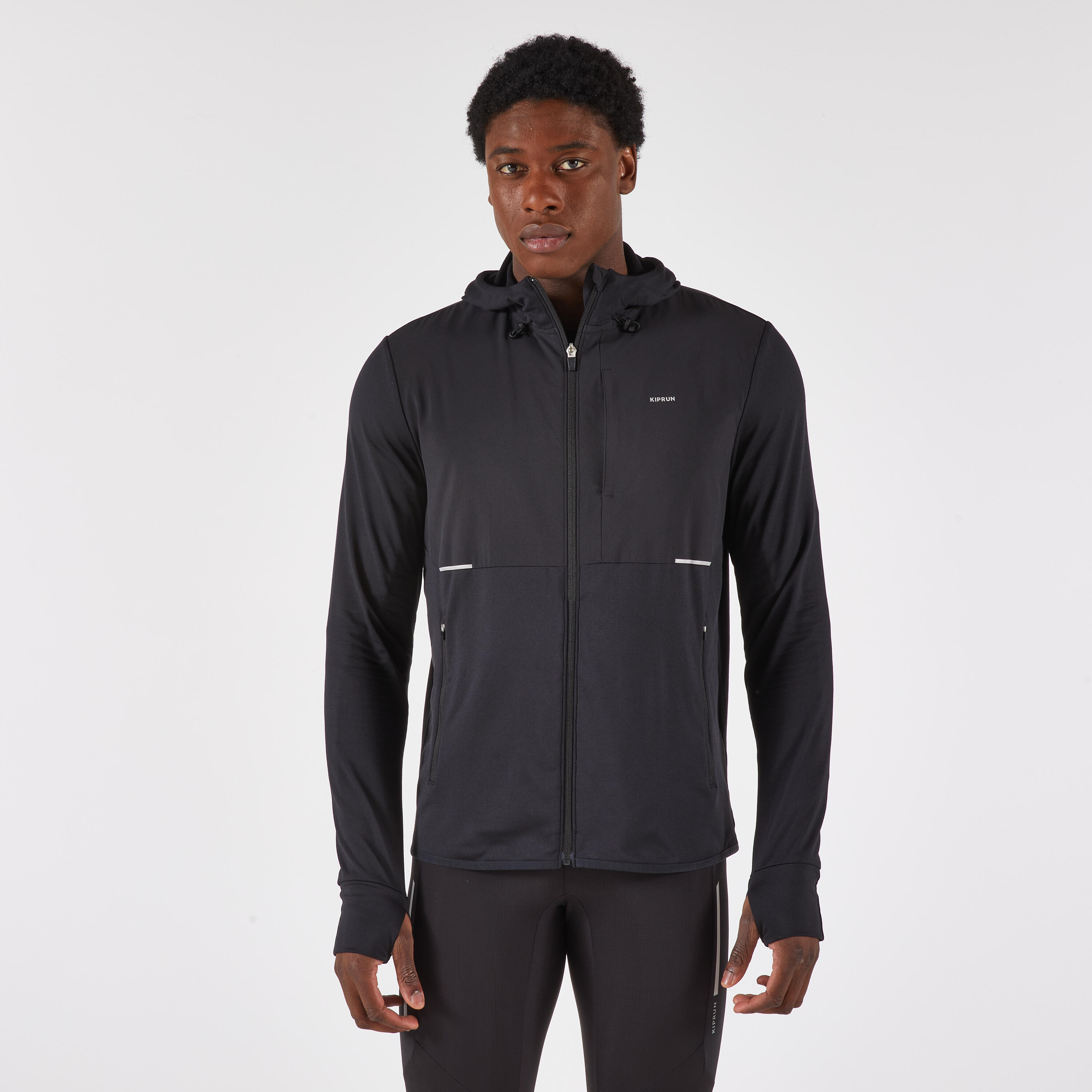
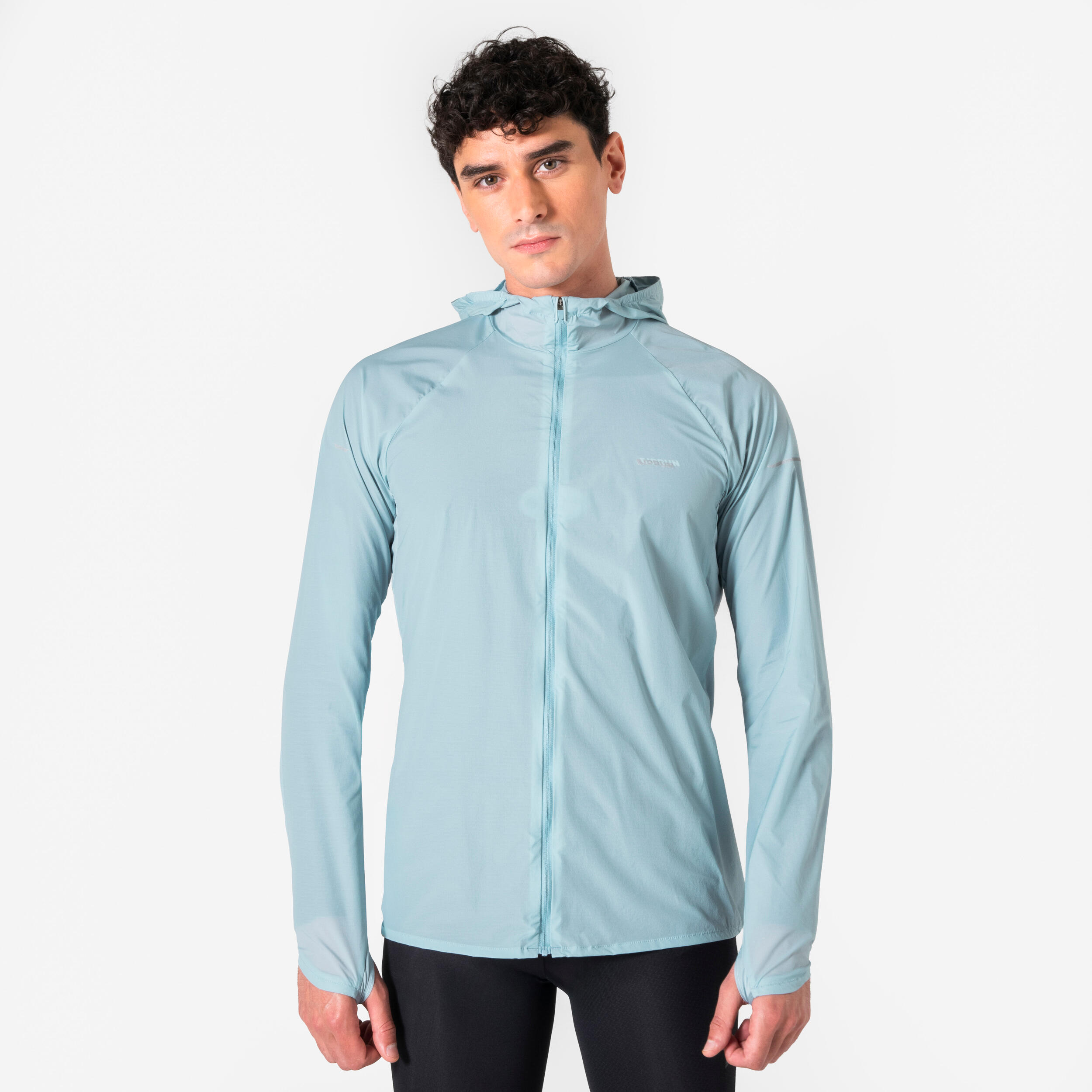
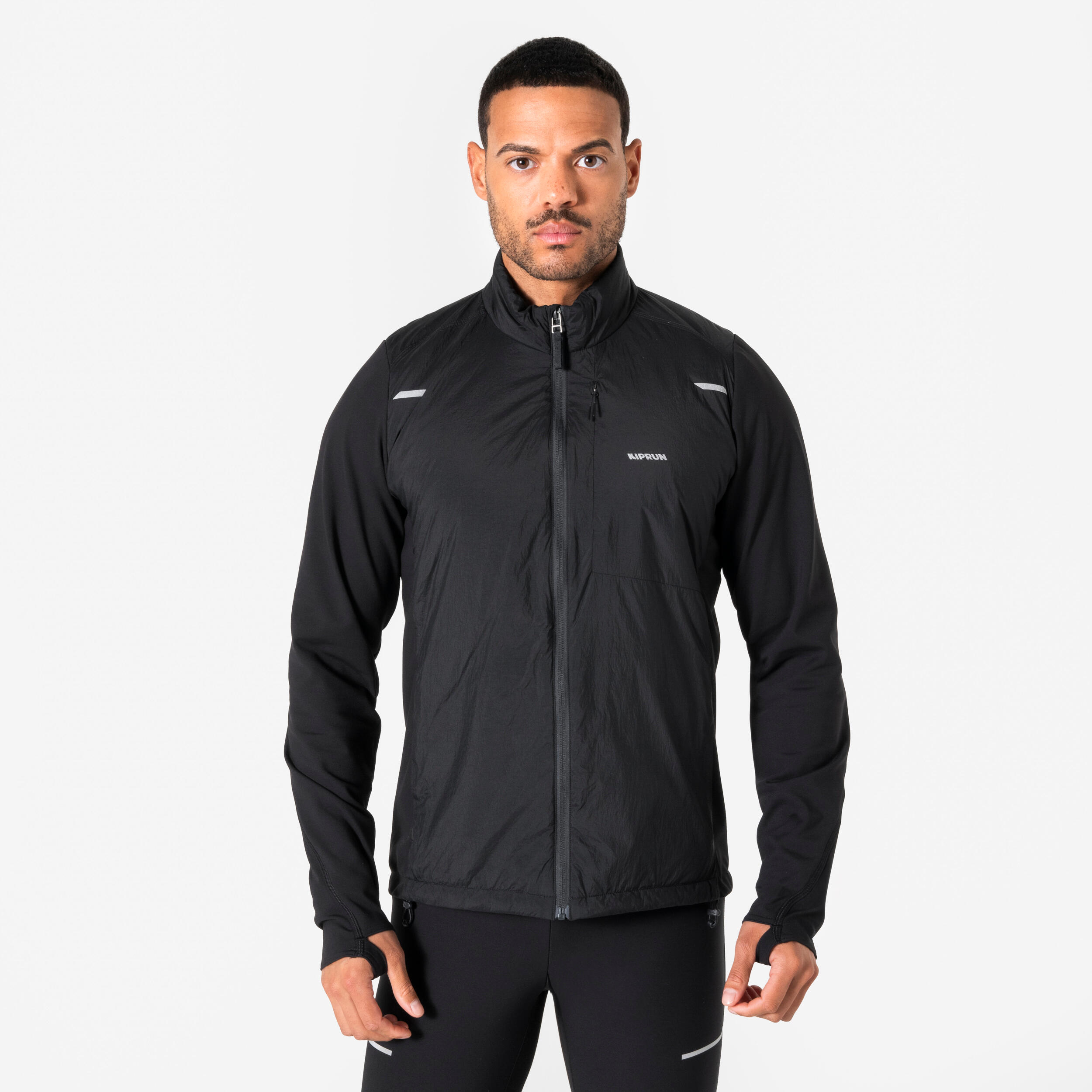
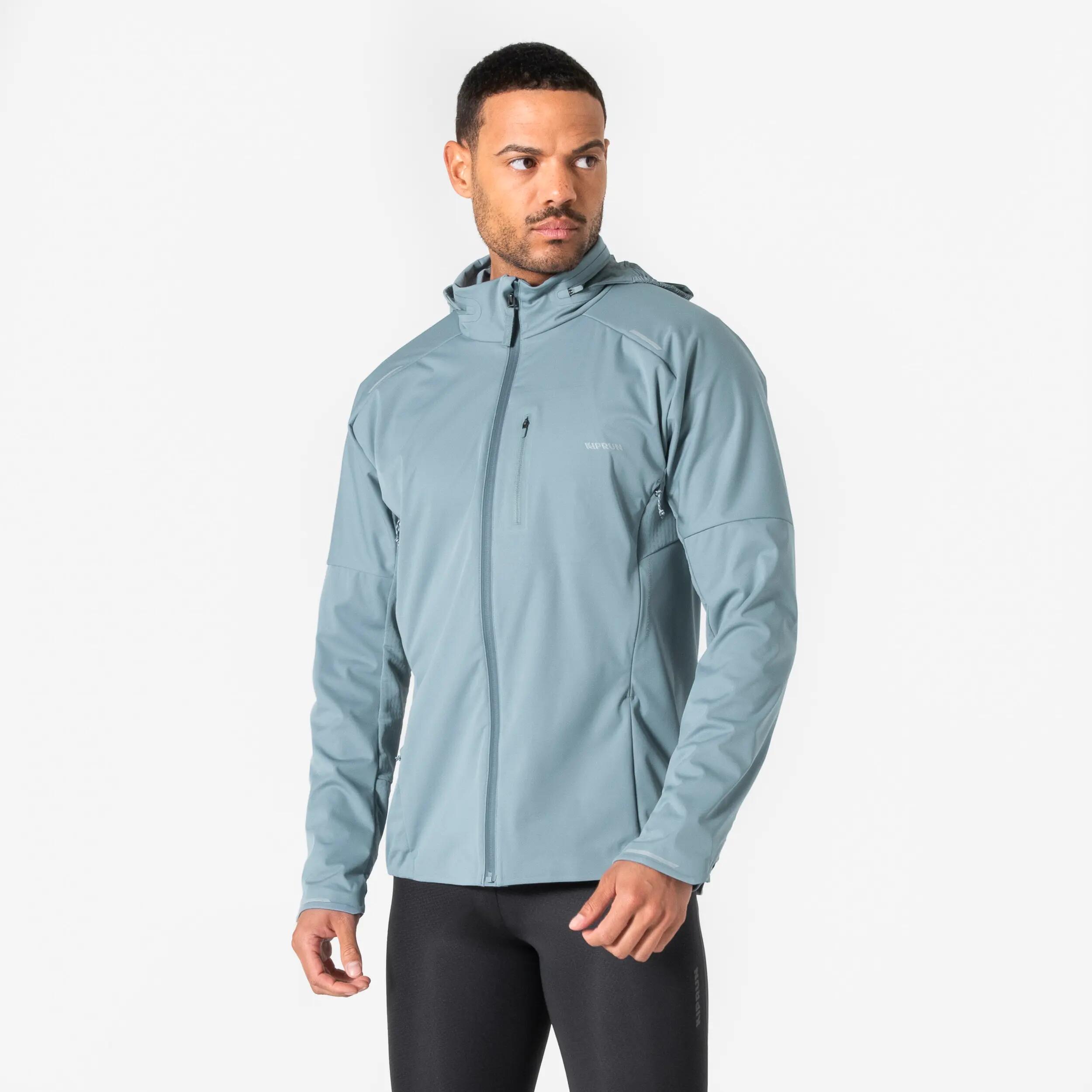
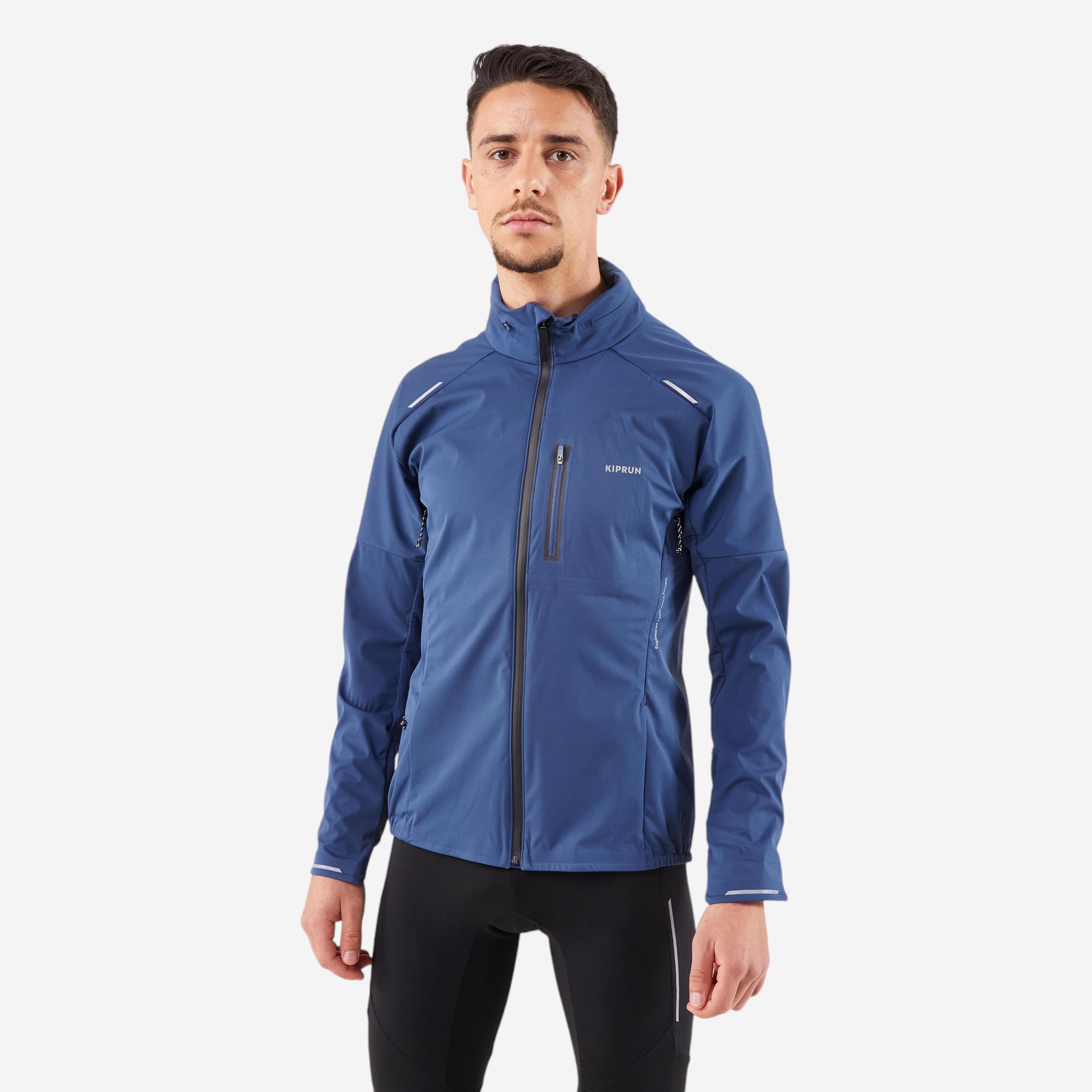
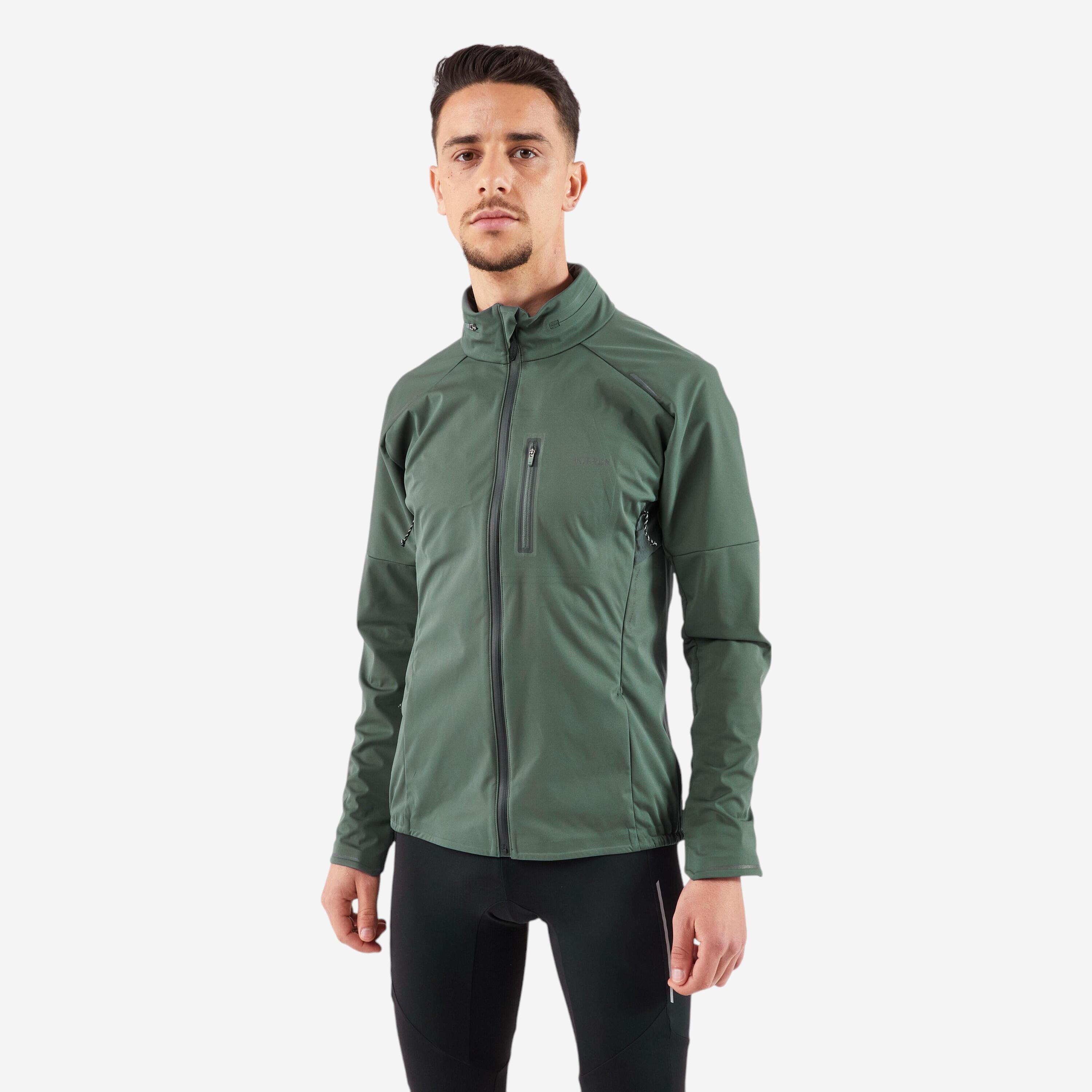
Choose a warm jacket according to the temperature, wind exposure and intensity of your session rather than thickness alone. A KIPRUN men's warm running jacket uses warmer materials around exposed areas and more breathable components where perspiration commonly builds. This balance matters because heavy insulation may cause overheating during intervals, leaving the inner fabric damp when your effort drops. A hood, thumb loops and secure pockets can add protection during outdoor warm-ups. Begin slightly cool, then adjust your layers once movement raises your body temperature. Pack a dry top for long waits or the journey home.
When should you wear a high-visibility windproof athletics jacket?

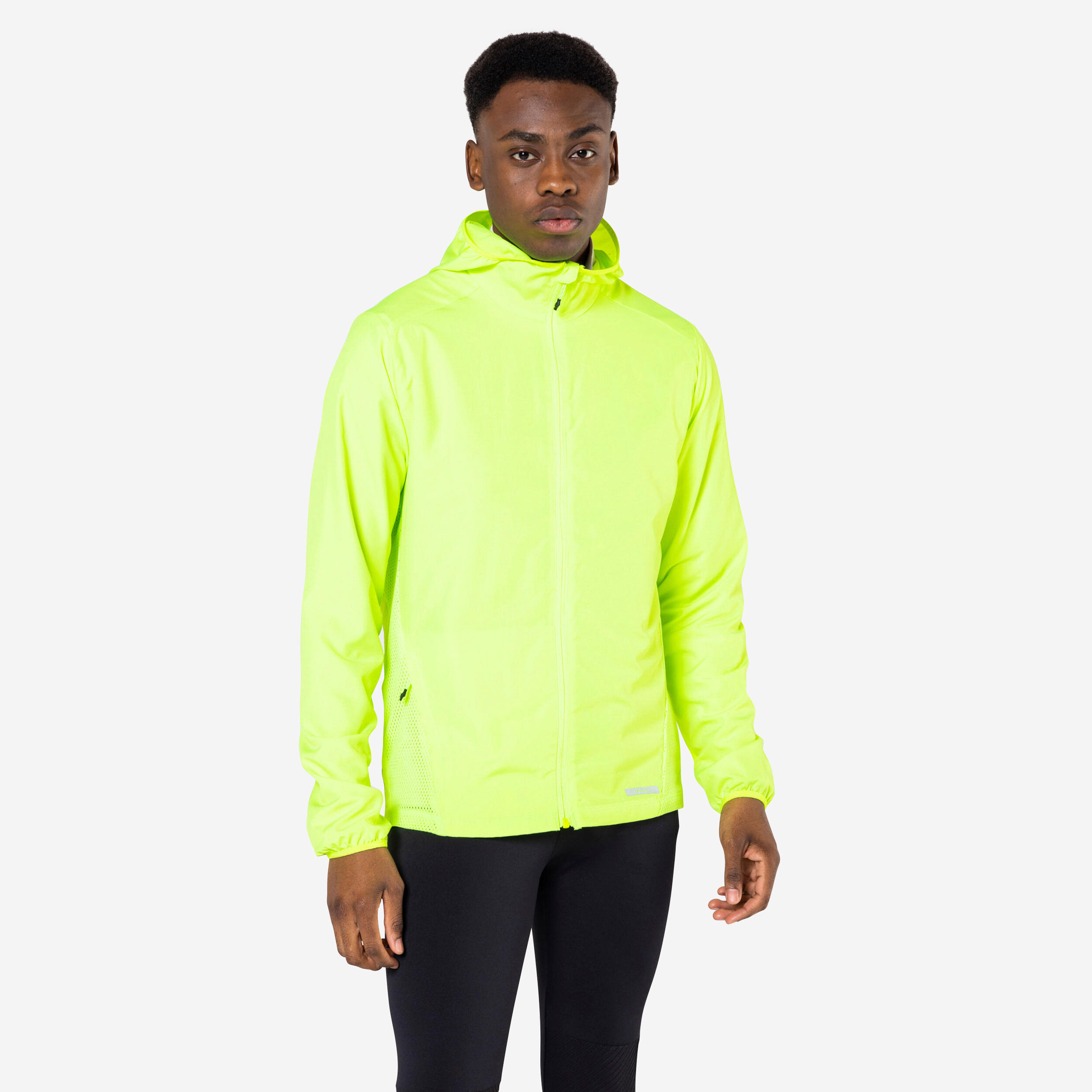
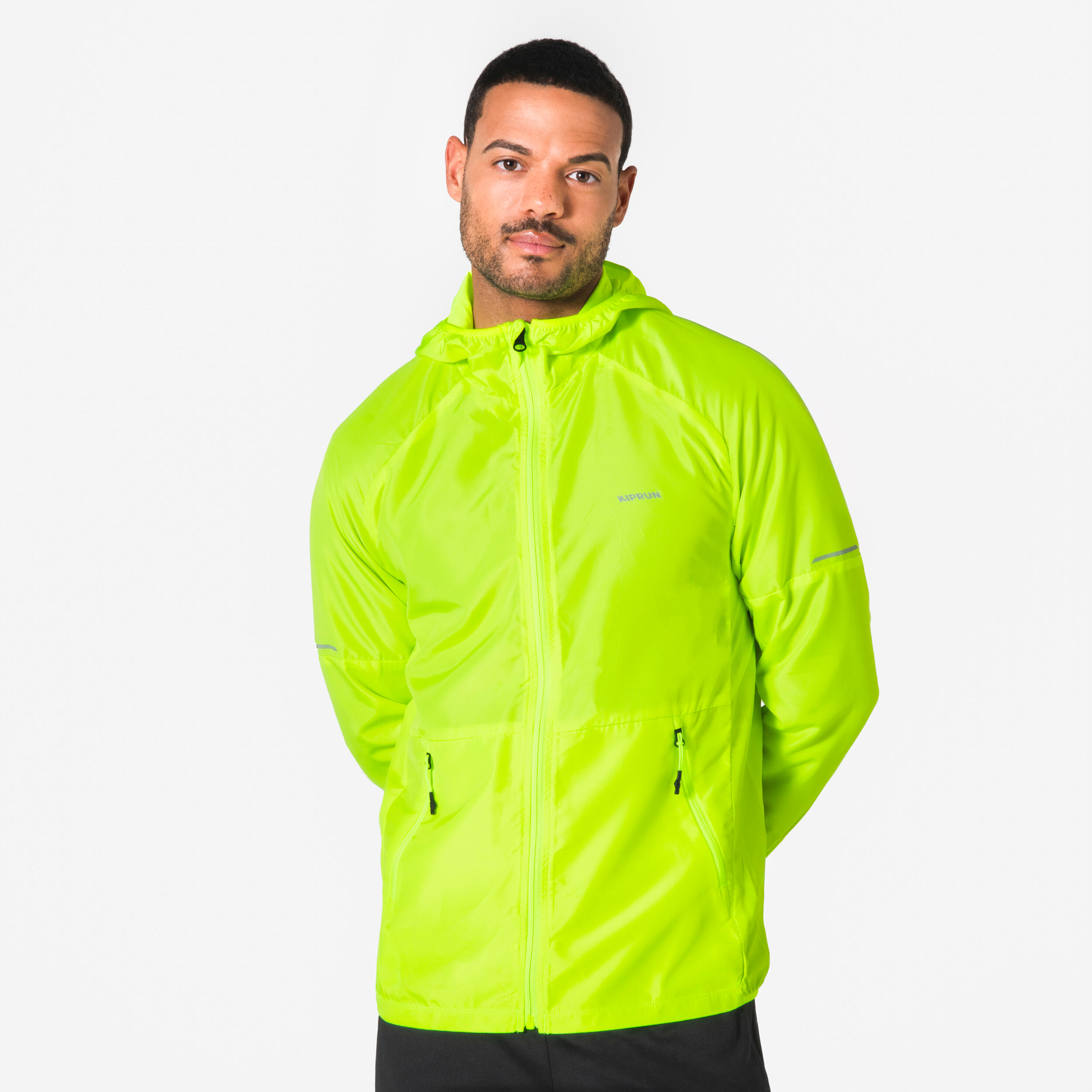
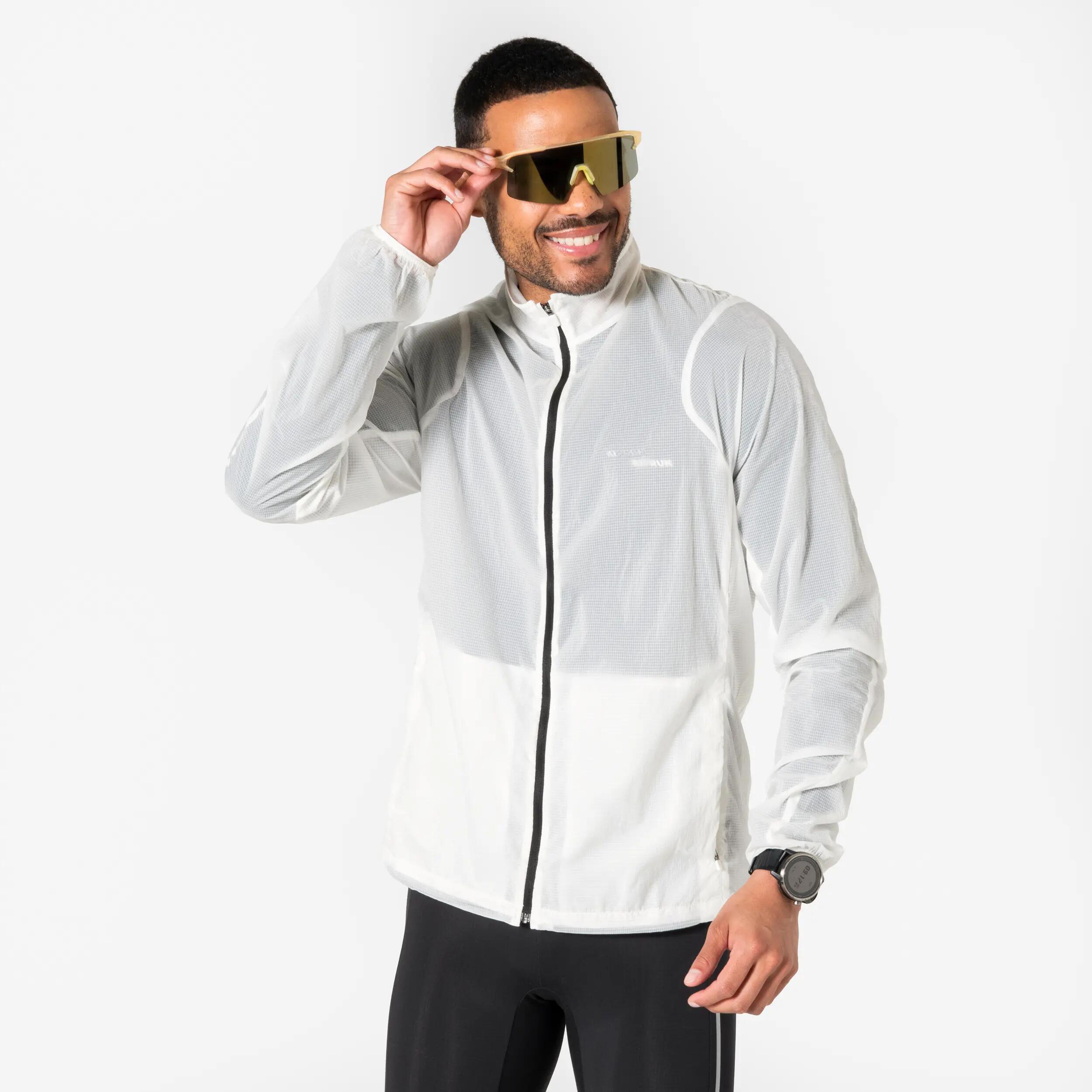
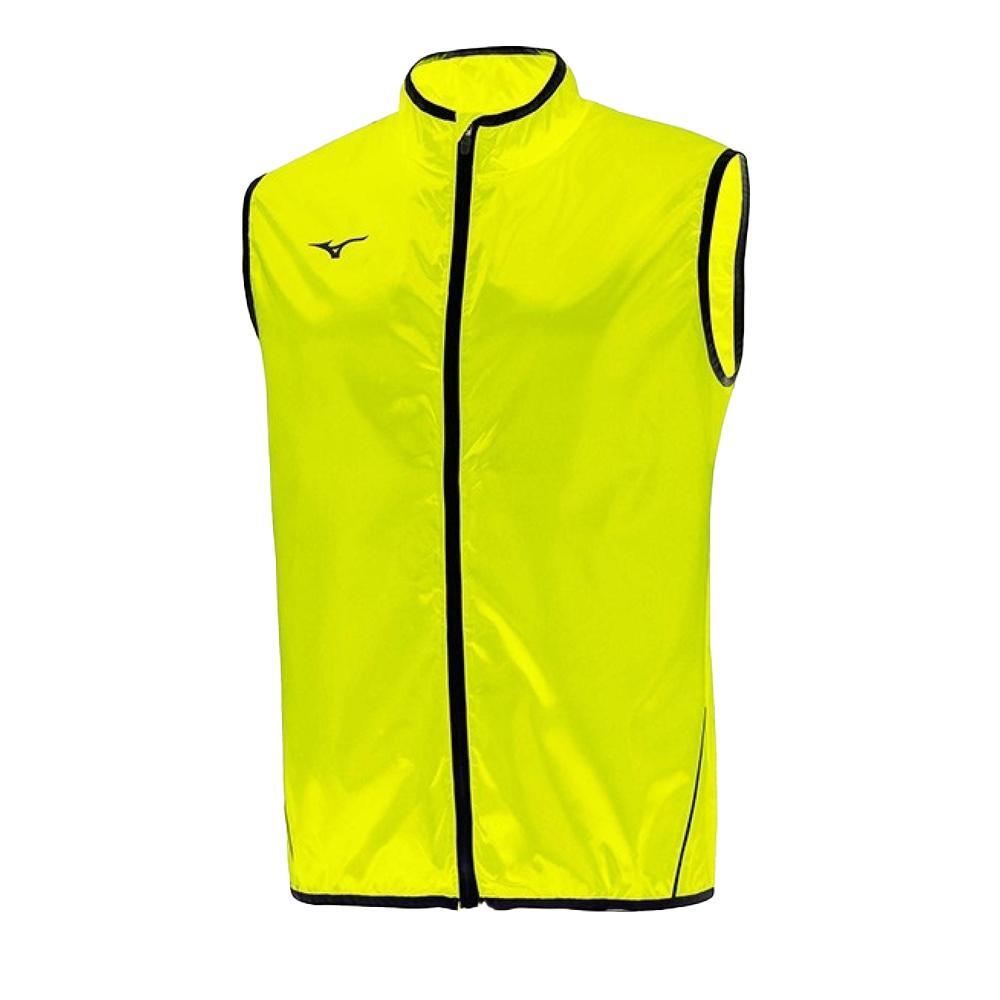
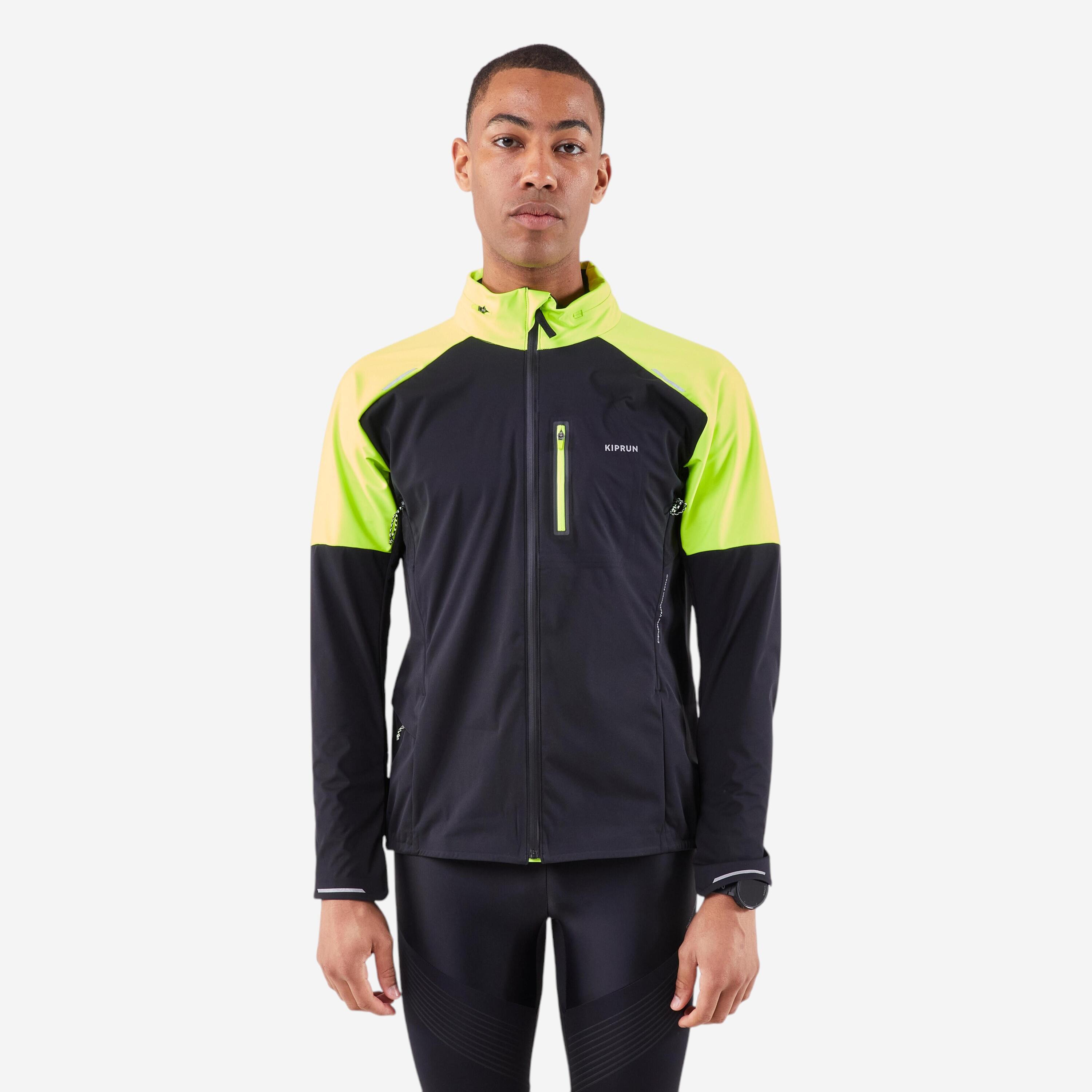
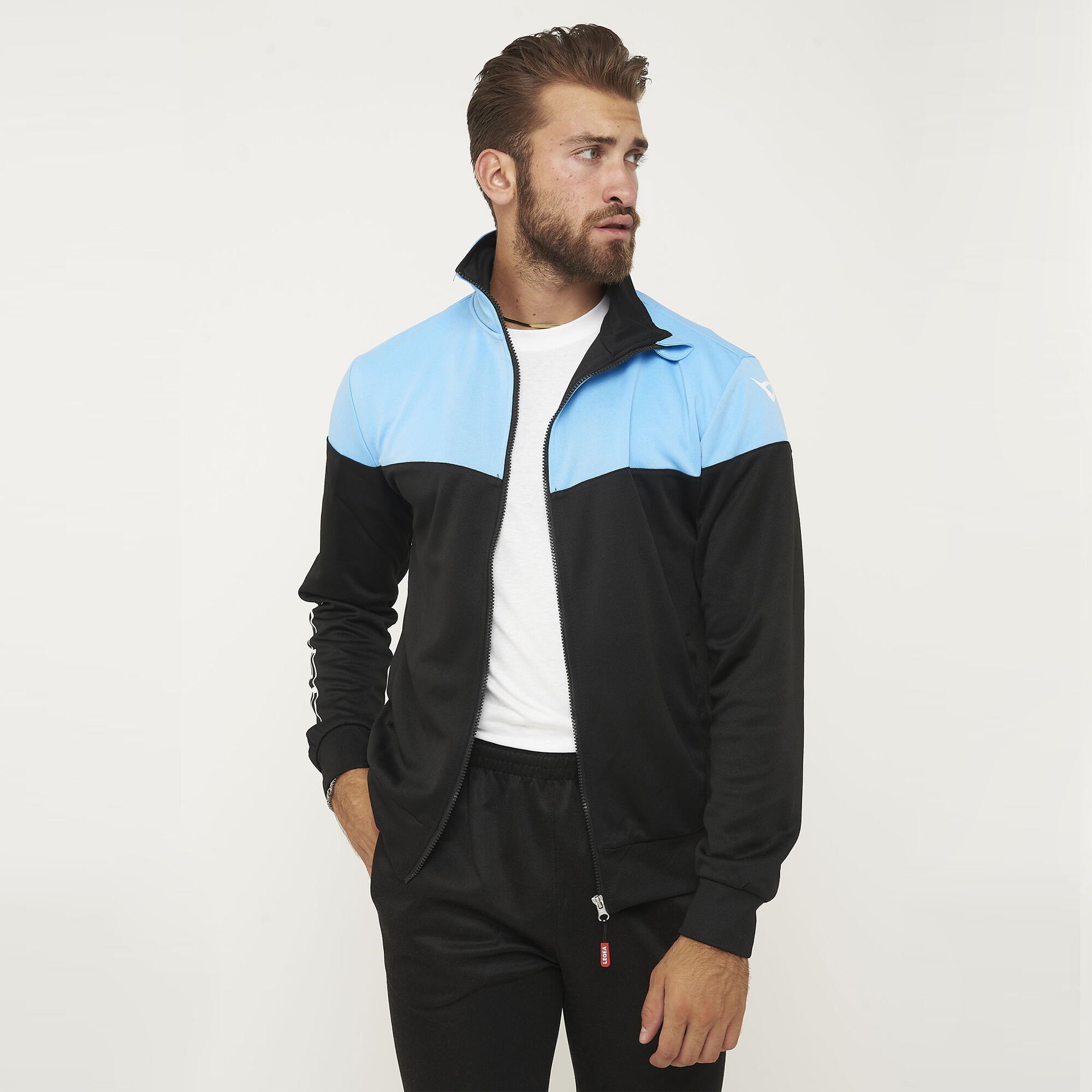
A high-visibility jacket is useful when you train near roads, on shared paths or in poor daylight, particularly during dark winter mornings and evenings. The men's Run 100 high-visibility windproof jacket combines wind protection with certified visibility for daytime use. Windproof fabric reduces the cooling effect created when moving air removes warm air from around your body, while breathable panels help internal moisture escape. Visibility clothing does not replace lights, reflective accessories or careful route choice after dark. Keep the jacket clean because dirt can reduce the brightness of visible panels, and check that bags or outer layers do not cover them.
What waterproof rating should a men's athletics jacket have?

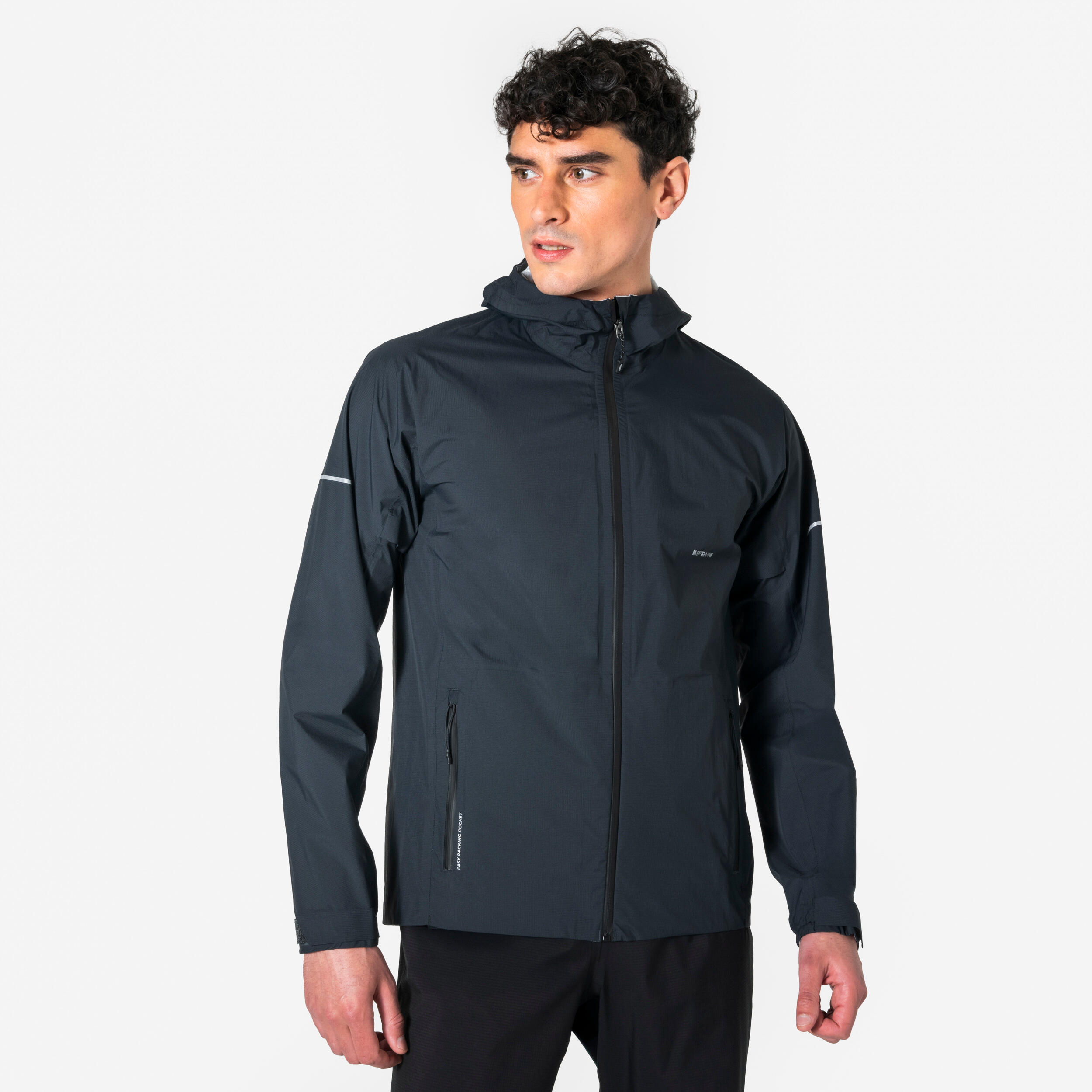
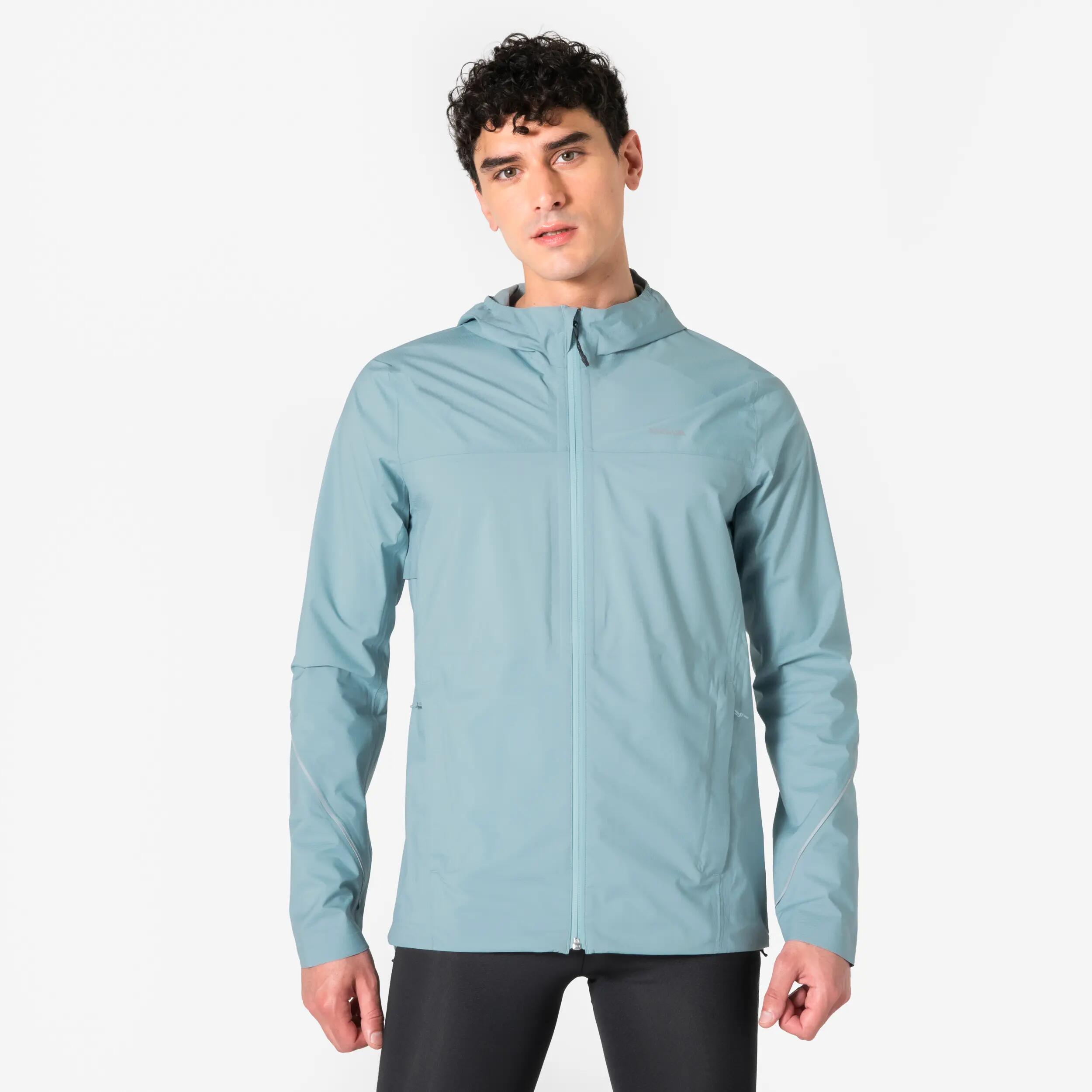
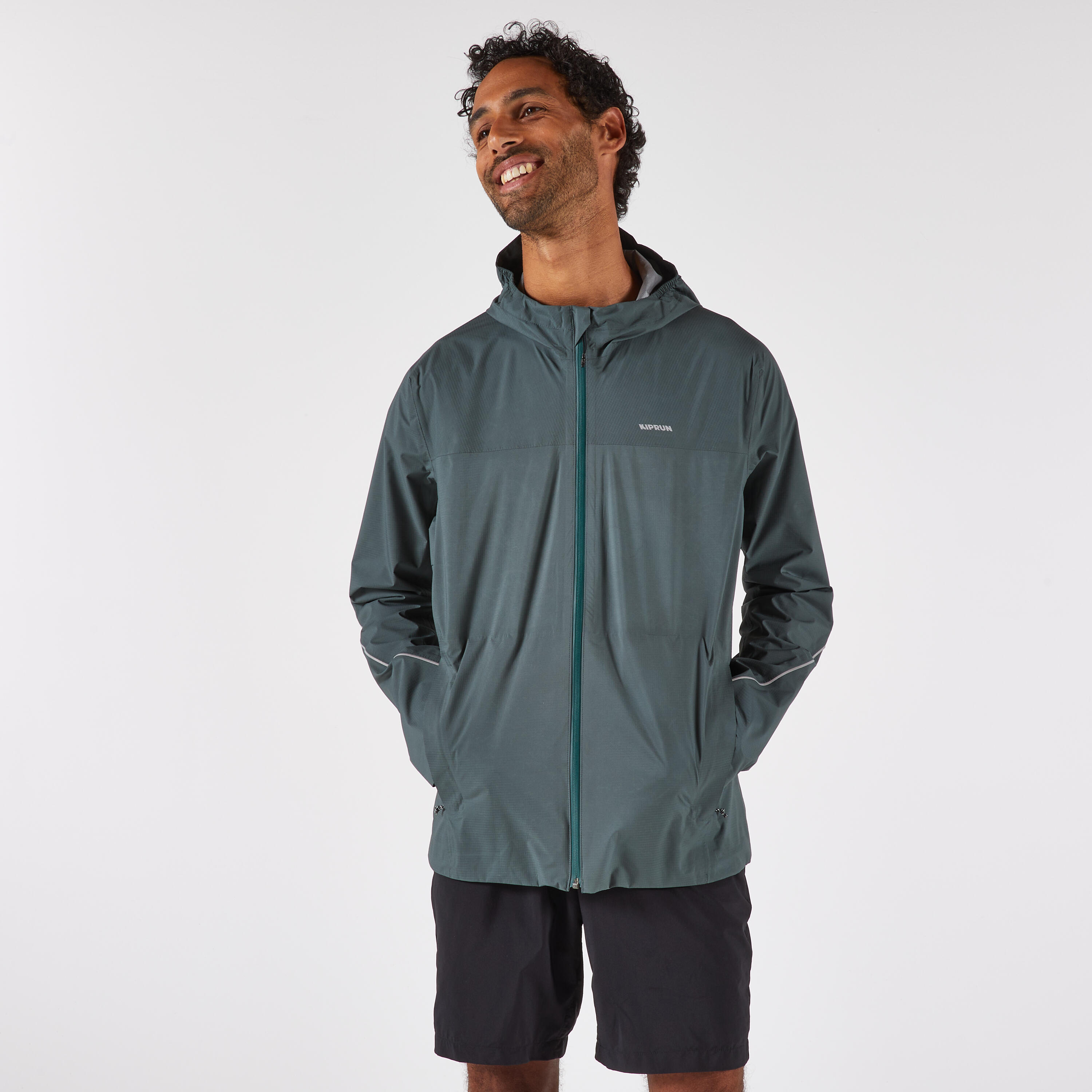
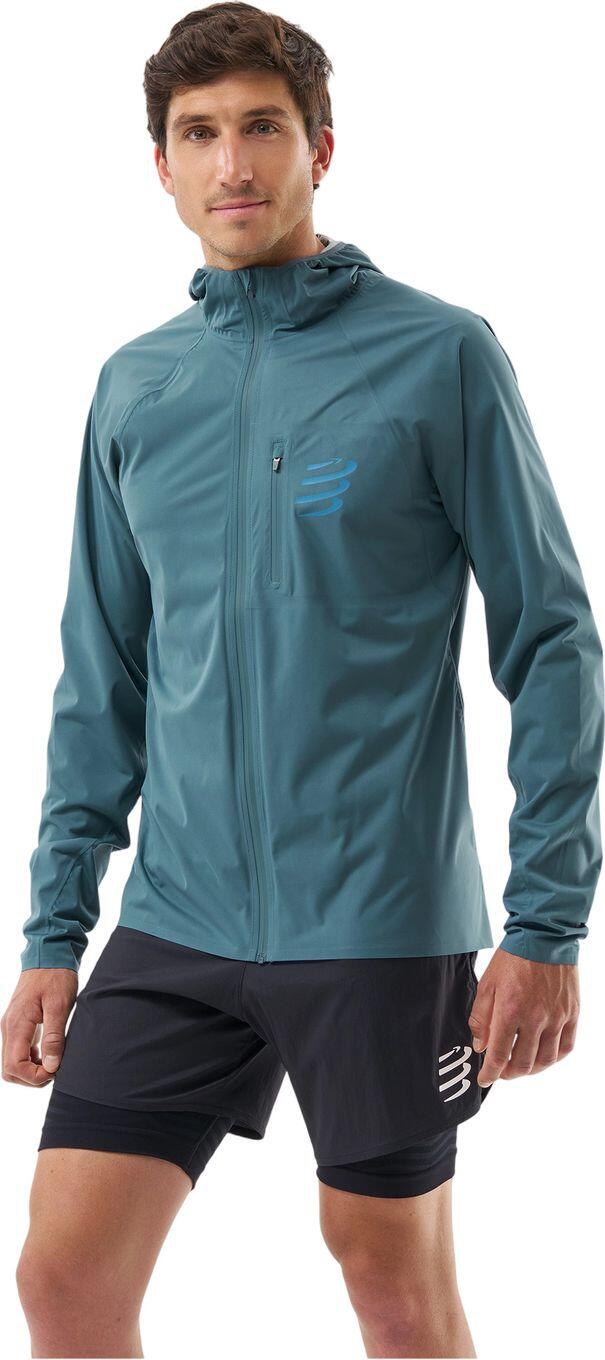
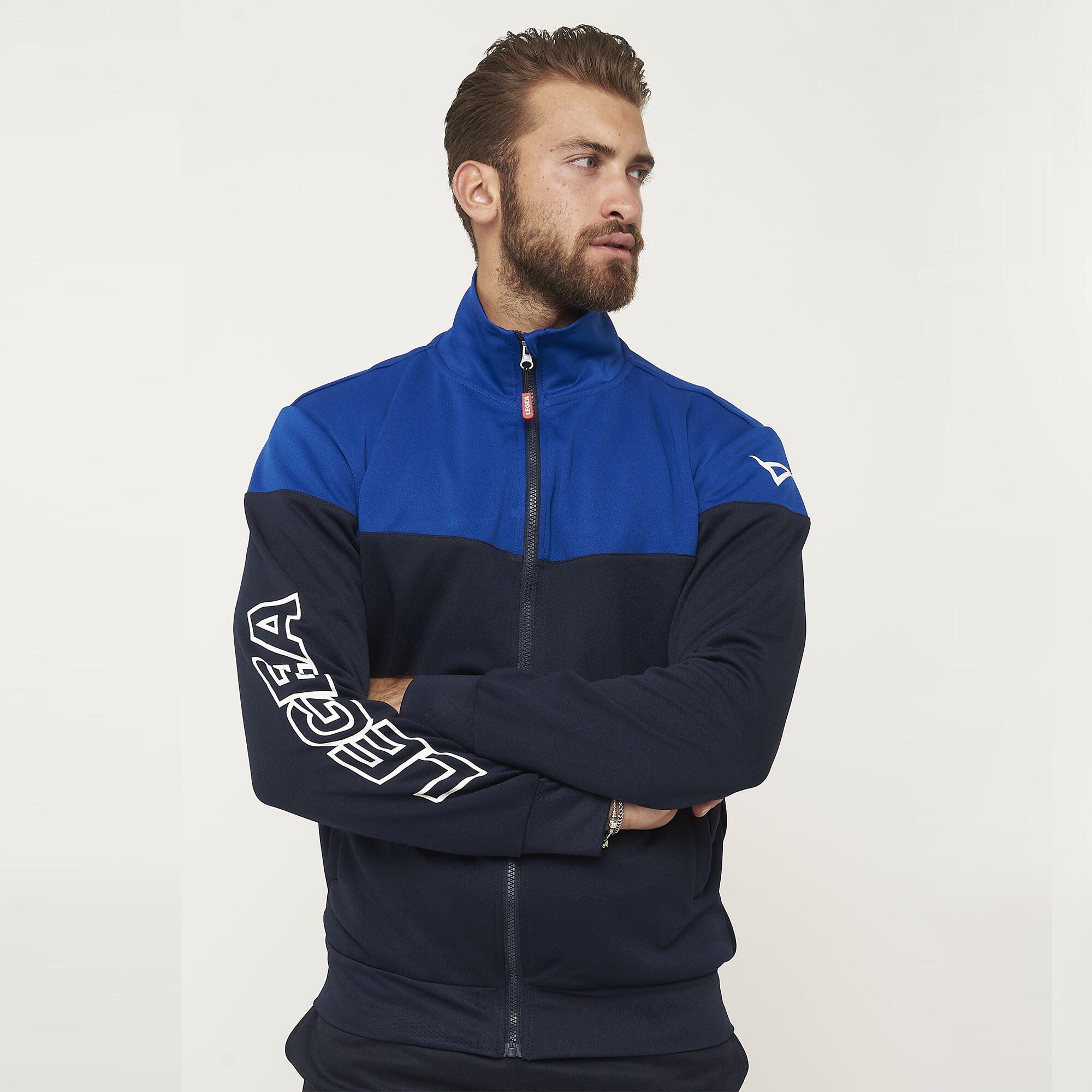
The right waterproof level depends on whether you need protection from a brief shower or sustained rain. A KIPRUN Run 500 men's waterproof jacket uses a 10,000 Schmerber membrane with taped seams and waterproof zips, providing more complete protection than water-repellent fabric alone. Its breathable membrane and rear ventilation help moisture leave the inside during harder efforts. Remember that waterproof and breathable do not mean sweat-free, especially when the pace rises. Close the zips before rain begins, adjust the hood without blocking your vision and store the jacket dry rather than leaving the membrane folded while damp.

How do men's athletics jackets manage warmth and ventilation?

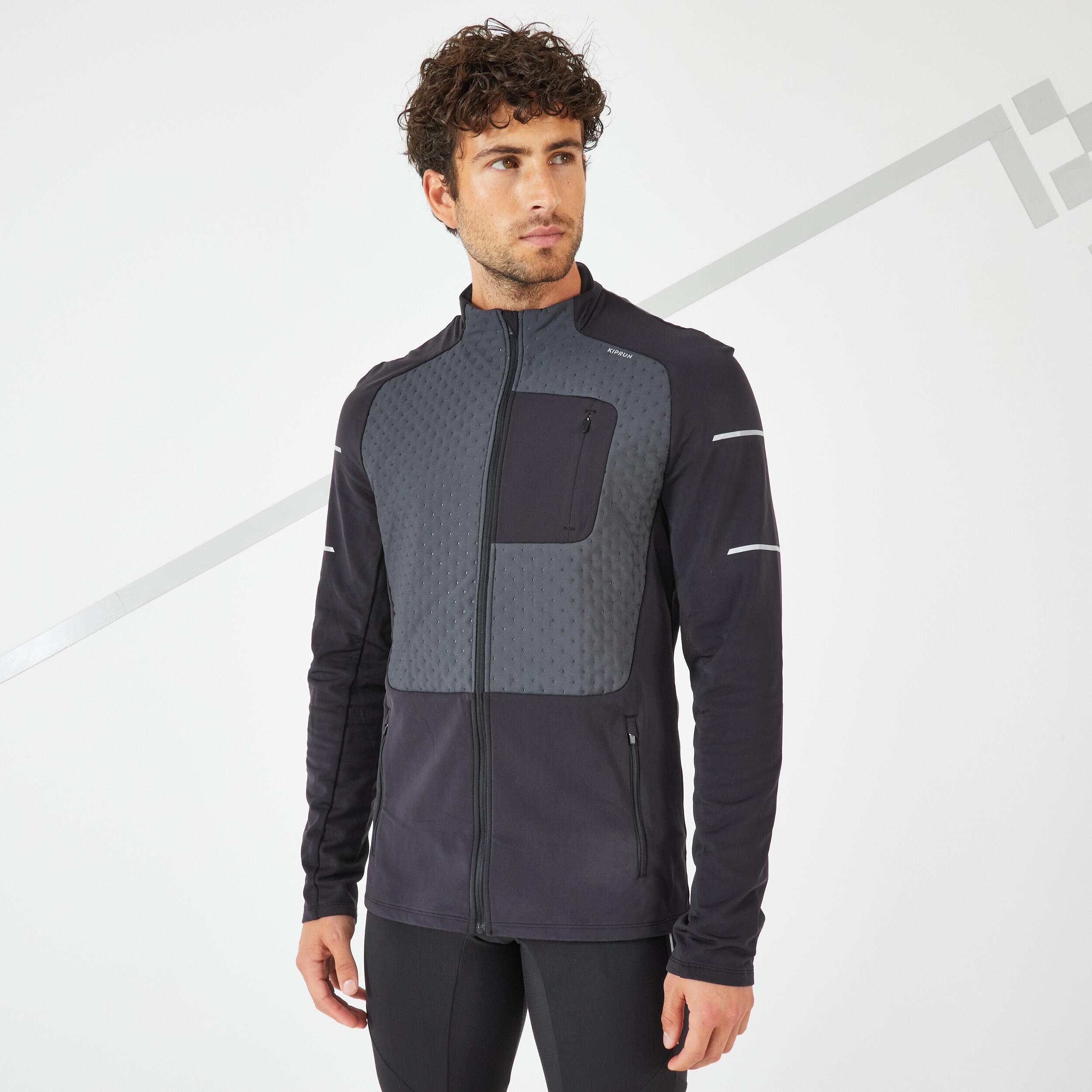
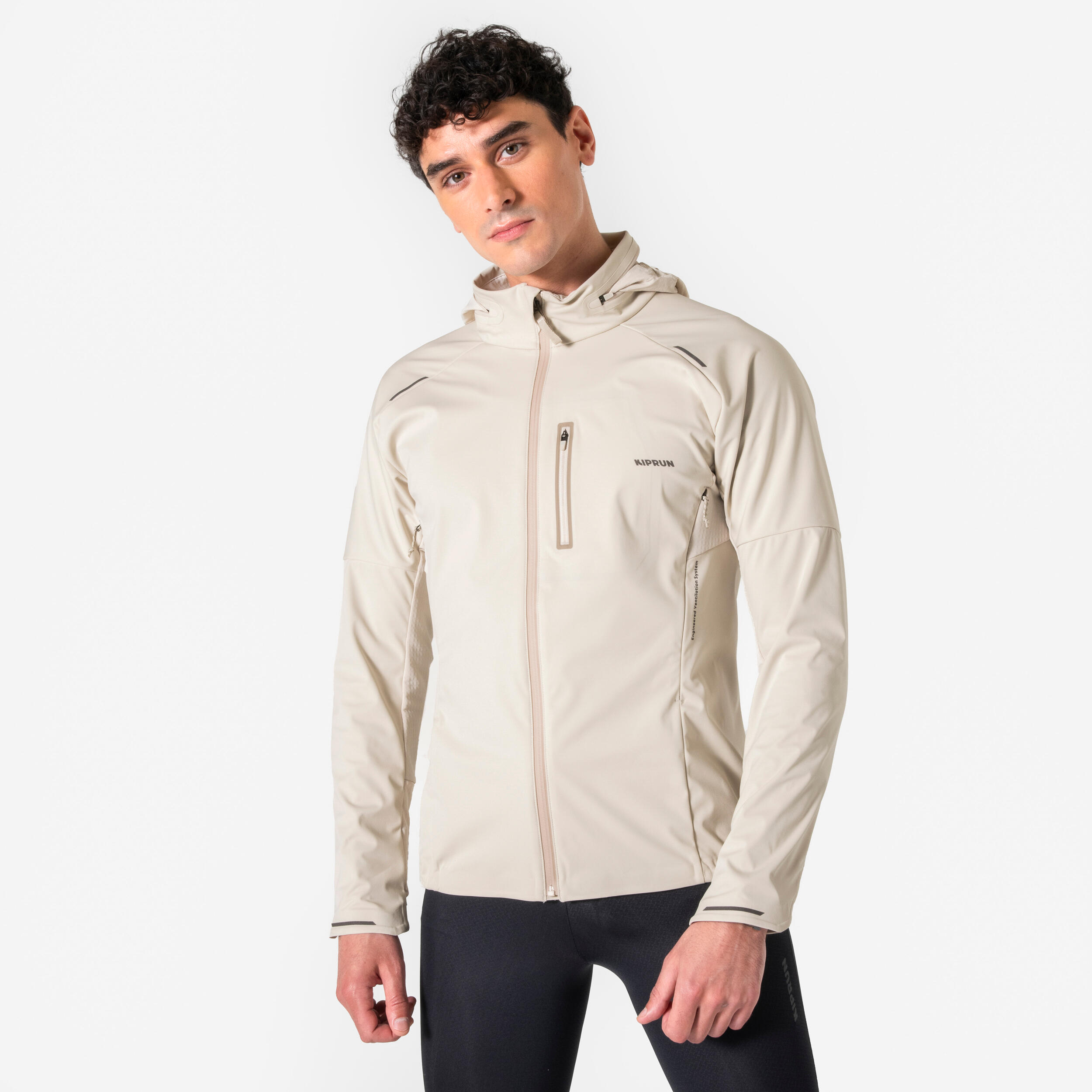
Effective athletics jackets place protection where wind and cold affect you most while allowing heat to escape from areas that perspire heavily. The KIPRUN Run 900 Warm Regul men's jacket uses strategically positioned warm, wind-resistant and breathable sections rather than one uniform fabric across the garment. This helps reduce overheating during harder efforts while retaining protection across the front. Open ventilation points gradually instead of waiting until the jacket feels wet inside. After training, close fasteners and follow the care label, generally washing technical jackets at 30 degrees Celsius without fabric softener. Air-dry the jacket fully, and renew the water-repellent finish when water stops beading on the outer surface.