15 items
4.7/5 based on 3012 reviews collected online and in stores

Predator Fishing Sinker FAQs

When does a drilled olive sinker work well for predator fishing?

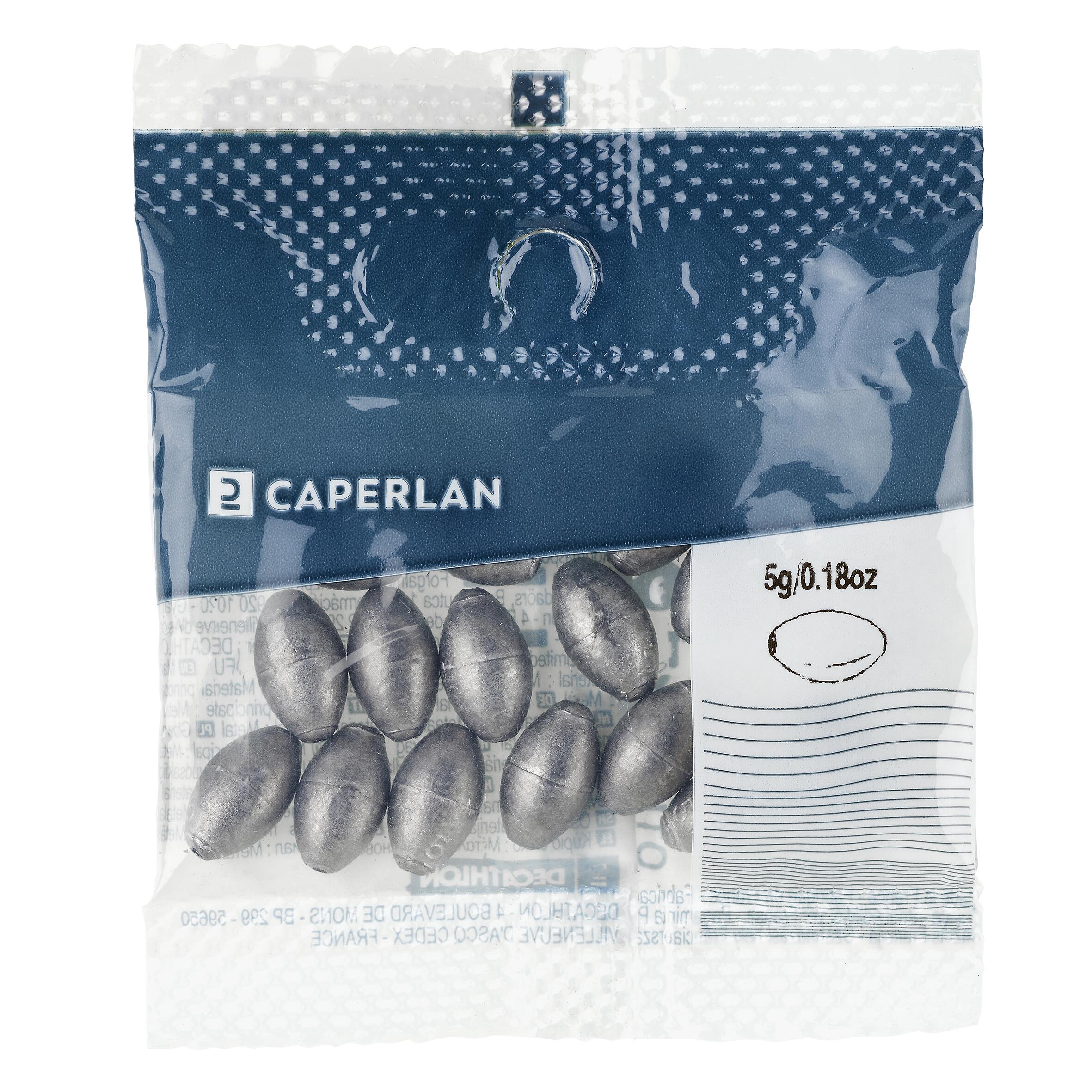
A drilled olive lets the fishing line pass directly through the weight, giving you a simple way to add ballast without another external connection. Caperlan shapes its heavier olives for long-distance casting and stable positioning in deeper water. The 100 g version works for ledgering and boat fishing in fresh water or at sea, while its hydrodynamic profile helps it settle into the intended fishing layer. Caperlan also publishes a -5% to +10% weight tolerance linked to its centrifugal manufacturing process. A drilled olive sinker makes more sense when you need substantial weight than when you only want to fine-tune a lightly balanced rig.

How does a swivel pear sinker help a ledgering rig?

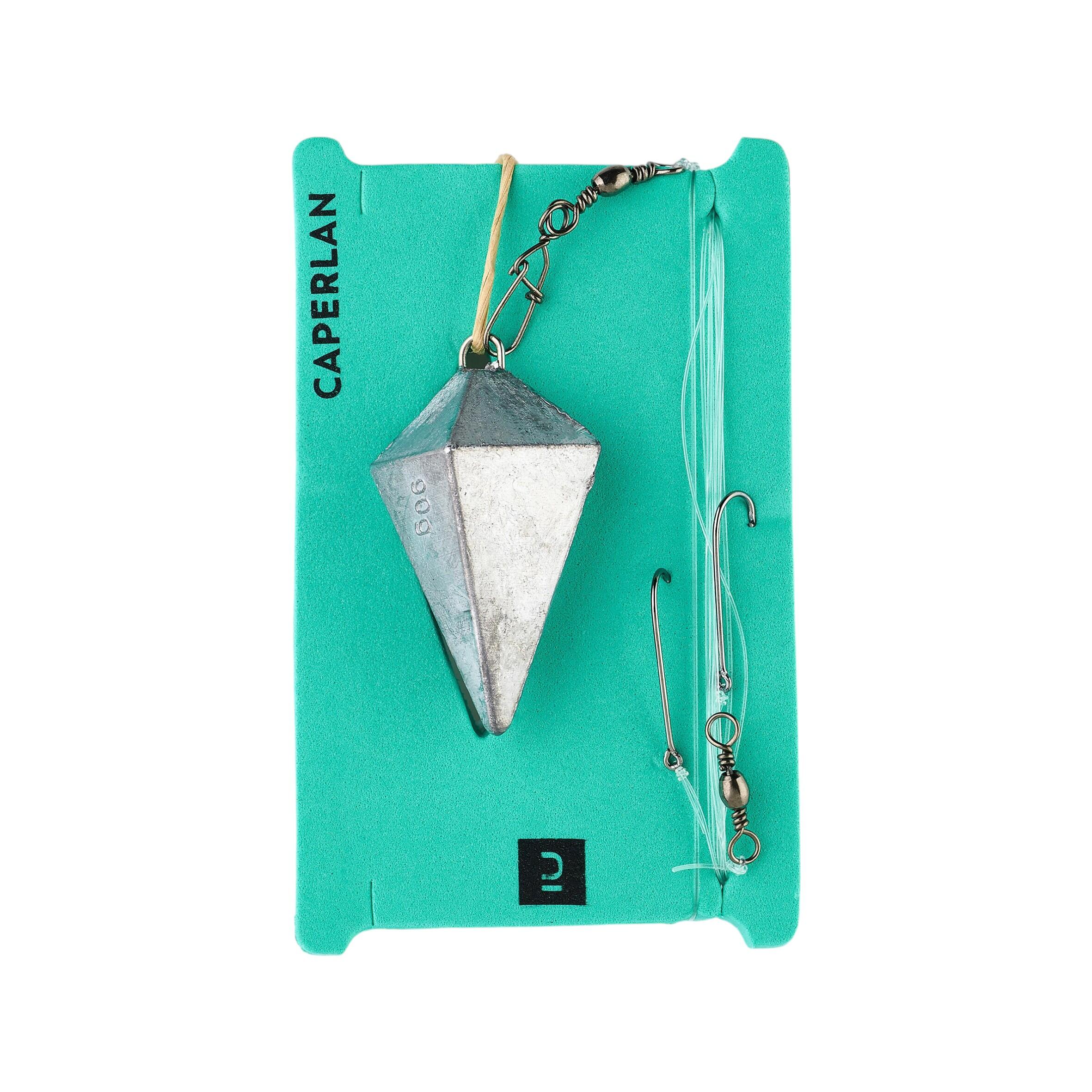
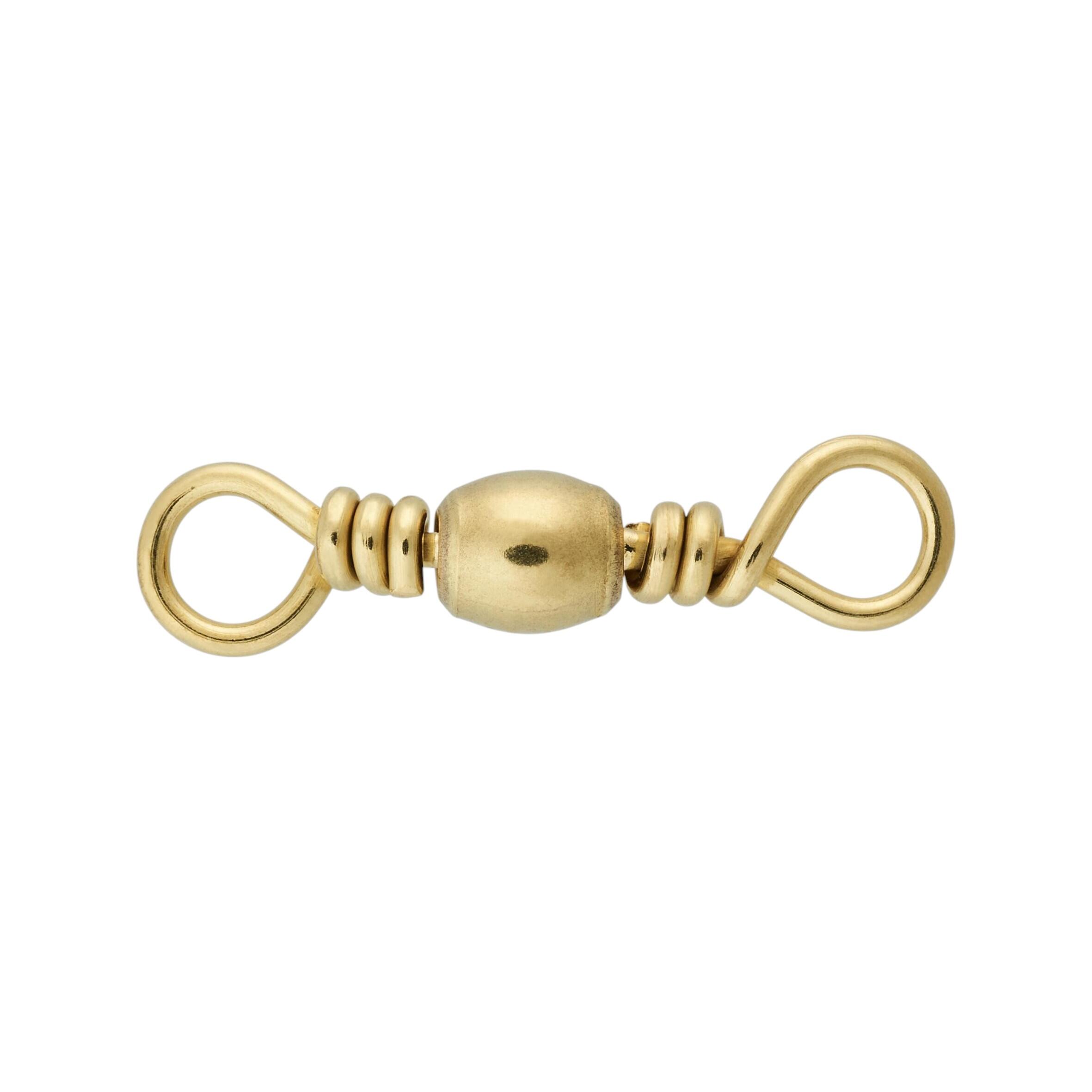
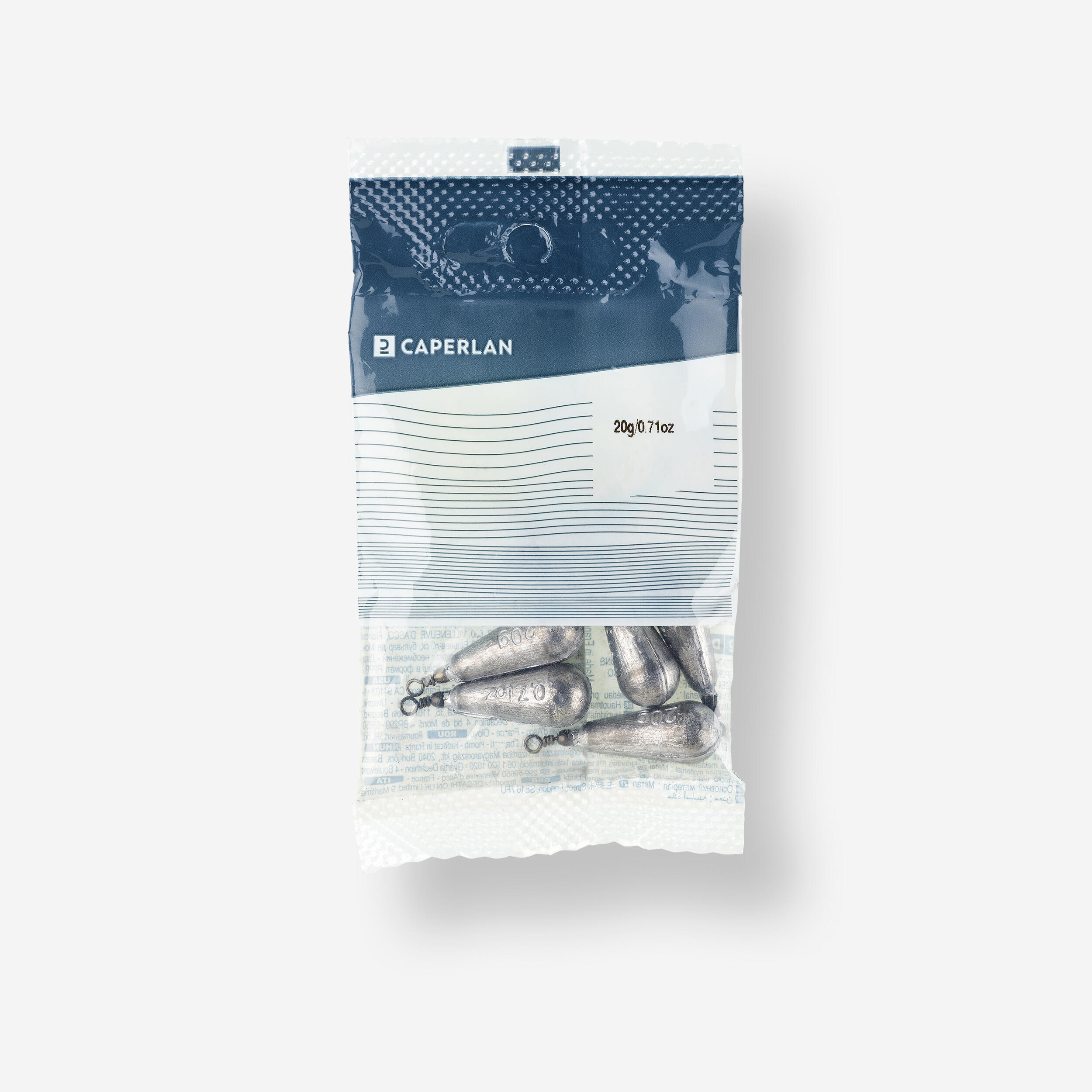
A pear-shaped sinker gives the rig concentrated weight while the integrated swivel provides a defined connection point for the terminal setup. Caperlan shapes its pear sinkers to cut through the air for long, accurate casts and to hold the leader in a stable position once the rig reaches the water. Sizes run from approximately 10 g to 60 g, giving you room to alter the weight according to distance, depth and conditions. The fishing swivel pear sinker also carries Caperlan's published -5% to +10% manufacturing tolerance, so small differences from the nominal weight can occur. Use enough ballast to hold the presentation without adding unnecessary load to the rod.

How can buckshot help you balance a predator fishing rig?

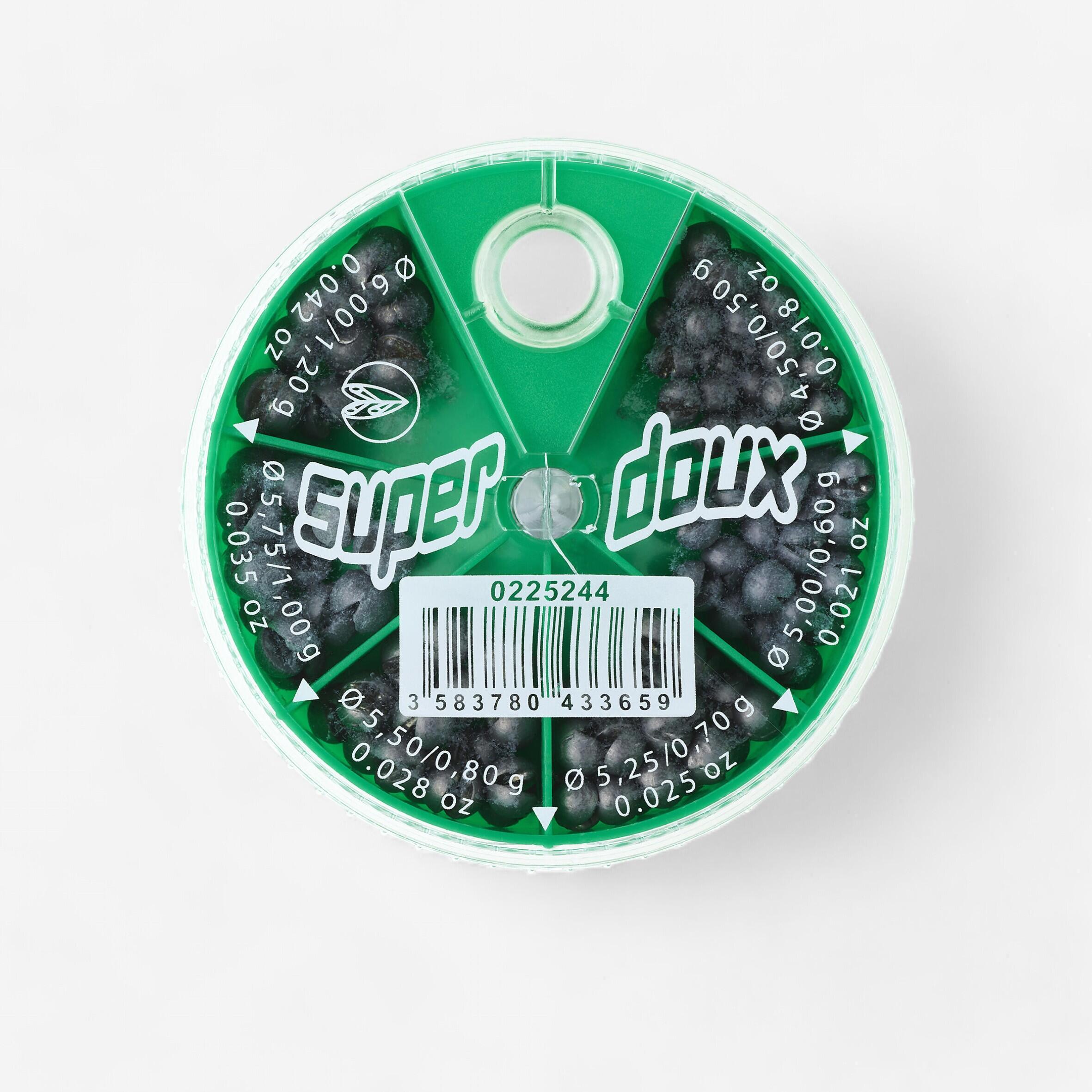
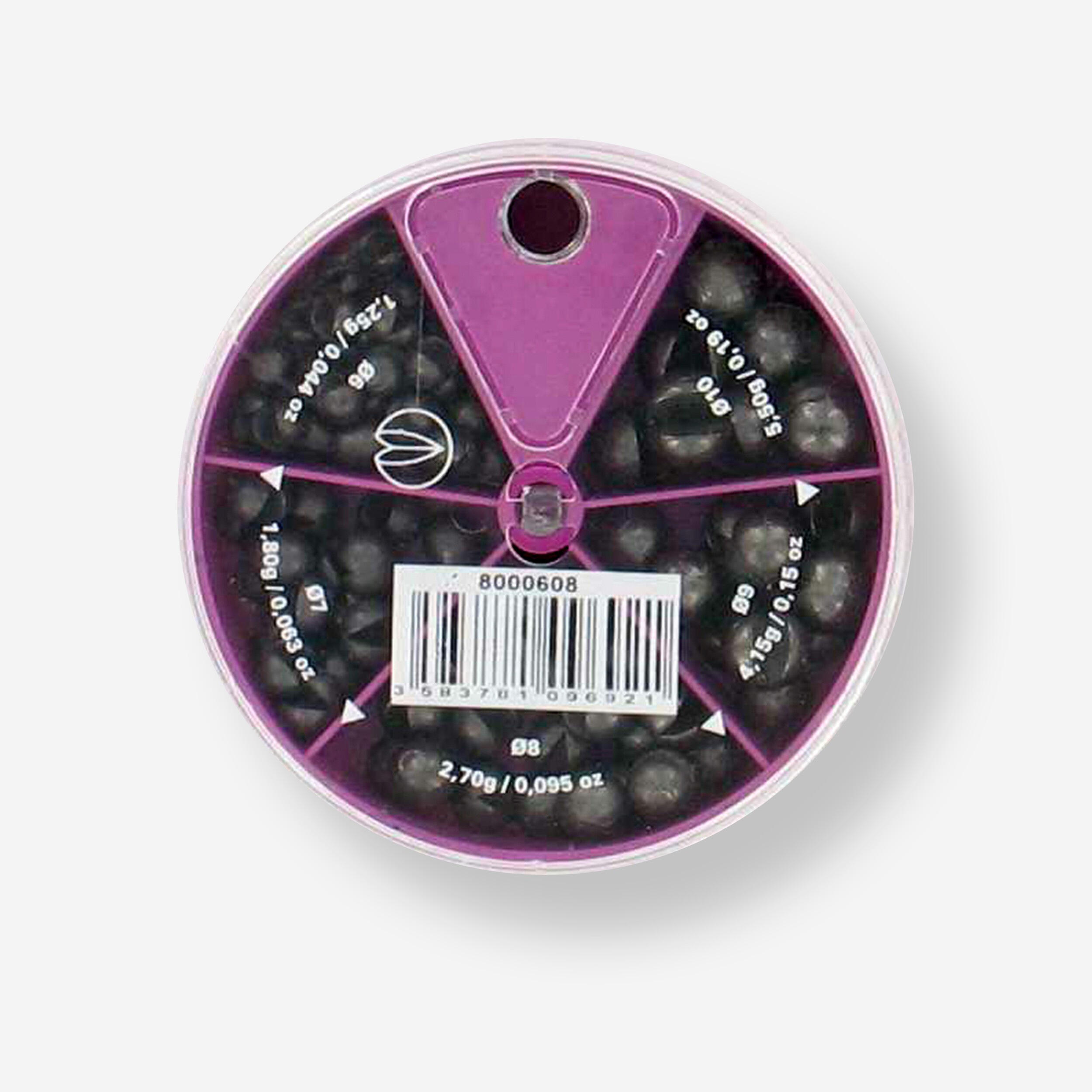
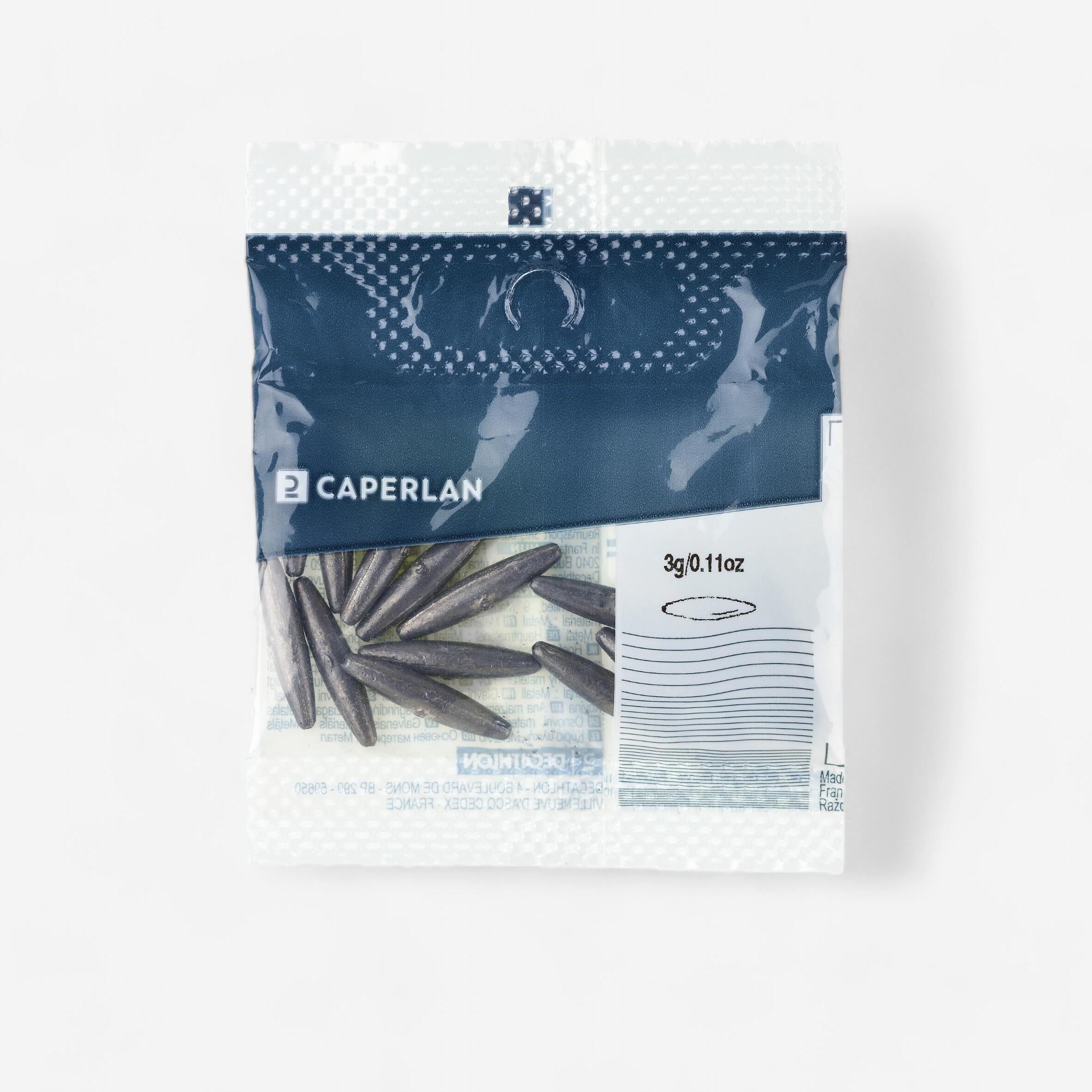
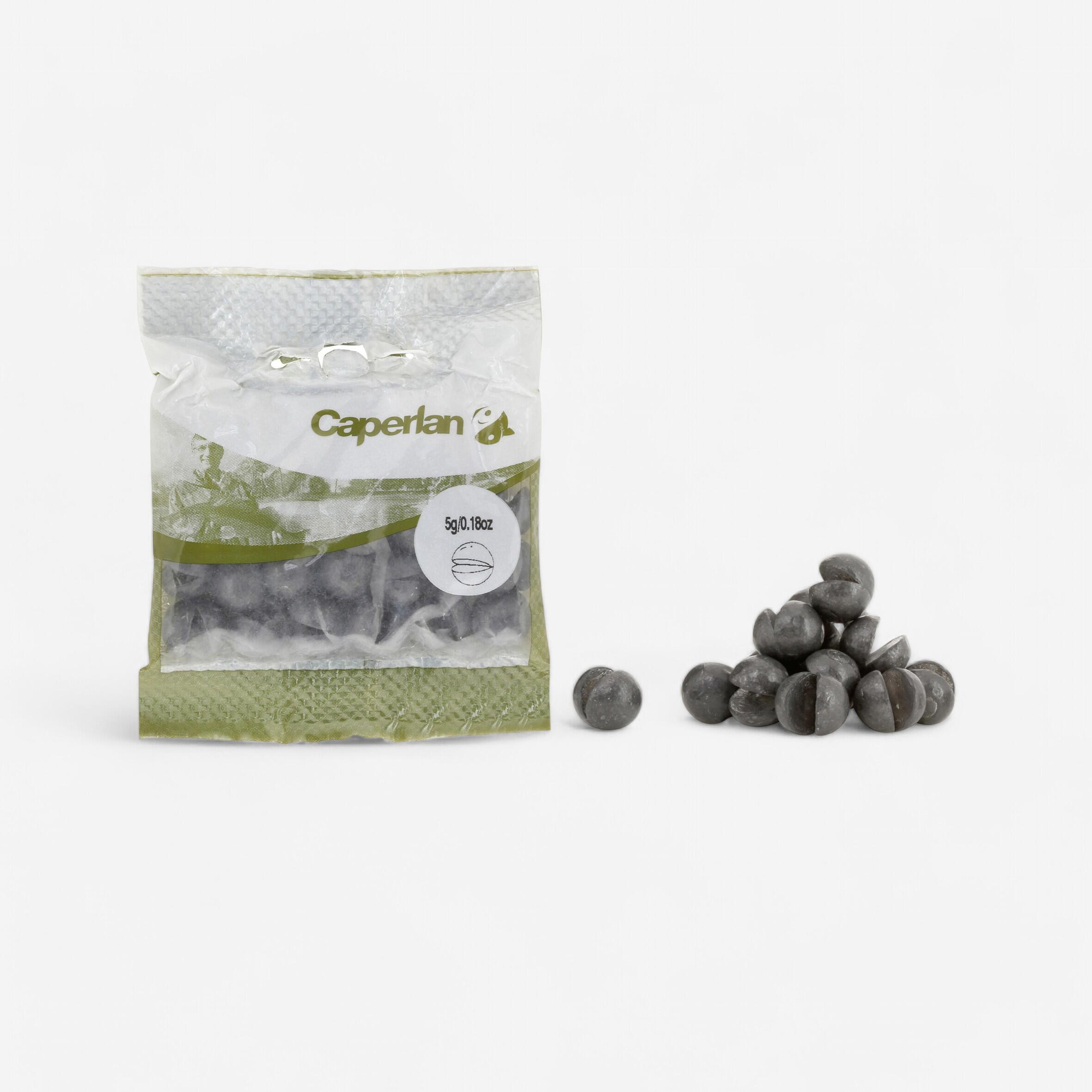
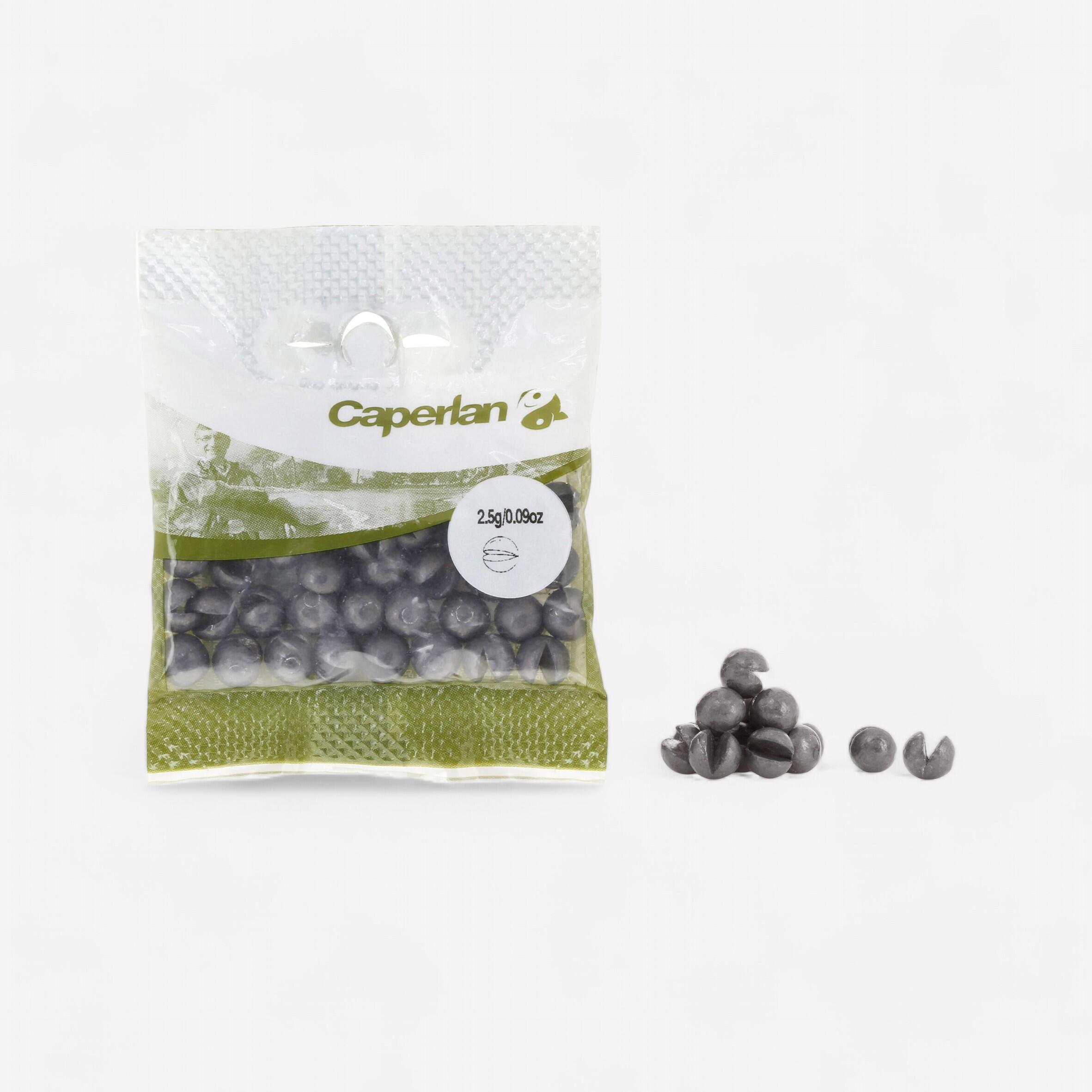
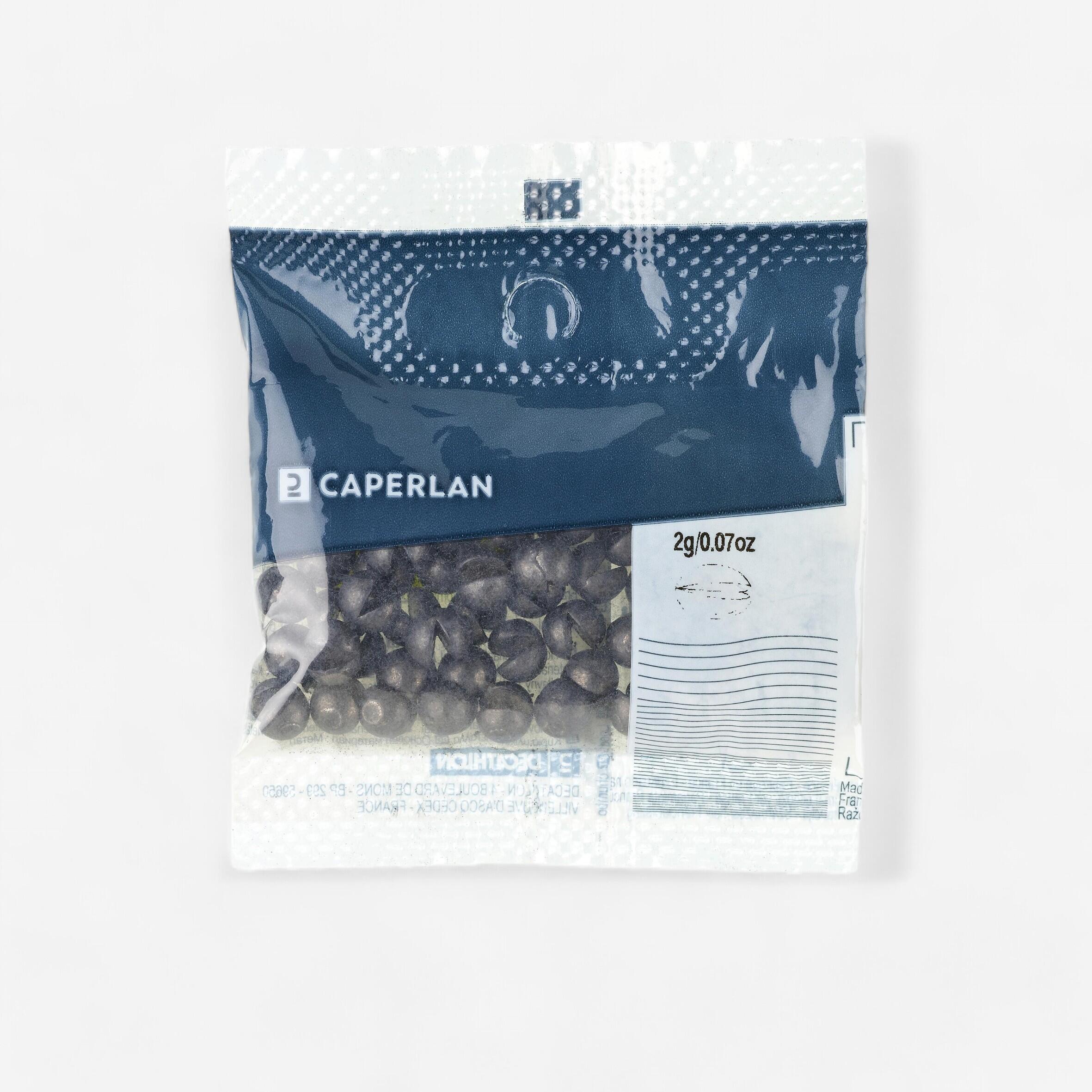
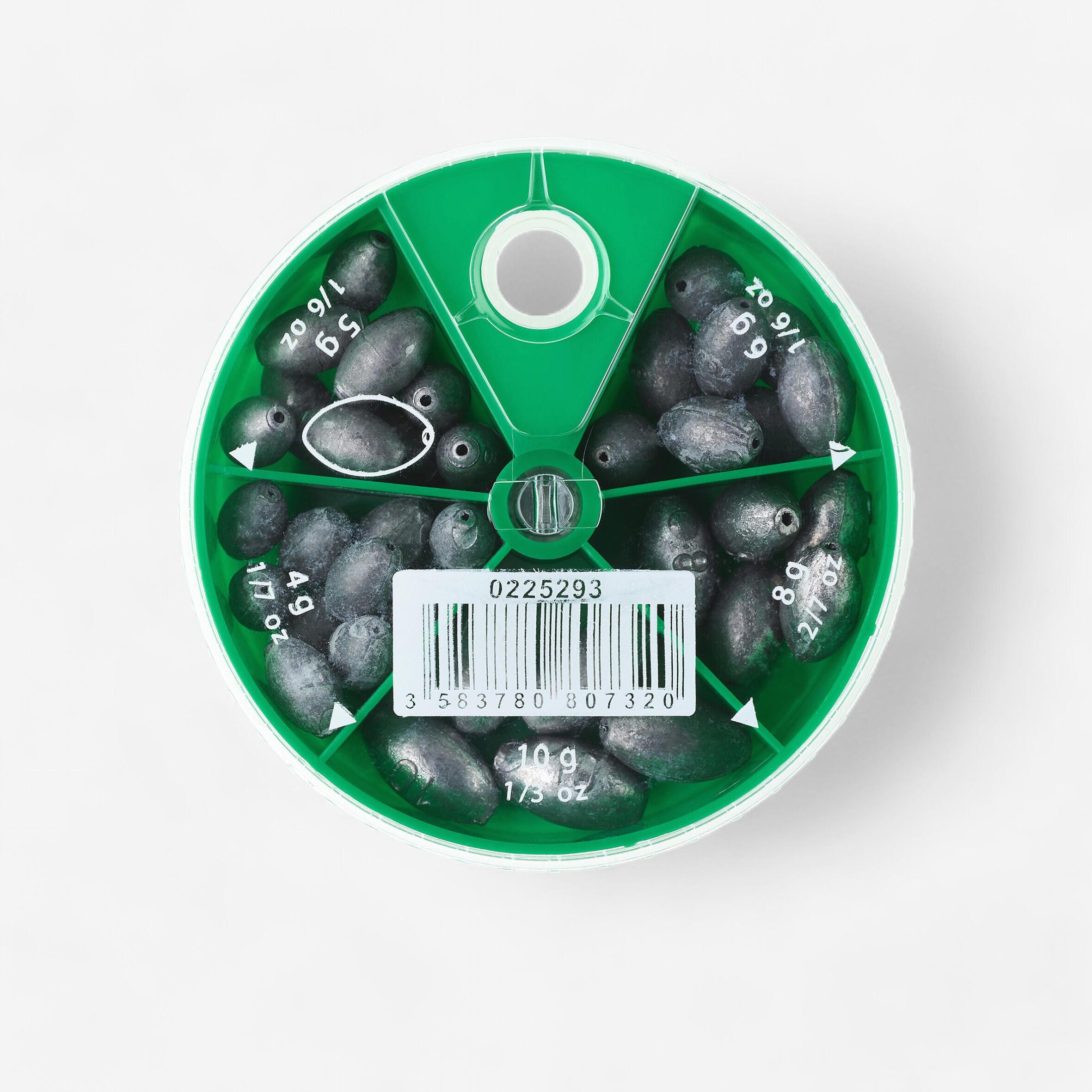
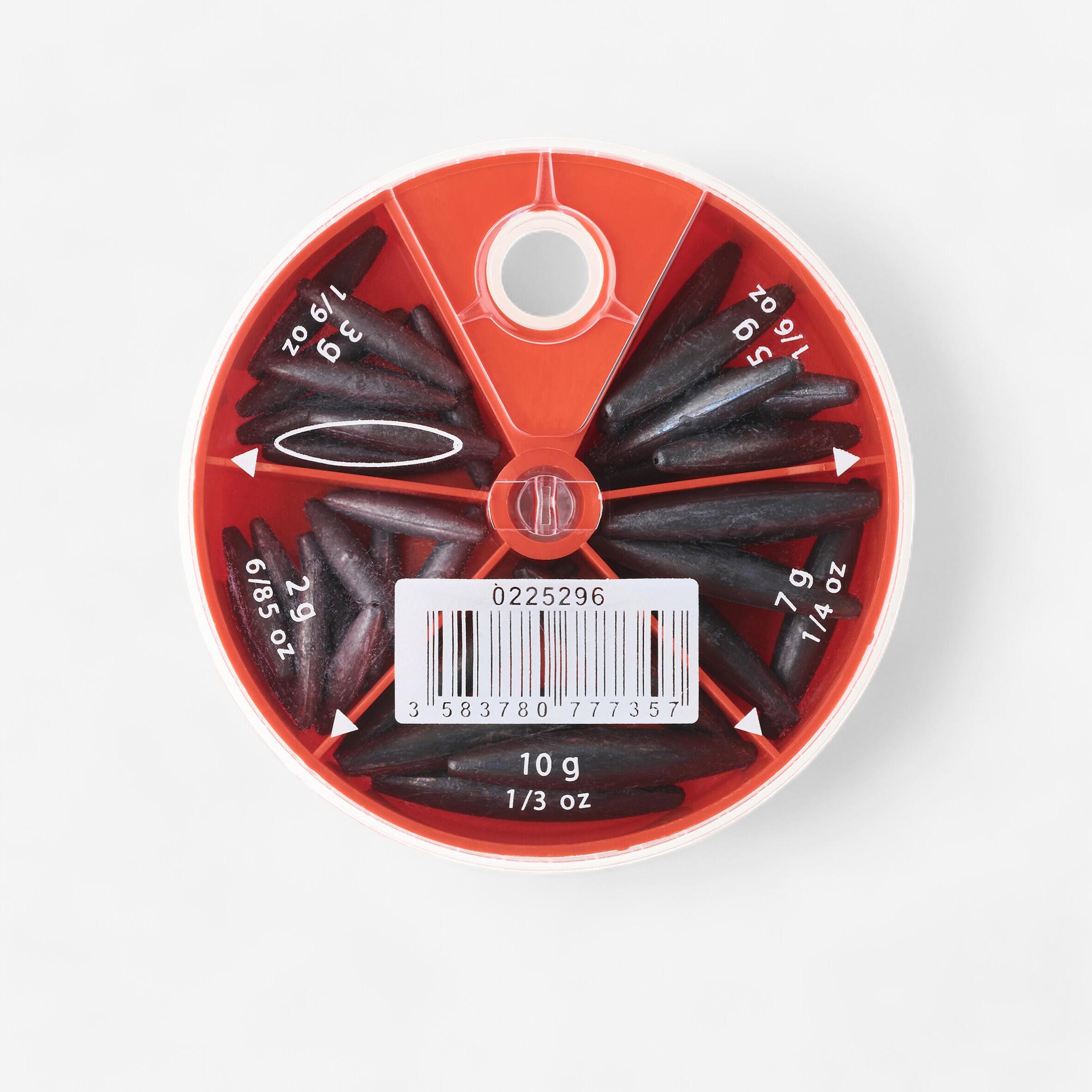
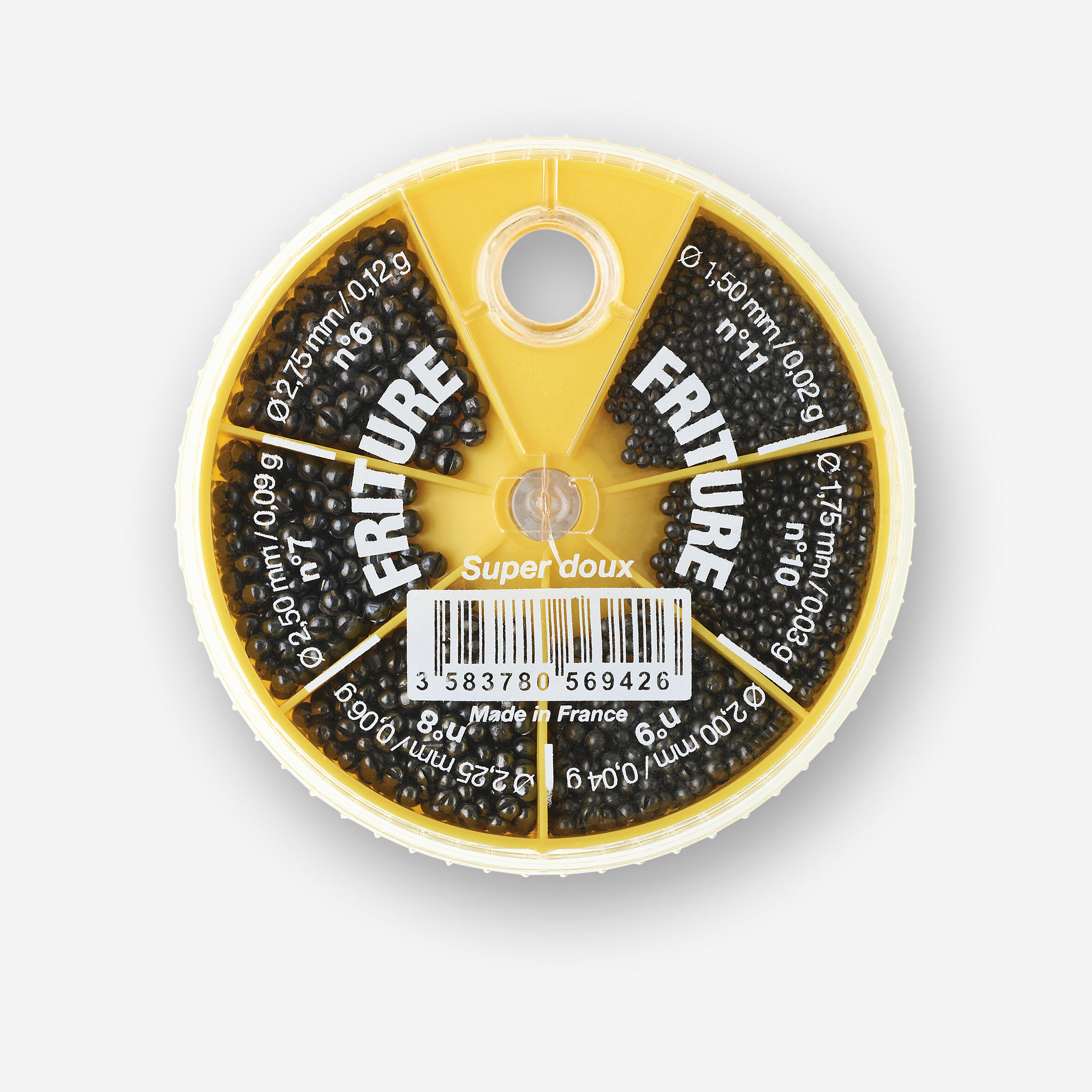
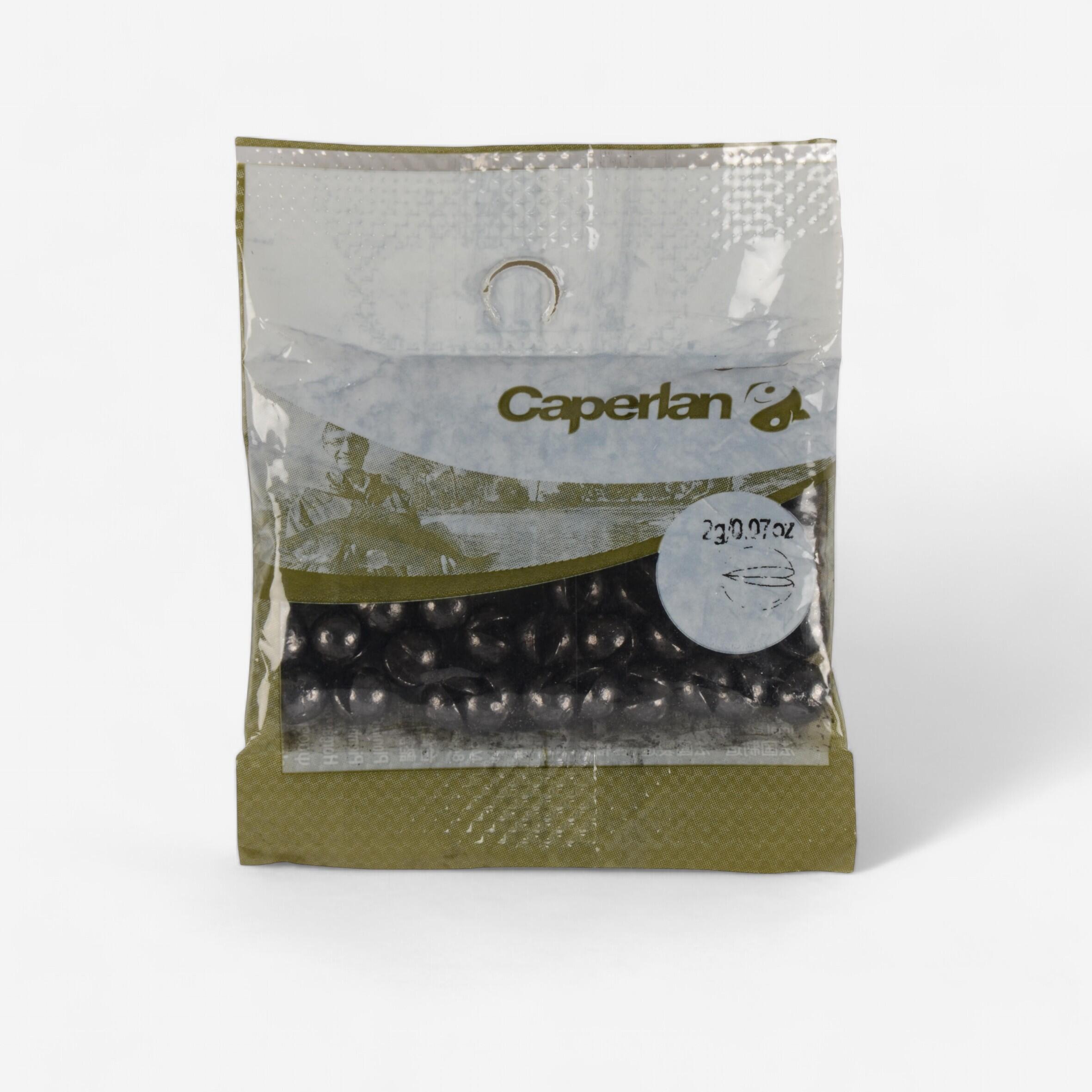
Buckshot gives you more control when the rig needs several smaller weights instead of one heavy sinker. Adding or removing individual pieces lets you alter the total ballast in small steps, which can help when balancing floats, adjusting presentation depth or responding to changes in current. Caperlan grades its buckshot by weight so you can build the rig more precisely rather than relying only on visual size. Keep buckshot predator fishing sinkers organised by size and close the container after use so individual weights do not mix in your tackle bag. The current Caperlan sinker category includes several split-shot and buckshot formats alongside drilled and swivel weights for different fishing methods.

How do you match sinker weight to predator ledgering?

Start with the rod's casting rating, then consider fishing depth, current, casting distance and how firmly the presentation needs to stay in position. A heavier sinker can reach deeper water or hold against more movement, but excess weight adds unnecessary casting load and can make a lighter rig less responsive. Caperlan offers small graded shots for fine adjustments as well as drilled olives reaching 75 g and 100 g for more demanding shapes. When preparing for predator ledgering fishing, treat the sinker as part of the complete rig alongside the rod, line, leader and hook. Test the finished system before casting at full power, especially after changing to a substantially heavier weight.

What care matters when using lead fishing sinkers?

Keep sinkers dry and contained so loose weights do not damage other tackle or become difficult to locate inside a bag. Several current Caperlan sinkers use lead, including drilled olives and swivel pear weights, and Decathlon explicitly advises washing your hands after handling them. Avoid eating or handling food until your hands are clean, particularly during longer fishing sessions. Store weights in their boxes between trips and inspect drilled holes or swivel connections before reuse. When organising your wider predator fishing tackle, separate heavy sinkers from delicate lures, floats and rod tips so they cannot knock against more vulnerable equipment during transport. Caperlan also advises dry-box storage for its current pear and heavy olive sinkers.