Energy reduction technology (ERT)
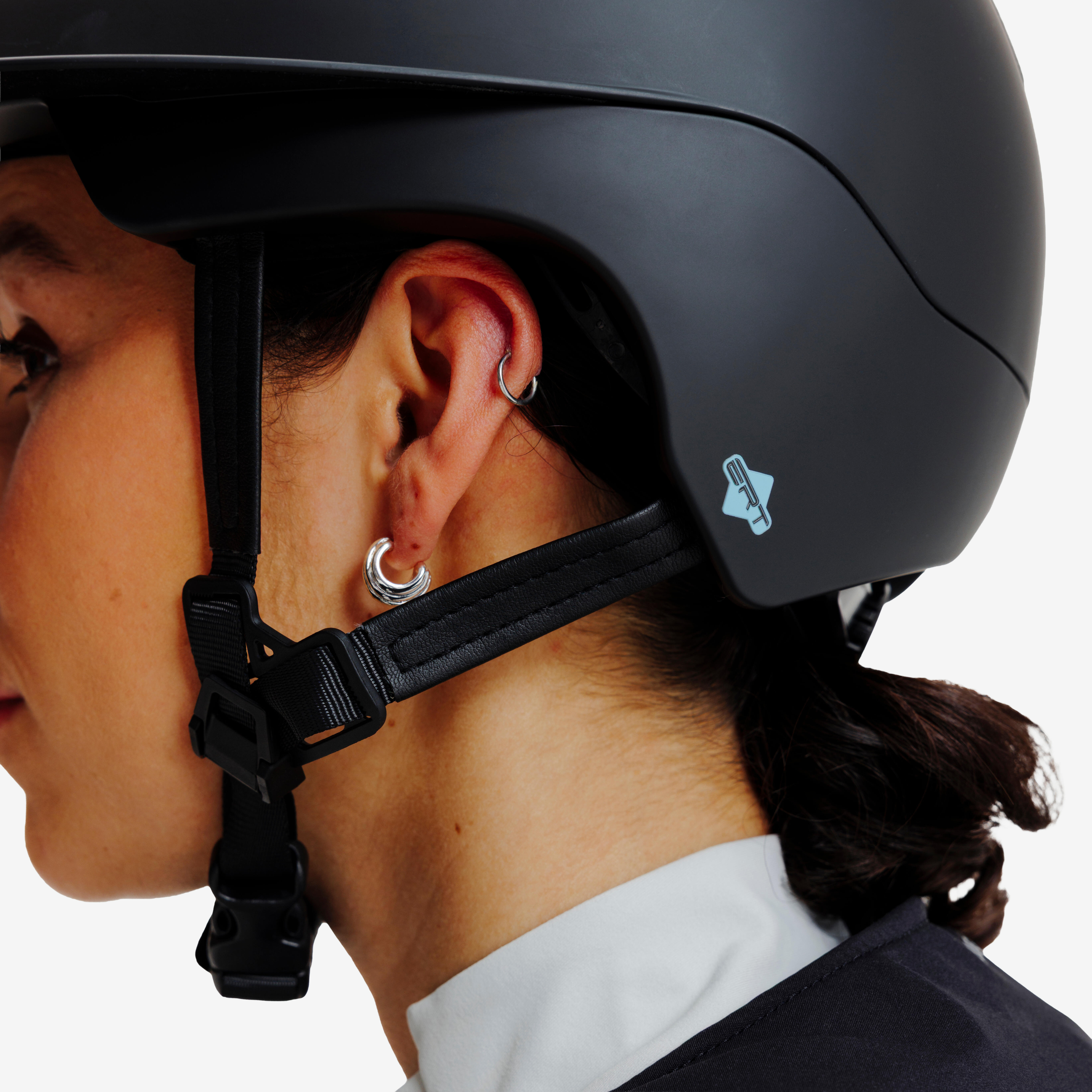
Energy reduction technology (ERT) involves adding soft polymer pads in the helmet. This technology reduces linear kinetic energy transfer by up to 20% and absorbs some of the impact through deformation of the materials. This significantly reduces the risks of concussion due to rotational impact to enhance rider safety.
For more information, go to erttechnology.com
Helmet weight
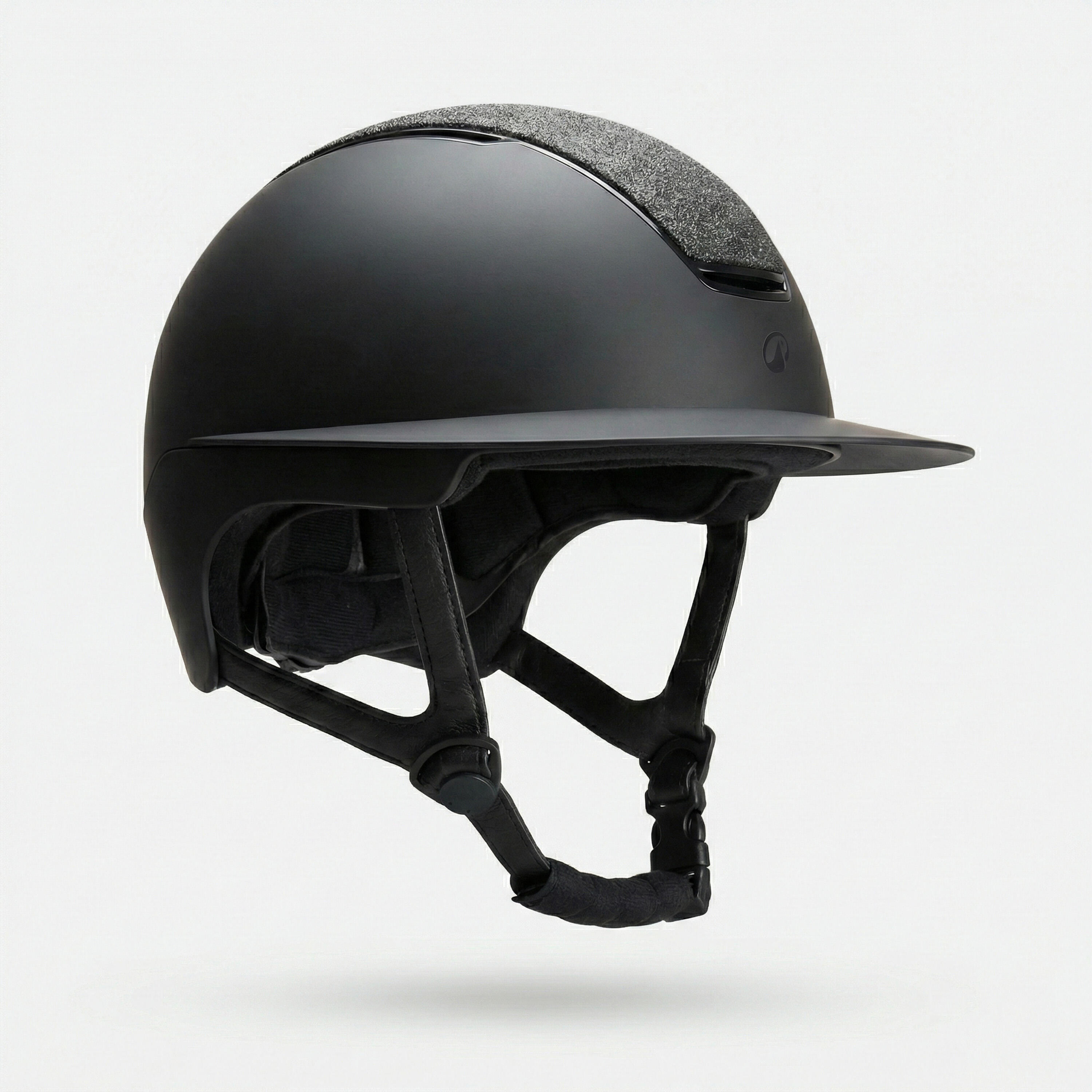
This riding helmet was designed to be light and comfortable, even when wearing it for an extended period of time. Weight (by size):
S 54 – 56: 560 g.
M 57 – 59: 595 g.
L 60 – 63: 625 g.
Instructions for use
For optimal safety and comfort when using your helmet, please read the user guide before wearing.
This helmet is for horse riding ONLY and should not be used for motor sports, snow sports, air sports, etc.
To ensure that it continues to protect you effectively, we recommend replacing it after a fall or after five years.
Adjustable
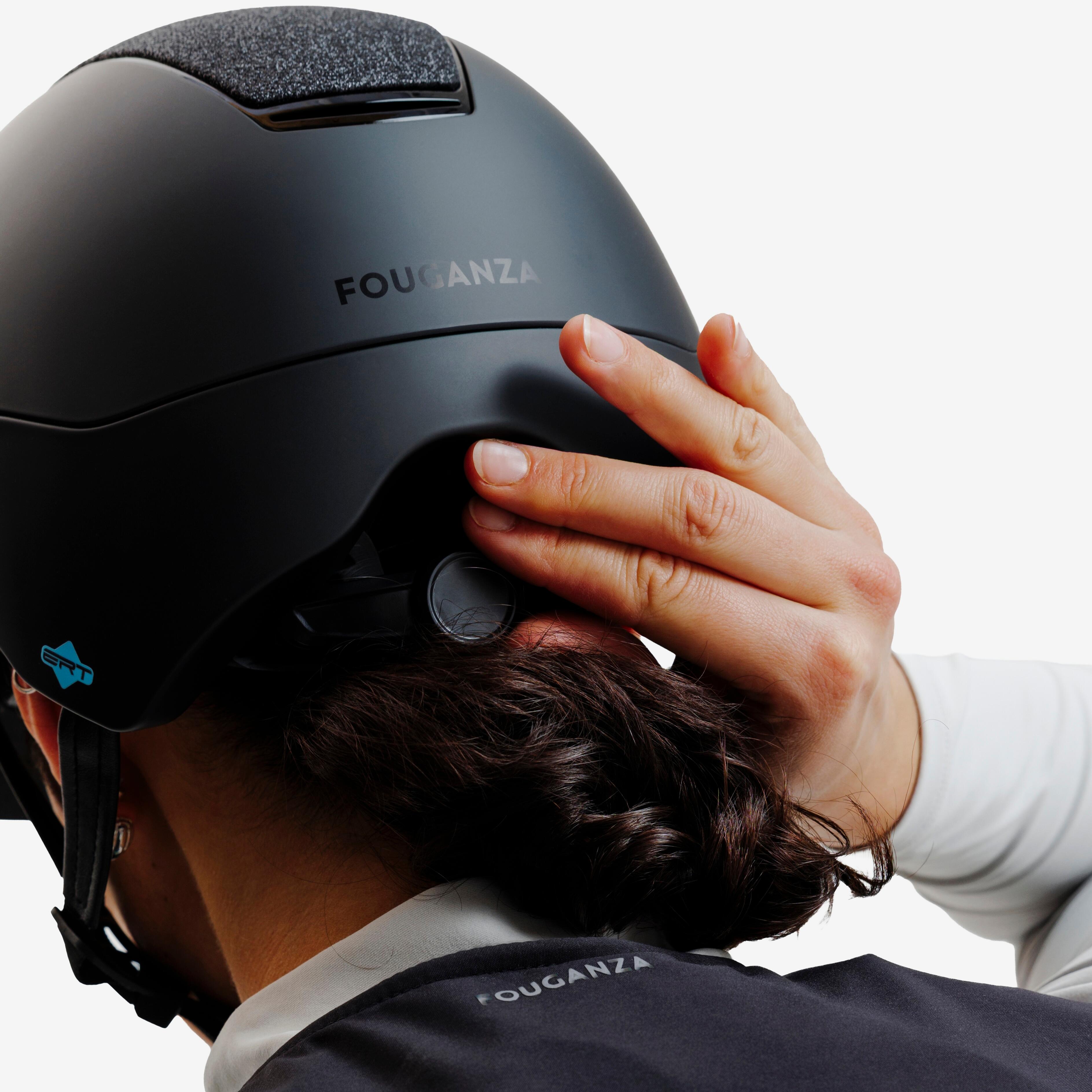
The riding helmet was designed to fit the shape of your head. The adjustable dial at the back lets you adjust the circumference precisely for an excellent fit. It is quick and easy to do and ensures your helmet fits just right. A good fit will keep the helmet stable and comfortable on your head while riding.
Standard and protection
Certified helmet compliant with the EN13842023 safety standard
It has been tested in our labs and was designed to absorb some of the energy on impact through partial deformation of the shell and/or the protective material.
Replace your helmet in the event of a fall. Even if it looks intact, deformations inside it may not be visible.
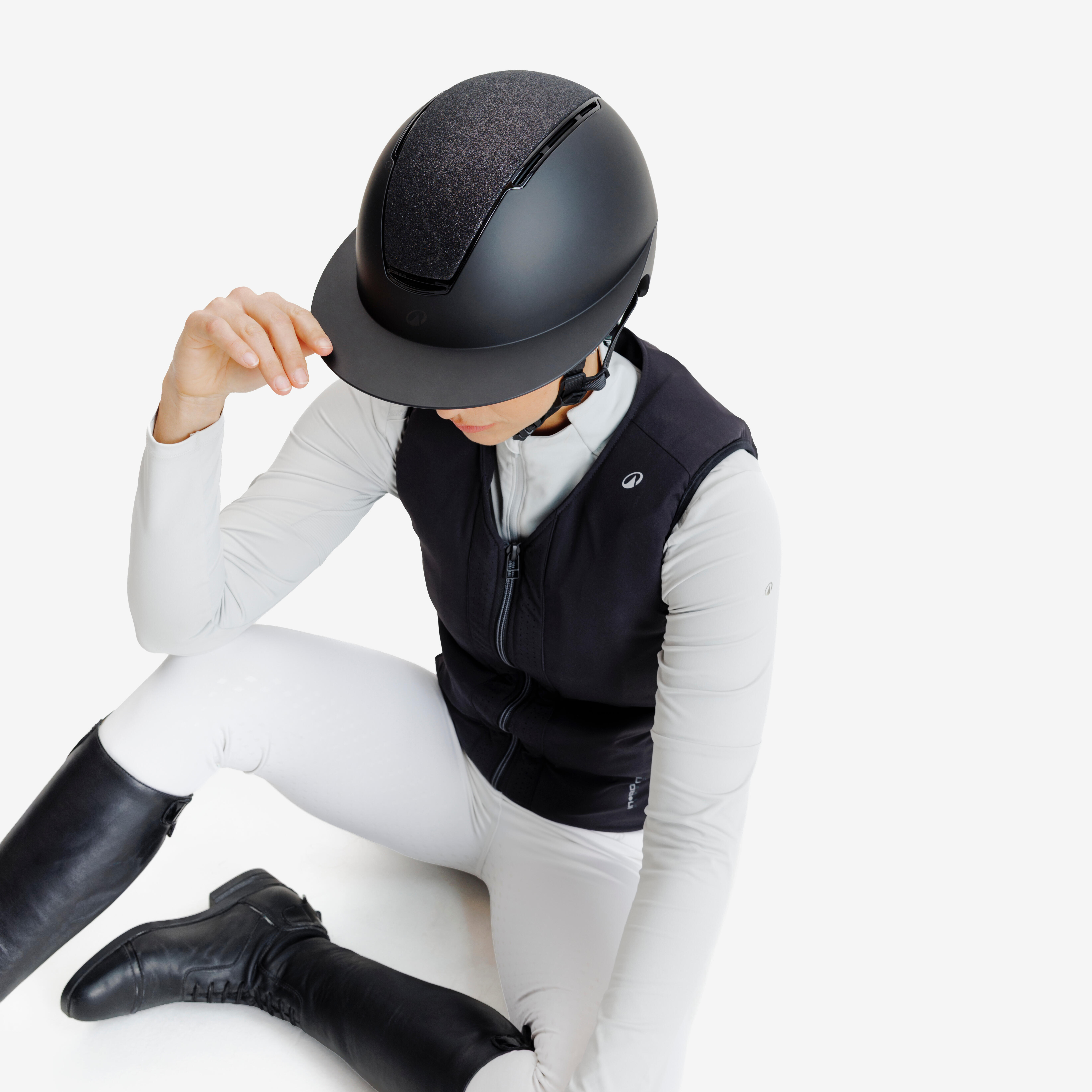
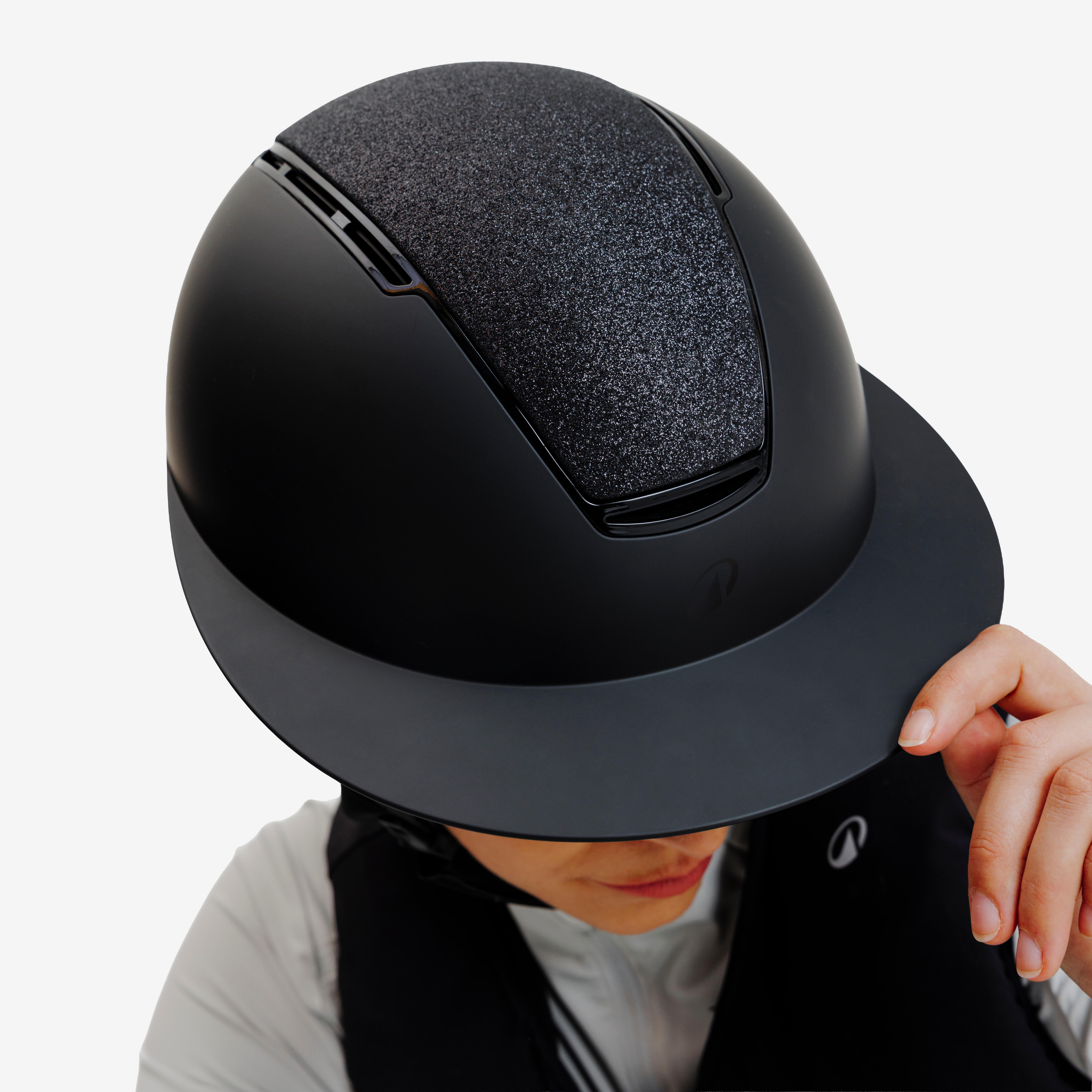
Wide visor
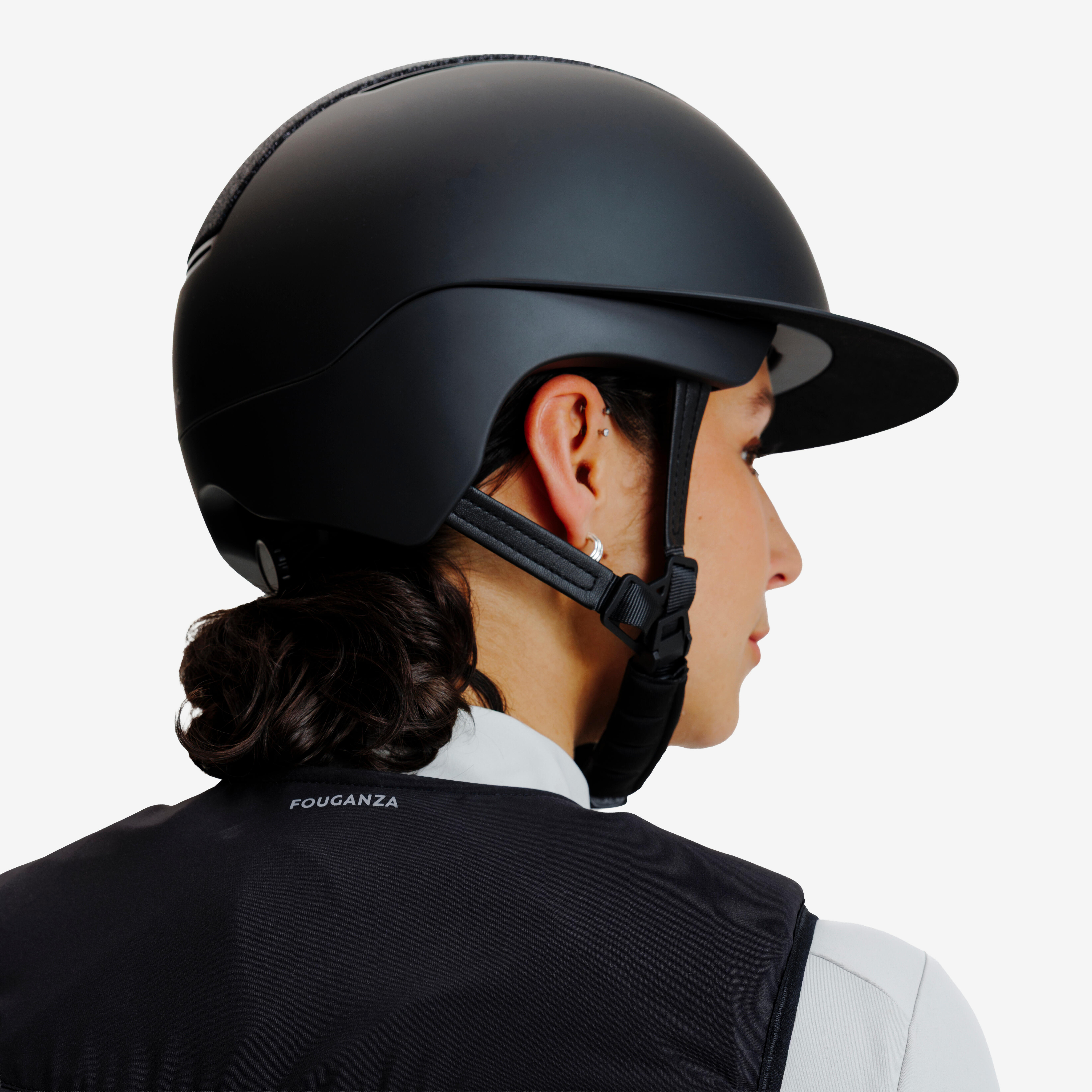
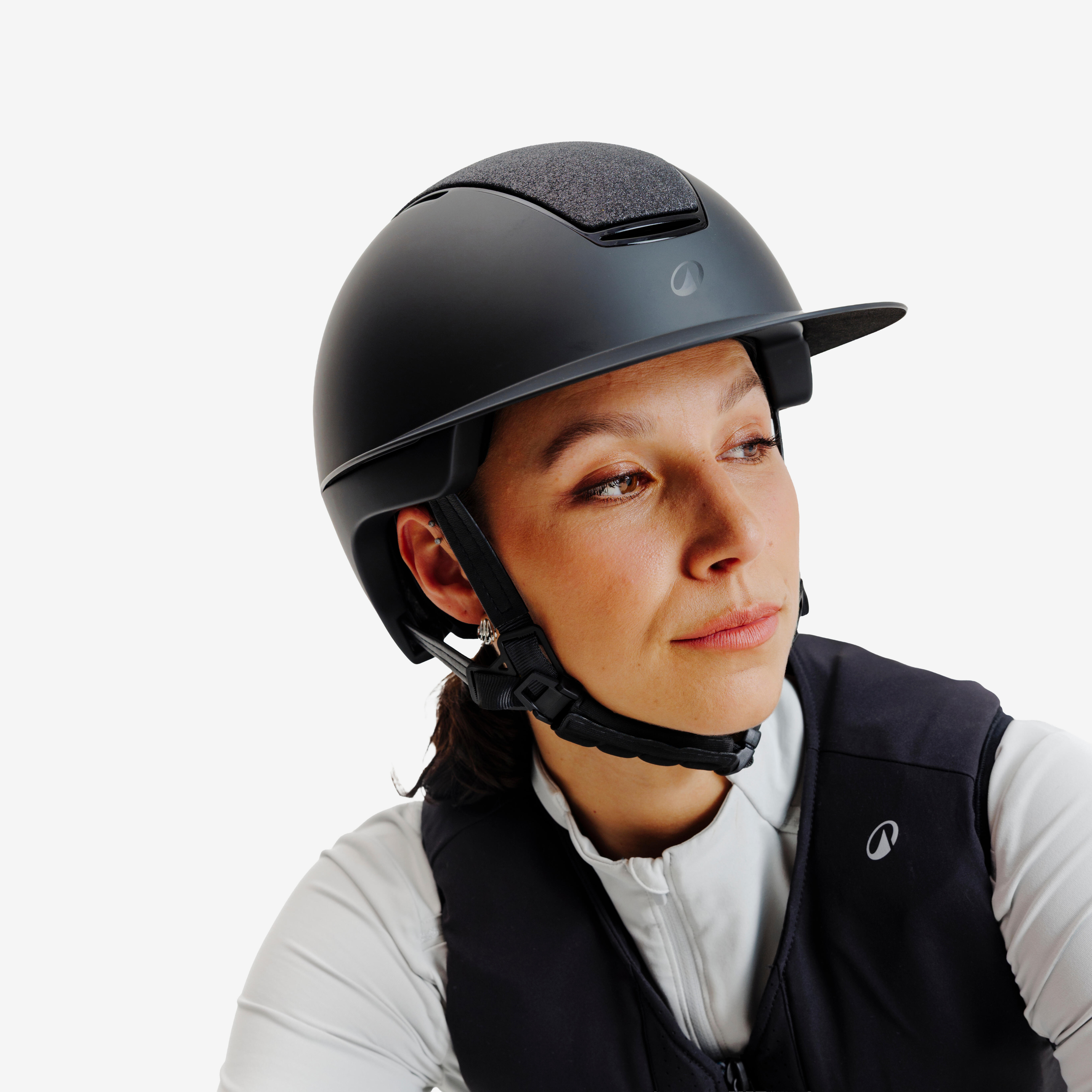
The wide visor was designed to provide clear visibility while reducing glare when the light is strong. It makes riding more pleasant during sunny days. This design also looks stylish when riding.
Adjusting the helmet
For optimal protection, the helmet should be in close contact with the head without squeezing it. When the harness and dial are properly adjusted, the helmet should not slide forward, back, or from side to side, even when you move your head.
The riding helmet's strap should pass beneath your jaw, rather than over the chin. It should be tight enough to stop the helmet rocking around, but it shouldn't choke you.