Features
Transmission rate: 92%
Lens: 42 mm
Field of view: 113 m to 1000 m range
Eye clearance: 16.8 mm
Exit pupil: 4.2 mm
Brightness index: 17.6
Twilight factor: 20.5
Nearest observation point: 2.5 m
Waterproof and anti-fog: nitrogen purge
2 ED lenses and 1 lanthanum lens (per tube)
Lens treatment: FBMC (Full Broadband Multi-Coated)
Prism: BaK4 dielectric and phase coating
Chassis: magnesium
Dimensions: 150x125x55 mm
Weight: 865 g
Pack contents
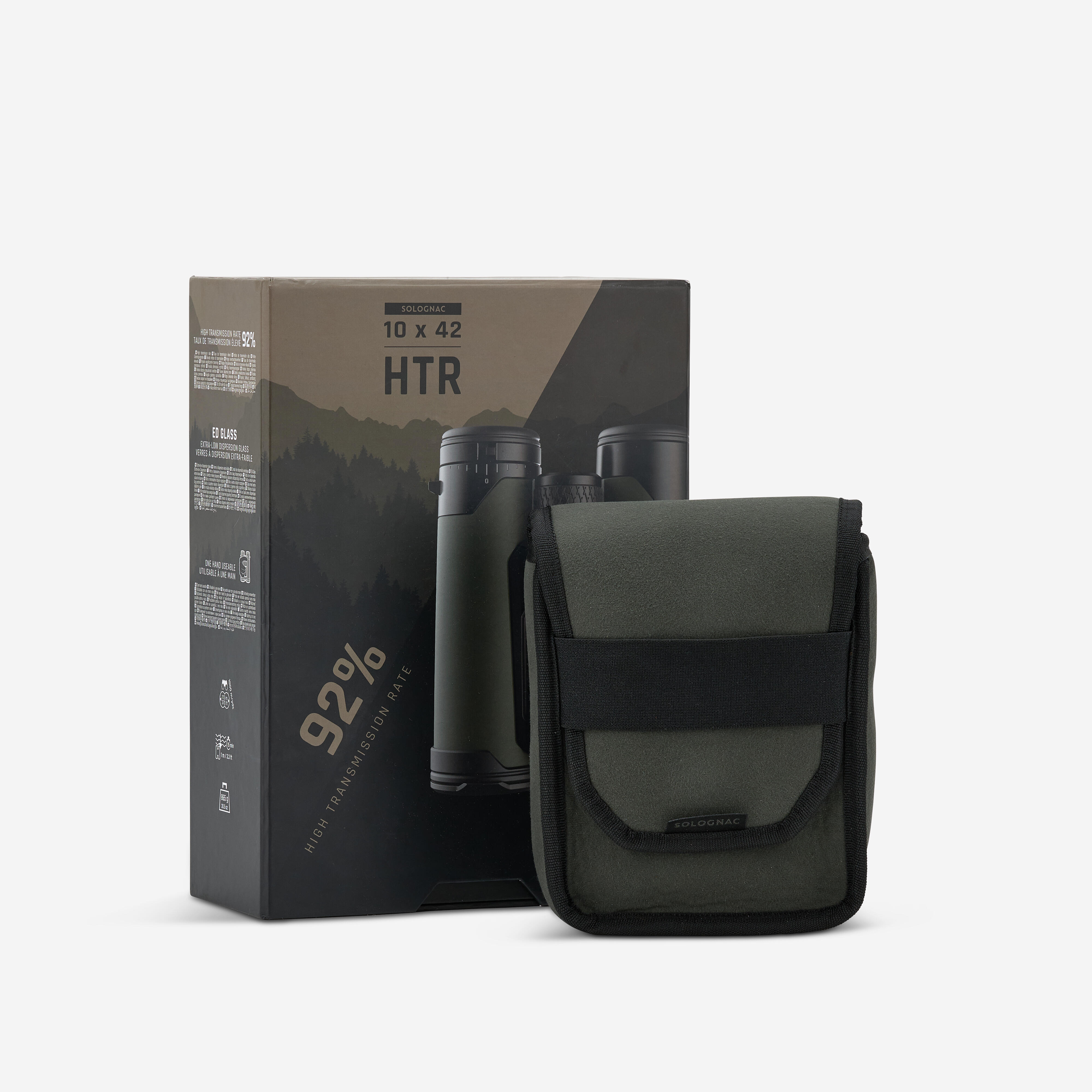
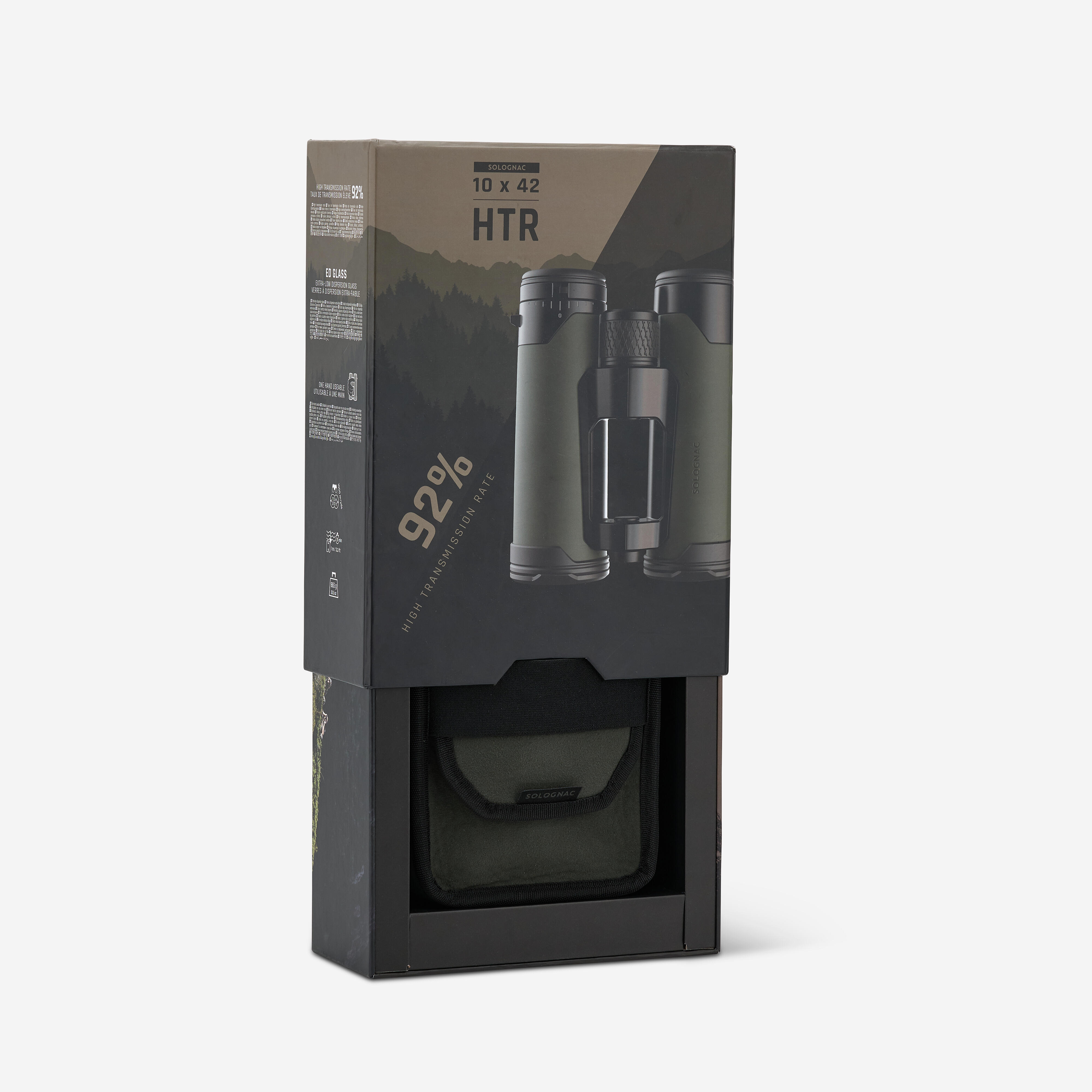
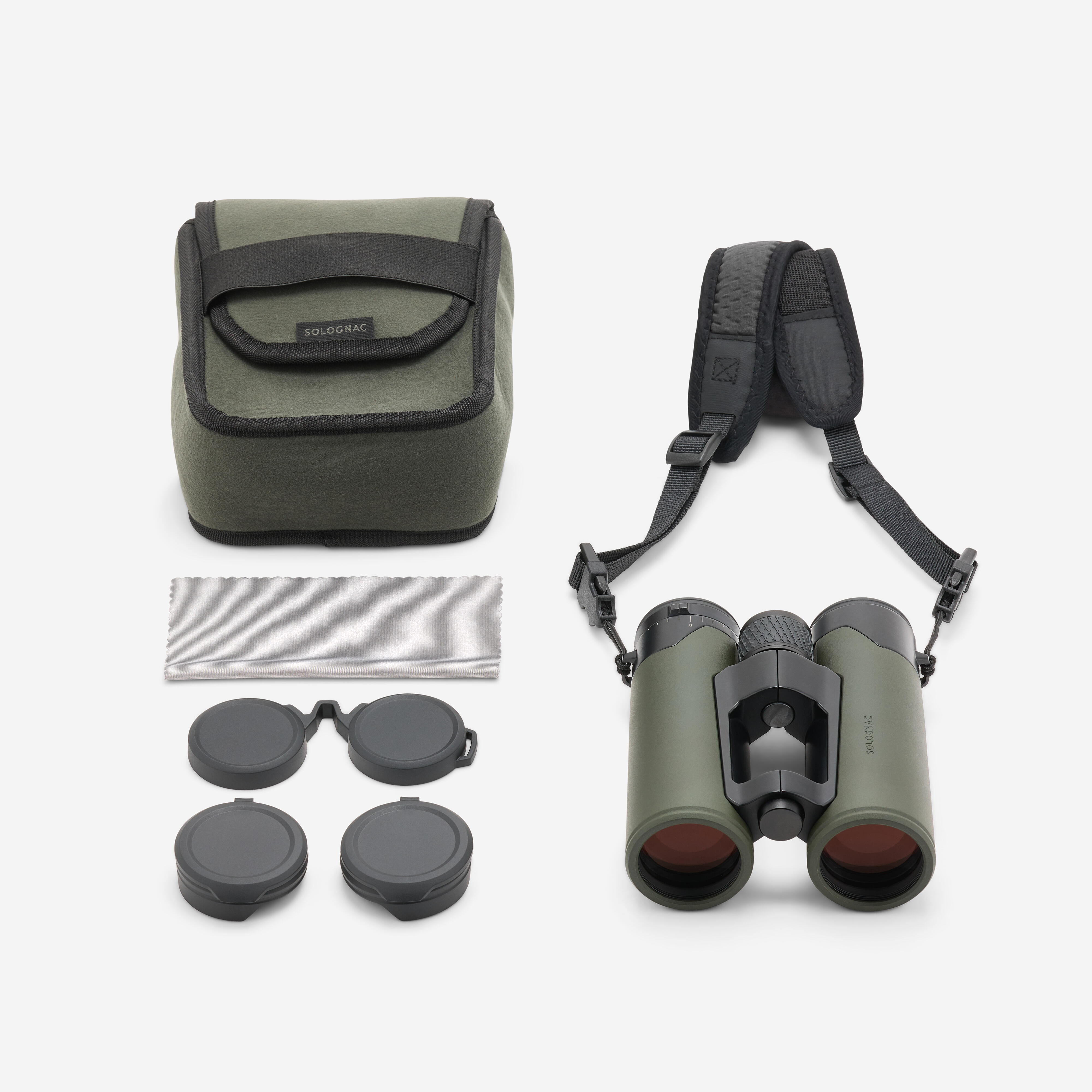
The pack consists of:
-a pair of HTR 10x42 binoculars
-1 eyepiece protection cover
-2 lens protection covers
-1 adjustable neck strap, in breathable mesh fabric to make observations more pleasant especially when it’s hot in summer
-1 protective pouch
-1 cleaning cloth for the lenses
The image quality of these binoculars (part 1/3)
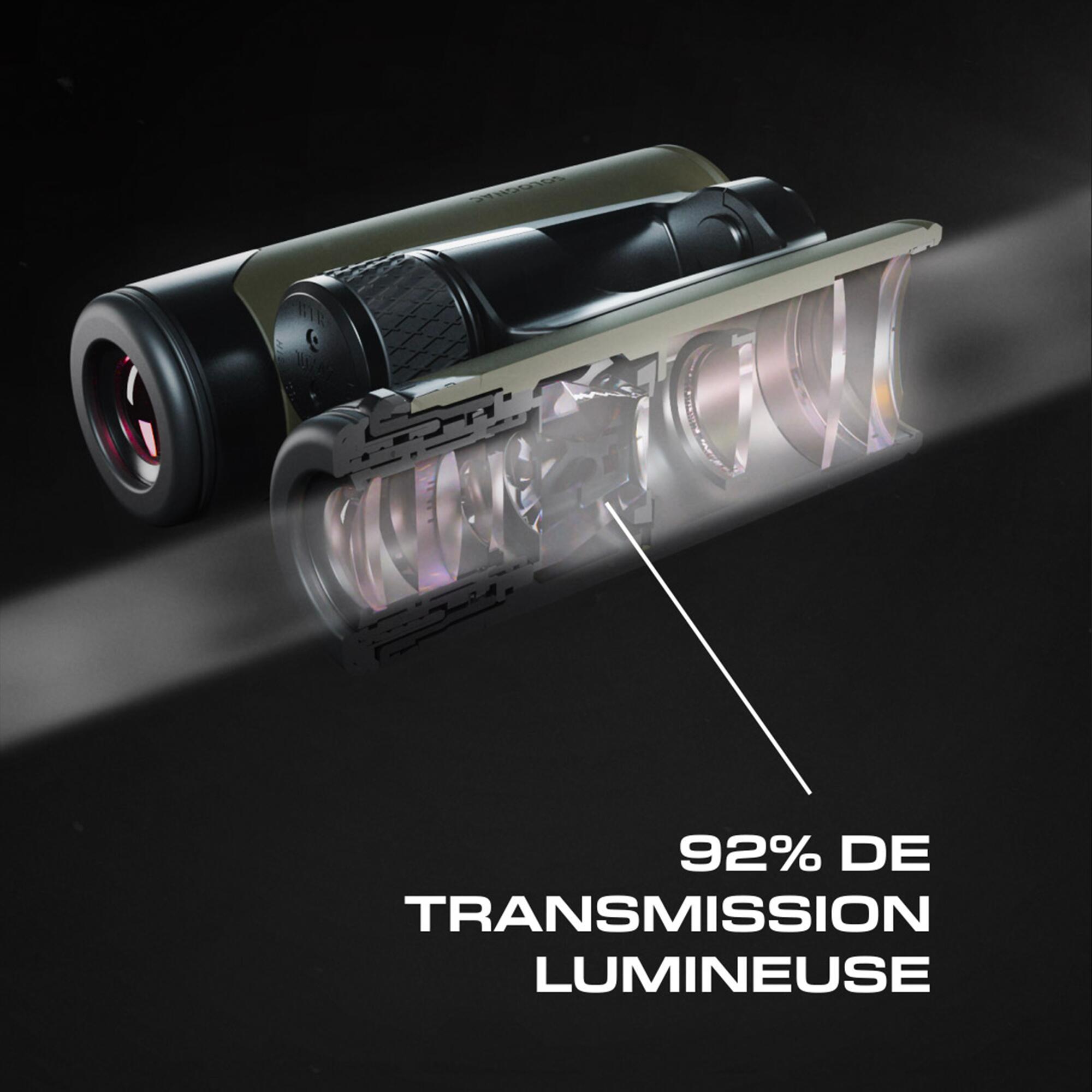
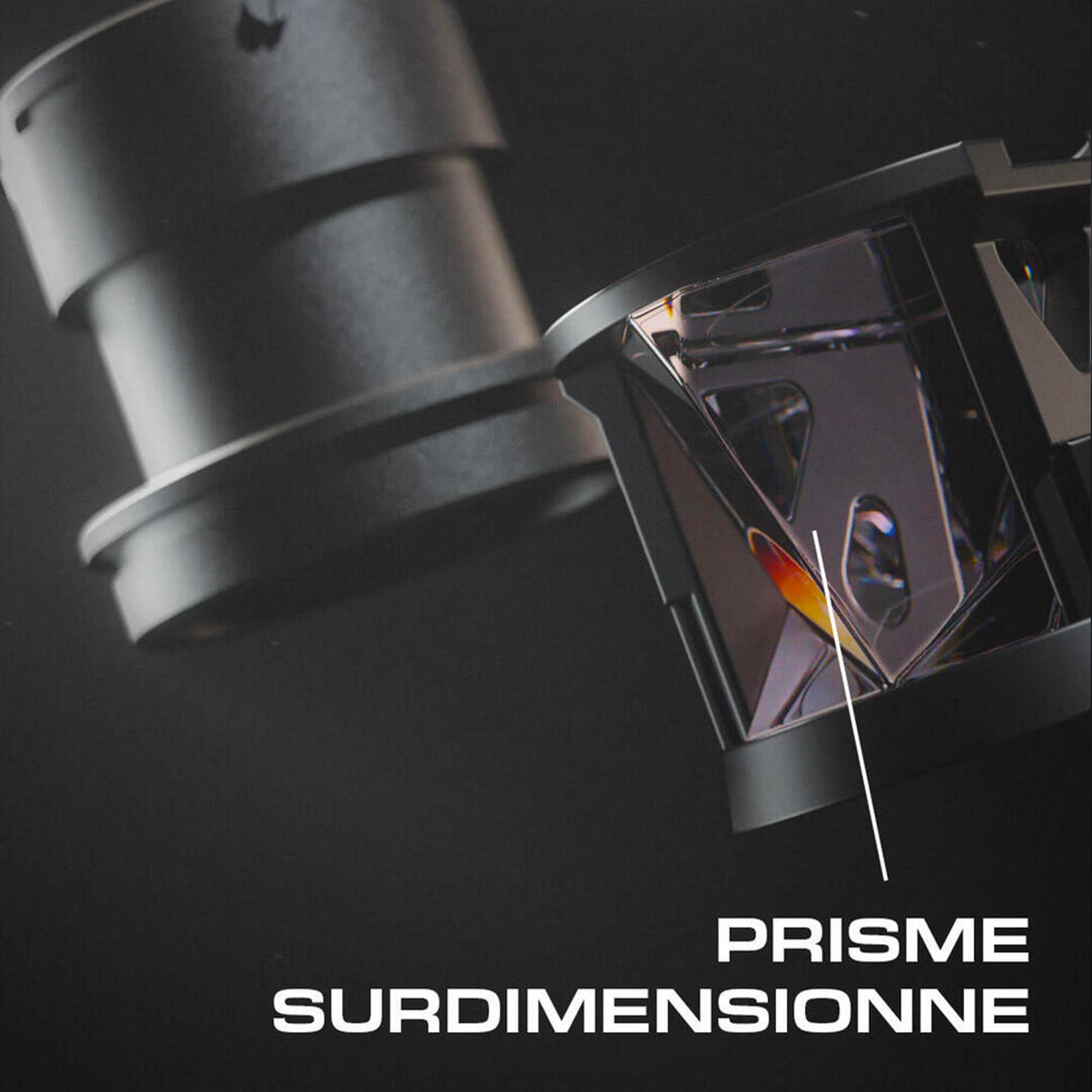
HTRs are equipped with a BaK4 prism with dielectric coating, which helps to reduce chromatic aberrations. They also feature lenses with FBMC coating. This means that all surfaces benefit from a balanced multi-layer treatment. These 2 elements make it possible to offer a light transmission of 92% at 550 nanometres (the highest in our current range of binoculars), as well as high-performance detail resolution (<4" of arc).
Further explanation of HTR image quality (part 2/3)
These binoculars have 2 ED lenses per tube (4 in total), to minimise light loss and improve contrast. This is crucial for stalking hunters, as the animals are often active at the very end of dusk. So you need to be able to maximise the light returned to the binoculars in these dark conditions: the higher the light transmission rate (92% here), the longer you can observe and the longer you can delay losing your view.
Latest on HTR image quality (part 3/3)
The binoculars also feature an optical component enriched with lanthanum (57 in Mendeleev’s classification). It is an essential component of fluoride glass, improving colour reproduction (or chromatism) and increasing the refractive index. This material is also used in telescope mirrors.
And what about waterproofing?
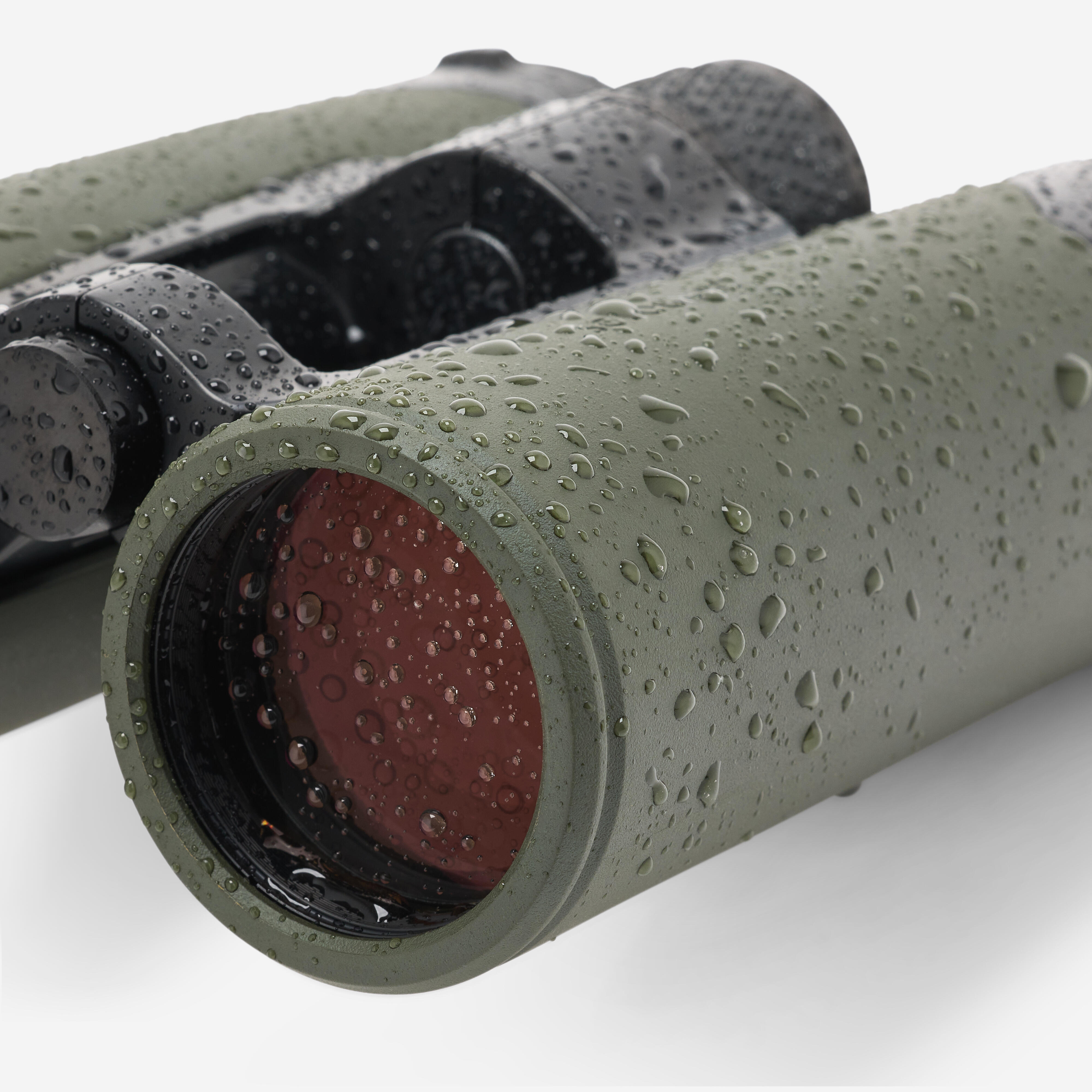
HTRs are fully sealed with nitrogen purge to ensure watertightness and internal anti-fogging. Laboratory-tested, they withstand immersion to a depth of 1 metre for 15 minutes without taking on water.
Also, the outer lenses have been given a water-repellent treatment: when it rains, the raindrops slide off the lenses (they do not remain static). This gives clear vision whatever the weather conditions.
Specific ergonomics
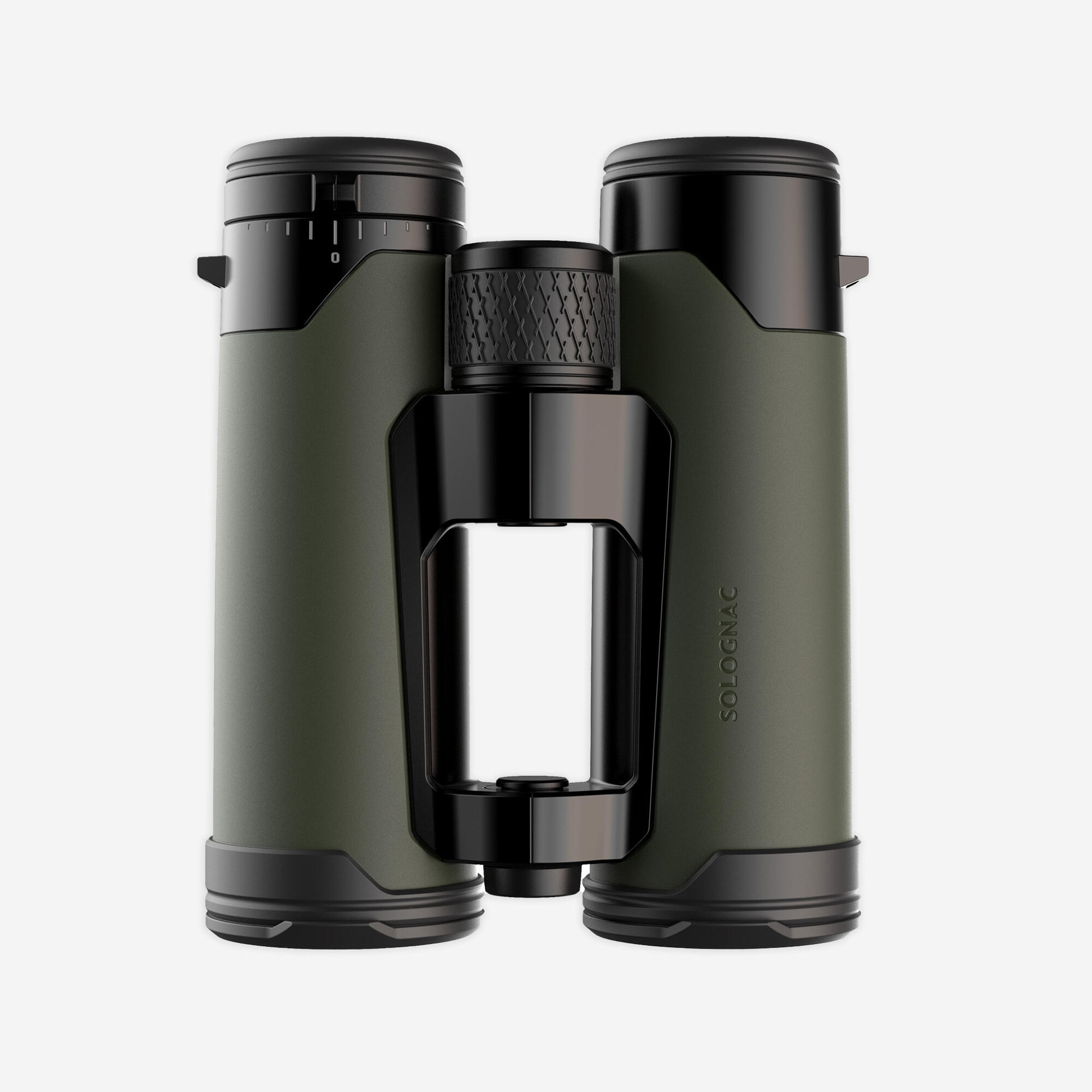
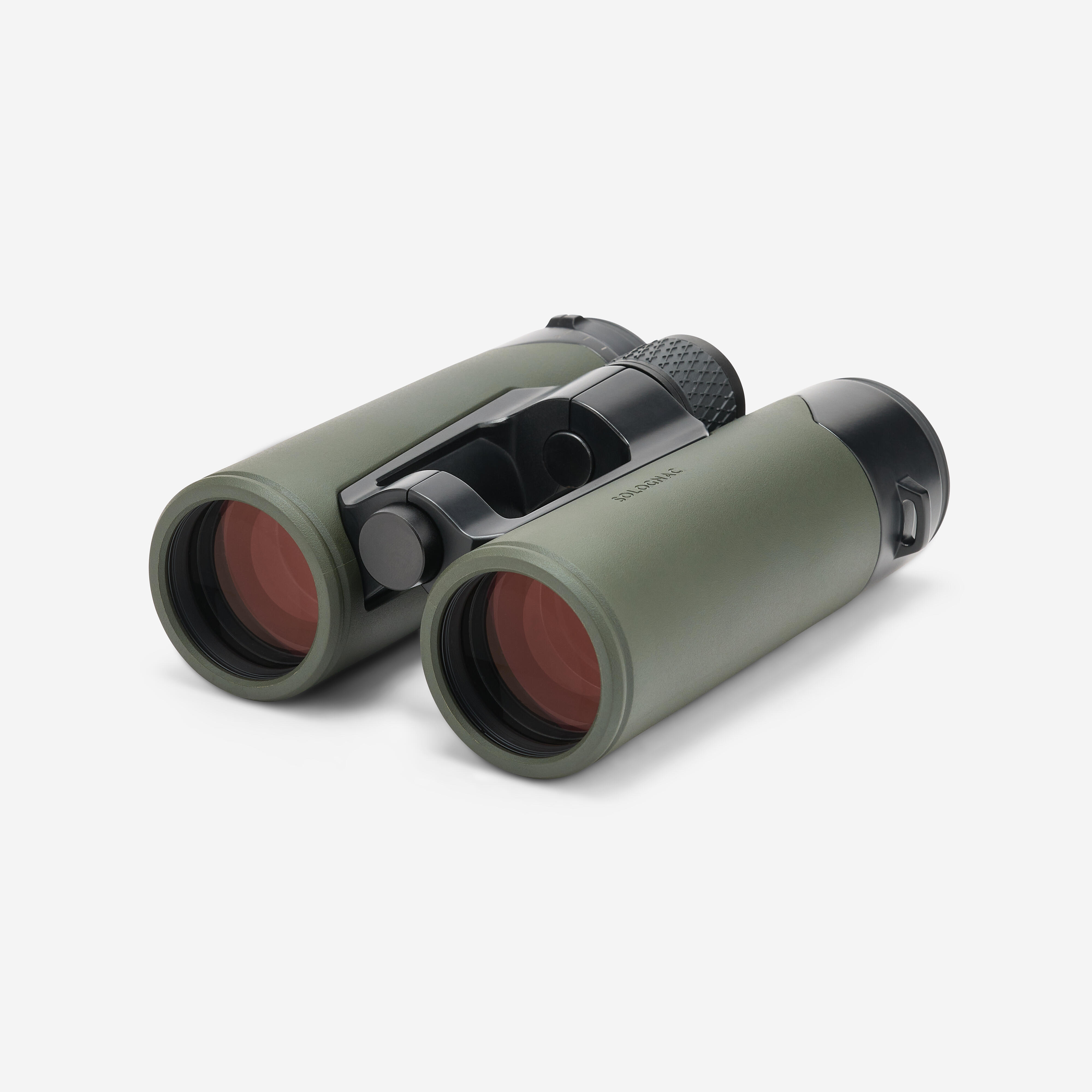
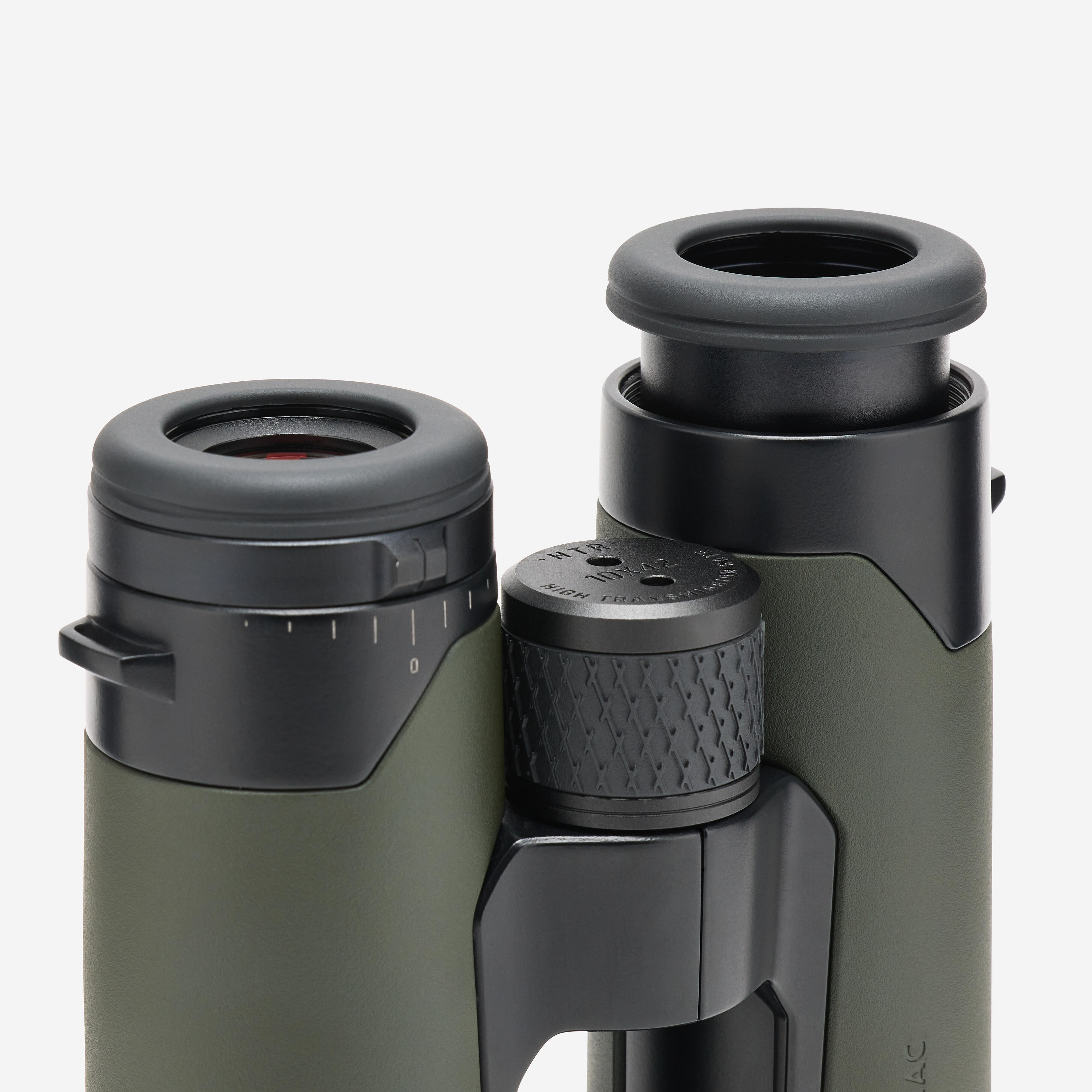
This pair has a double-bridge or open-bridge structure. This is a 2-hinge assembly that frees up space in the middle for the fingers. In practical terms, it can be intuitively gripped with just one hand. This is a considerable advantage, especially if you are stalking: with your right hand, you can knurl without any problem while keeping a pirsch stick in your left hand, for example. Two movements are possible at the same time!
A word about the chassis
This model has a magnesium alloy body protected by PVC armour. But why magnesium and not aluminium? This is because magnesium is lighter than aluminium, and deforms less as a result of variations in temperature. It therefore guarantees the reliability of optical elements over time, even in extreme heat or cold.
Functional test performed via ovens: from -10°C to +60°C
Test when not functional (storage): from -20°C to +70°C
Weight, a factor to be taken into account
865 g is the weight of this pair of binoculars. That’s 170 g more than the Solognac 900 10x42, for example. There are 4 reasons for this difference:
-a double bridge structure is heavier than a conventional structure
-to achieve a high light transmission rate, there are more lenses in HTRs than on 900s
-ED glass has a high density, so each optical element is heavier
-the prism is larger, offering a wider field of view
The eyelets on these binoculars
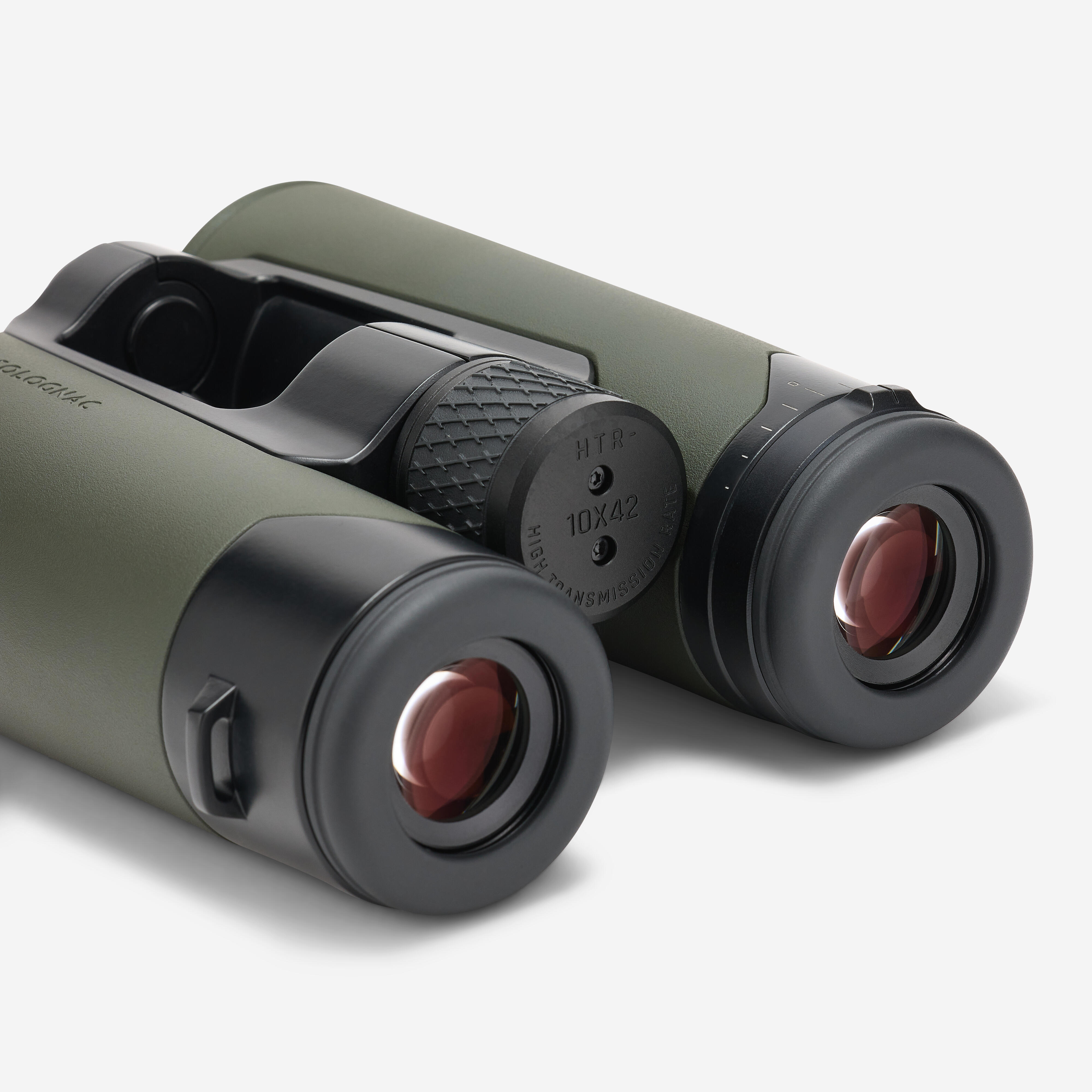
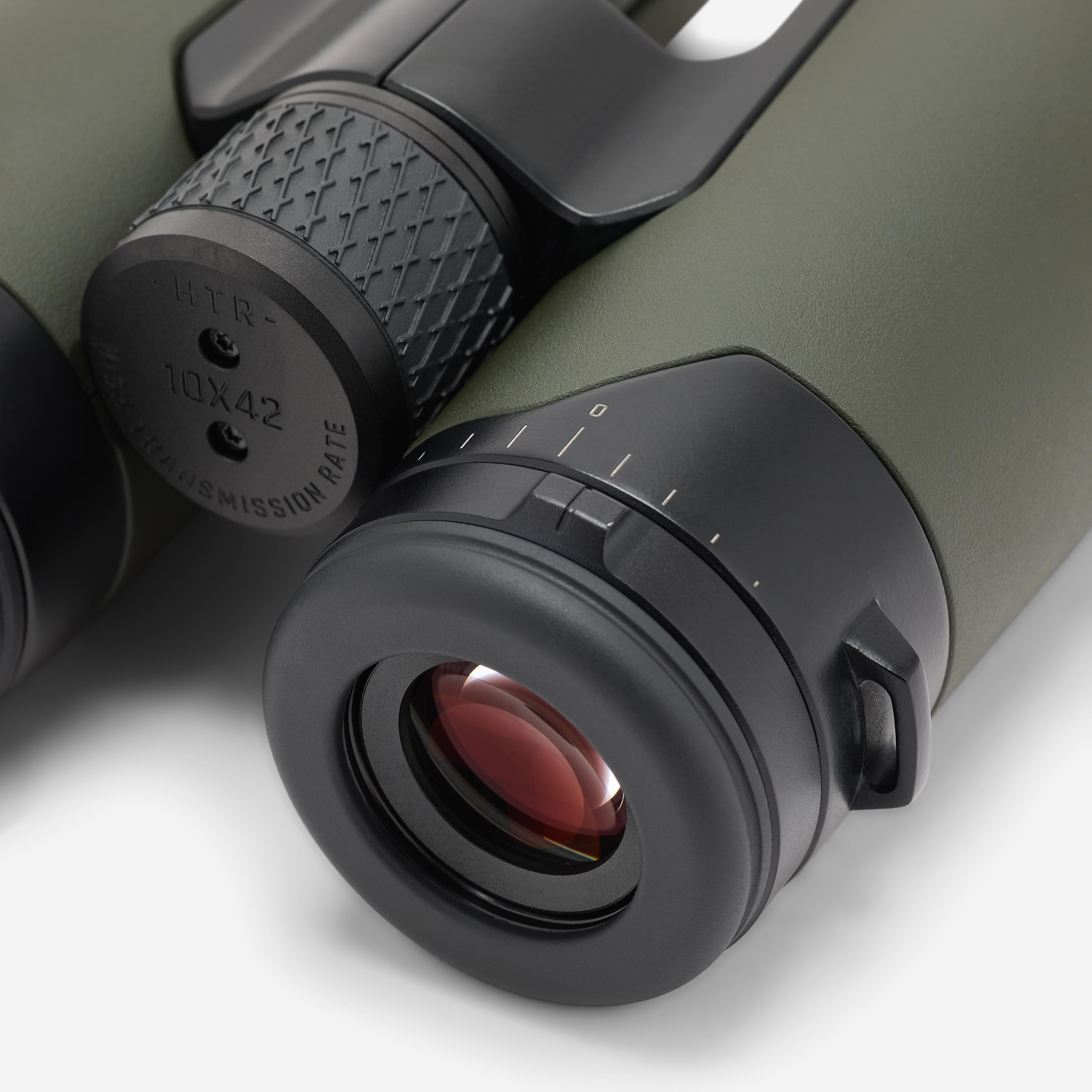
They are adjustable from 0 (neutral: the eyecup is not extended), to notches 1, 2 or 3 (there, the eyecup is fully extended).
Adjusting the eyecups is important because it allows you to obtain the correct ocular distance (the distance separating the last lens from the eye) to limit the tunnel effect when looking through them. They can also be unscrewed (and are available from the after-sales service): if dust, sand or other residues have crept in, you can clean them.
Dioptre correction
As your left eye does not see as well as your right eye (or vice versa), the dioptre correction takes account of this difference and corrects it. This is done here on the right eyecup by means of a lug to make it easier to grip with your index finger, and by means of lines that serve as markers. It’s handy for finding your sharpness setting instantly if you lend this pair of binoculars to someone and they change the setting!
A model with repairable components
From the outset of the development of these binoculars, our teams were keen to facilitate the maintenance of their components. They’ve also designed them to be repairable, so they’ll be with you for as long as possible as you observe wildlife, whether you’re a hunter or a birdwatcher, for example. That’s why the eyecups, eyepiece cover, lens caps and cover are available from our after-sales service as spare parts.
Want to capture a memory of the scene you’re observing through your binoculars?
It’s possible! This is referred to as digiscoping. Digiscoping is the art of capturing photos of the scenes you observe through your binoculars using your smartphone. All you need is one accessory: a digiscoping adapter. You can find it in our range with the reference 8648792.
No matter how dark it gets, HTR binoculars will continue to illuminate your observations.
In short, HTRs offer excellent colour rendition during the day and remarkable brightness even at the end of twilight, so you won’t miss a single detail of your surroundings. They have a wide field of vision so you can feel immersed in the scene you’re looking at, and high contrast so you don’t miss a thing.
With them, extend the moments of hunting and immersion in the great outdoors!