Weight
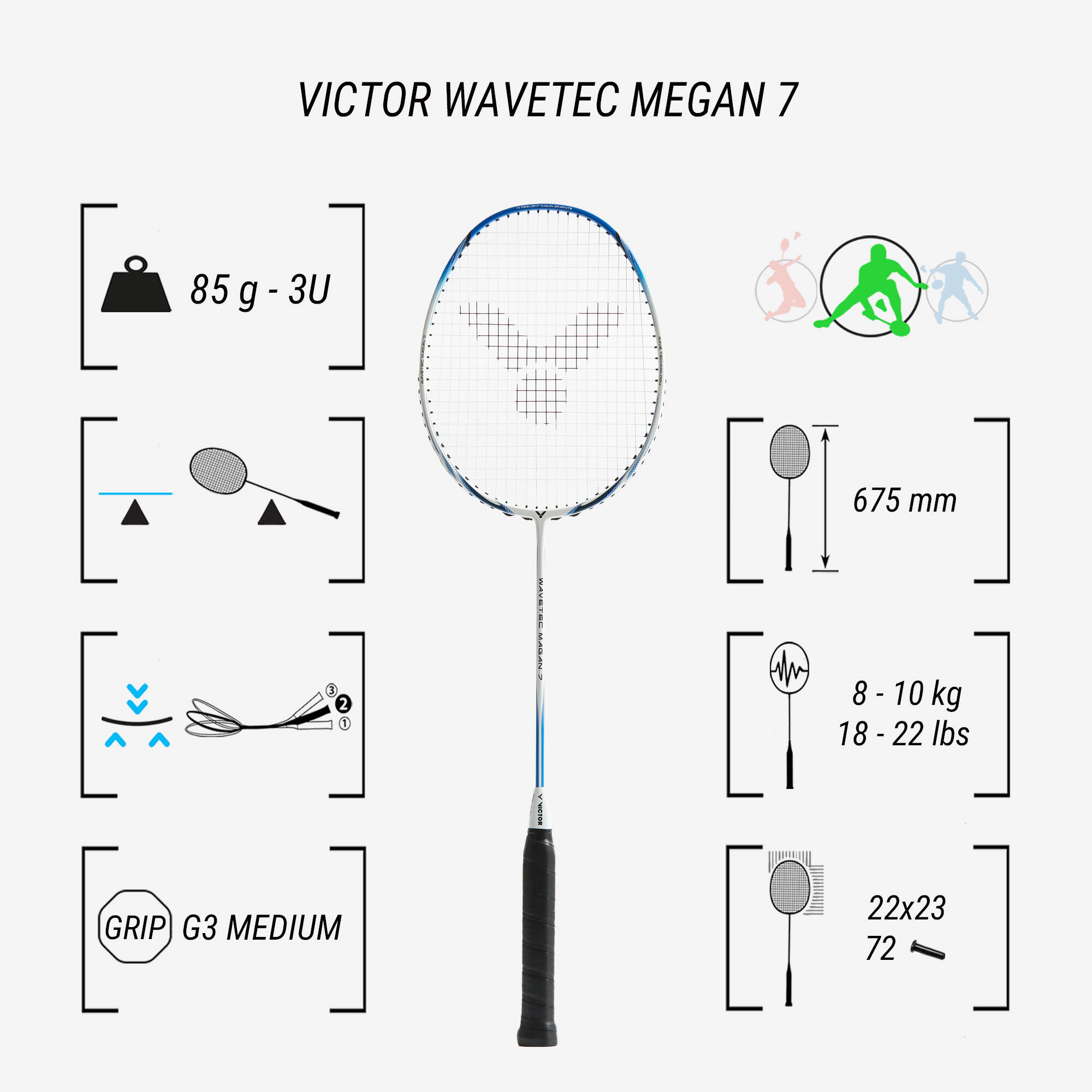
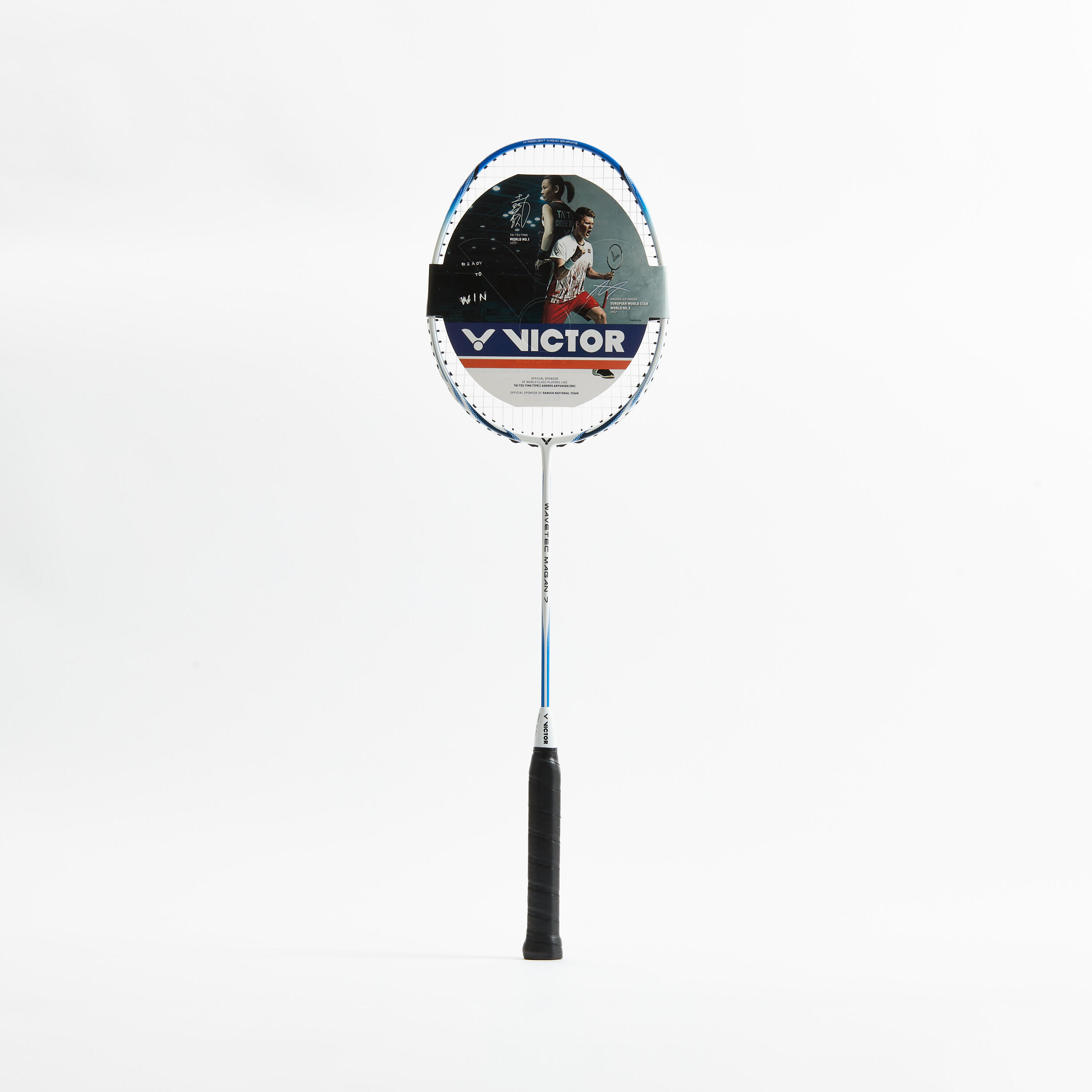
85 g - 3U (85-89 g).
The weight (mass) of a racket generally ranges from 60 to over 100 grams. Rackets are categorized into mass intervals, denoted by units called "U". A light racket will be manoeuvrable, comfortable and easy on the arm for faster swings. On the other hand, a heavier racket will be more powerful.
Flexibility
Semi stiff.Shafts can range from flexible to rigid.A flexible shaft will be more forgiving and comfortable during play, and also help you easily hit into the backcourt. Meanwhile, a stiff shaft offers more propulsion and accuracy, but does require sufficient swing speed.
Balance
Head light.The "balance" of a racket refers to its weight distribution, from the base of the handle to the balance point. A head light racket will be more manoeuvrable and reactive, which is ideal for defensive players! Even though it may seem heavier and harder to swing, a head heavy racket will be more powerful, making it a must-have for offensive players.
Composition
High Modulus Graphite.
Steel and/or aluminium models are suitable for recreational play. Rackets made from graphite/aluminium or purely graphite are better suited to beginner or regular players. Finally, rackets made from High-Modulus Graphite, which is often combined with other materials like tungsten, are designed for intermediate and intensive players.
Length
675 mm.
Kids' racket sizes are chosen based on their age. A 540 mm racket is ideal for kids aged 4 to 6 years while a 620 mm racket is suitable for those aged 7 to 11. But as soon as a child is playing at an intermediate level, they should switch to an adults' racket.
Grip size
G3 medium.
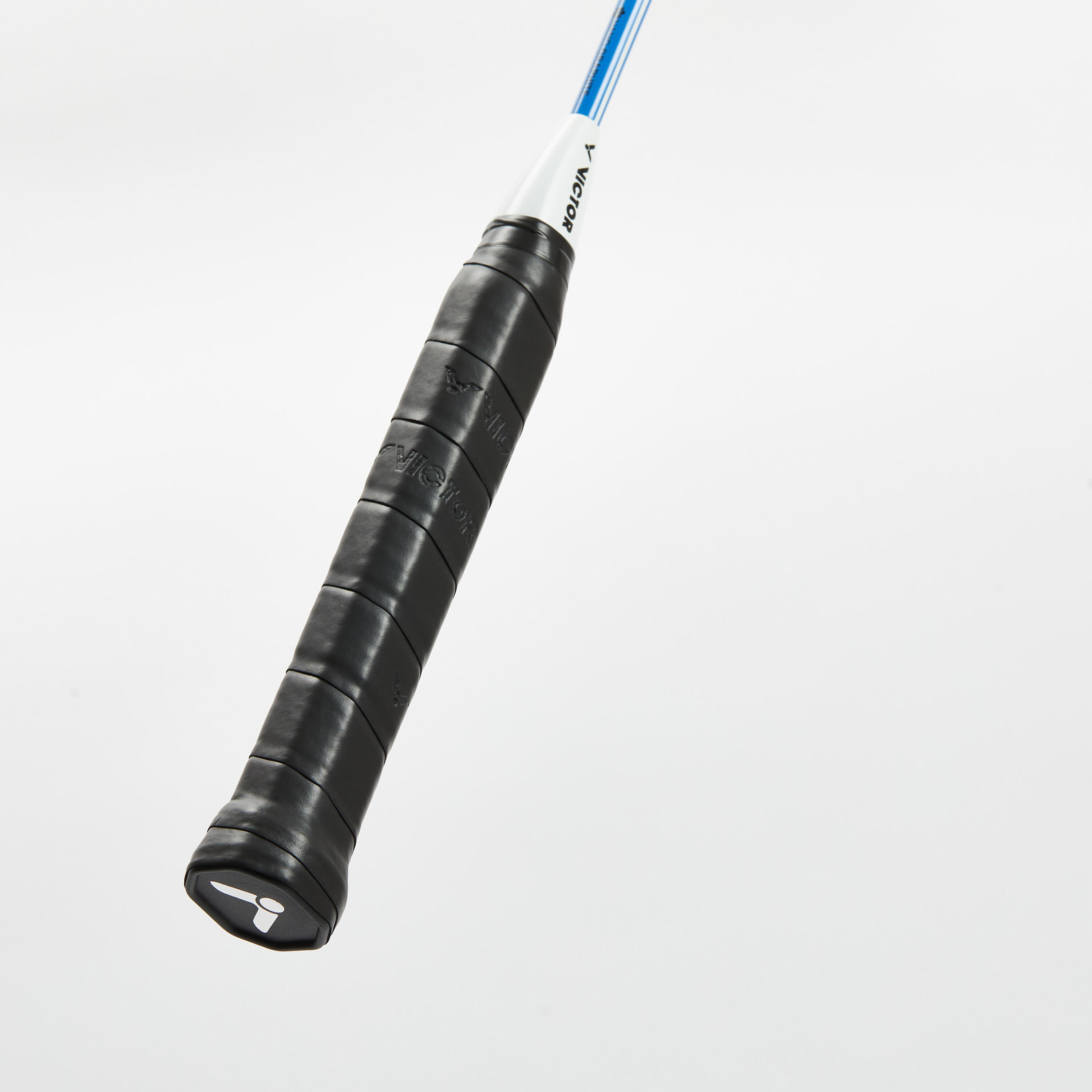
The diameter of a racket handle generally varies from 75 to more than 90 mm. A thick handle is easier to hold but makes it harder to switch grips, whereas a smaller handle favours dexterity to give the racket more speed.
Original strings
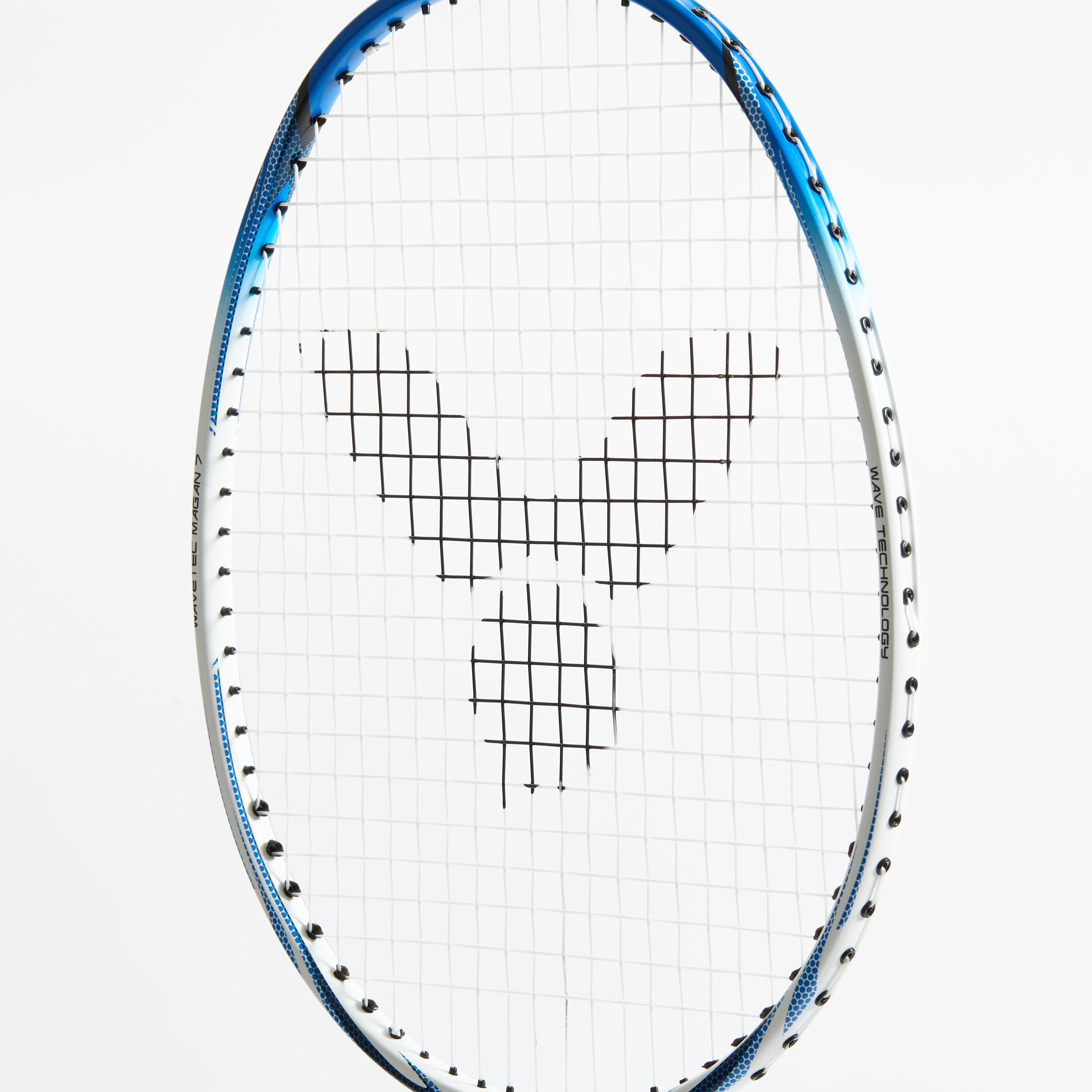
The racket comes pre-strung with white multifilament string with a gauge of 0.70 mm.
Original tension
Factory tension: 8-10 kg. The tension is measured in kilograms (kg) or pounds (lb).
Rackets are generally strung at 9 kg (20 lbs), but this tension may go down over time
Recommended tension
8-10 kg / 18-22 lbs. Every brand recommends a maximum tension for their rackets to prevent the string or frame from breaking while stringing or hitting. The string tension impacts your play. A lower tension will be comfortable and help you hit into the backcourt. A higher tension offers accuracy, propulsion and an impressive sound, but it is also more sensitive, especially to off-centre shots. Consider your needs and playing style when choosing a tension.
Stringing:
22x23. The string pattern is expressed in the number of vertical strings x the number of horizontal strings. In badminton, you say mains and crosses on a racket. This configuration increases grip and improves spin.
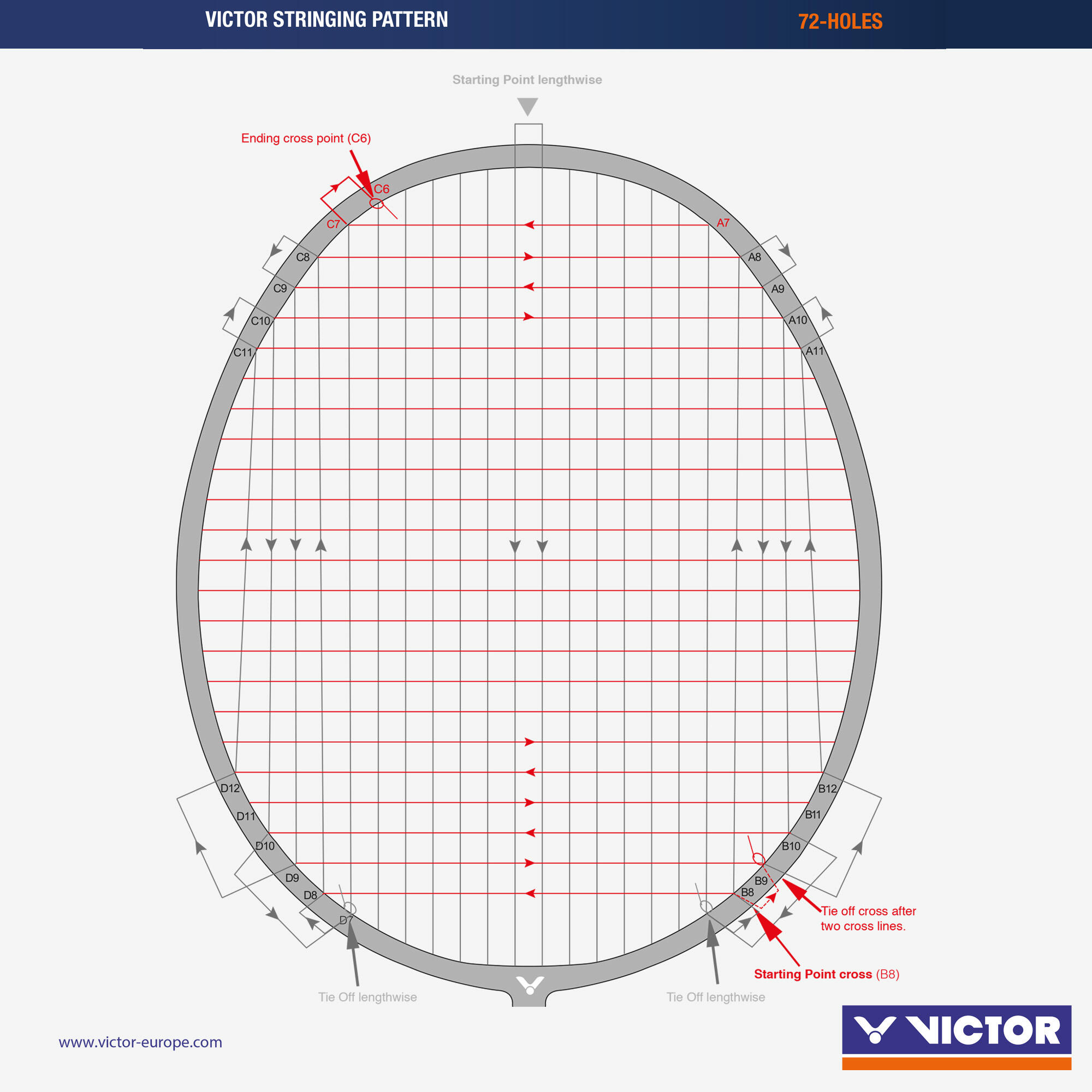
72 eyelets stringing instructions: A = top, B = bottom
4 knot stringing instructions. Mains: start from top centre and continue stringing, alternating left and right every 2 mains to B12 (skip B11) and finish by tying a knot at B7. Crosses: start the crosses at the bottom from B8 and tie a knot at B9. Keep on stringing from the bottom to A7 and finish by tying a knot at A6.
Technology, composition
High Resilient Magan Graphite