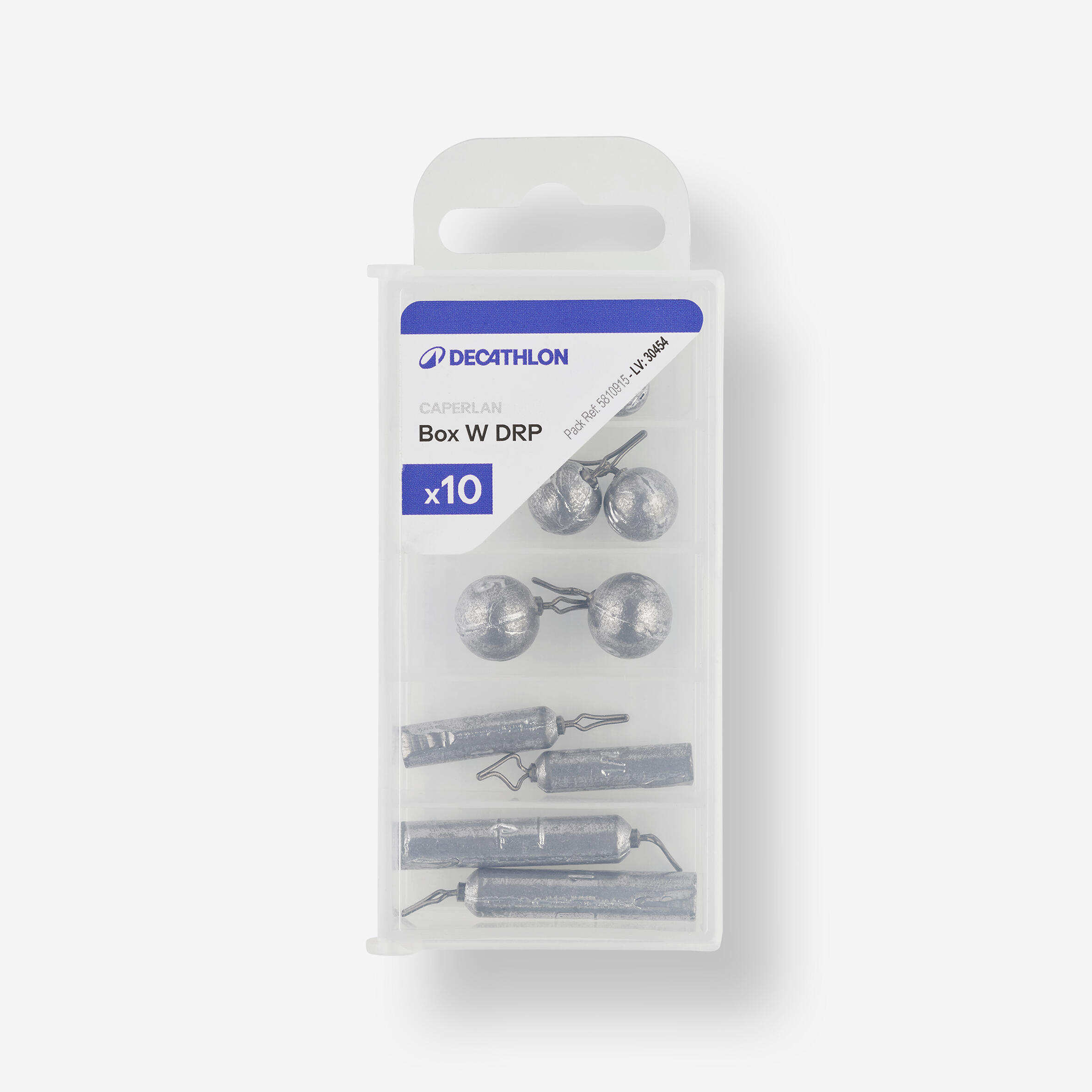
Weight tolerance: -5%/+10%
This weight tolerance is due to the centrifugation process used to manufacture fishing weights.
Composition
- 1 reusable box
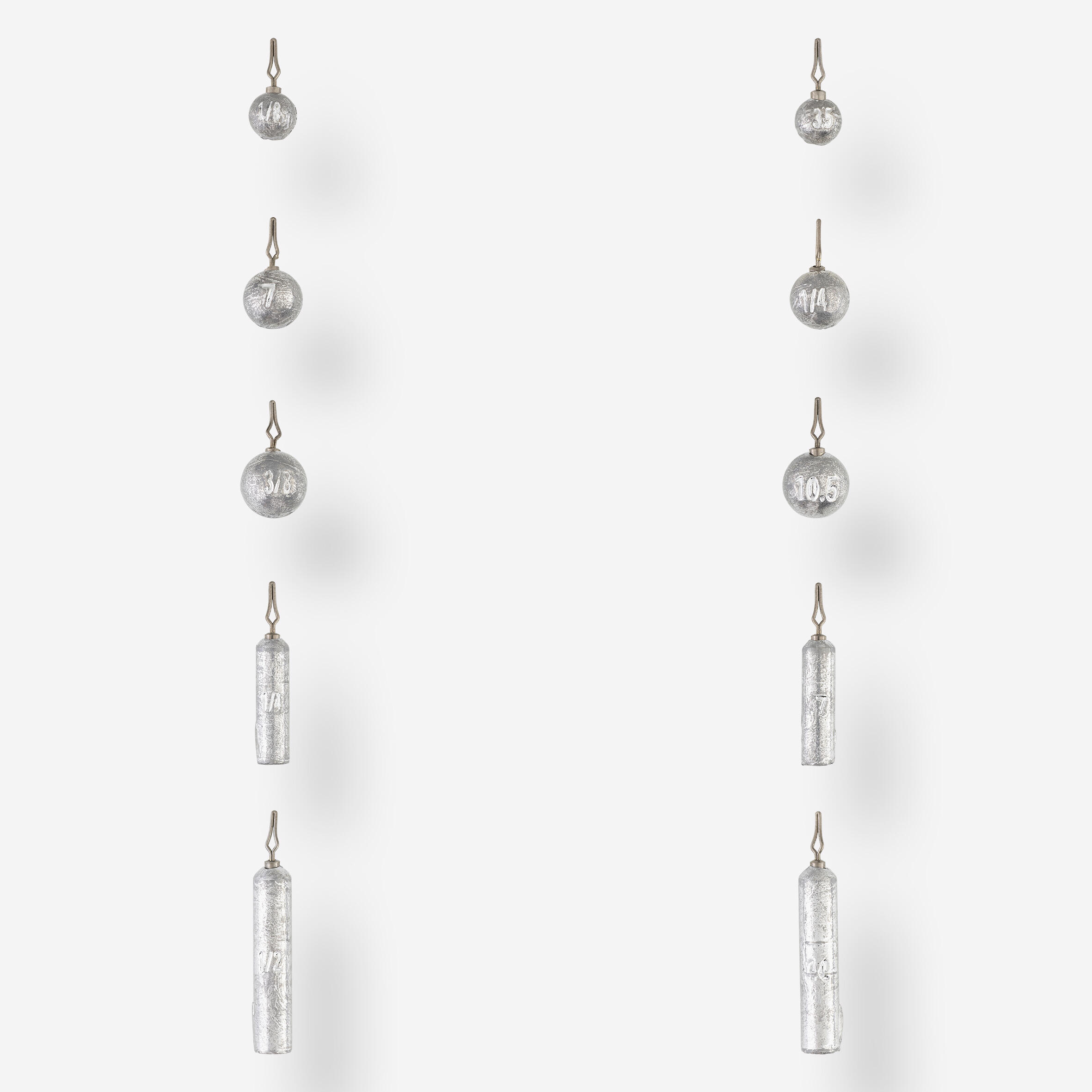
- 2 round weights of 3.5 g; 1/8 oz
- 2 round weights of 7 g; 1/4 oz
- 2 round weights of 10.5 g; 3/8 oz
- 2 long weights of 7 g; 1/4 oz
- 2 long weights of 14 g; 1/2 oz
Drop shot rig
The main idea of the drop shot is to be able to present a lure in a very natural way at a precise water height and to animate it on the spot, without having to move the sinker.
Once the rig has been cat, the sinker rests on the floor. By slightly stretching the line, the lure is suspended in the water at exactly the distance you chose when you placed your sinker². It then floats freely, clear of the bottom.
Making a drop shot rig: tying the knot
The hook knot:
The most commonly used knot is the Palomar knot. When tying this knot, it is crucial to pass the free strand of line (the one that will go to the sinker) back through the eye of the hook, from top to bottom, before tightening it. This trick keeps the hook perfectly horizontal.
Leave some excess thread:
After tying the knot, do not cut the excess thread. Leave the length at which you want your lure to stay above the bottom.
Making a drop shot rig: mounting the lure
Attach the sinker:
Simply attach the drop shot sinker to the end of this excess line. The clamping system makes it quick and easy to adjust the height.
Mounting the lure:
Attach your soft lure to the hook. Most of the time, it is nose-hooked to give it maximum freedom of movement.
The advantages of the drop shot jig when fishing
Natural presentation:
The lure is free of any constraints and imitates small suspended prey perfectly.
Motion on the spot:
Allows you to stay at in particular spot for a long time without moving the rig from the bottom, which is impossible with a jig head.
Bite alarm:
The bite is often very direct and results in a very clear ”pull” or ”knock” on the taut line.
Precision fishing:
Ideal for jigging from a craft (boat, float tube)