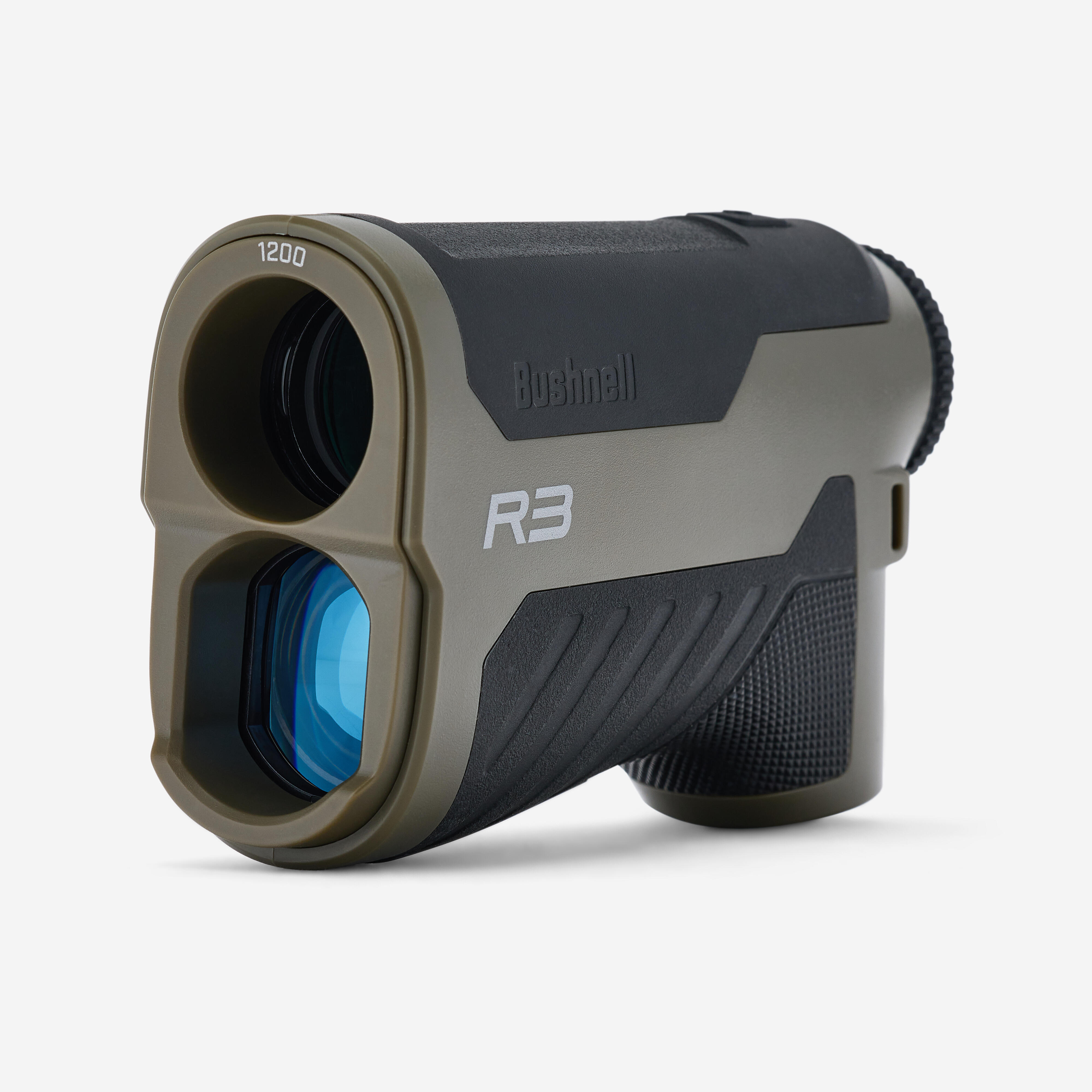
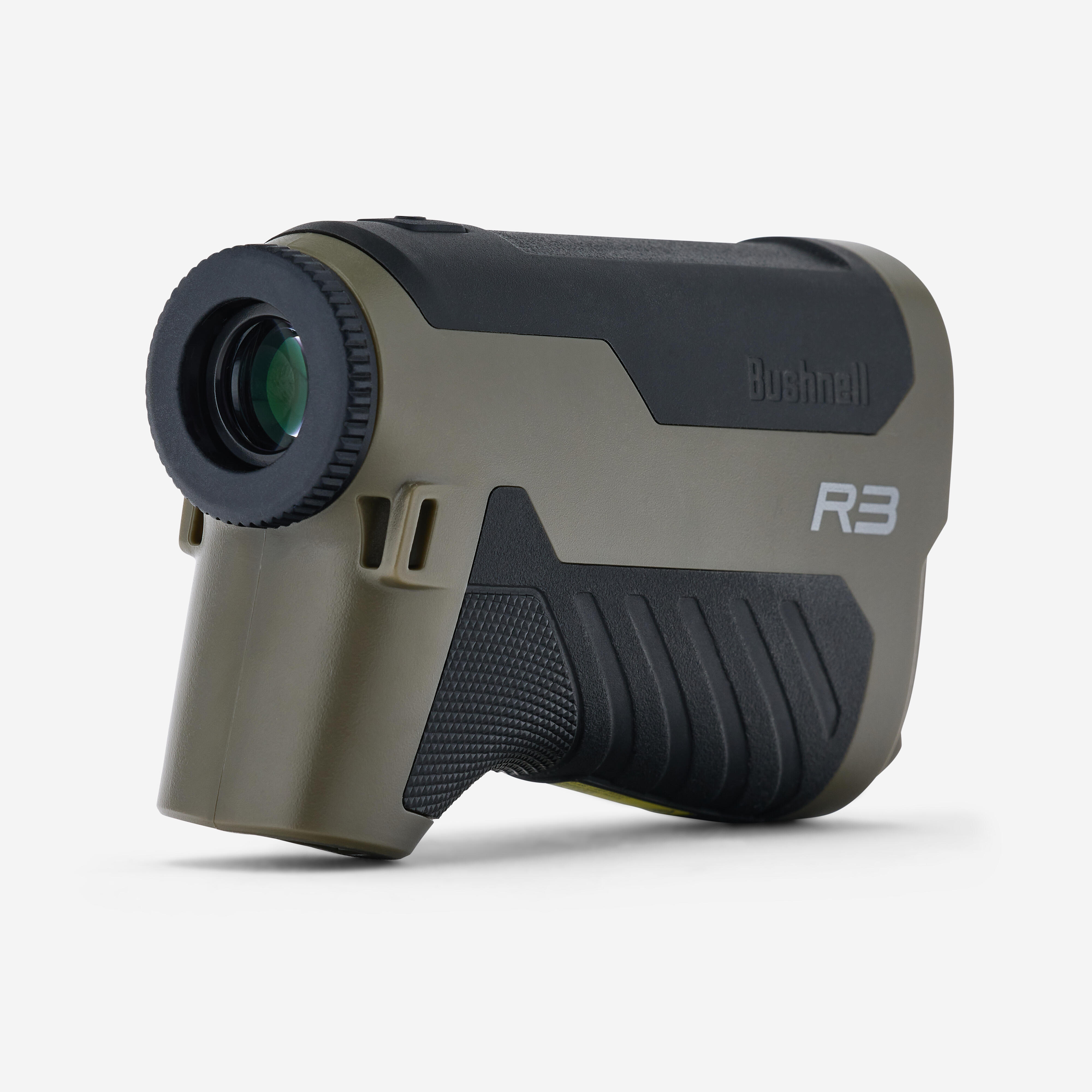
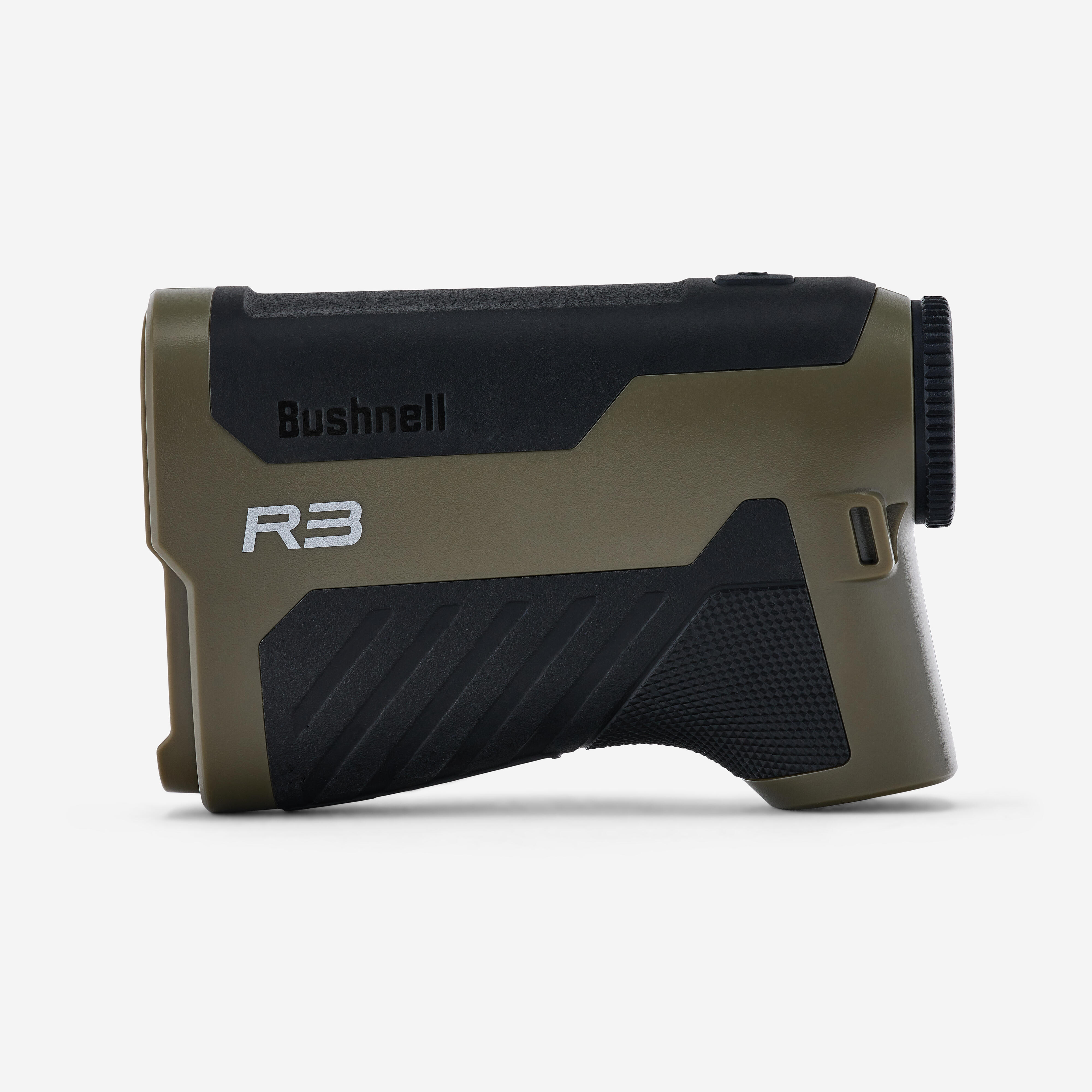
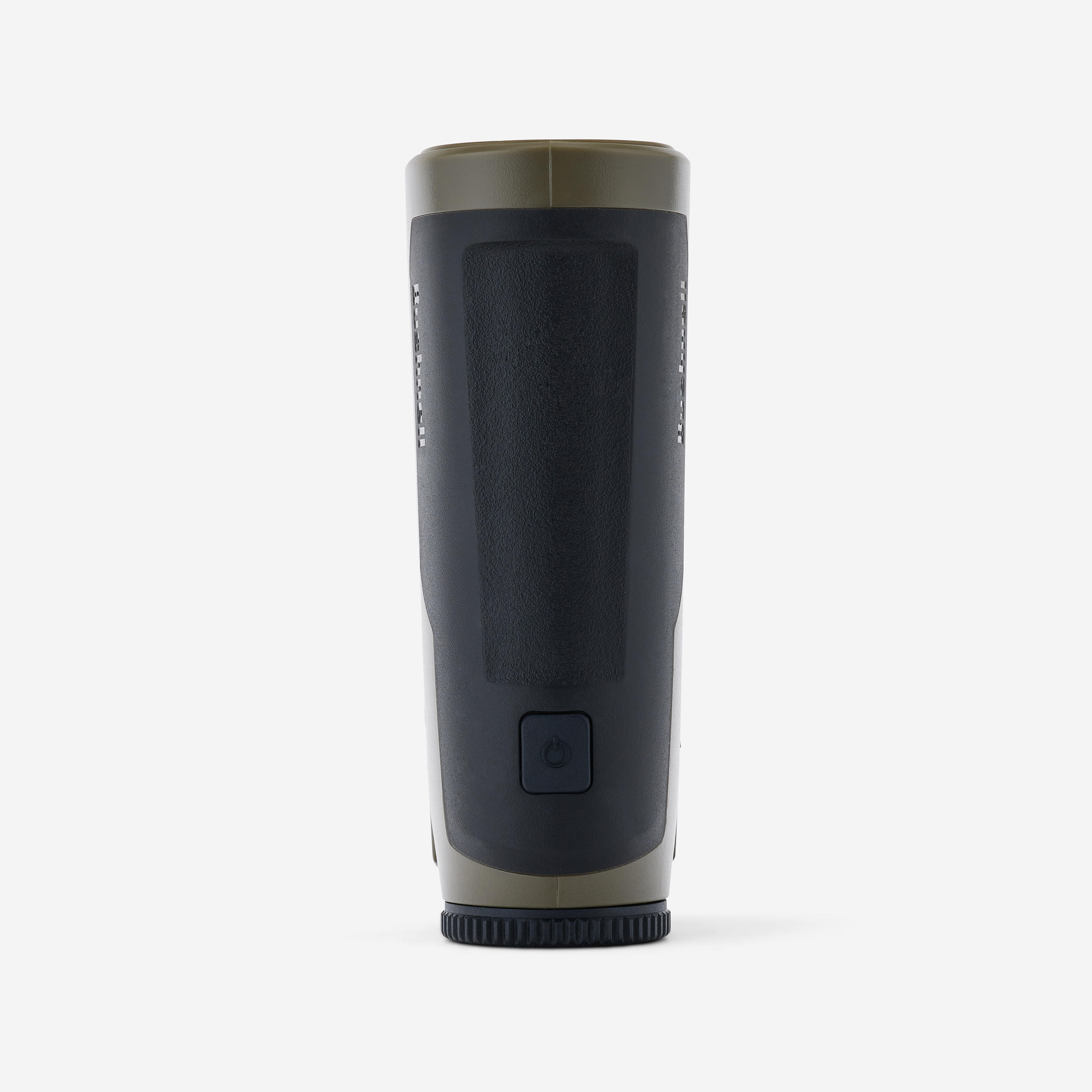
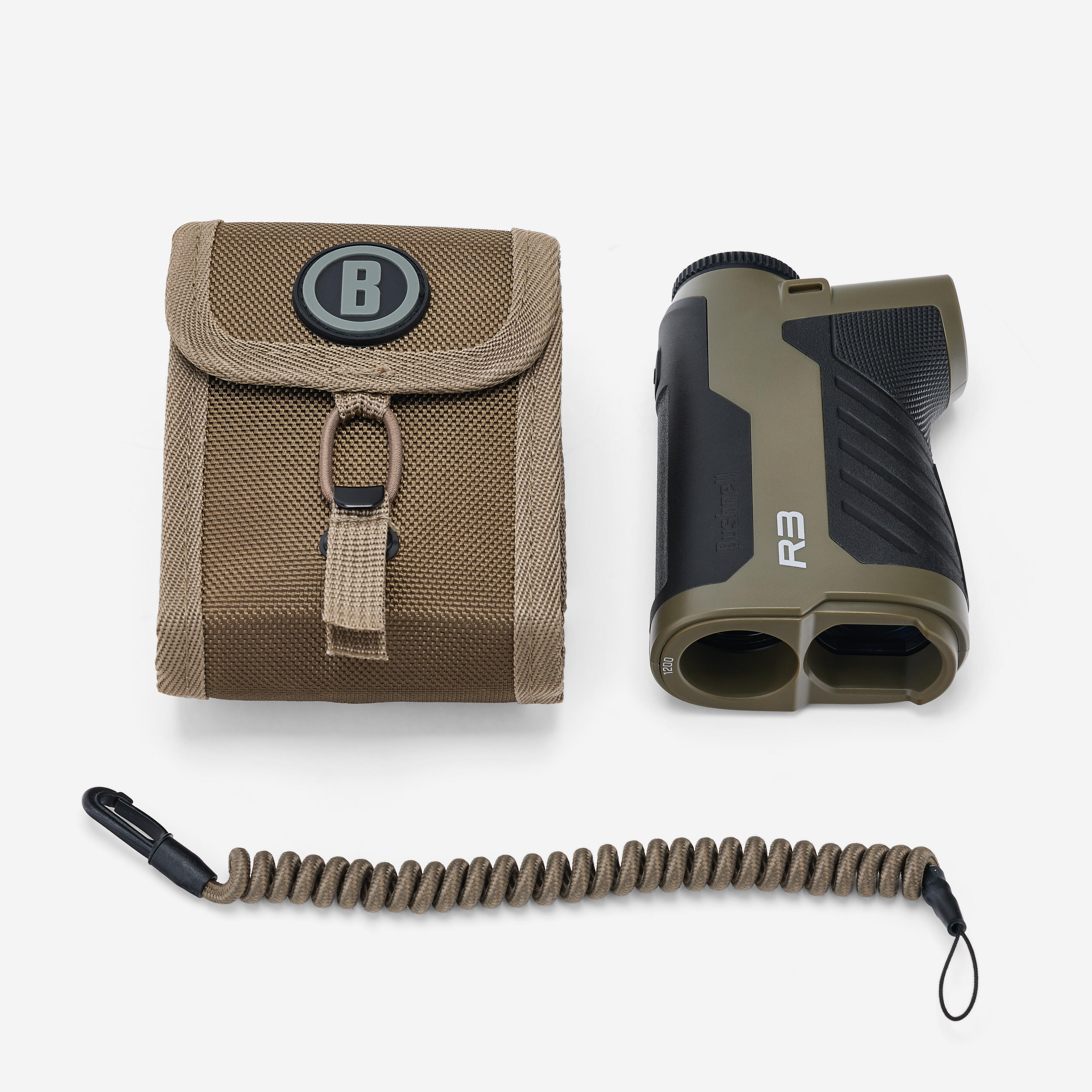
Features of this rangefinder
Magnification: x6
Lens diameter: 25 mm
Reticle: Digital
Linear field of vision: 365 feet at 1,000 yards/111.3 metres at 1,000 metres
Max range: up to 1200 yds (1097 metres)
Shaft reach: up to 700 yds (640 metres)
Range on animal: up to 350 yds (320 metres)
Minimum range: 5 yd (4.5 metres)
Waterproofing: IPX4 (resistant to splashes of water)
Contents
Pack contains:
-the rangefinder
-an instruction manual
-a soft carrying/storage case
-a wrist strap
-a lens cloth
-an elastic cord
-a CR2 battery
-a Bushnell sticker
Basic operation (part 1/2)
Before using for the first time: remove the battery compartment cover by lifting the tab, then turning the cover anti-clockwise. Remove the red plastic disc from the + terminal of the battery, then put the cover back in place. NOTE: we recommend replacing the 3-Volt CR2 lithium battery at least once every 12 months. Insert it in the compartment with the - terminal first.
Basic operation (part 2/2)
1. Start/Range button:
-quick press for power on
-press again for the distance
-press and hold the button for scan mode and/or to access the unit selection when the device is switched off
2. Focussing the crosshairs:
- turn to adjust the dioptre until the image is sharp
3. Attaching the hand strap:
The hand strap allows you to carry your rangefinder in complete safety. Slide it to the left or right using the holes just above the battery compartment.
Choice of the distance units
The Configuration menu selects the distance units: yards, metres or feet. When the camera is switched off, press and hold the Power/Shutter button to access the configuration menu. The first setting is Yards and "Y" flashes, indicating the selected distance unit. Press and hold the same button for 3 seconds until "M" appears to switch to metres. And for another 3 seconds to change to feet. Release the button to confirm.
Automatic scan
To use the auto-scan function, simply press and hold the shutter button, then aim the rangefinder from one object/target to another. This automatic scan triggers a continuous update of the
standard line-of-sight distance measurement.
ARC (Angle Range Compensation) - part 1/2
Regardless of the weapon used (bow or rifle), very steep terrain alters the calculation of the actual horizontal distance to the target. The solution? The ARC system that is built into this rangefinder. In practical terms, an inclinometer transmits angular data to a chip in the rangefinder when the targets are high or low. This data is then processed to provide: the line of sight, angle and compensated distance.
ARC (Angle Range Compensation) - part 2/2
For example, a bow hunter lying in wait in a tree can aim at an animal below, at an angle of -52° relative to his position. The distance of the line of sight is 29 metres (32 yards). However, the hunter risks shooting above the target if they rely solely on this information. The actual horizontal distance displayed (compensated according to the angle) is 18 metres (19.7 yards). This is the distance on which the hunter must base their shot.
Rangefinder maintenance/cleaning
The lenses of the R3-1200 laser rangefinder have a multi-layer coating for optimal light transmission. Special care must therefore be taken. We therefore advise you to:
-remove any dust or debris from the lenses by blowing on them (or using a soft brush)
-then use the microfibre cloth supplied and rub in a circular motion
Note: the rangefinder is IPX4 waterproof. But it must not be immersed