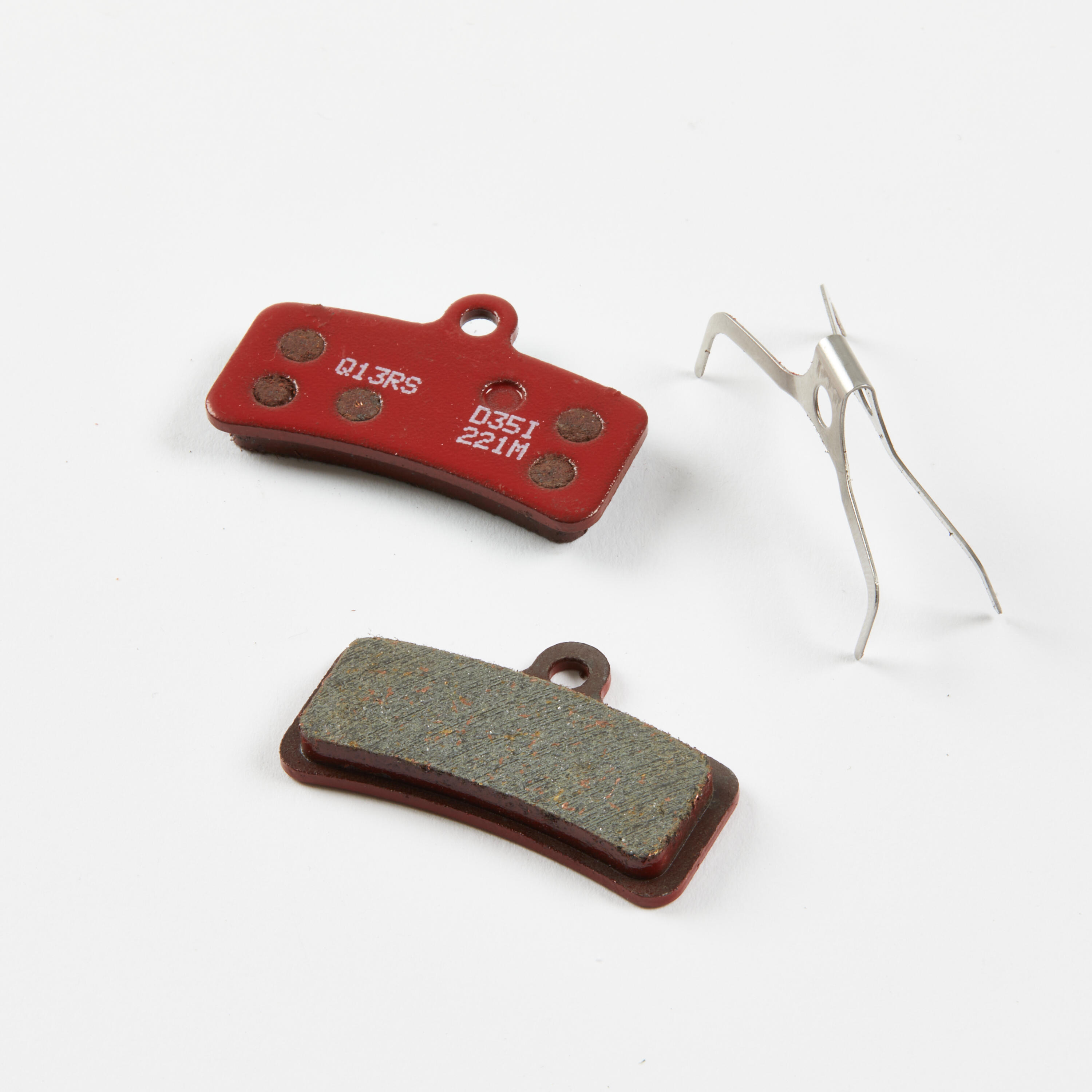
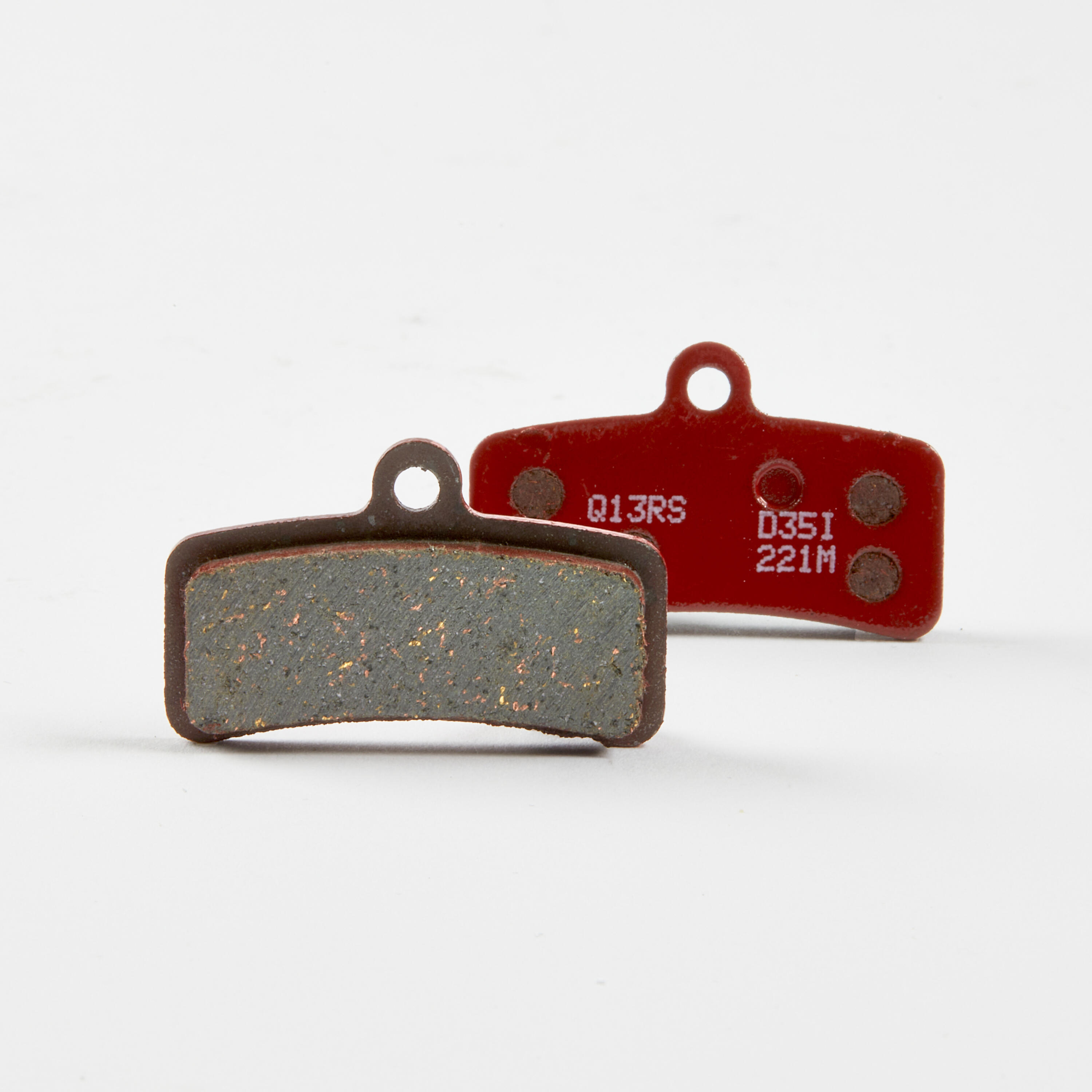
BEDDING IN YOUR BIKE'S BRAKE PADS IS ABSOLUTELY ESSENTIAL FOR EFFECTIVE BRAKING.
This involves gradually heating up the brake pads and rotors to create an even contact surface.
Before bedding in your brakes, it's important to do the following:
- Clean your brake rotors. If you change the pad, it's recommended that you also change the rotors.
- Make sure you have the right equipment. Wear a helmet and fix a bike computer or bike GPS to your bike.
- Choose a safe place. Bed in your brakes on a flat, dry road with no obstacles.
Tech Specs
Model: Q13RS
Lining: Semi-metallic
Thickness of the brake pad: 5mm
A FEW EXTRA TIPS FOR BEDDING IN YOUR BRAKES:
- Use one brake at a time so that you don't overheat the pads.
- Ride on a flat surface to avoid jolts.
- Don't brake harshly.
- Be patient. Bedding in can take up to 30 minutes.
- If you notice a rainbow mark on your rotors or if your braking isn't very effective, this means that your brakes are "glazed". If this happens, please visit a Decathlon workshop.
Care tips
When servicing your bike, make sure you don't splash any oily liquids on the disc or brakes as this will reduce their braking power.
THE BEDDING-IN PROCEDURE INVOLVES GRADUALLY BRAKING SEVERAL TIMES IN A ROW, FROM INCREASING SPEEDS.
It's important to alternate between the front and rear brakes, and to work through the following steps:
Step 1: Ride at 15 km/h and gradually brake to slow yourself to 5 km/h, 10 times in a row.
Step 2: Ride at 20 km/h and gradually brake to slow yourself to 5 km/h, 10 times in a row.
Step 3: Ride at 25 km/h and gradually brake to slow yourself to 5 km/h, 10 times in a row.
Between each step, release the brakes and ride a few dozen metres to let the rotor and pads cool down.