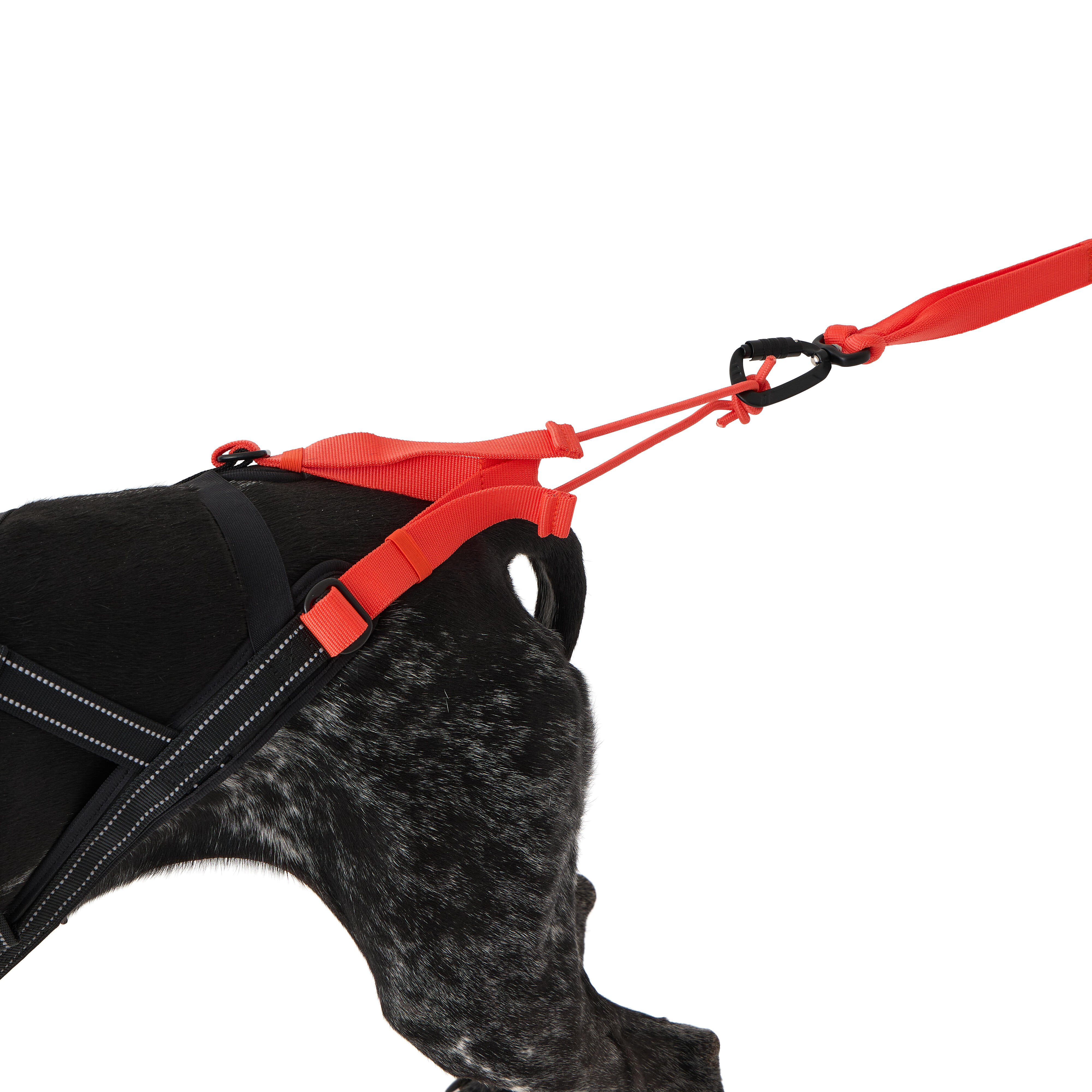
Adjusting the harness.
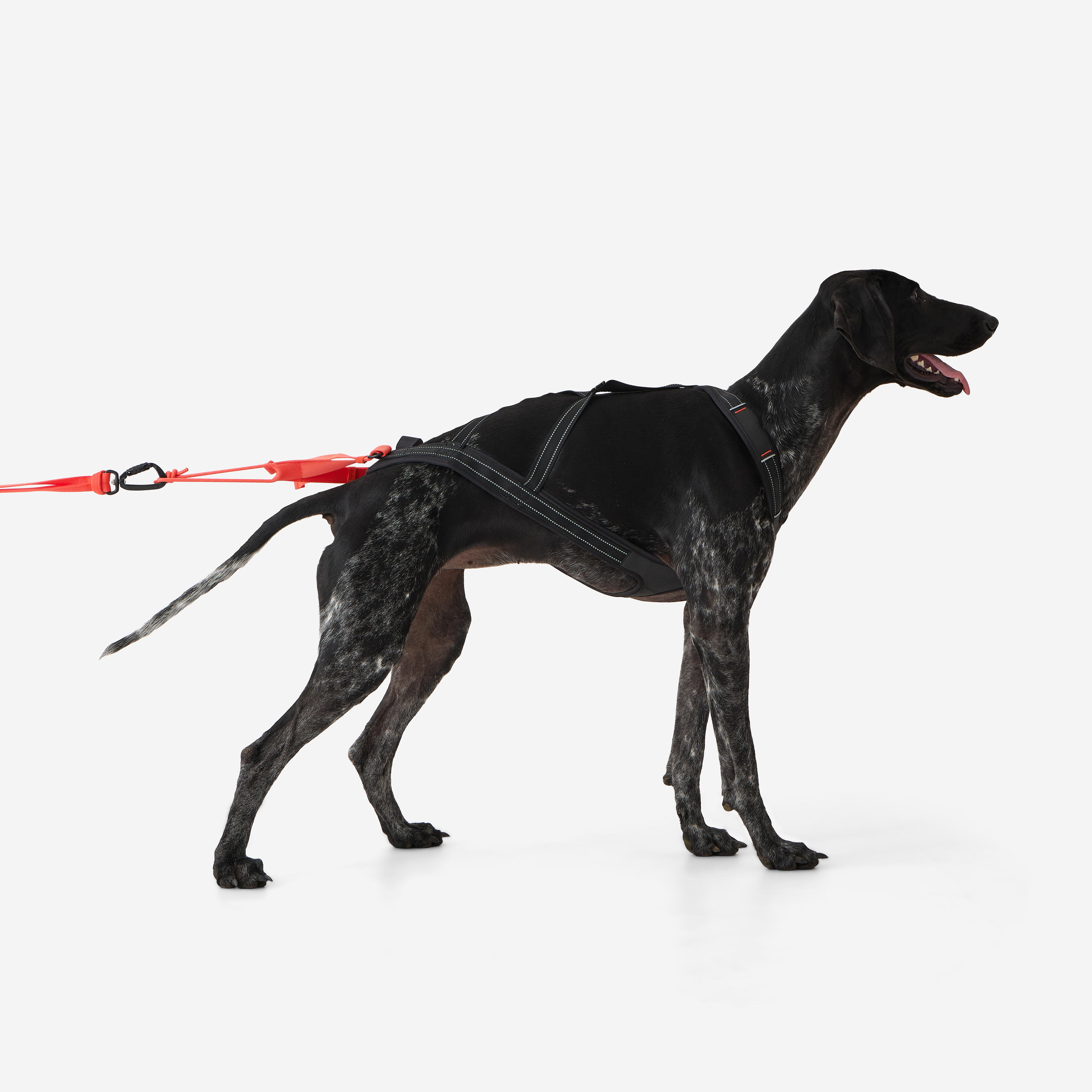
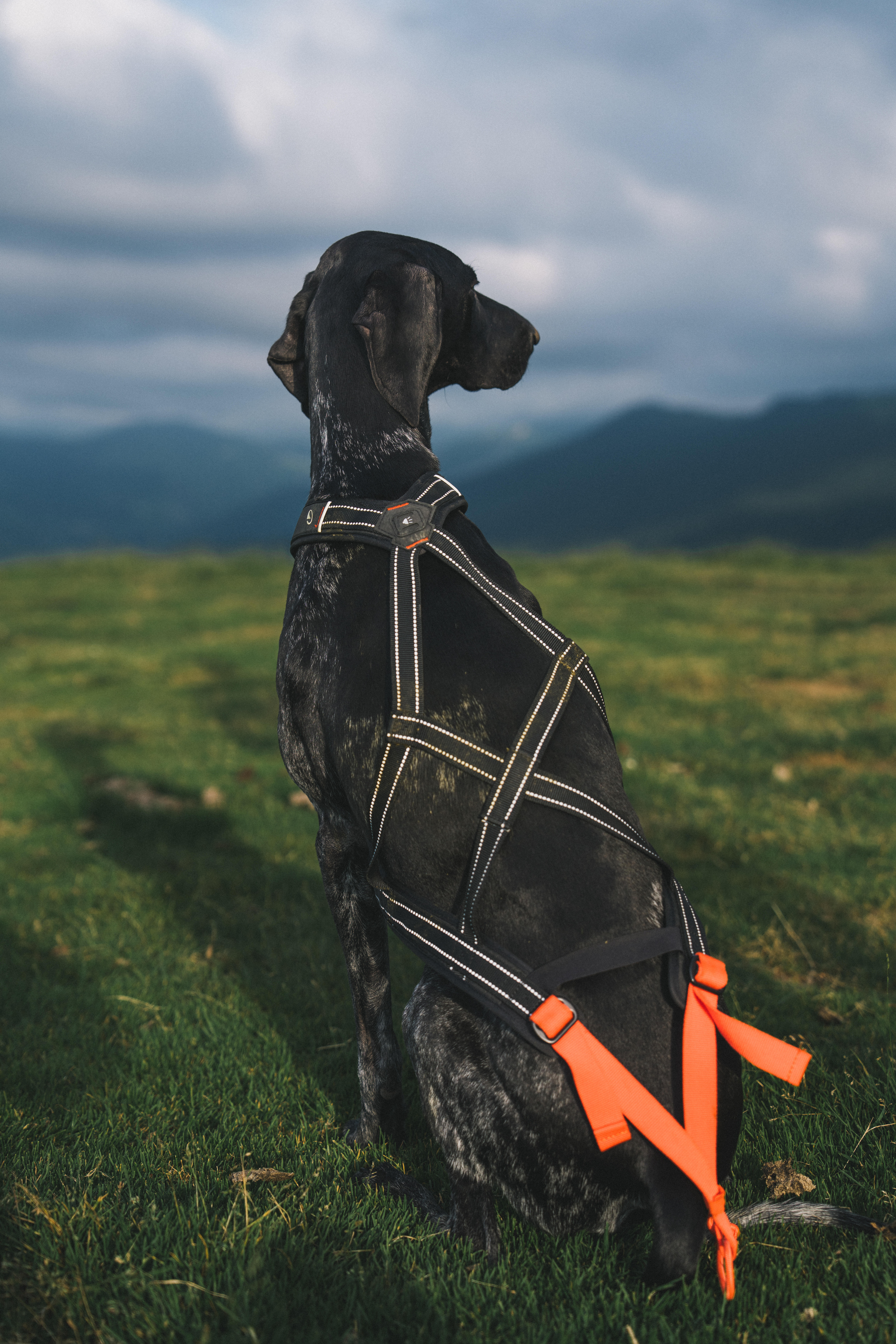
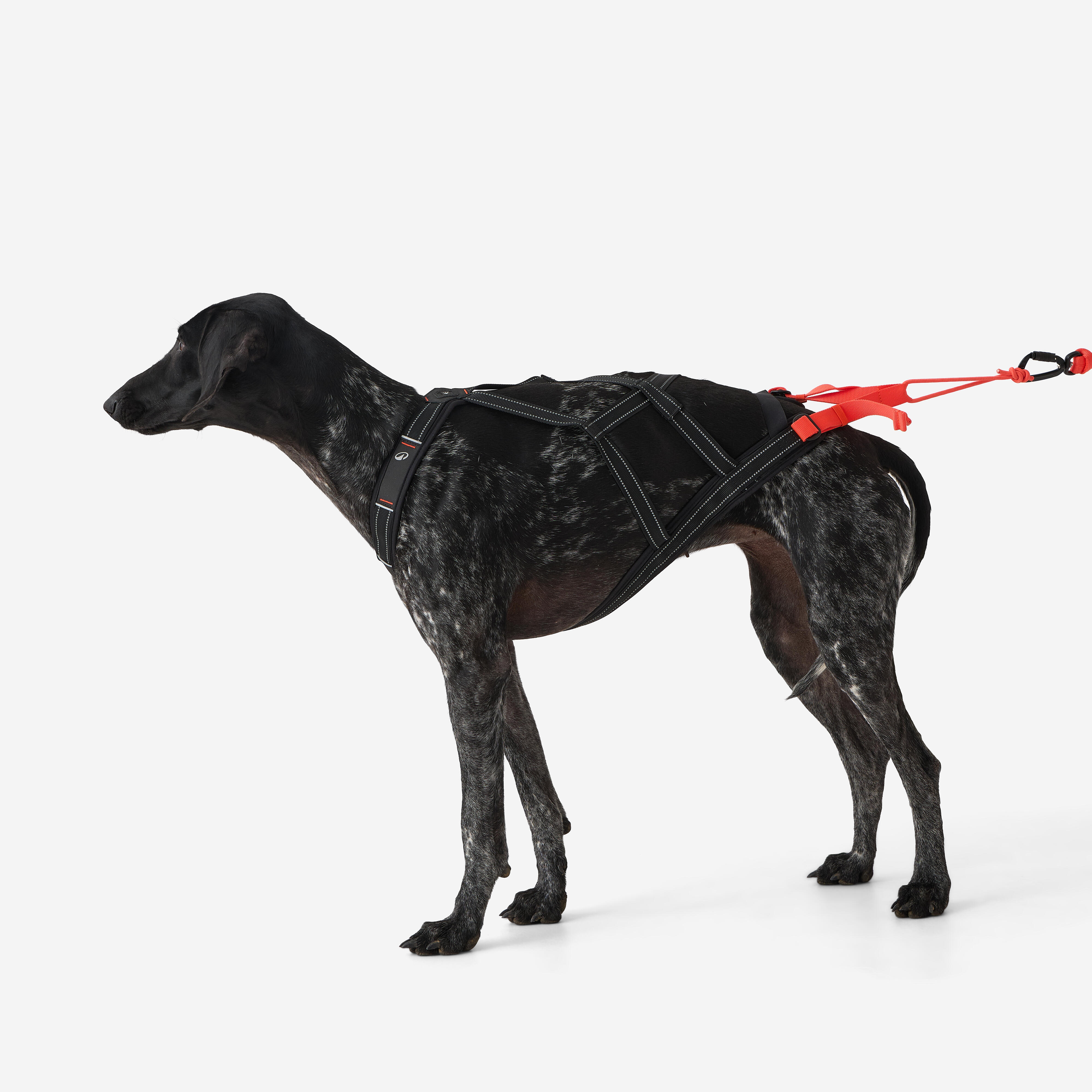
There’s only one adjustment needed on your dog’s harness, and that’s the orange part.
The seam you see should sit at the base of your dog’s tail. To achieve this, tighten or loosen the straps on either side, making sure the adjustment is perfectly symmetrical and even on both sides.
You can also check that the knot holding the carabiner in place is tight.
1st point to check on the harness.
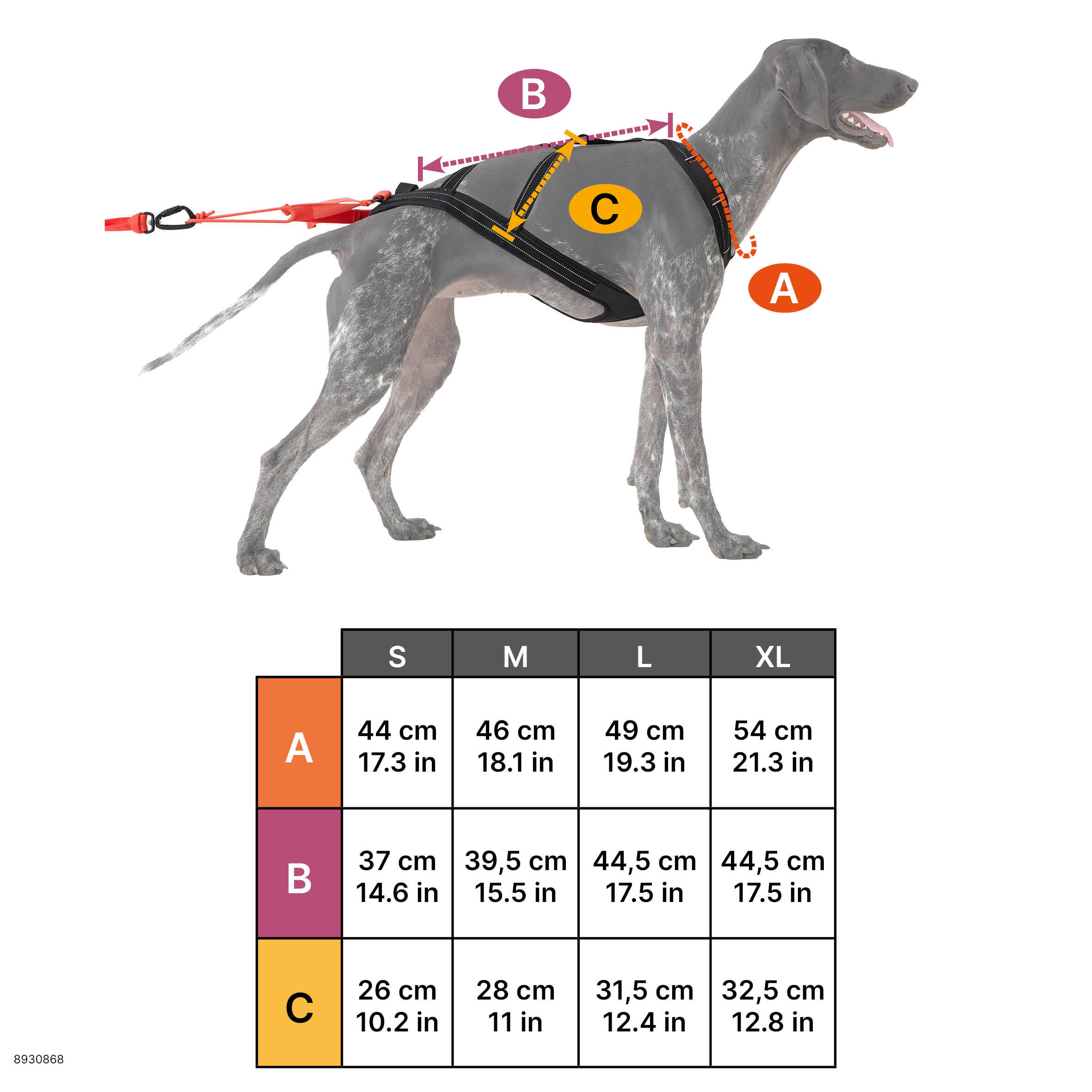
It’s essential to carry out these checks to be sure you’ve chosen the right size harness for your dog.
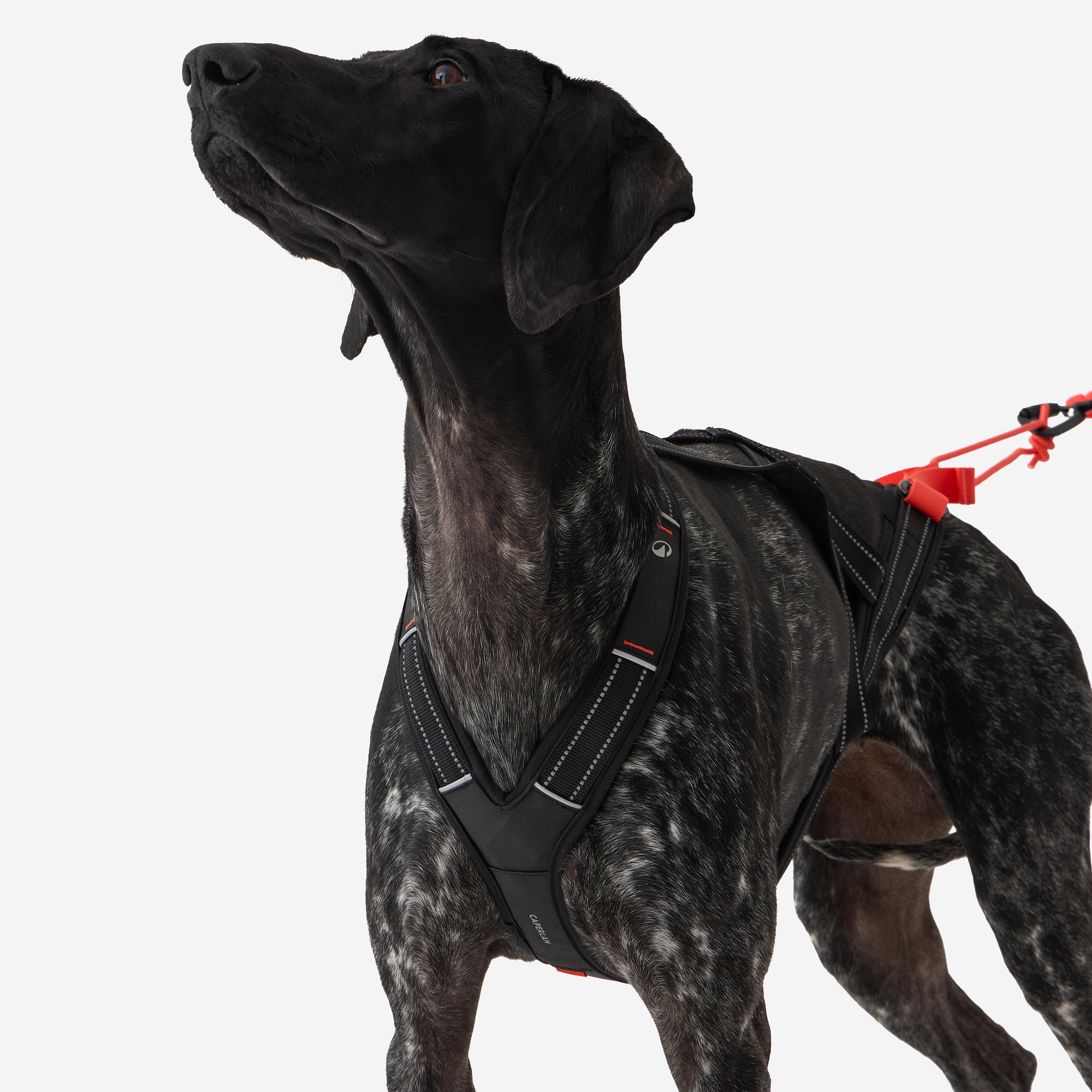
1. The point of the ‘V’ at the front of the harness should sit above or directly at the tip of the sternum. If it sits below it, you need a different size.
2nd point to check on the harness
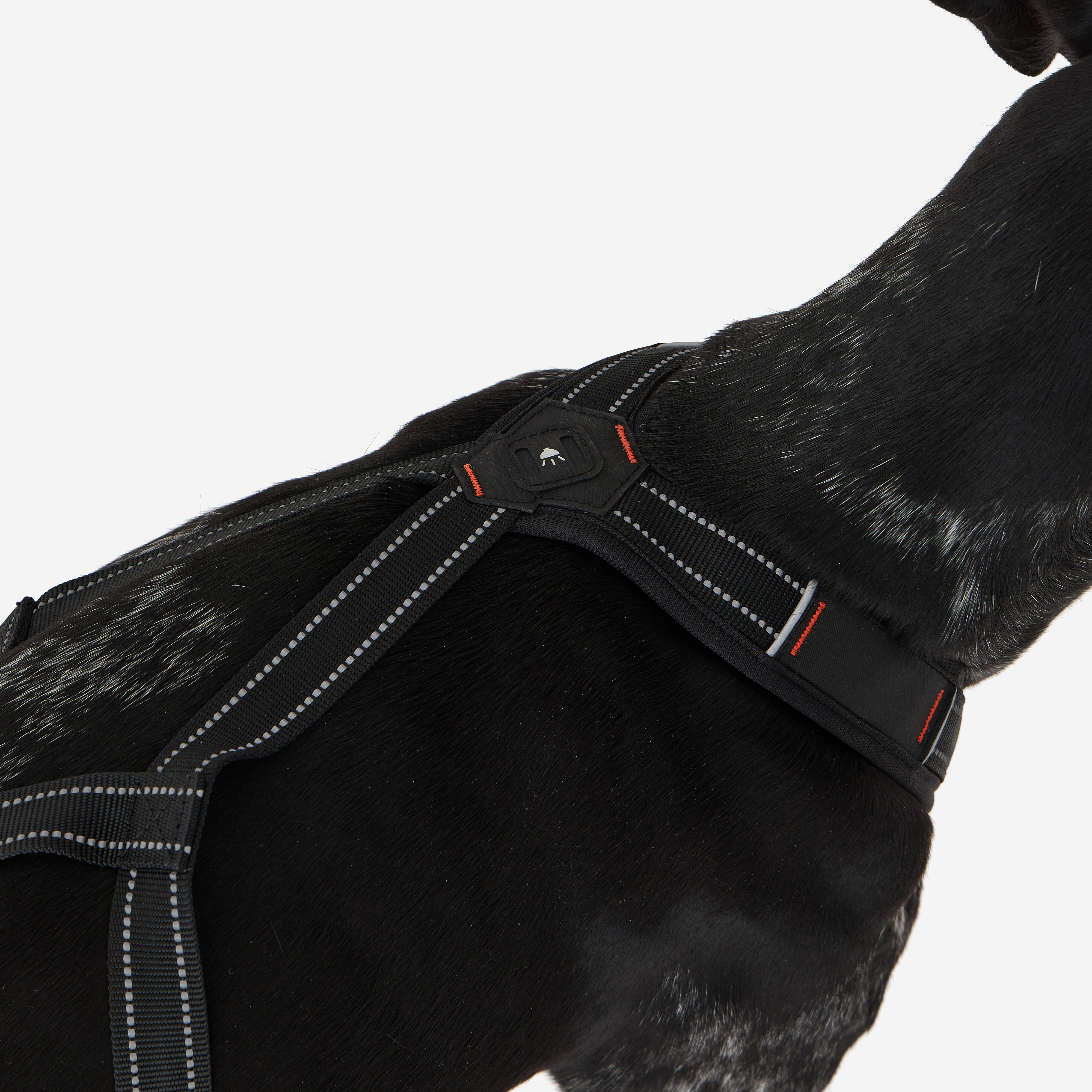
2. The side straps should be in line with the ribs.
Ideally, the harness should be in line with the floating ribs—or just in front on the last fixed rib—when under tension, i.e. during active use.
When checked "at rest", the tension is not the same, so the harness should be in front of the floating ribs.
This is a key safety point that ensures your dog’s physical well-being if followed correctly.
Choosing an X-back harness.
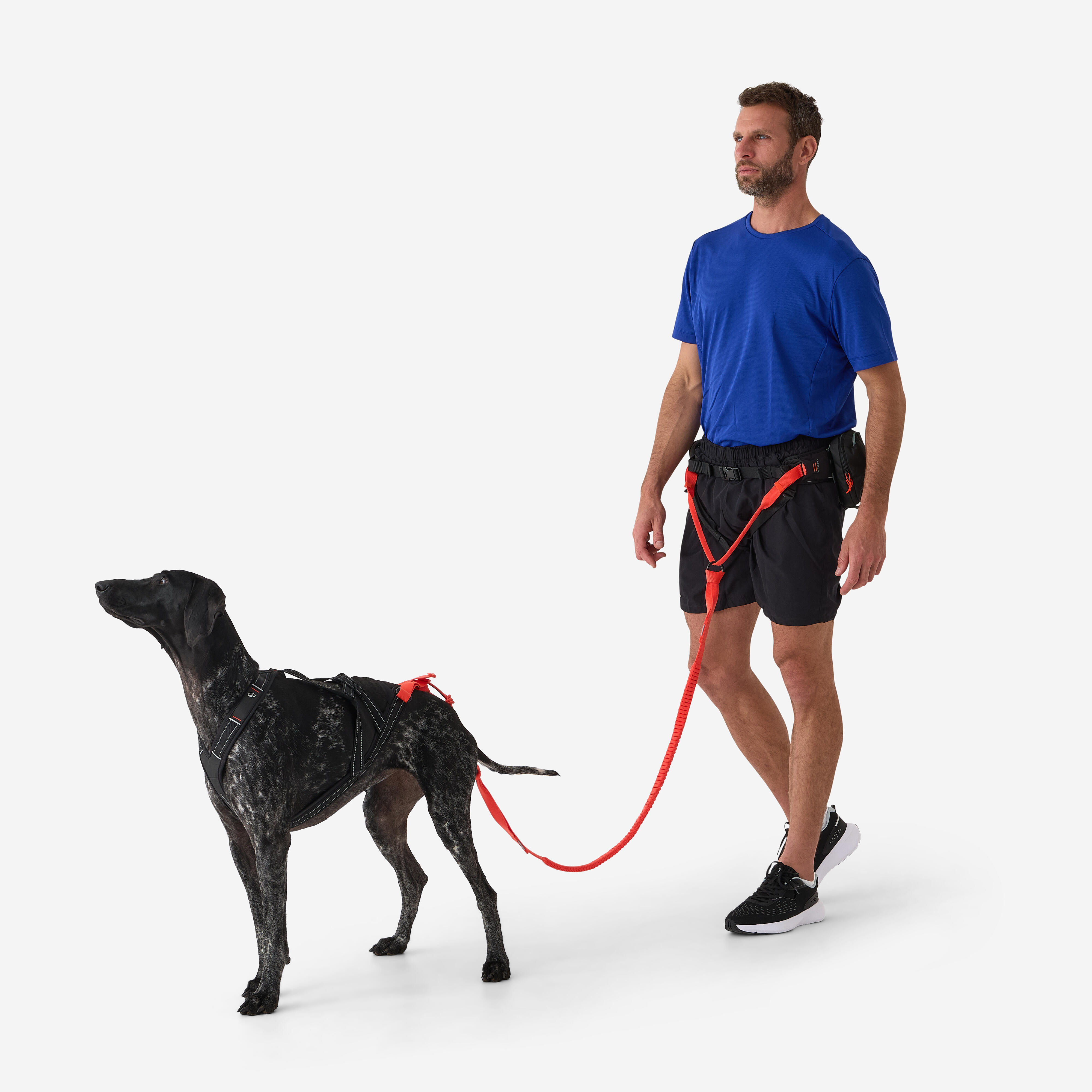
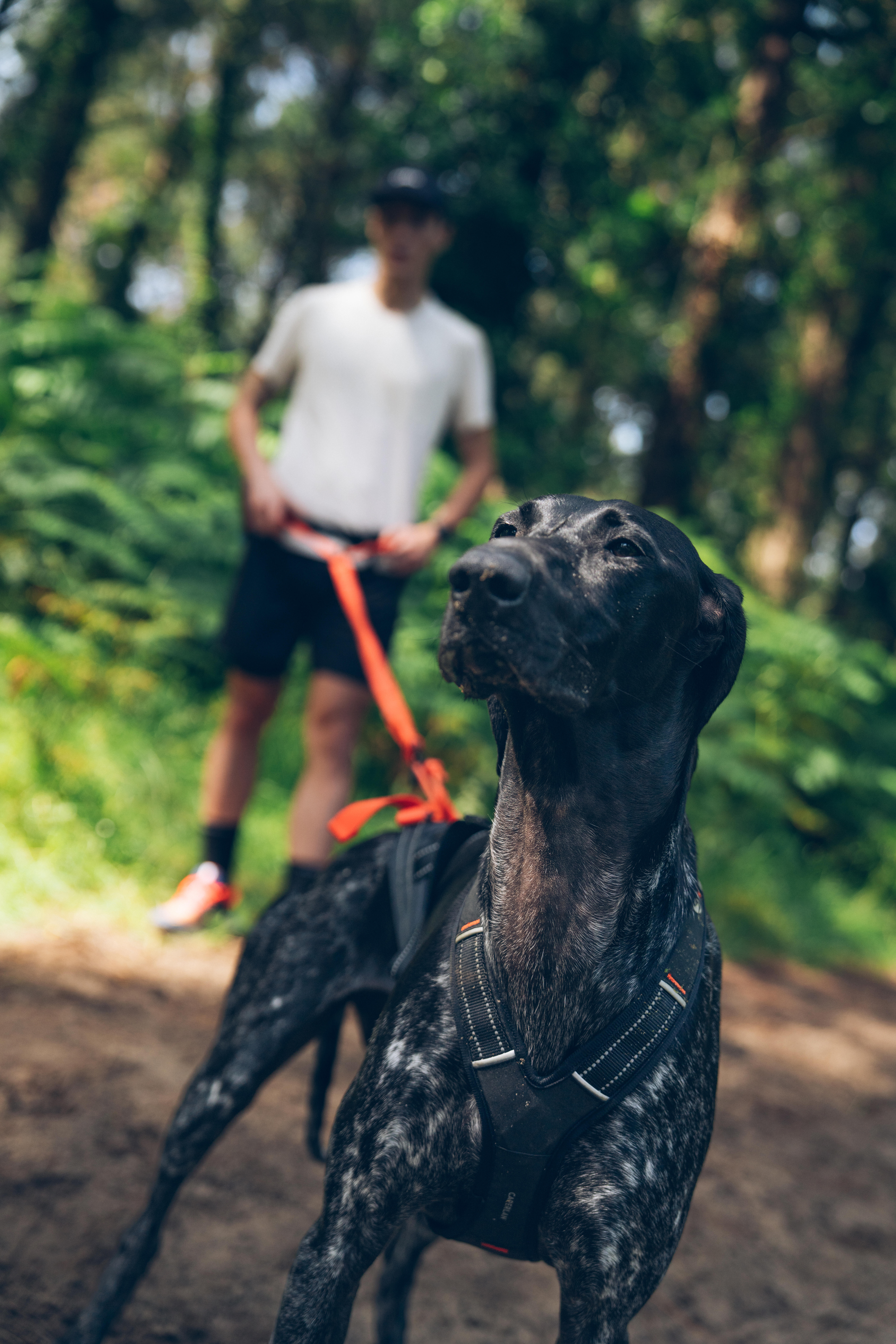
The X-back harness offers efficient traction by distributing the force over the dog’s entire body. It leaves the dog’s shoulders free for smooth running, is stable at high speeds and remains comfortable over time.
Suitable for athletic dogs, which are able to discover sports or enjoy canicross outings, while limiting friction and the risk of injury.