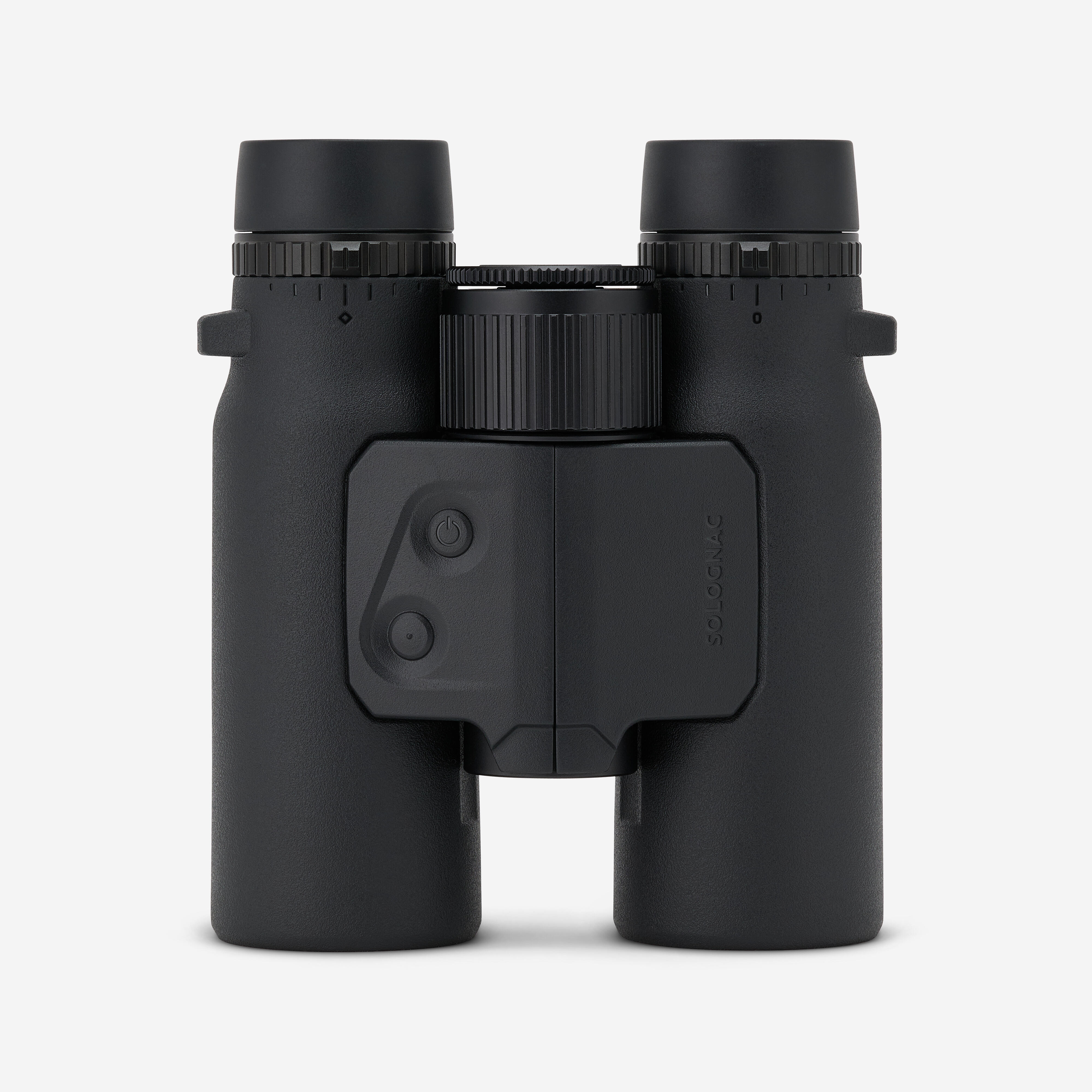
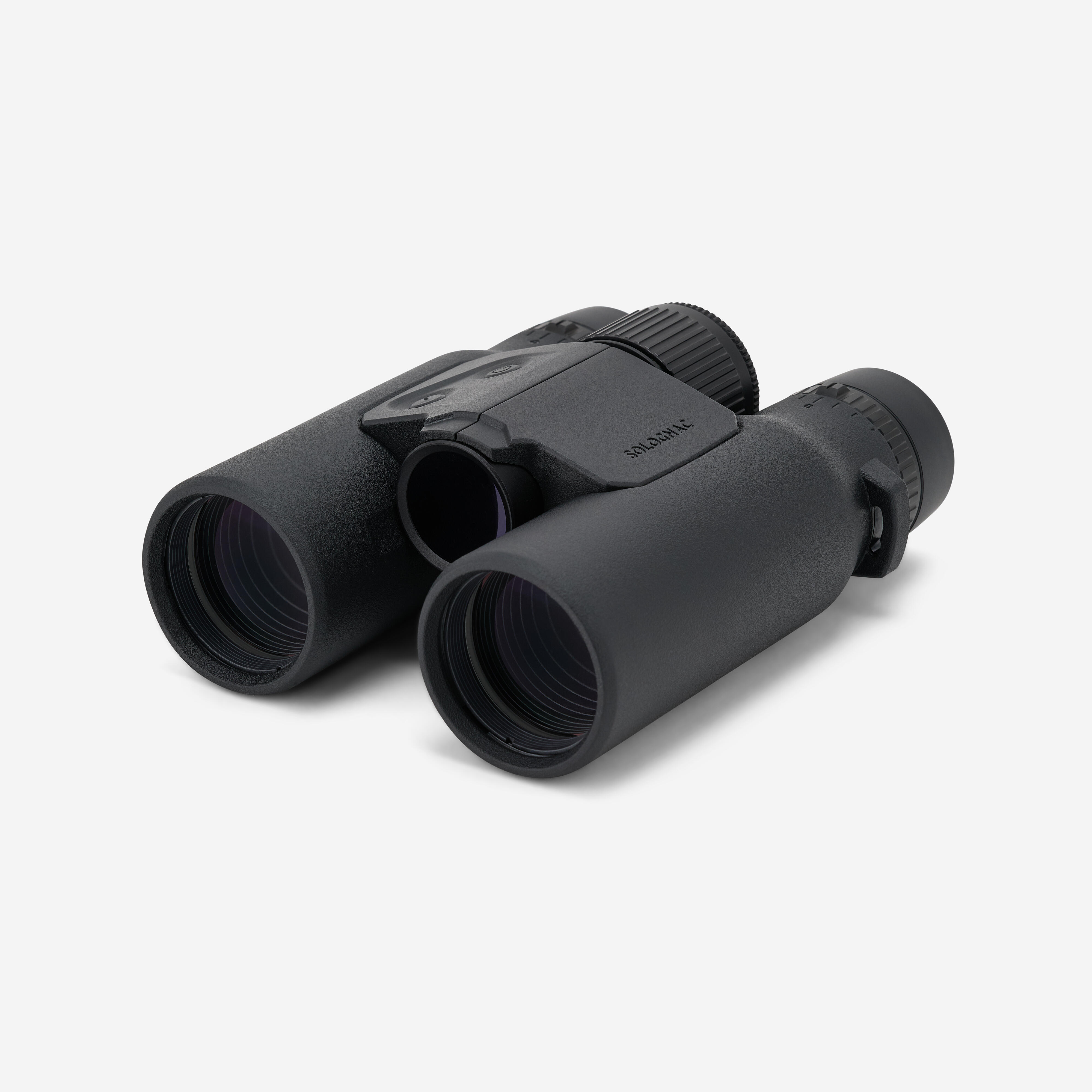
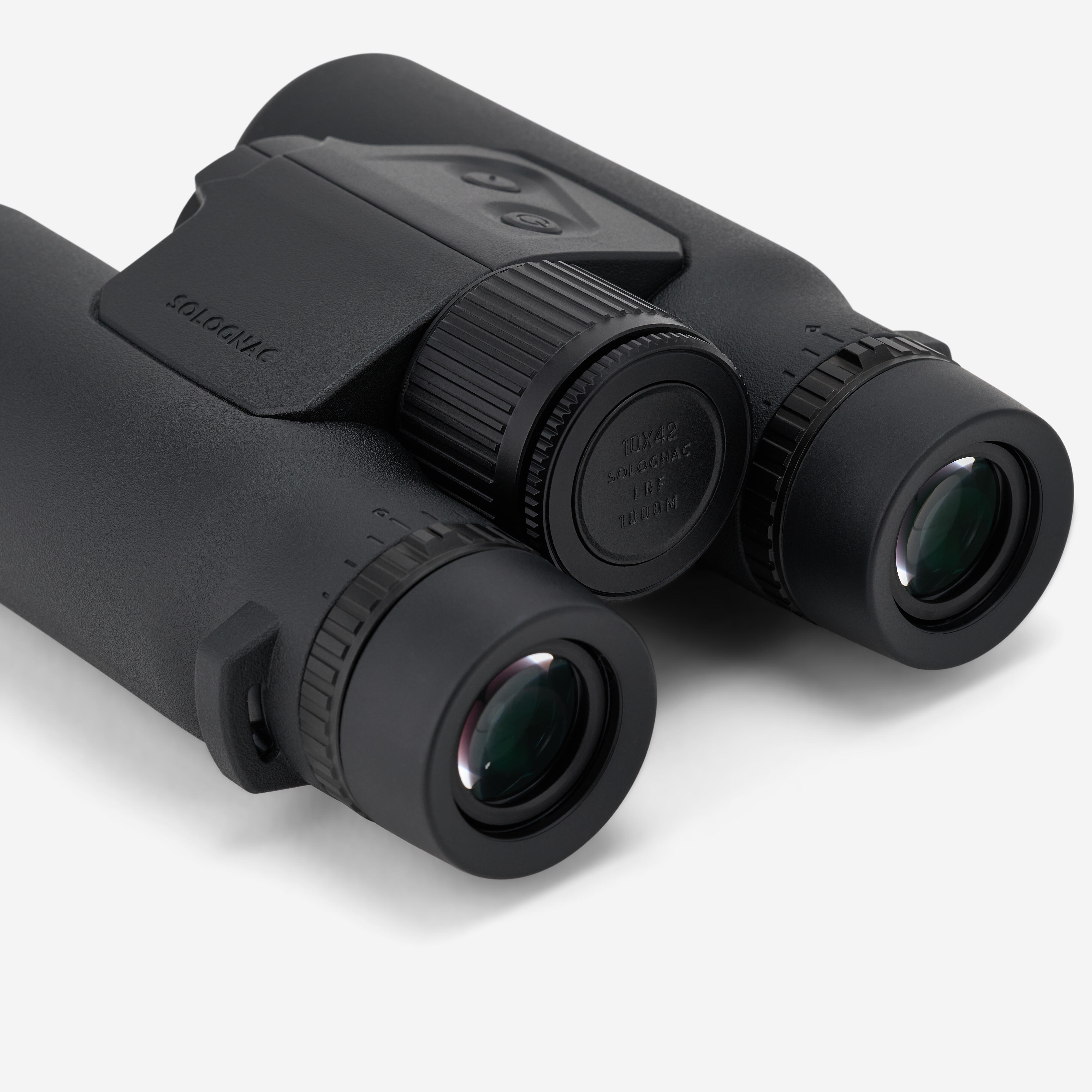
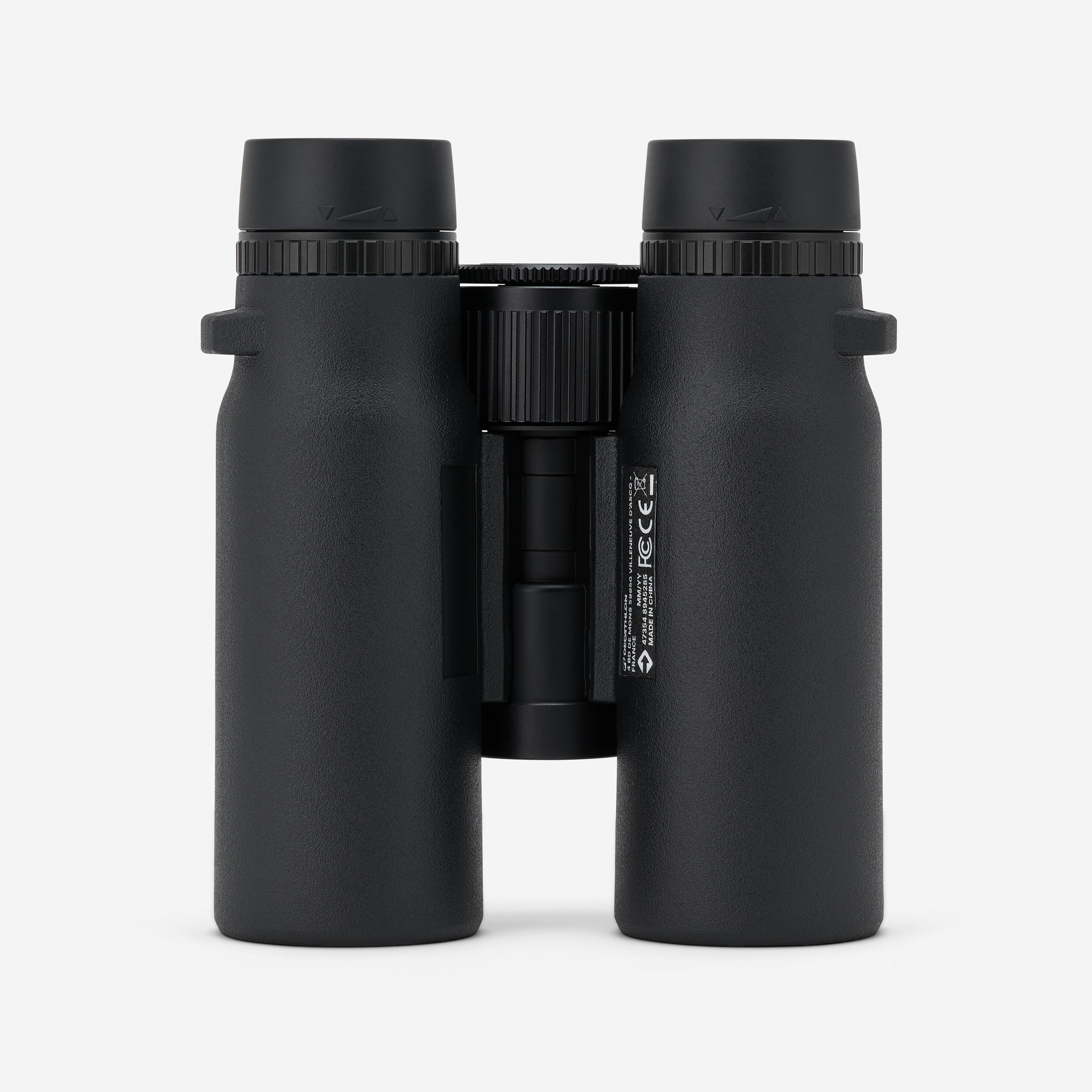
Features
Transmission rate: 81% (left tube with no screen) / 71% (right tube with screen where data is displayed)
Lens: 42 mm
Field of vision: 110 m to 1000 m range
Eye clearance: 16.2 mm
Exit pupil: 4.2 mm
Brightness index: 17.64
Twilight factor: 20.49
Nearest observation point: 5 m
Rainproof (but not waterproof) and fog-proof
Explanation of corrected distance
For example, a bow hunter lying in wait in a tree can aim at an animal below, at an angle of -52° relative to his position. The distance of the line of sight is 29 metres. However, the hunter risks shooting above the target if they rely solely on this information. The actual horizontal distance displayed (compensated according to the angle) is 18 metres. This is the corrected or projected distance on which the hunter must base their shot.
Reticle and dioptre adjustment (part 1/2)
For a faultless image quality, it is important to compensate for the difference in visual acuity between your eyes and to have a clear reticle. Here are the 4 steps to follow:
1/ Turn the binoculars ON and close the left eye.
2/ Aim for a uniform background (white sky or wall). Turn the ring on the right-hand tube until the display is perfectly sharp.
Operation of the LRF 1000M (part 2/2)
Unit conversion:
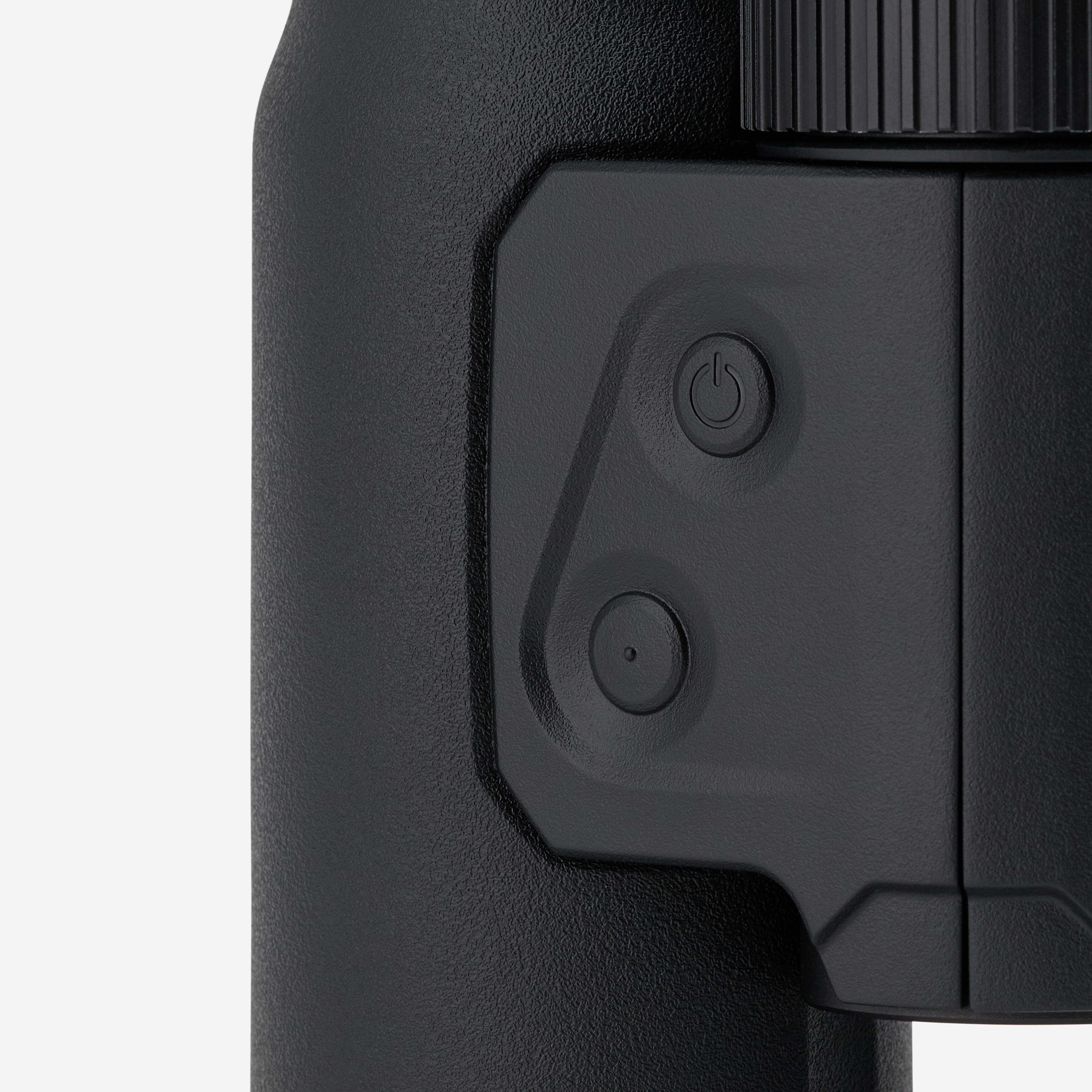
Press and hold the MODE button. The units will switch from “metres” (m) to “yards” (Y), and vice versa.
Mode change:
When the screen is lit, press the MODE button once. there are 3 possible modes:
-basic mode: single aiming point
-corrected mode: display of angle of view, measured distance and corrected distance
-low-light mode: a reticle appears to assist aiming when conditions become obscure
Pack contents
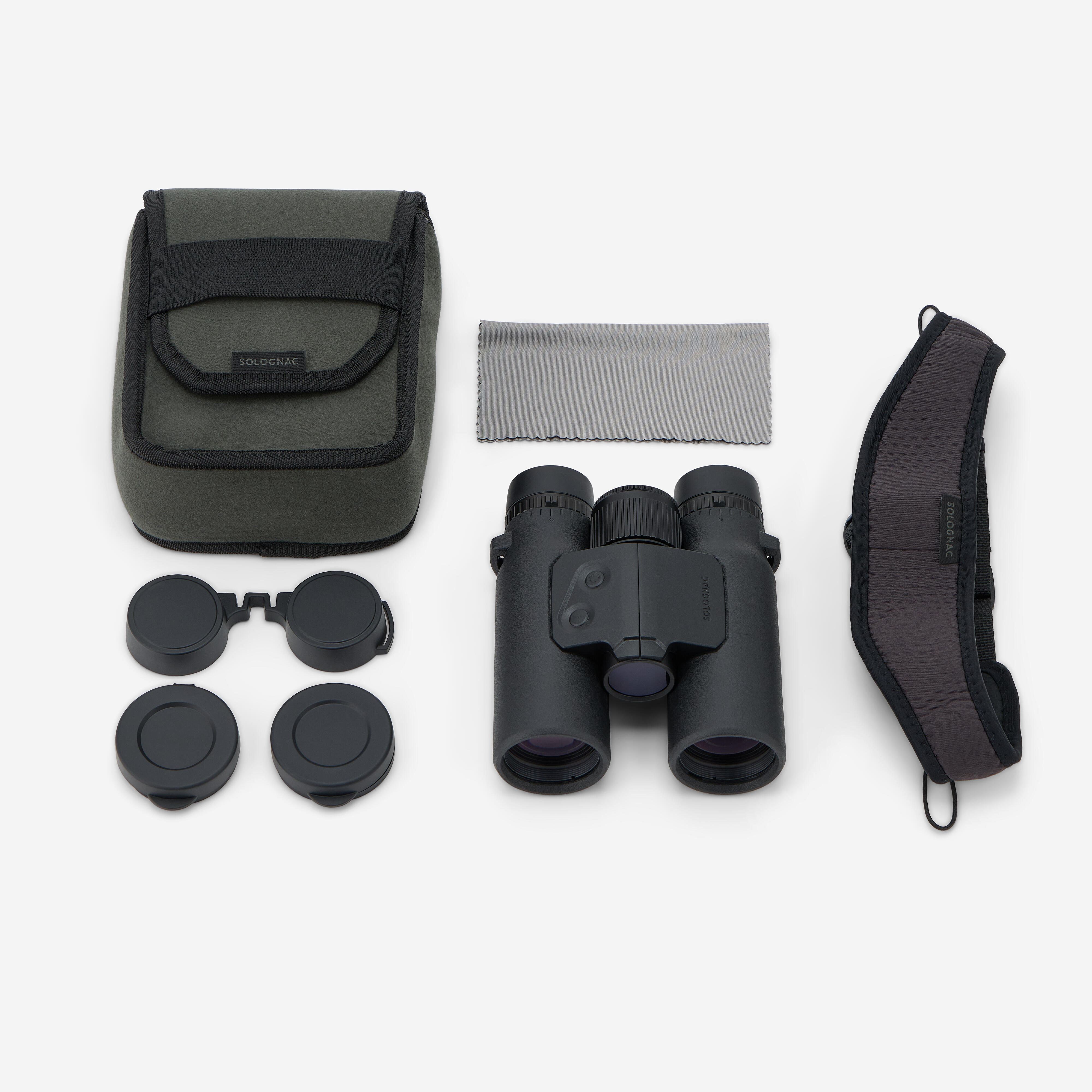
The pack consists of:
-a pair of LRF 1000M 10x42 binoculars
- 1 protective eyepiece cover
- 2 protective objective lens covers
- 1 neck strap
- 1 protective pouch
- 1 cleaning cloth for the scopes
- 1 3-volt CR2 battery with a life of around 4,000 measurements
Other features worth noting
Lens treatment: FBMC (Full Broadband Multi-Coated)
Prism: BaK4, dielectric coating
Plastic frame in PPS
Dimensions: 160x132x62mm
Weight: 870 g without battery
Operating temperature: -10°C/+50°C
Operation of the LRF 1000M (part 1/2)
Start-up:
Briefly press the ON/OFF button once. The LCD screen (not backlit) displays the mode used the last time the device was used.
Measurement:
Briefly press the ON/OFF button once. A measurement is taken.If you hold down this button, the measurements will be scanned according to the movement of the binocular and the objects targeted (scanning function). If no action is taken, the screen goes dark after 10 seconds.
Reticle and dioptre adjustment (part 2/2)
3/ Adjust the difference between your left and right eyes.
4/ Keeping your left eye closed, aim at an object between 20 and 50 m using the central focus ring. Turn the lens until you obtain a sharp, precise image of the target object.
5/ Close your right eye. Looking at the same object, turn the ring on the left-hand tube until you obtain a sharp, precise image.
The difference in vision between your left and right eyes has now been corrected.
Best practices for use (part 2/3)
Further points to keep in mind:
-rangefinding over a lake, pond or body of water can sometimes cause reflections and erroneous measurements
- at long range, large objects will be easier to locate than small ones
The principle of a pair of rangefinder binoculars
This type of scope allows distances to be measured from the binoculars. To do this, a laser pulses a light wave. This wave “ricochets” off the target and returns to the sensor in the binoculars. The time taken between the light emission and its return to the laser’s internal receiver determines the distance to the desired target. The information is then processed by the system and the data is displayed on the screen in the right-hand tube of the binocular.
Best practices for use (part 1/3)
Distance measurement can be affected by a number of factors, mainly related to the target objects. The following points should therefore be borne in mind:
-light colours and shiny surfaces generally reflect better than dark colours and matt/textured surfaces
-snow, rain and fog can interfere with measurements
-solid objects, such as rocks, reflect better than bushes
Best practices for use (part 3/3)
If you are having difficulty locating an animal or object, try locating another object nearby or use the scan function to pan back and forth while monitoring changes in range.
Examples of maximum measurement ranges:
-highly reflective targets: 1000 m
- game: 600 m