Compatibility.
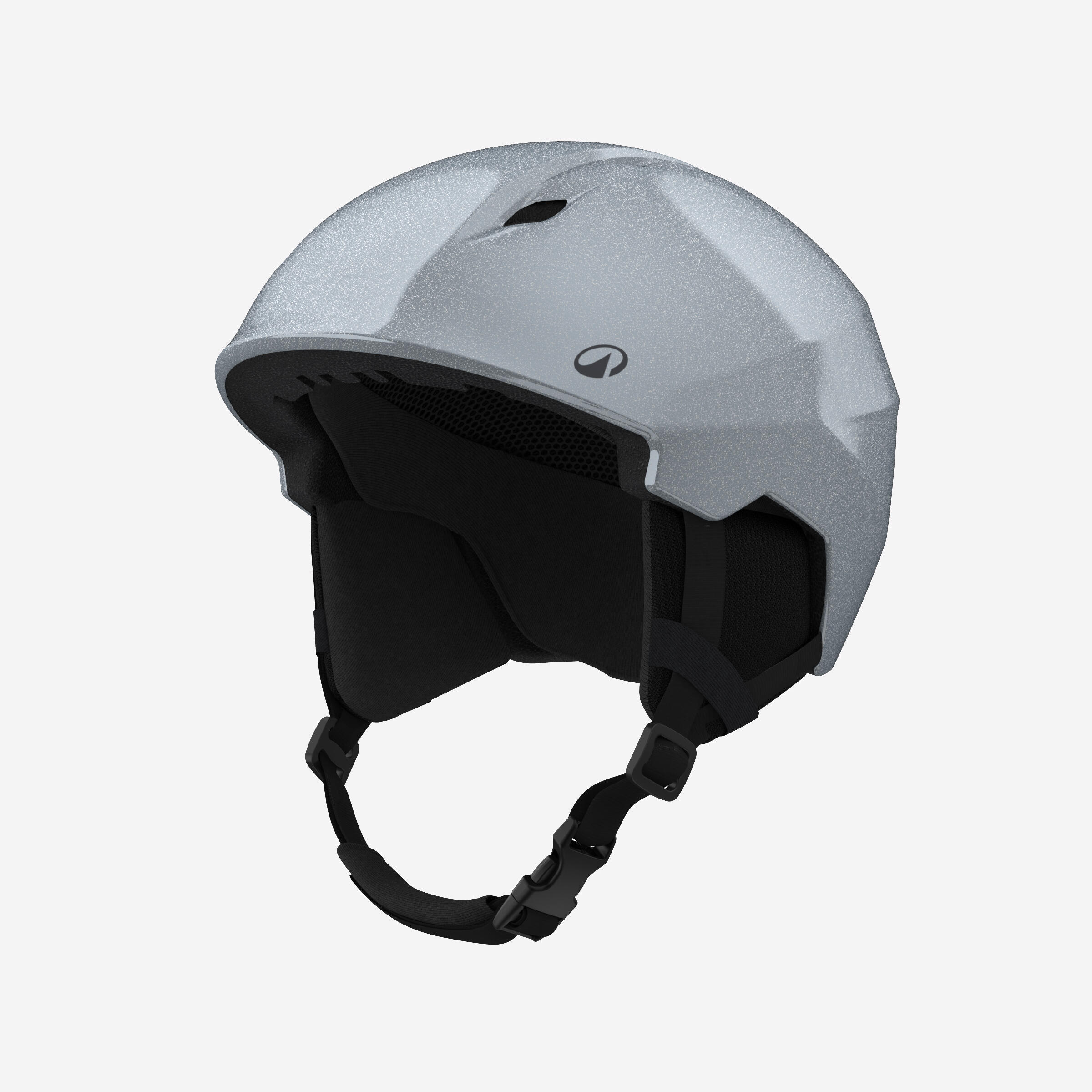
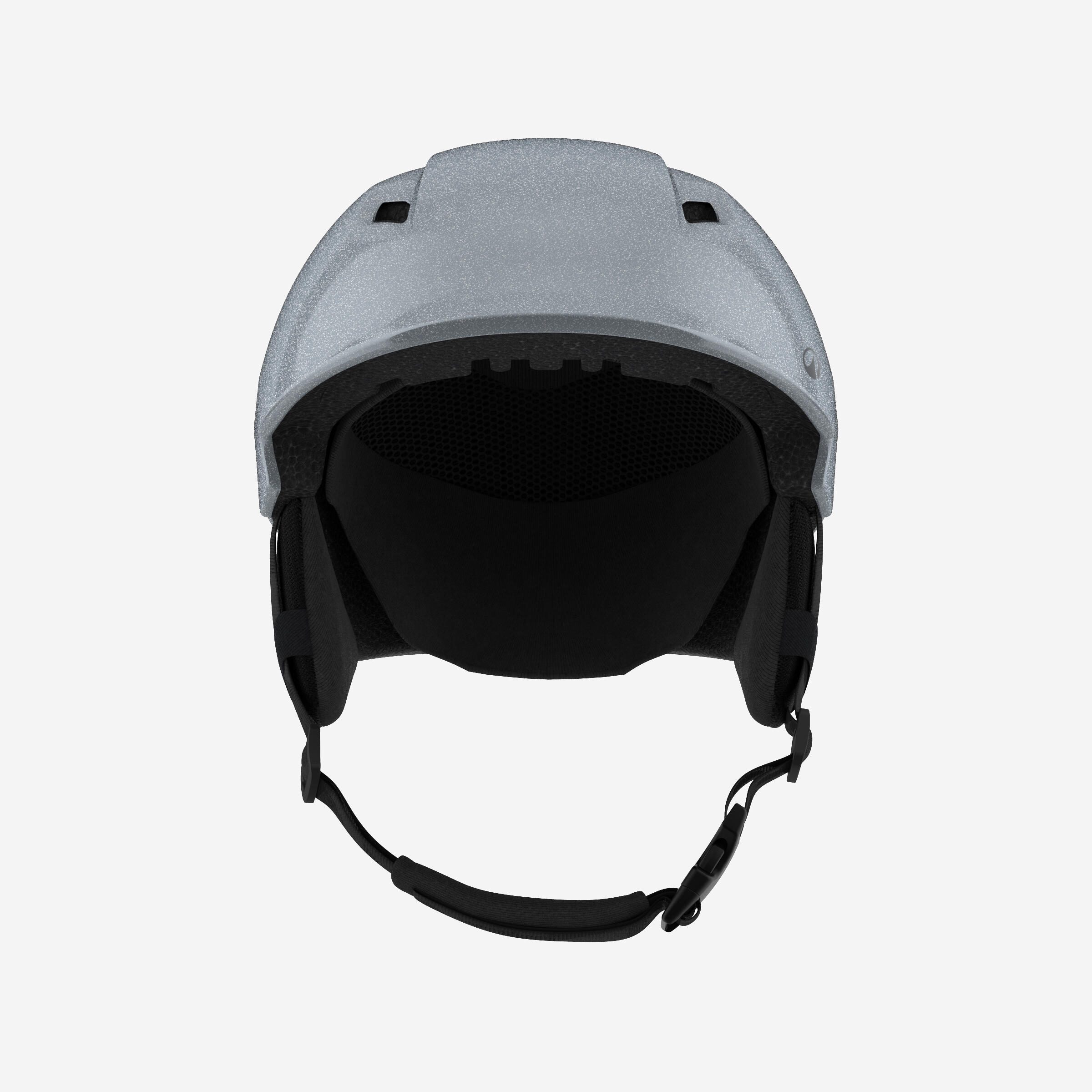
Wedze/Quechua helmets and goggles are designed to form an complete unit and prevent gaps between the top of the helmet and the goggles.
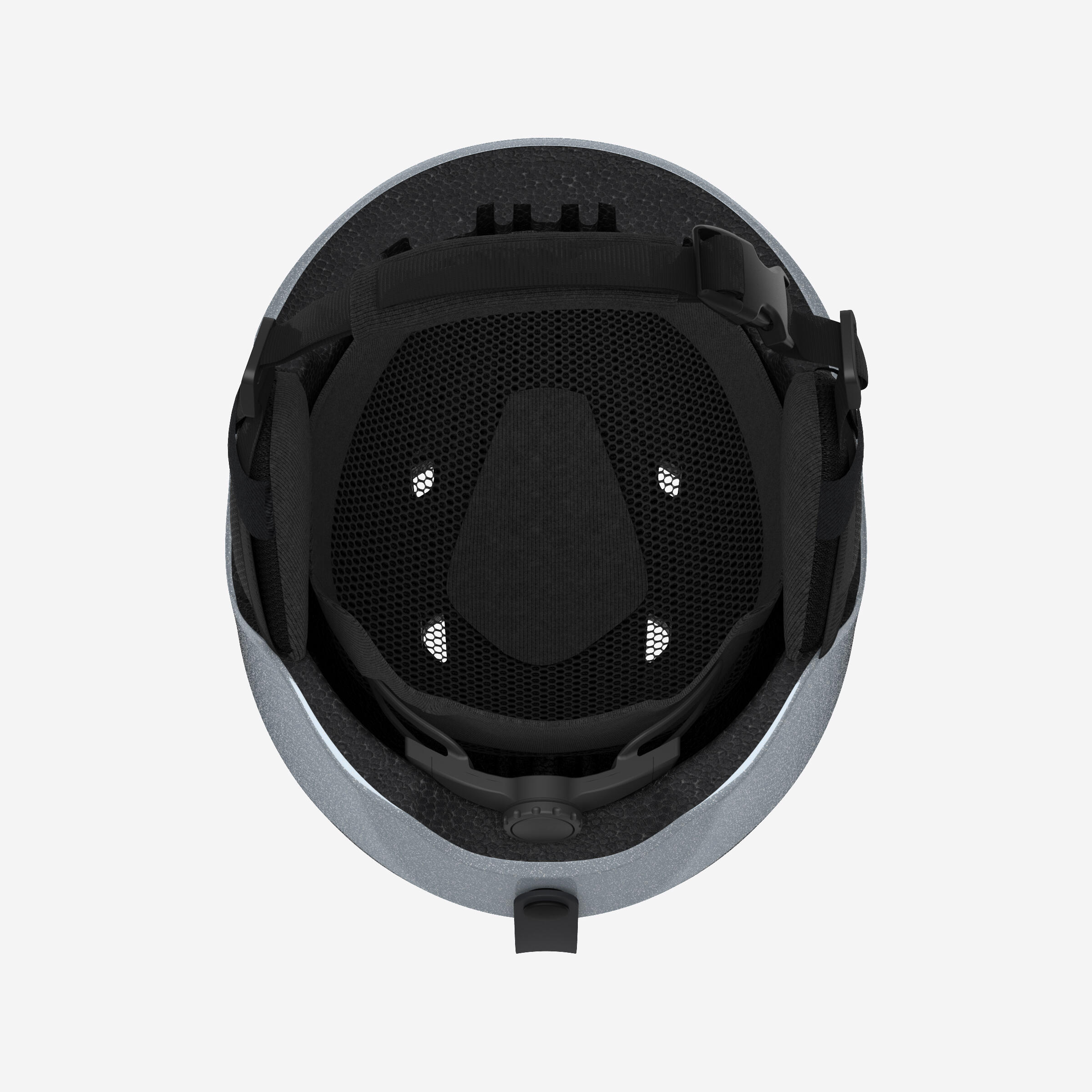
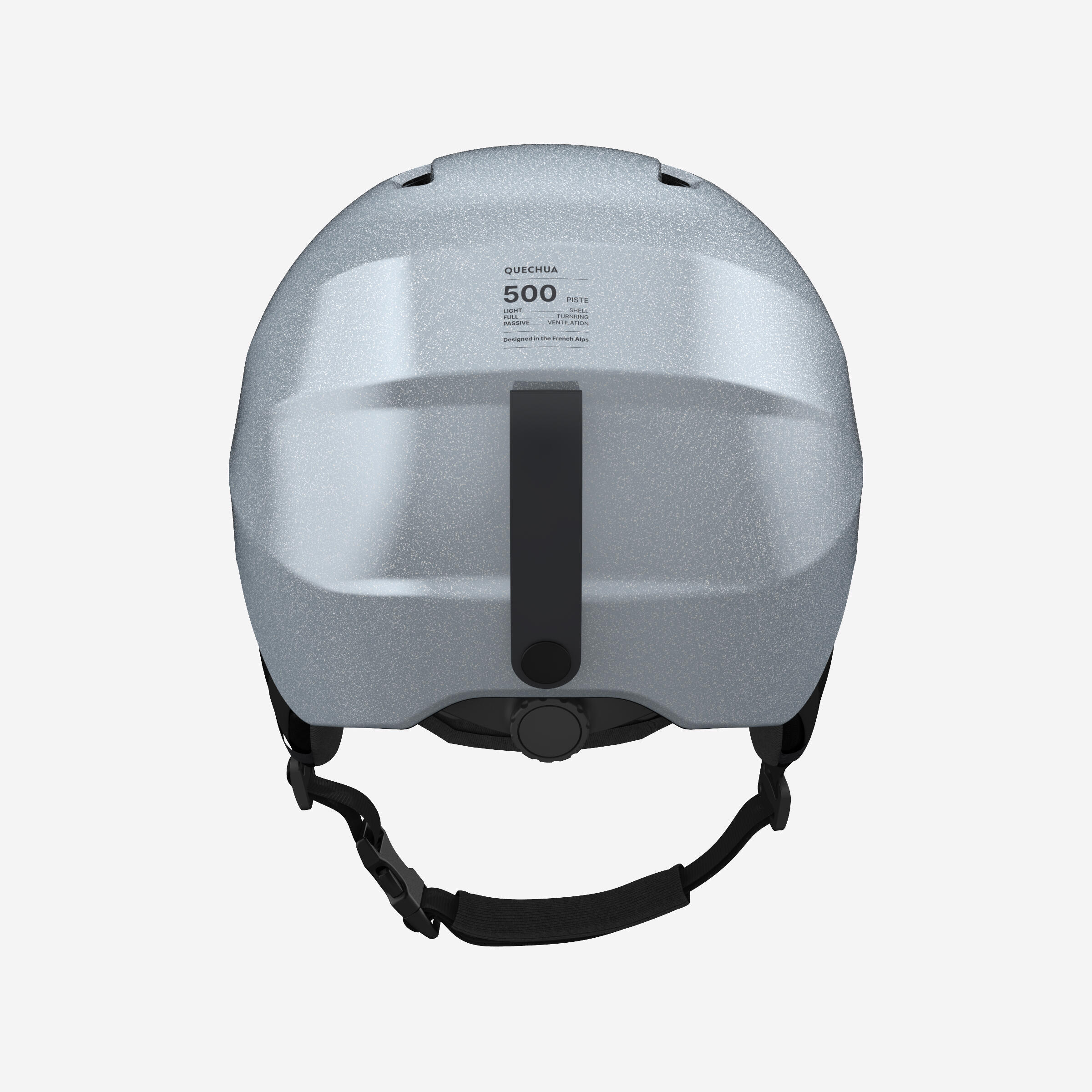
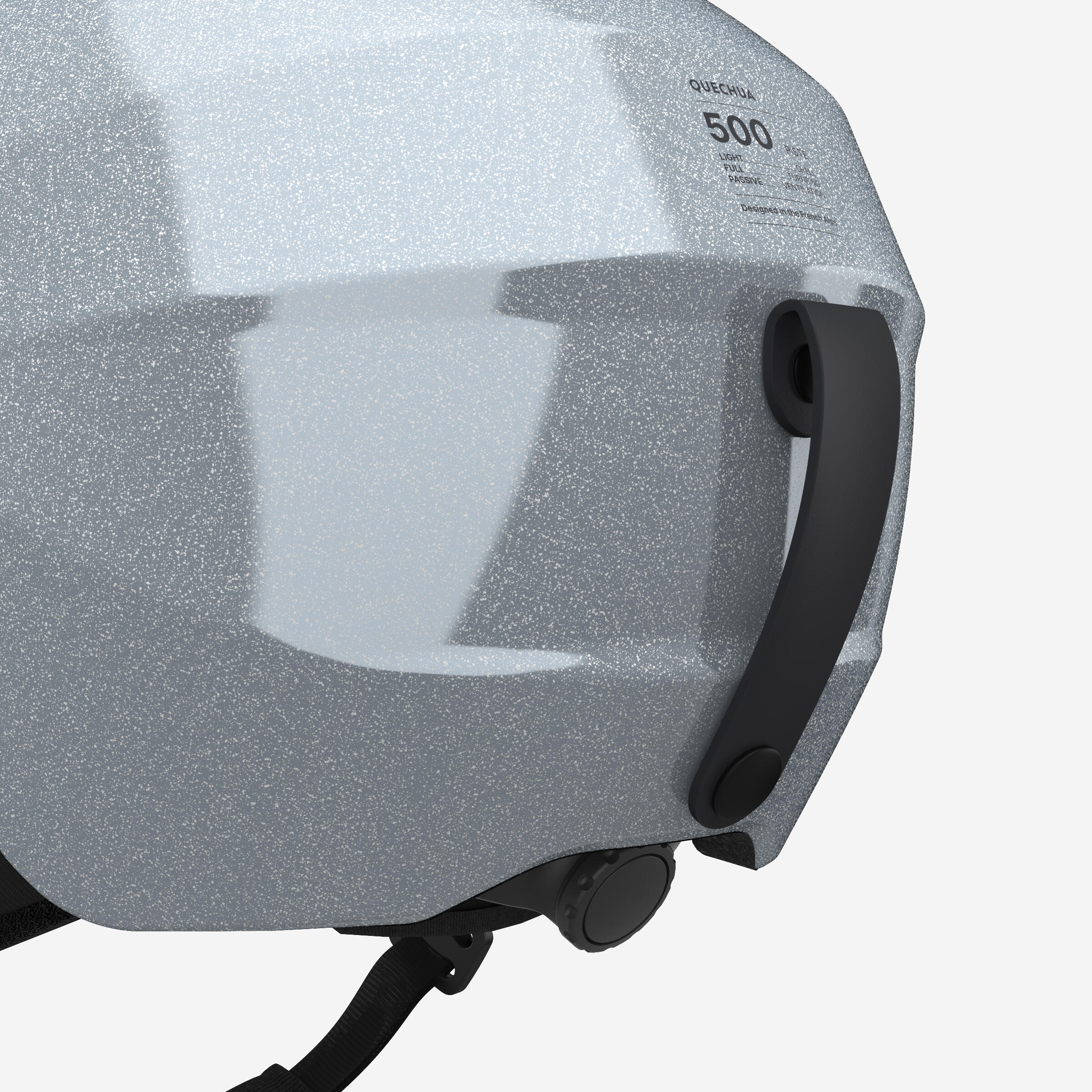
Tightening dial.
The adjustment wheel plays a key role in keeping your helmet secure. This system can be easily and precisely adjusted at any time using the easily accessible dial that you can even use with your skiing gloves. It also gives you comfort and maximum safety. Turn the dial to the right to tighten and to the left to loosen.
In-Mold construction.
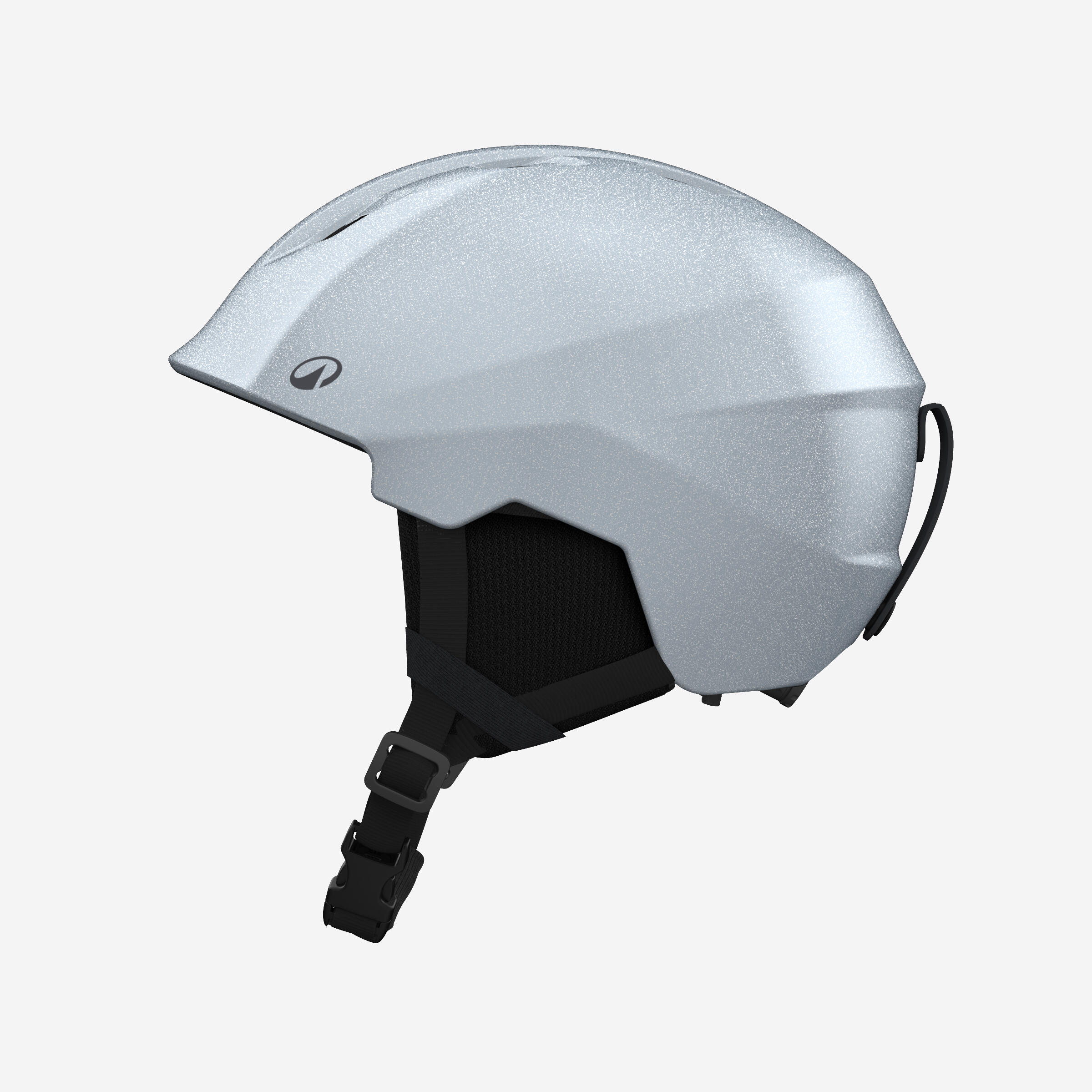
This type of structure, known as In-Mold, features a polycarbonate outer shell that is moulded directly to the EPS liner. The inner EPS liner absorbs shocks in the event of a collision. The whole thing is extremely lightweight.
In-Mold construction is more sensitive to everyday impacts. We recommend changing your ski helmet at least every 5 years unless it has sustained a significant impact in the meantime.
How to choose the right size and trying on your helmet
Measure the circumference of your head (from the middle of your forehead to the top of your ears) and choose the right size. When trying on the helmet, you should not feel any discomfort. If the helmet does not have a visor, try it on with a pair of goggles: There should be no gaps between the two.
Adjust your helmet once you have the right size.
For your safety, your ski helmet must be properly adjusted:
- The head circumference should be adjusted using the thumb wheel.
- The chinstrap must be properly adjusted. You should be able to fit two fingers between the strap and your skin. If it’s poorly fitted, your helmet will offer less protection.
When to change your ski helmet?
We recommend changing your ski helmet every 5 years, unless it has sustained a significant impact in the meantime. In case of severe impact, you need to change the helmet: even if you can’t see it, the inner material may be damaged and your helmet will offer less protection.
A helmet keeps you warm: you don't need to wear a hat underneath – in fact, it’s best not to.
Avoid wearing a hat, as this will create a gap between your head and your helmet and reduce your protection. If necessary, opt for a very thin balaclava designed for this purpose.
Avoid putting a camera on the helmet, as this will compromise your safety. The standard does not take into account any elements added to the helmet.
EN 1077 Standard
Standard EN 1077:2007 is a European standard that applies to helmets used for cranial protection during downhill skiing and snowboarding. This standard tests the ability to absorb shocks and resistance to penetration. There are 2 categories:
- Class A: protects the top and back of the head, as well as the ears and the side of the head.
- Class B: Protects the top and back of the head but does not cover the ears.
Return terms and conditions (Specific product: personal protection equipment)
Make sure this product is right for you before purchasing. If it doesn’t fit, you can return it subject to the following conditions: i.e. with the instructions, labels and, if applicable, the original packaging.