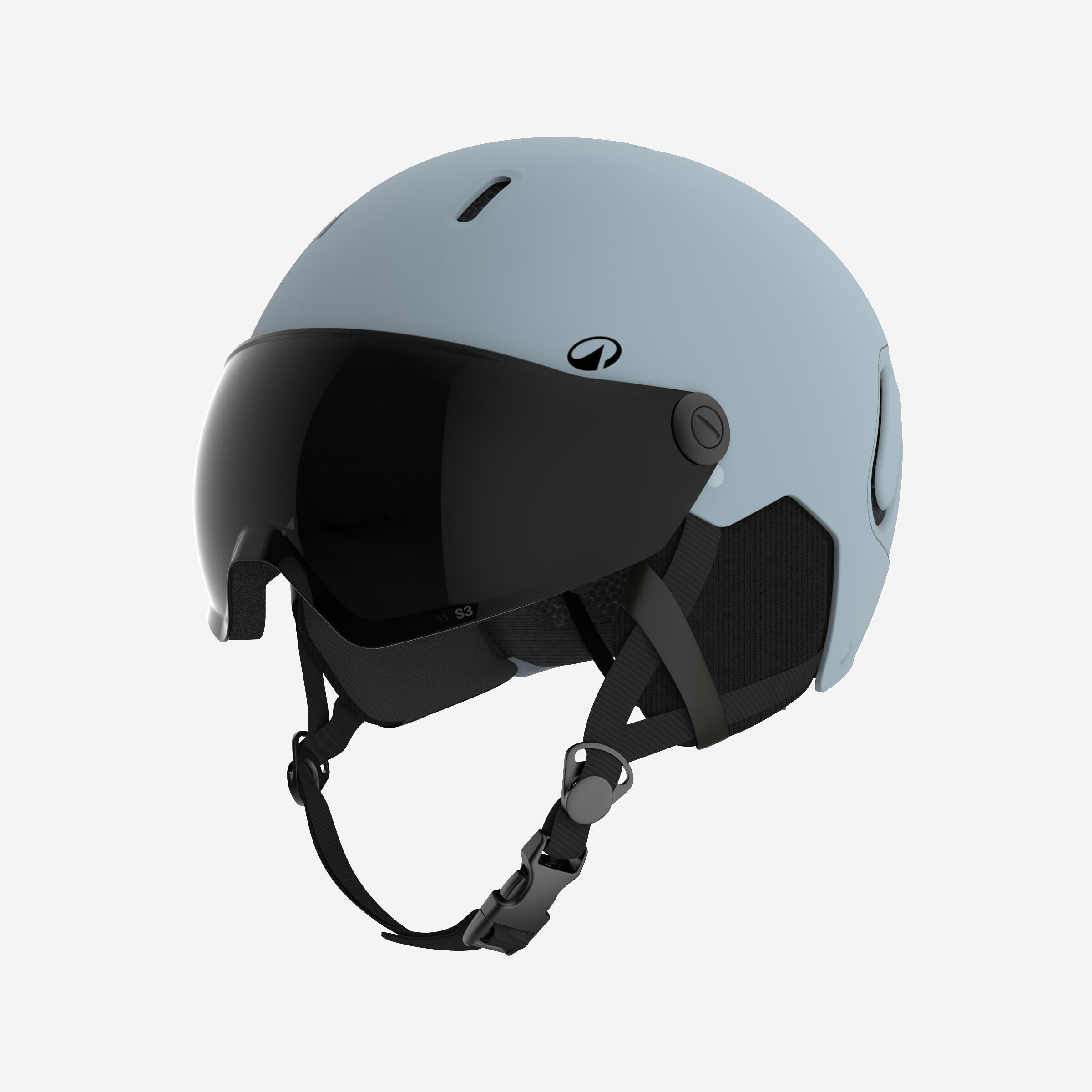
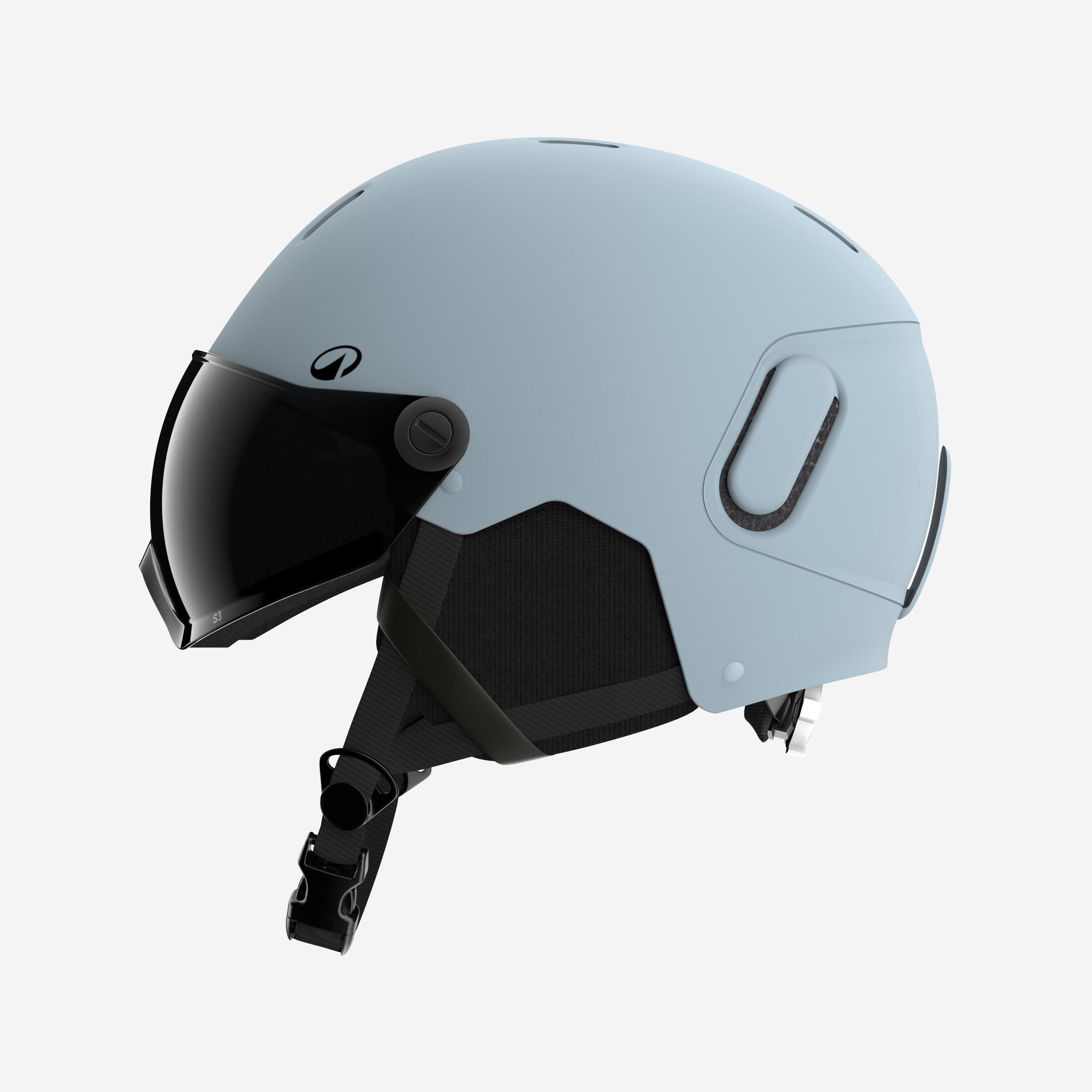
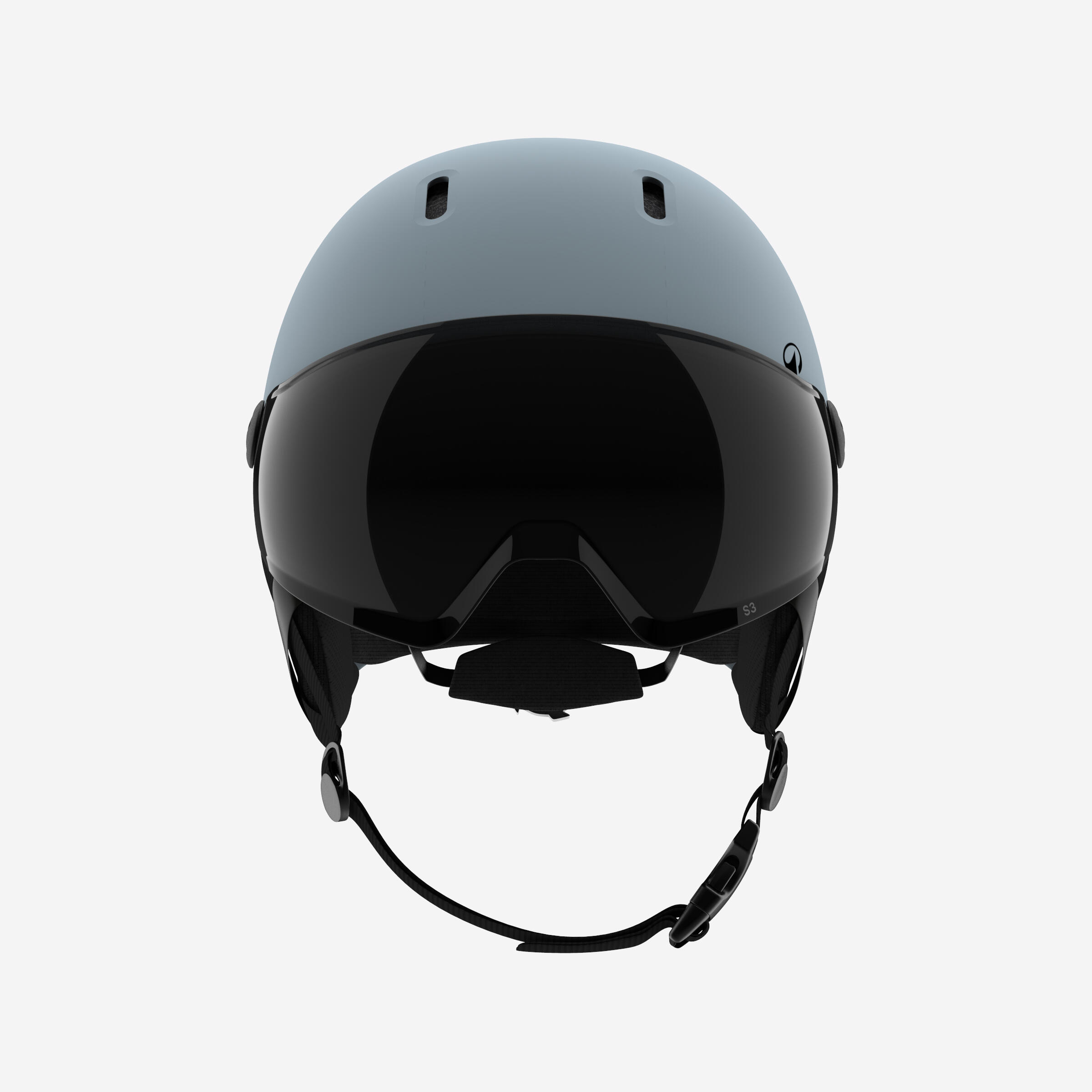
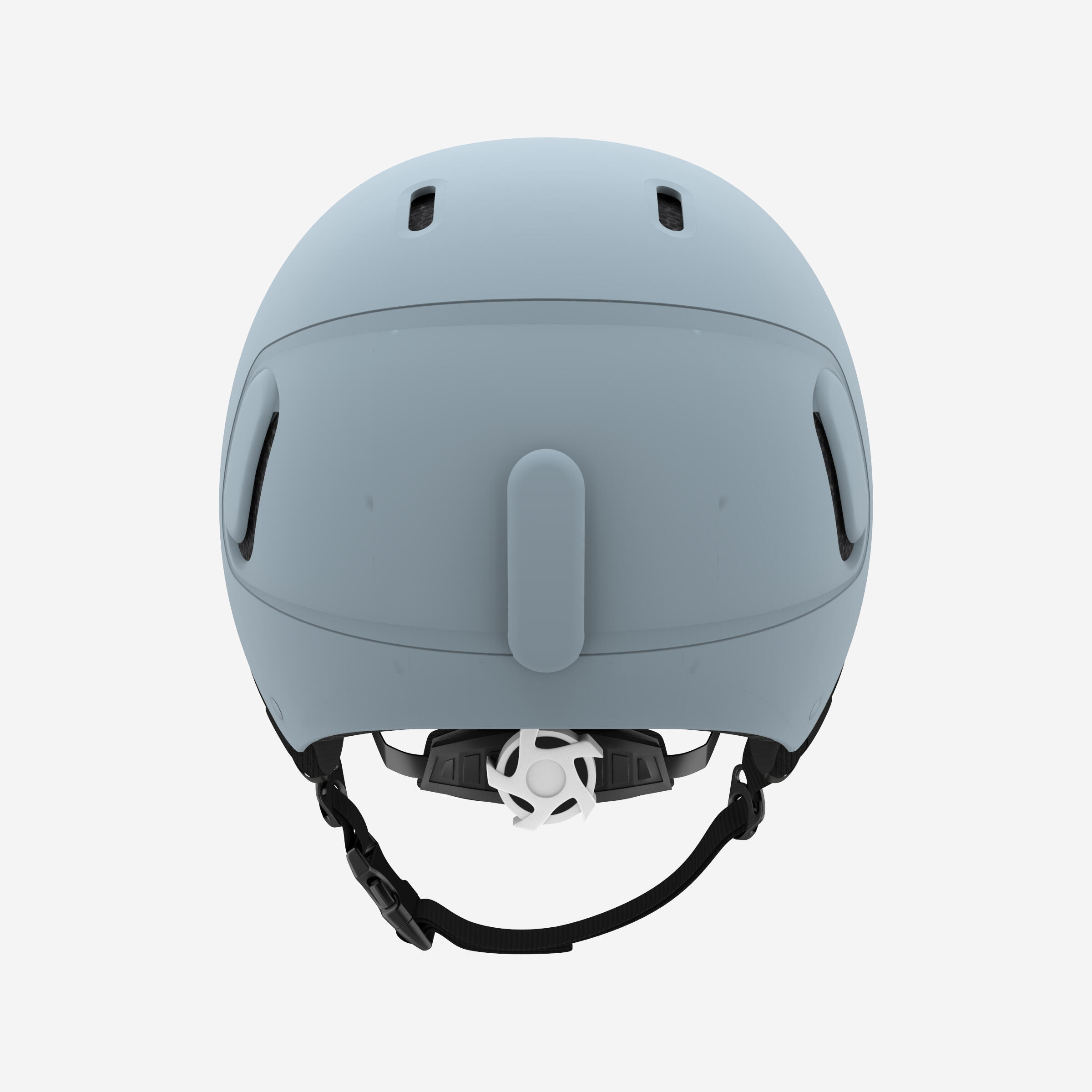
Special visor helmet features.
Visor helmets are extremely comfortable and practical to use. However, we recommend them for skiers who ski at moderate speed. They are less windproof than a mask, which perfectly moulds to your nose and face. If you ski very fast, air can get in and it can be unpleasant.
For the best airtightness, you must lower the visor as far as it will go. If you can’t, then this helmet is not suitable for you.
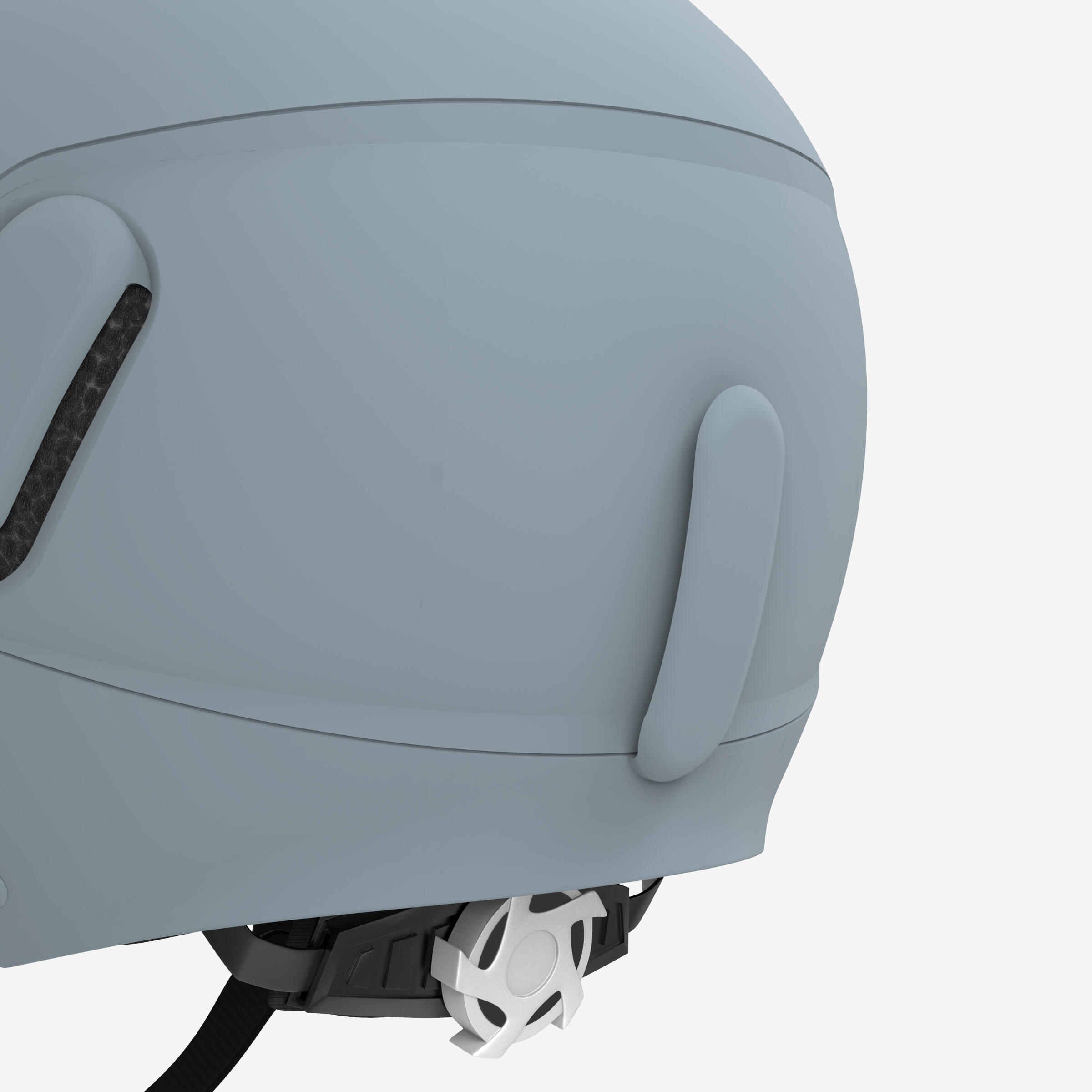
ABS structure.
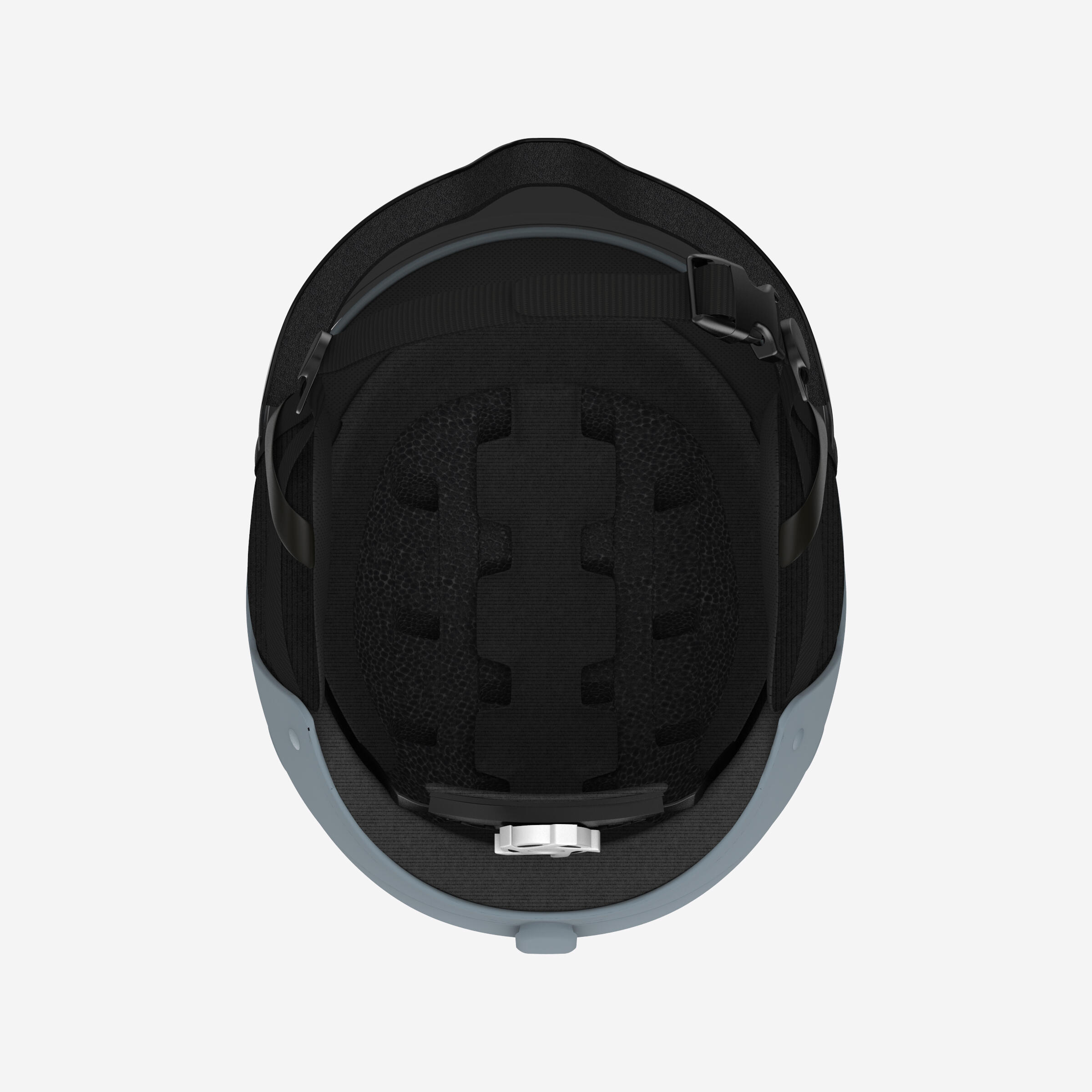
This type of structure incorporates an outer shell, made of ABS, injection moulded to withstand powerful impacts. It has a significant capacity to withstand bumps and knocks. The internal EPOS skullcap absorbs impact and collision at the time of impact. We recommend changing your ski helmet at least every 5 years unless it has sustained a significant impact in the meantime.
Compatibility with prescription glasses.
The pleasure of skiing should be accessible to all, including those who wear prescription glasses. Wedze has designed this helmet with a visor, more practical to use than an "over glasses (OTG)" ski mask. Due to issues with glasses size, some models remain incompatible. Head to your Decathlon store to try helmets on with your glasses.
How to choose the right size and trying on your helmet
Measure the circumference of your head (from the middle of your forehead to the top of your ears) and choose the right size. When trying on the helmet, you should not feel any discomfort. If the helmet does not have a visor, try it on with a pair of goggles: There should be no gaps between the two.
Adjust your helmet once you have the right size.
For your safety, your ski helmet must be properly adjusted:
- The head circumference should be adjusted using the thumb wheel.
- The chinstrap must be properly adjusted. You should be able to fit two fingers between the strap and your skin. If it’s poorly fitted, your helmet will offer less protection.
When to change your ski helmet?
During practice, the ski helmet must be properly fitted and adjusted:
* It is essential to choose the right size.
* The head circumference must be adjusted using the thumb wheel.
* The chinstrap must be properly adjusted.
It's a bit like the seat belt in a car: if it’s too loose, it will not perform its function and you will be less protected.
A helmet keeps you warm: you don't need to wear a hat underneath – in fact, it’s best not to.
Avoid putting a thick hat under your helmet as this will move the helmet away from your head and you won't be as well protected.
Choose a beanie or balaclava hat, avoid wearing a hat, which will create space between your head and helmet and reduce your protection. If necessary, choose a very thin balaclava designed for this purpose.
Avoid adding a camera, which will reduce your safety; the standard does not take into account any elements added to the helmet. Very thin and causes no harm
EN 1077 Standard
We recommend changing your ski helmet every 5 years, unless it has sustained a significant impact in the meantime. In case of severe impact, you need to change the helmet: even if you can’t see it, the inner material may be damaged and your helmet will offer less protection.
Product care.
Removable comfort foam machine-washable at 30°C.
After-sales service.
Certain parts of the PST 150 helmet are available as spare parts: The original S3-type visor, the bad weather (S1) visor and screw kit for attaching visor (screw and spacers).
Return terms and conditions (Specific product: personal protection equipment)
Make sure this product is suitable before buying. If it doesn’t fit, you can return it subject to the following conditions: i.e. with the instructions, labels and, if applicable, the original packaging. it can be refurbished.