6 items
4.5/5 based on 357 reviews collected online and in stores

Feather Train FAQs

How does a ready-to-fish feather train simplify sea fishing?

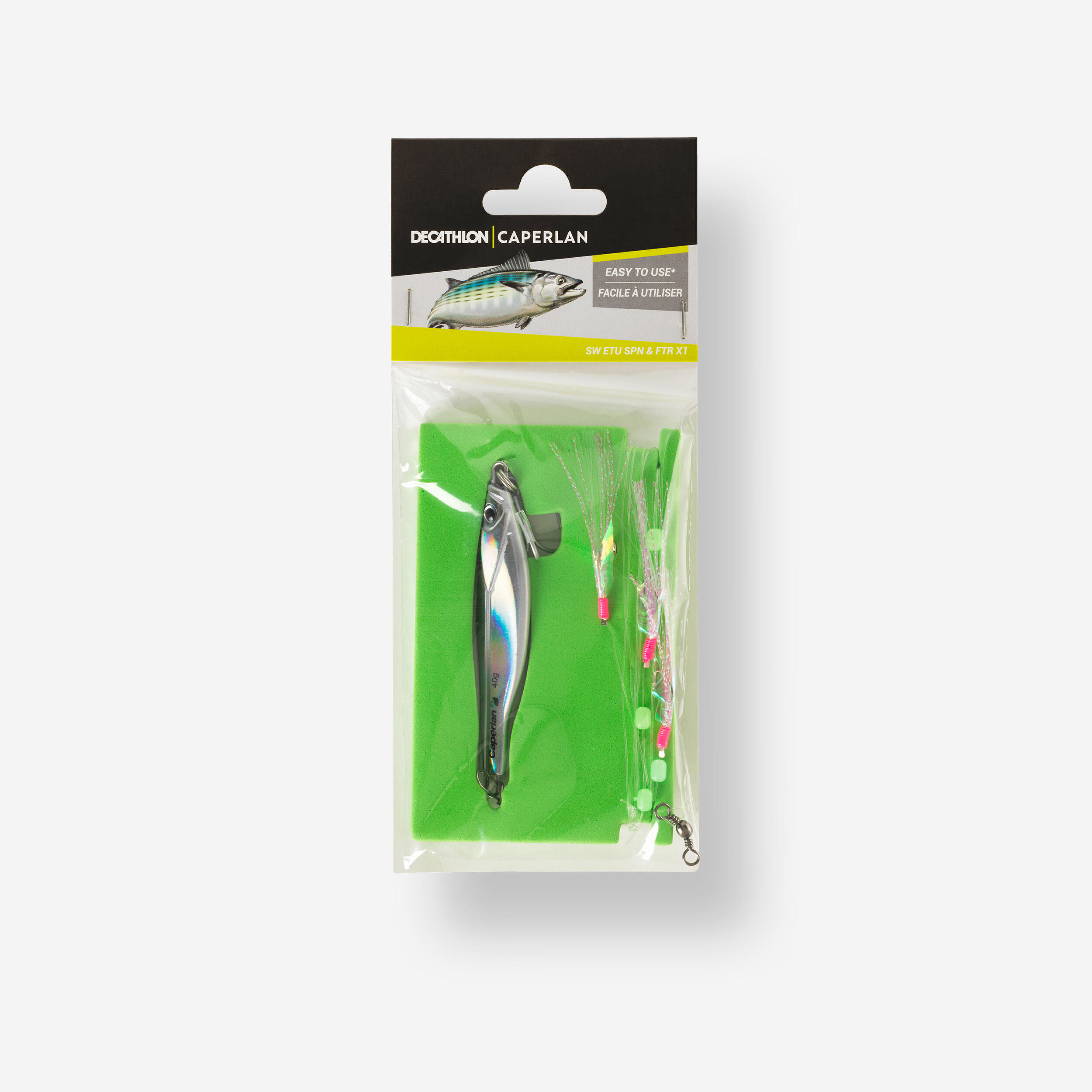
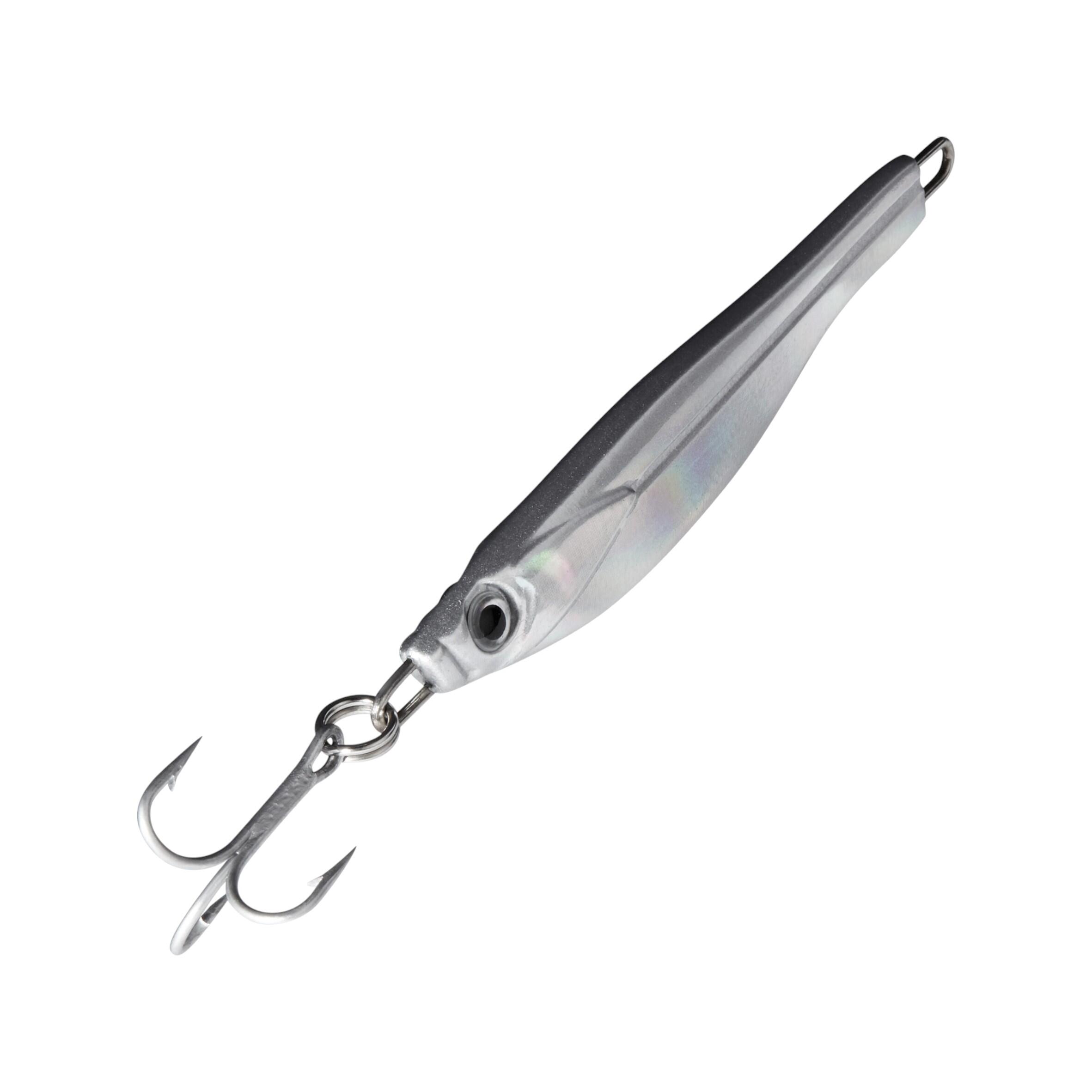
A pre-tied feather train lets you spend less time assembling individual hooks, leaders and terminal connections at the water. Caperlan's feather rig kit combines three EVEN SEA feathers with an 80 g BIASTOS casting jig, creating a weighted setup that can descend quickly when fishing vertically from a boat. The 1.5 m rig uses 50/100 main line and three size 1/0 hooks, while the pink jig adds a holographic herring-style finish. A reusable foam folder keeps the leader organised after fishing. Match the complete rig weight to your rod rating before lowering or casting it.

Why do feather rigs use different hook sizes and leader diameters?

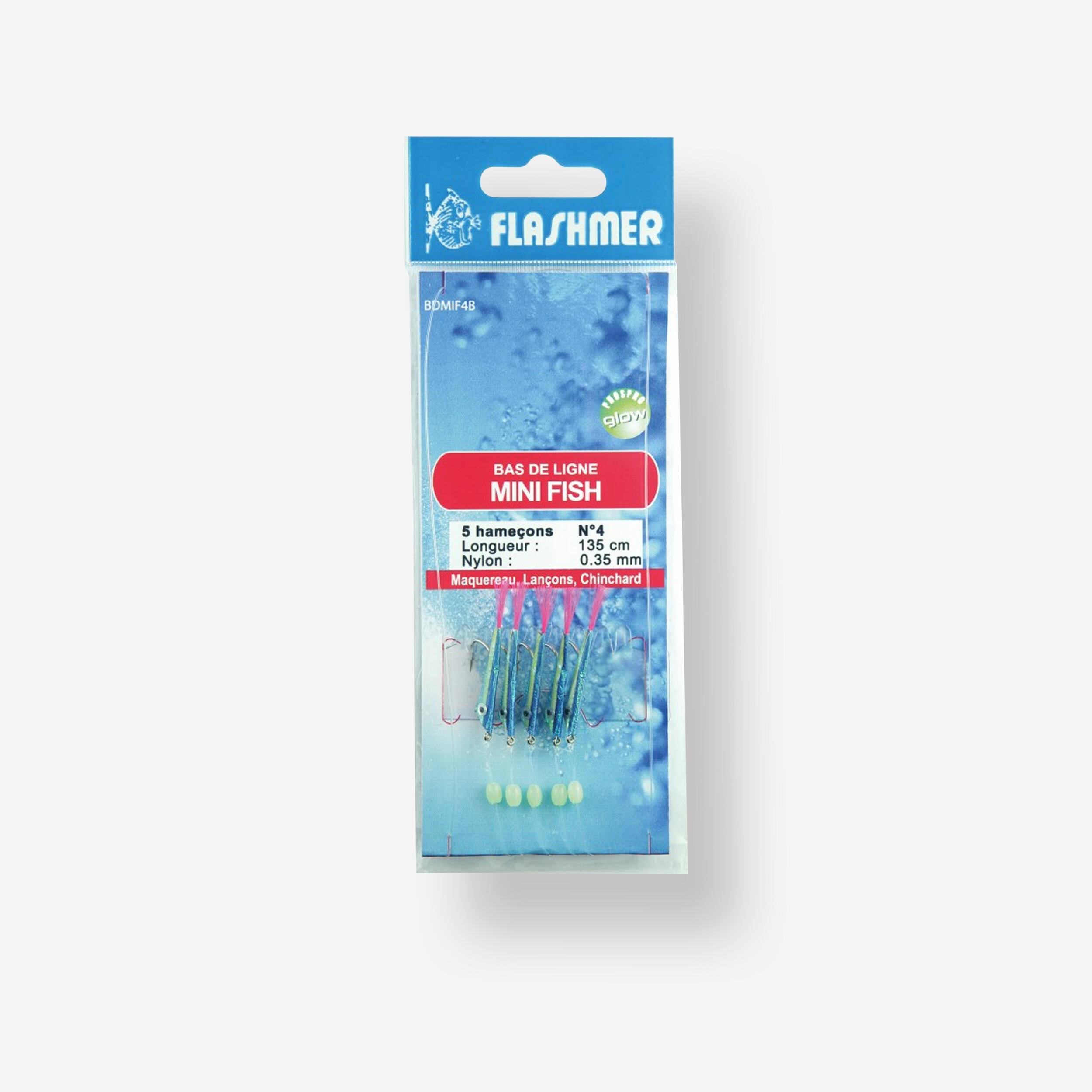
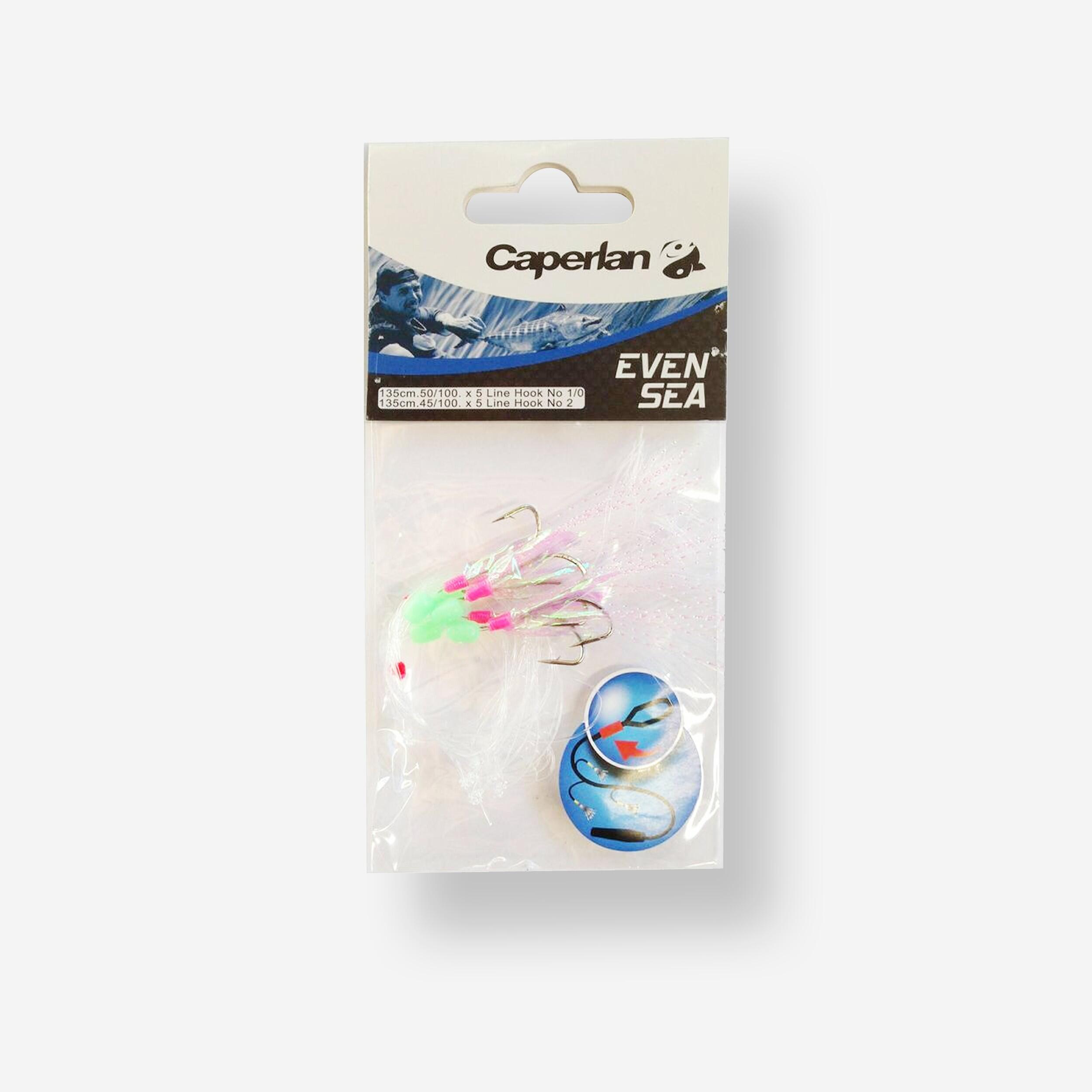
Hook size and leader strength need to work together because larger hooks and stronger fish place more load on the rig. Caperlan's feather trains pair progressively larger hooks with heavier line, rather than using one leader diameter across every setup. The leader feather train mini fish provides a different presentation from heavier predator rigs, making it easier to match hook size to smaller baitfish-feeding species. Across the EVEN SEA system, five-hook rigs use varying diameters and hook sizes so you can select a setup suited to the fish you expect. Check the main line and terminal connection as well so the complete rig remains balanced rather than creating one unnecessarily weak section.

How do feathers and phosphorescent beads attract fish?

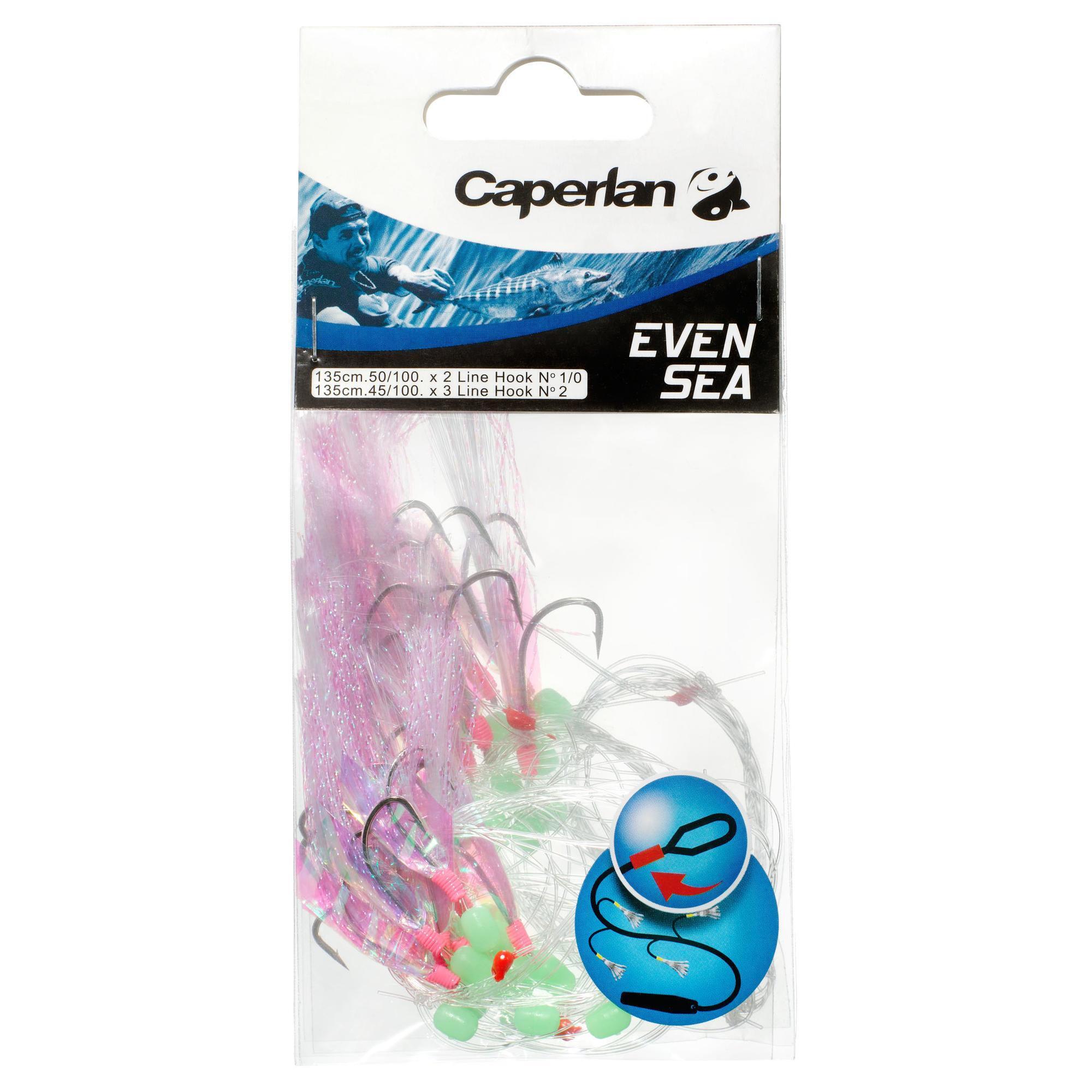
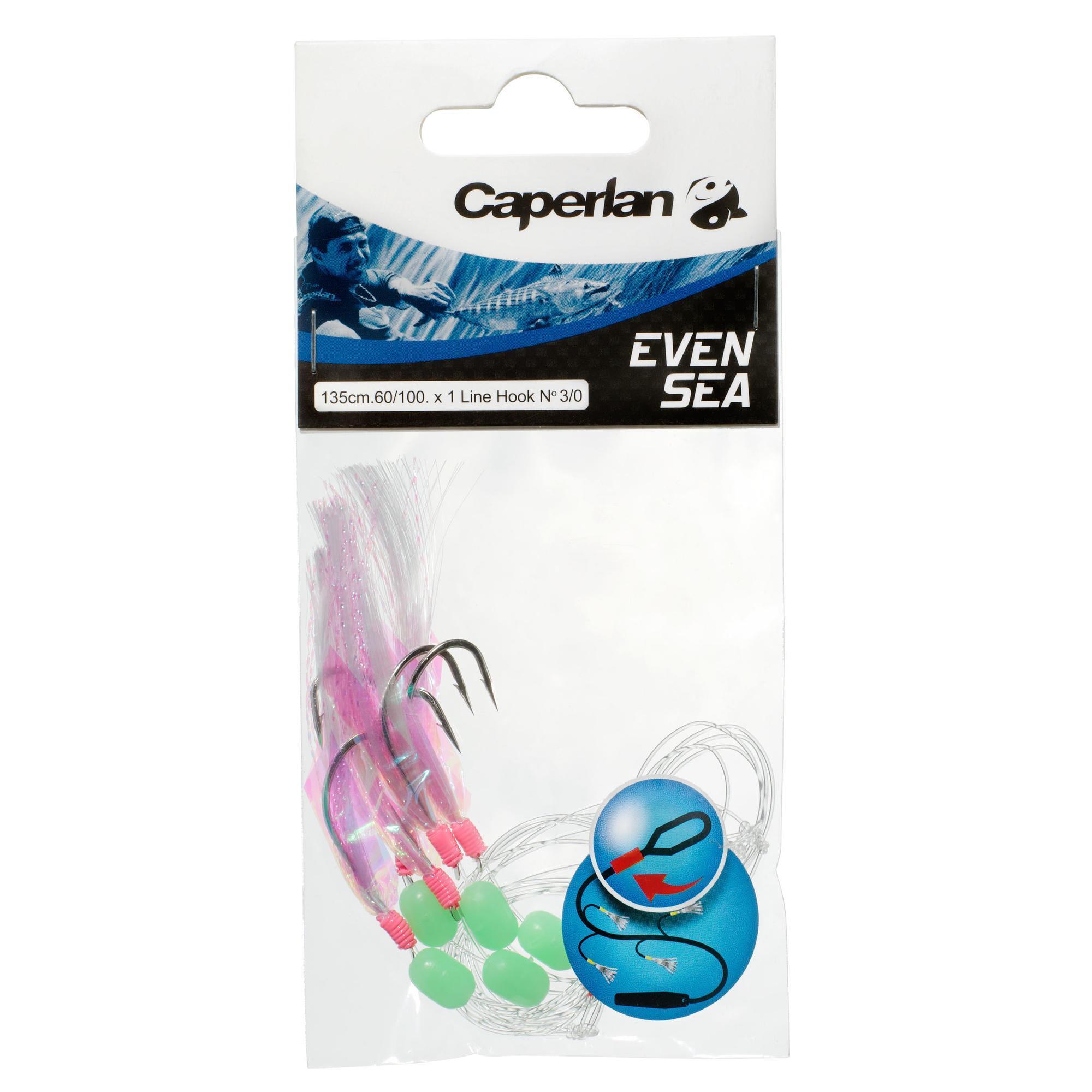
Movement, flash and visibility help a feather rig imitate small marine prey while it rises and falls through the water. The sea fishing feather rig uses pink iridescent feathers that Caperlan links with a krill-like appearance, helping create attraction for species such as mackerel and horse mackerel. Selected EVEN SEA rigs also include phosphorescent beads that remain more visible as natural light decreases with depth. Work the rig with controlled lifts and drops rather than continuous aggressive movements. The feathers need enough water movement to pulse and flash while still looking like small prey, especially when fish are feeding in a concentrated layer below the boat.

Can the same feather train work for more than vertical fishing?

Caperlan positions selected feather rigs for several techniques, including vertical fishing, cast-and-retrieve use and coastal trolling. Vertical fishing lets the rig work directly beneath the boat, while casting covers water farther away and trolling keeps the feathers moving behind a slowly travelling boat. The sinker or jig fitted to the bottom of the rig changes how quickly it reaches depth and how it behaves during retrieval. If your session also includes other sea fishing with lures methods, keep your feather trains on their winders until needed so the multiple hooks do not tangle around spoons, jigs or hard lures. Use the technique that matches the fish's depth and movement rather than working every rig the same way.

When should you clean and dry feather trains after use?

Multiple hooks and long leaders can tangle quickly when a feather rig is stored loose, so rewind the assembly onto its shaped EVA winder or reusable foam folder after fishing. Inspect feathers, knots, swivels and hooks first, particularly where saltwater and fish contact may have affected the components. Tin-coated or stainless-steel parts add corrosion resistance, but keeping the rig dry between sessions still matters. Let wet feathers dry before closing them in a tackle box and replace hooks that are blunt, bent or visibly corroded. Other saltwater fishing terminal tackle can be stored in the same careful way, keeping damp rigs and exposed hooks separated from nearby line, lures and accessories.